

For the first time in three years, Natasha Morgan brings The Winter Table Masterclass back to Oak Lane & Co in Kyneton. An intimate, hands-on morning in one of Victoria's most beautiful shops — strictly limited places.
Read More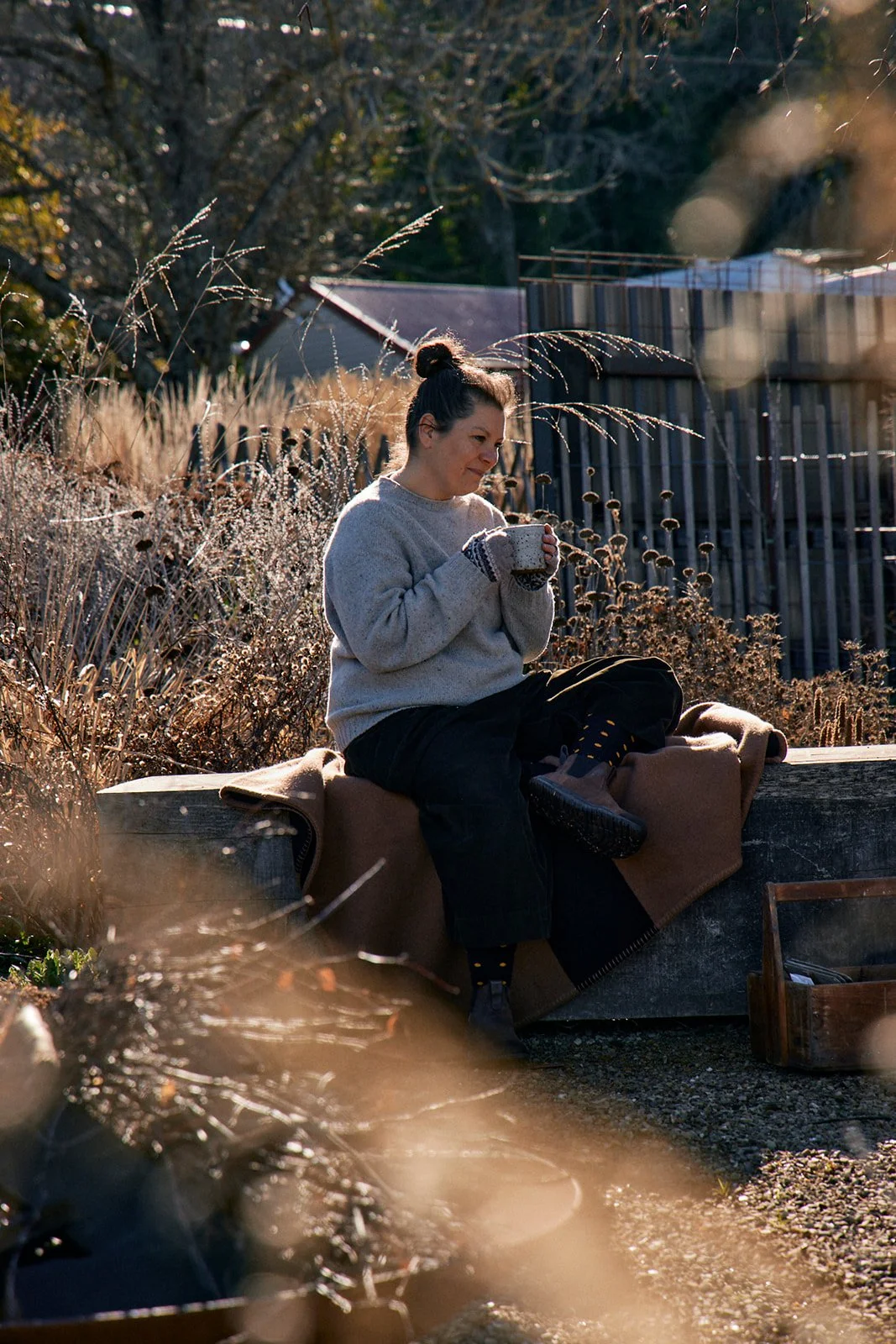
Designed to Be Lived In
I spent an hour this week talking with Joel from InStyle Gardens for his podcast, and somewhere in the middle of it I heard myself once again sharing something that is at the core of what I do and believe: that I design through experience, and that the size of a garden has almost nothing to do with whether it's any good.
Read More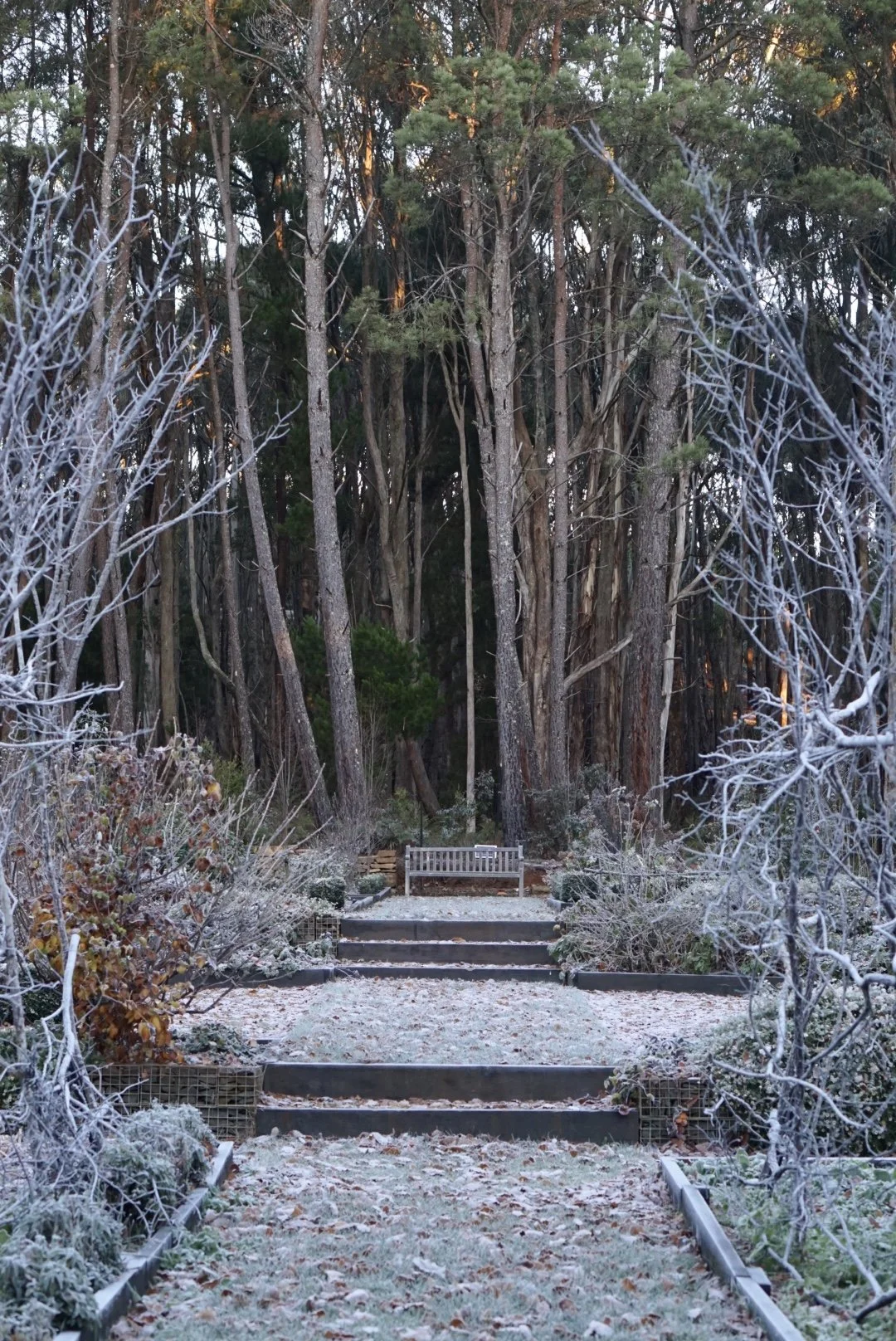
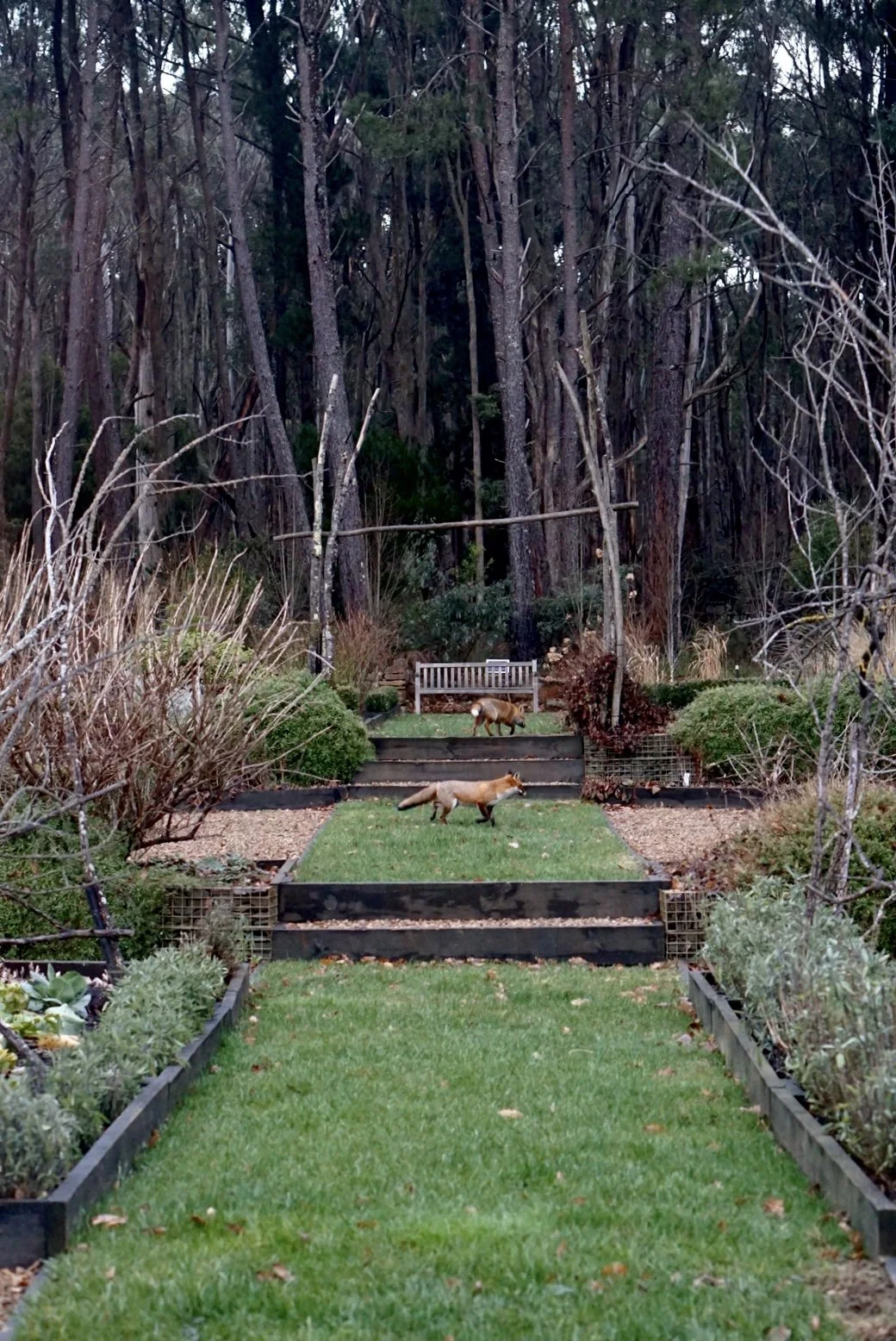
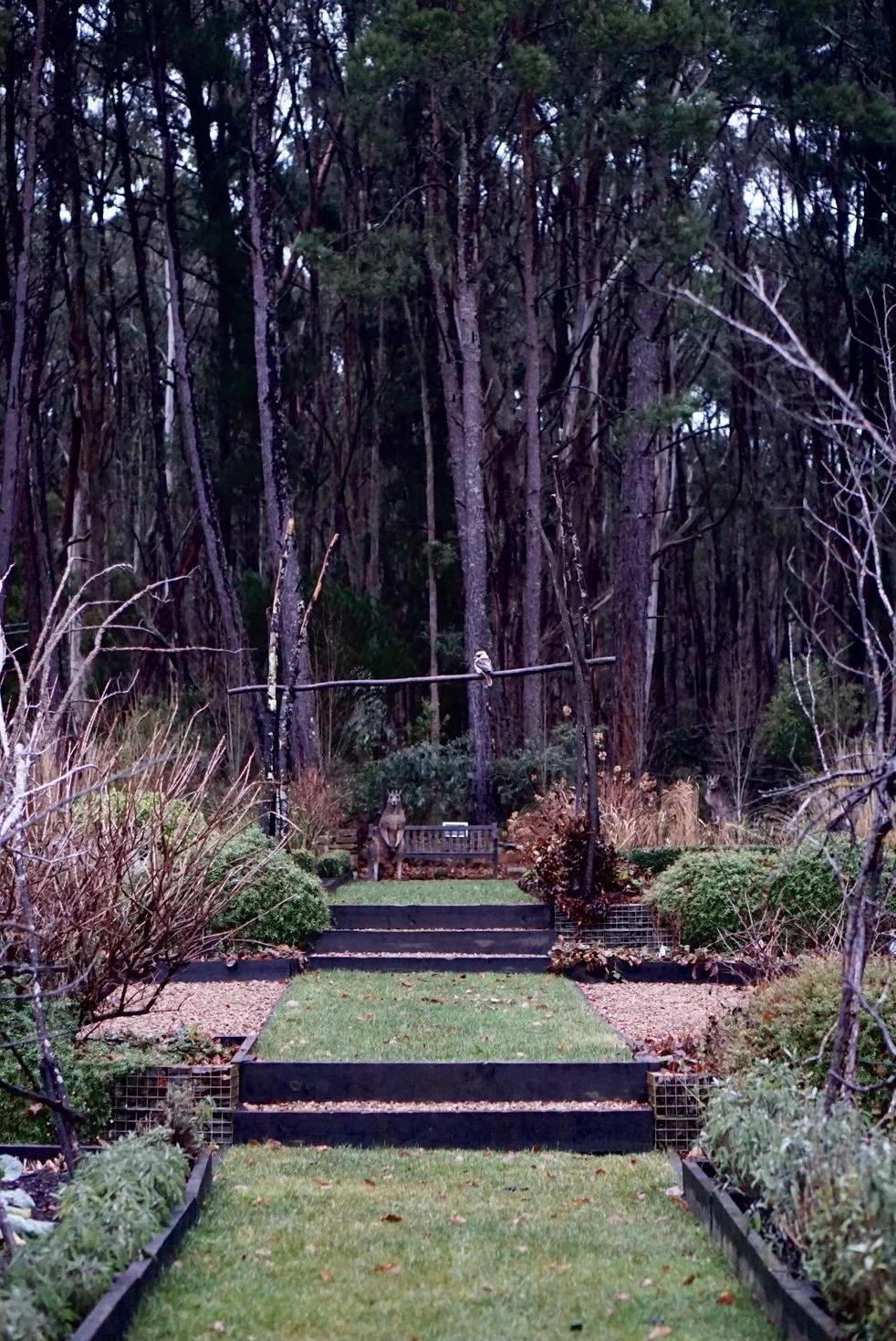
Oak & Monkey Puzzle - view down lawn spine to forest backdrop
What Winter Shows You
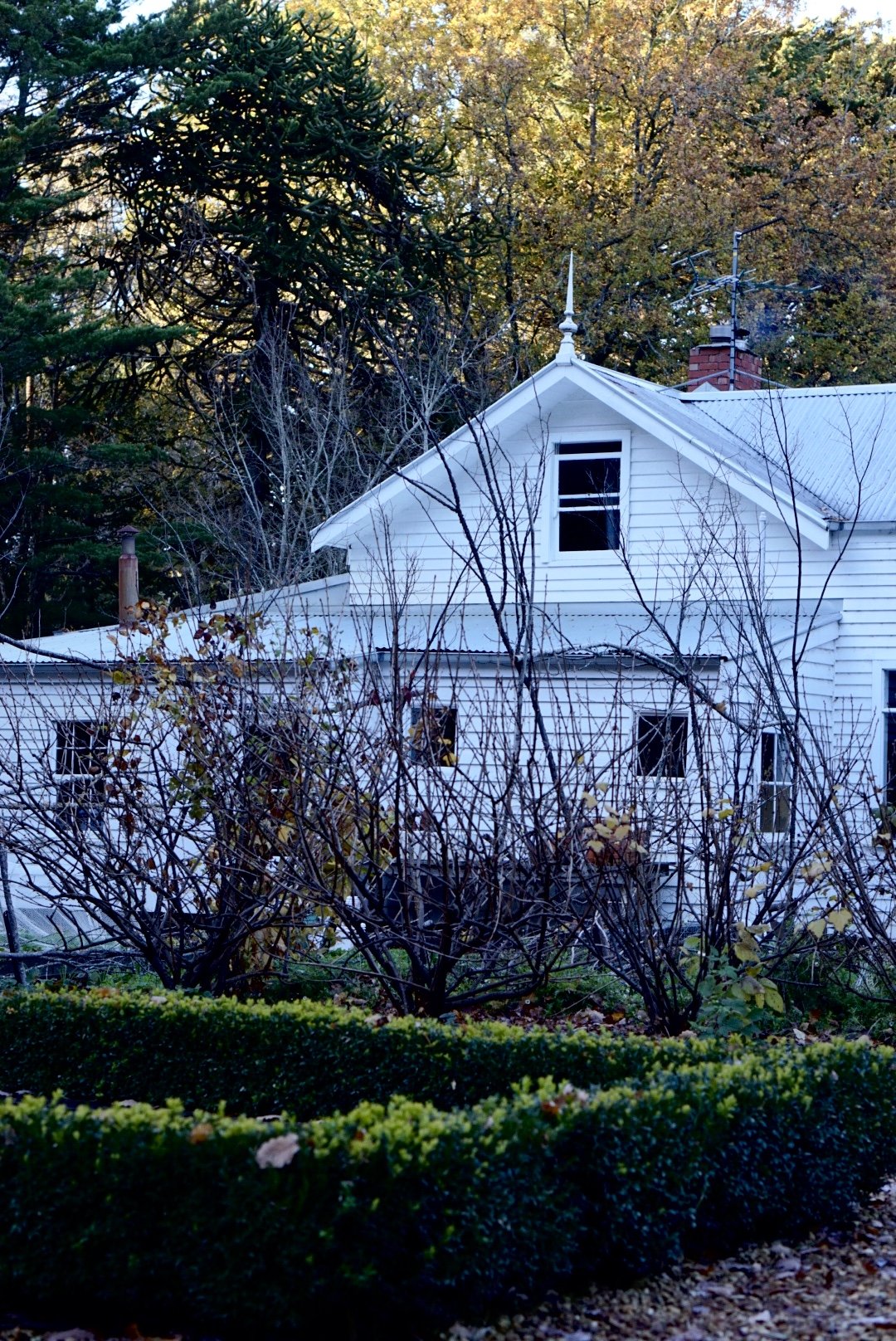
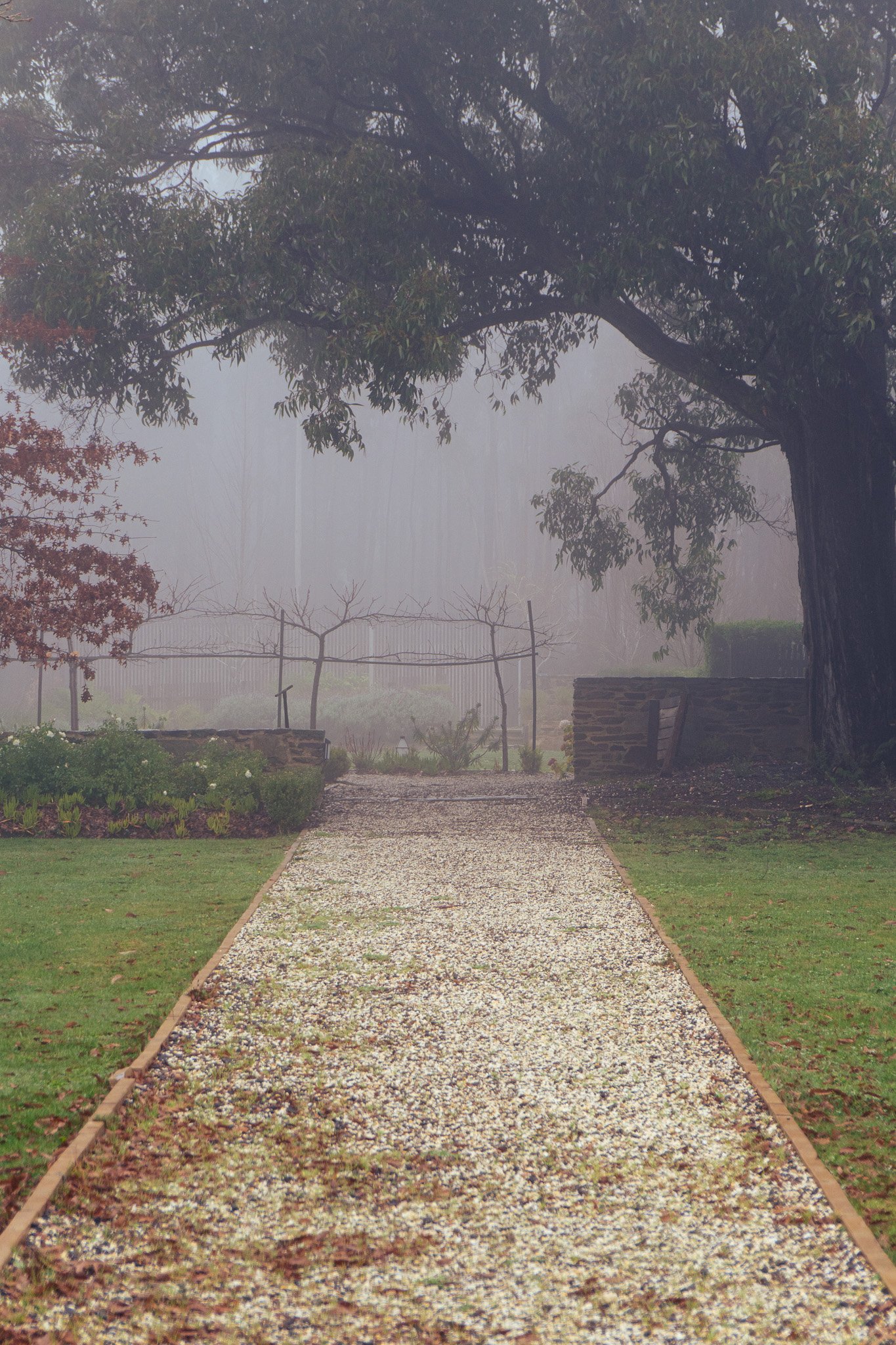
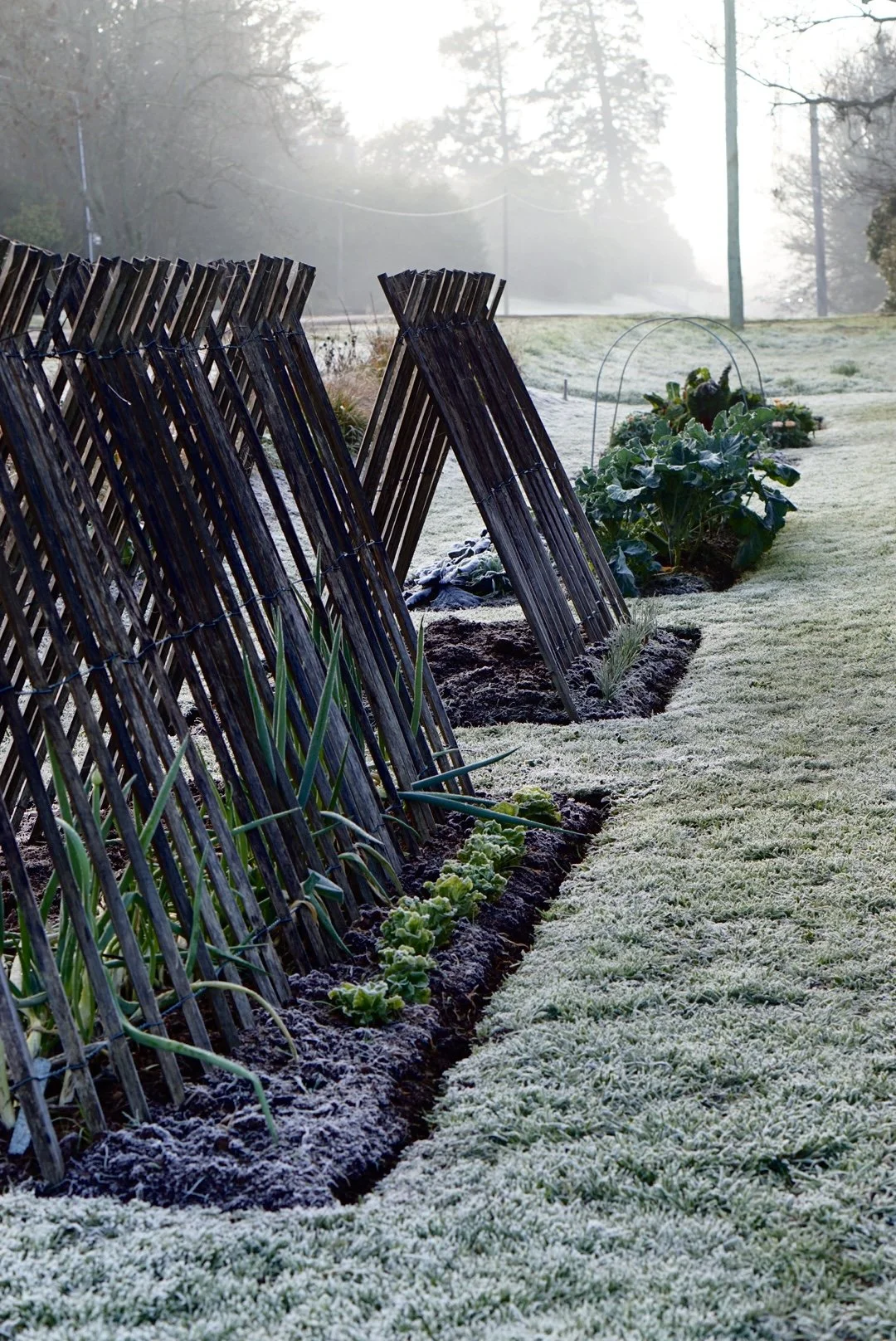
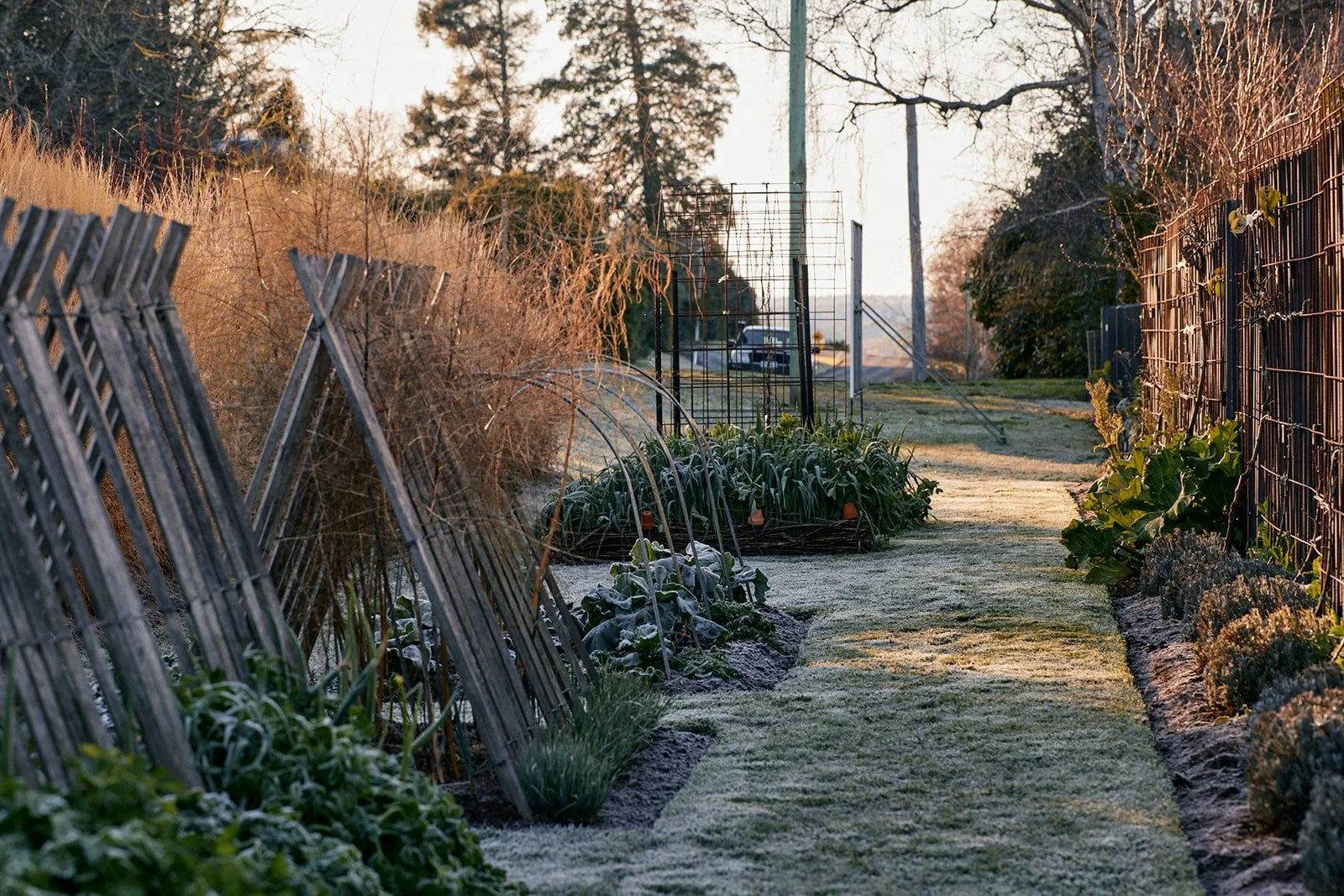
On the coldest mornings I take the same short walk around my garden before the day begins, and the lawn is the first thing I see. A crust of frost across the open grass, holding the low light, keeping the shape of every blade until the sun finds it. The garden at Little Cottage on a Hill is only five hundred and fifteen square metres, and on a morning like that it gives itself up to me completely. The grass reads as a kind of ground. The bare espalier along the fence becomes a drawn line. The trees are tone and mass and the spaces between them. Everything has been stripped of its colour, and in that stripping I can see, with almost embarrassing clarity, what holds the garden and what does not yet anchor it strongly enough.
Years ago, before my daughter was born, I spent Tuesday nights learning to paint in a studio in Clifton Hill — a converted stairmaker's factory that smelled of linseed oil and cigarettes and whiskey, where an esteemed old painter named Des set me the same task again and again. The underpainting. Before any colour, the old painters laid down a monochrome ground: the whole composition resolved first in greys, in light and dark, so they could see whether it held before a single true colour was allowed near the canvas. I did not understand, then, that I was being taught how to look at a garden. I understand it now, every July.
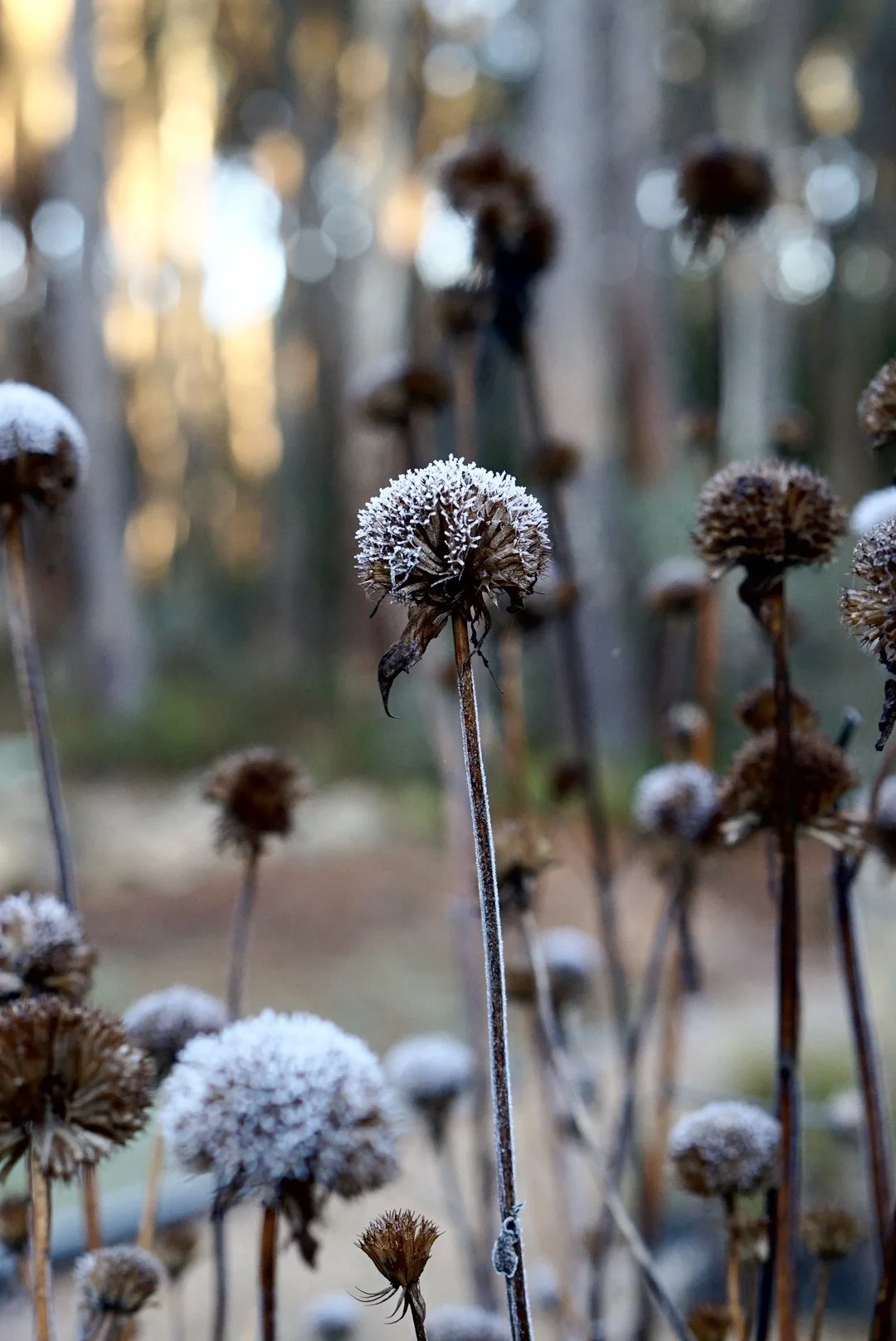
This is the thing I most want to say about winter, and I want to say it plainly, because it runs against the grain of how we are taught to feel about the season. Winter is not the garden at its emptiest. It is the garden at its most honest. You would be amazed how much a winter garden can teach you, if you let it. It takes away the froth of summer — the colour the eye runs to first, the abundance that papers over a weak structure — and leaves the bones exposed. It asks the one question every gardener tends to avoid and every designer should be asking: does this hold on its own terms, beneath everything I have laid on top of it?
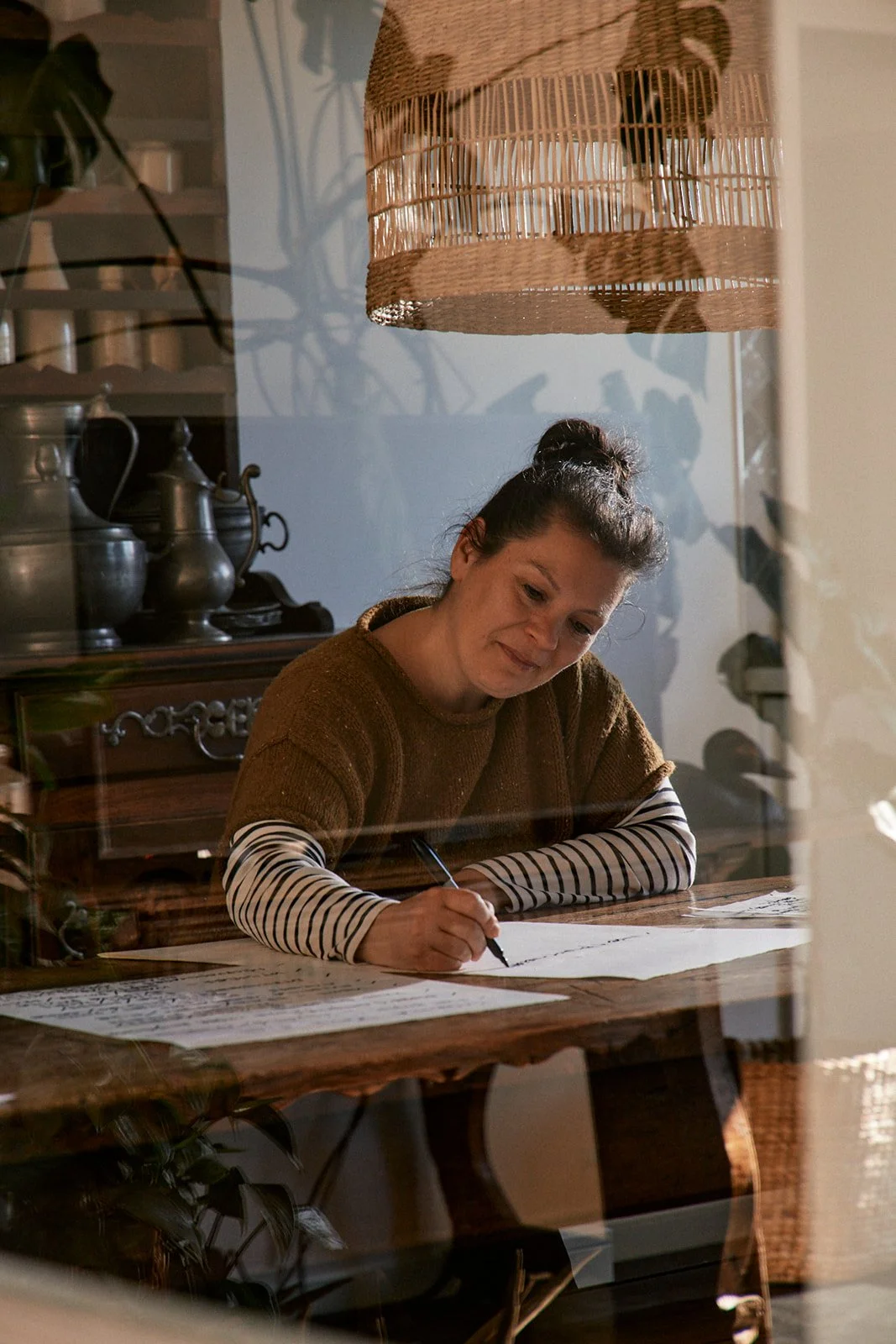
I came to that question the long way round. I have been a gardener since I was a child, loving the plants themselves — their beauty, the small triumph of coaxing something difficult into growth — long before I knew anything about design. Design came later, through study and then through fifteen years of practice, learning to read space before planting: mass and void, the way one volume sits against the next. What took me far longer to see is that winter performs that reading for you, for free, once a year. When I was finishing my book, The Productive Garden Companion, and battling with the cover direction as most authors do, I’m told, artist and friend Andrew O'Brien stripped its cover to black and white, to test it — because colour is the most seductive thing in any image, and only with the colour gone is the eye forced onto whether the composition is genuinely well made or merely attractive. That is precisely what winter does to a garden.
I am in good company here. Piet Oudolf, whose plantings have done more than anyone's to rehabilitate the idea of a garden in winter, chooses a plant as much for how it dies as for how it blooms — the echinacea for the cone it leaves behind, the miscanthus for the plume that frost turns to a small sculpture. Dan Pearson writes about the moment in autumn when you finally take your hands off the reins and simply look. Arne Maynard says that only in winter, stripped of its summer froth, can the true layout of his garden be seen for what it is. None of them is mourning a gap. They are describing a season of revelation that the rest of the gardening world has somehow agreed to call empty.
It helps that I garden where I do. There is a particular gift in this volcanic country of the Victorian Central Highlands, and it only becomes fully visible in the cold. Deep fog and real frost most mornings, settling in the low places and silvering everything they touch. A low, raking light that comes in almost horizontally and finds the texture in everything it crosses. From my garden I can see the old trees on Wombat Hill standing against a pale sky, reading almost like a wall beyond the fence. Five minutes away at Musk, where it snows some winters, Andrew has spent years making Stonewalls — twenty-five acres of garden and bushland shaped through a painter's eye.
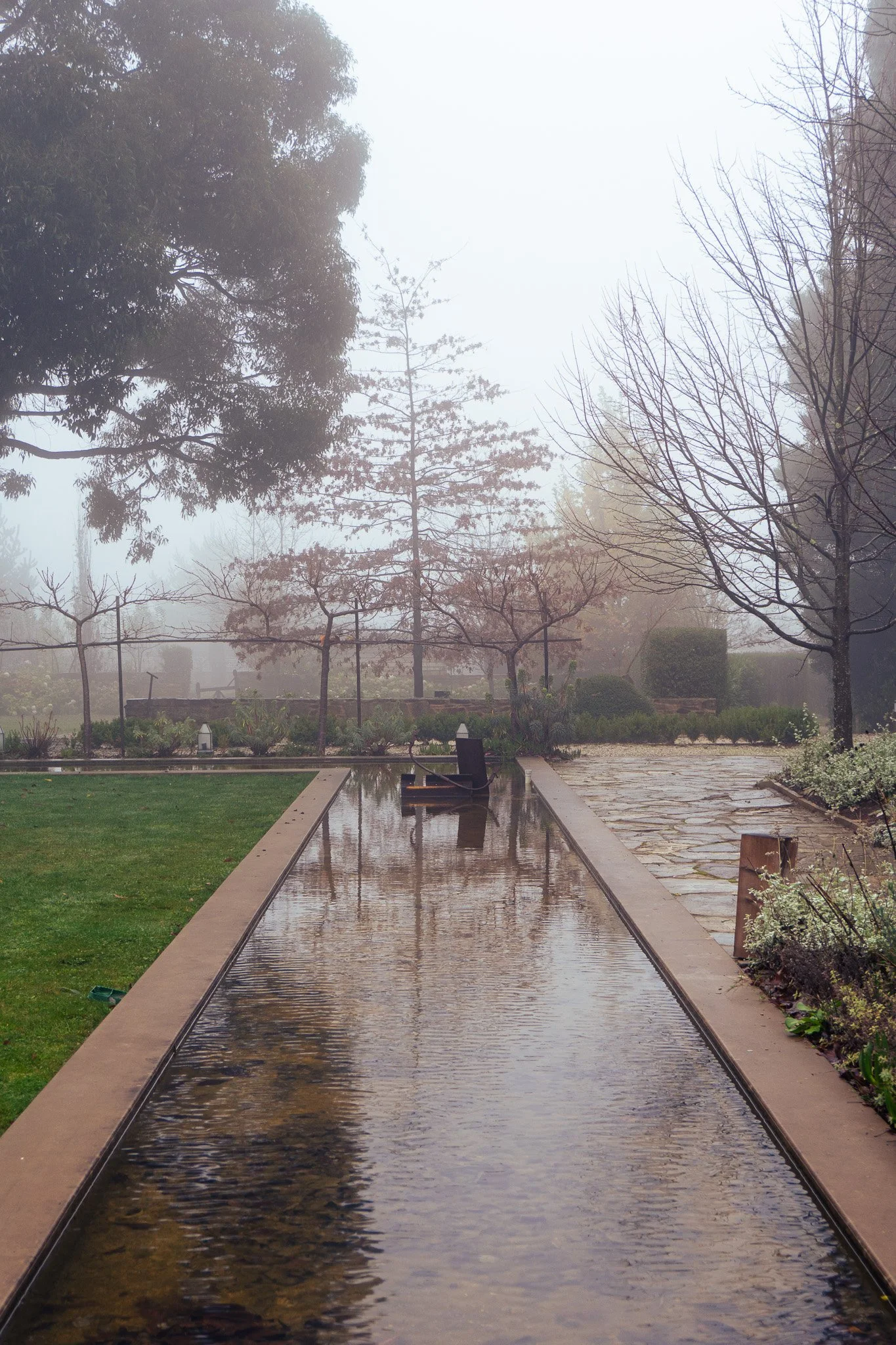
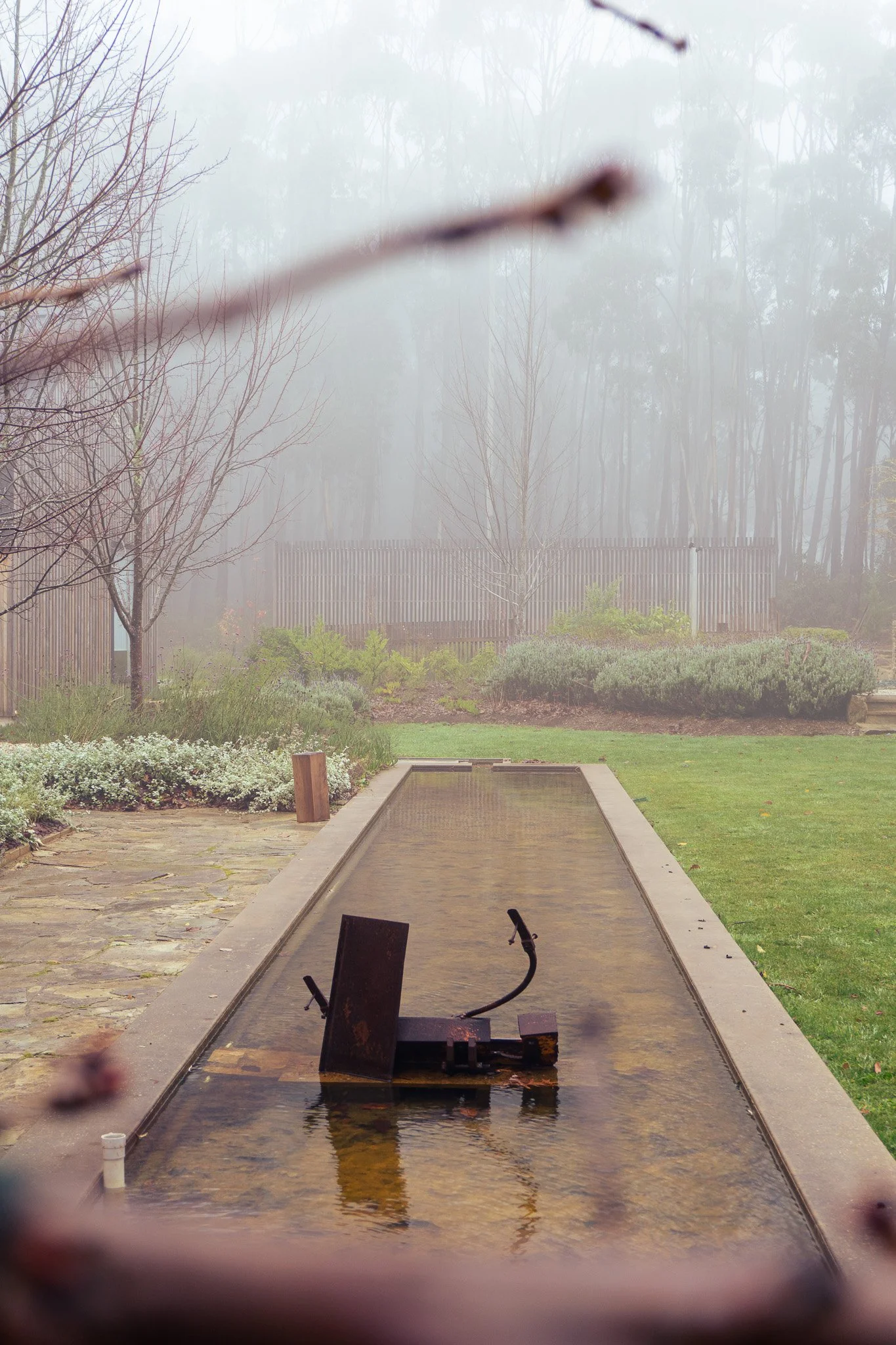
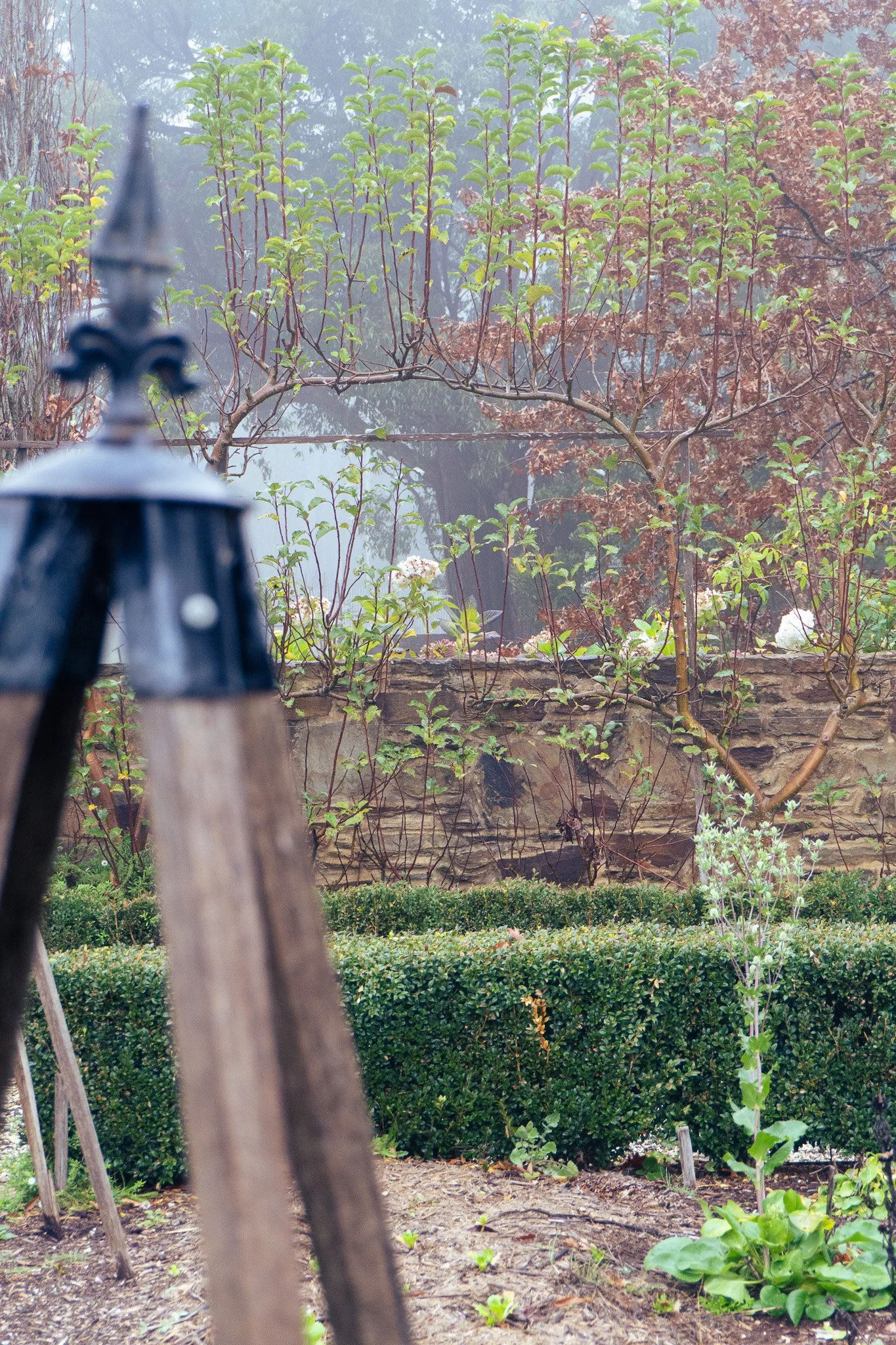
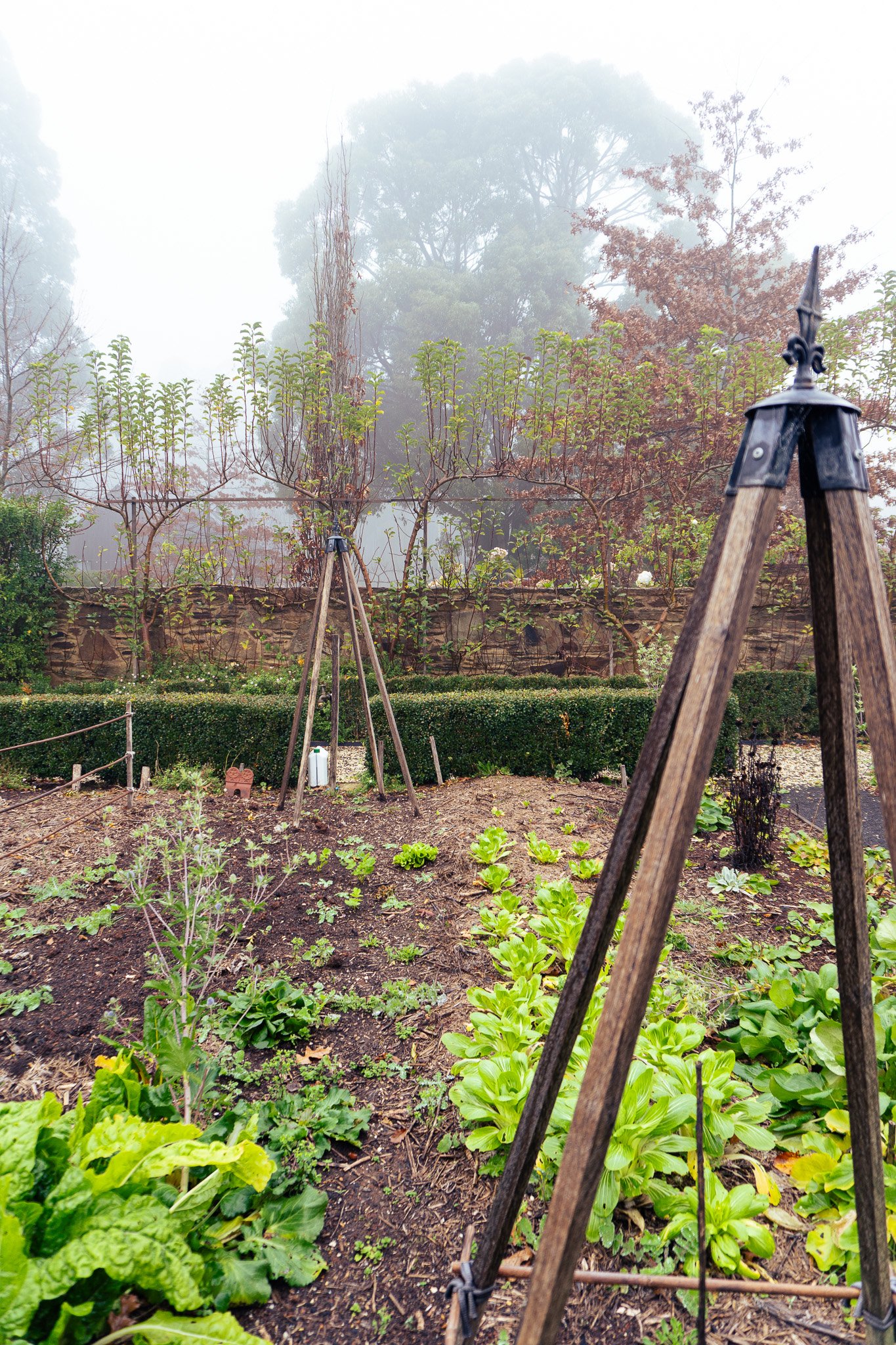
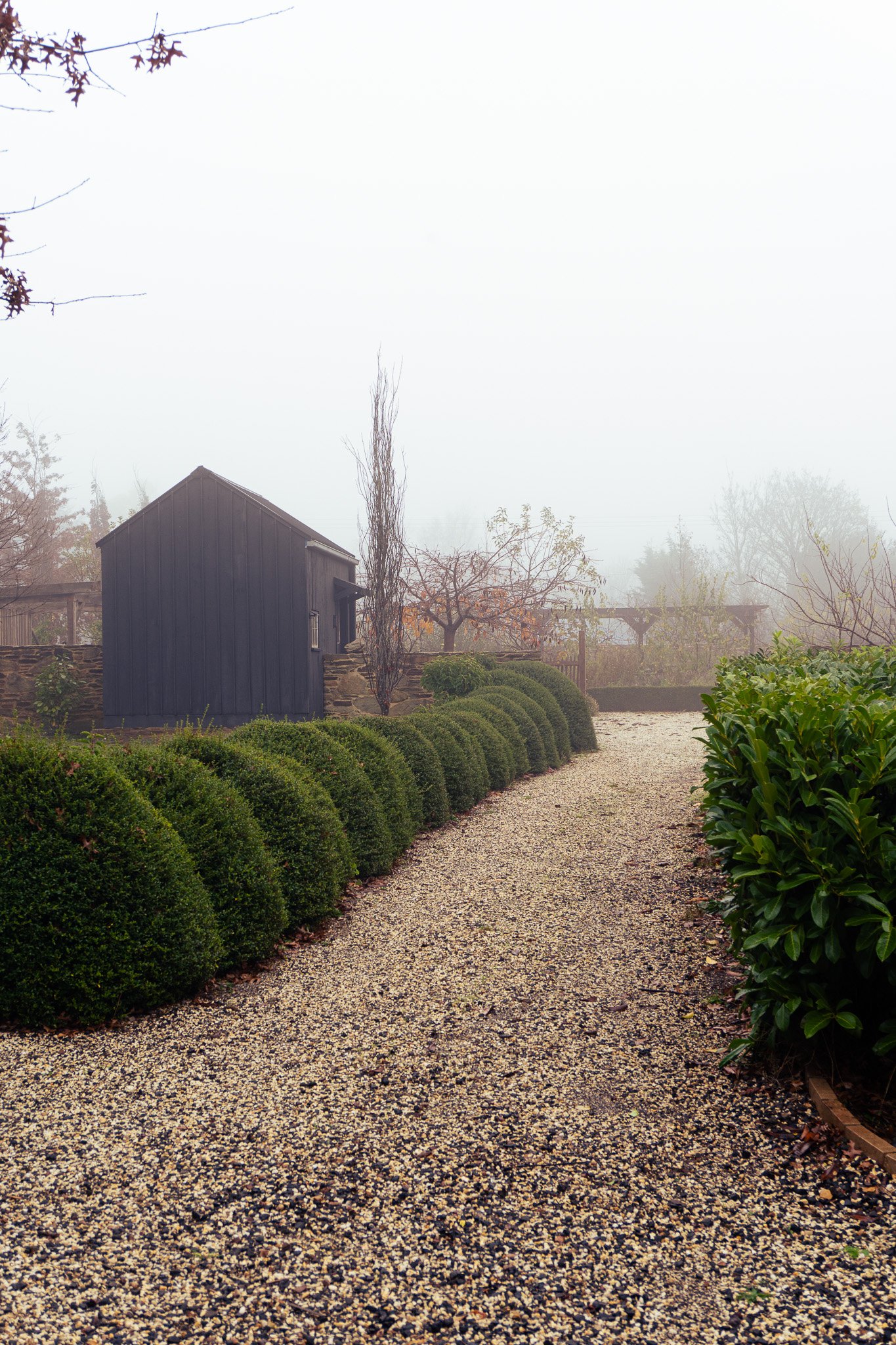
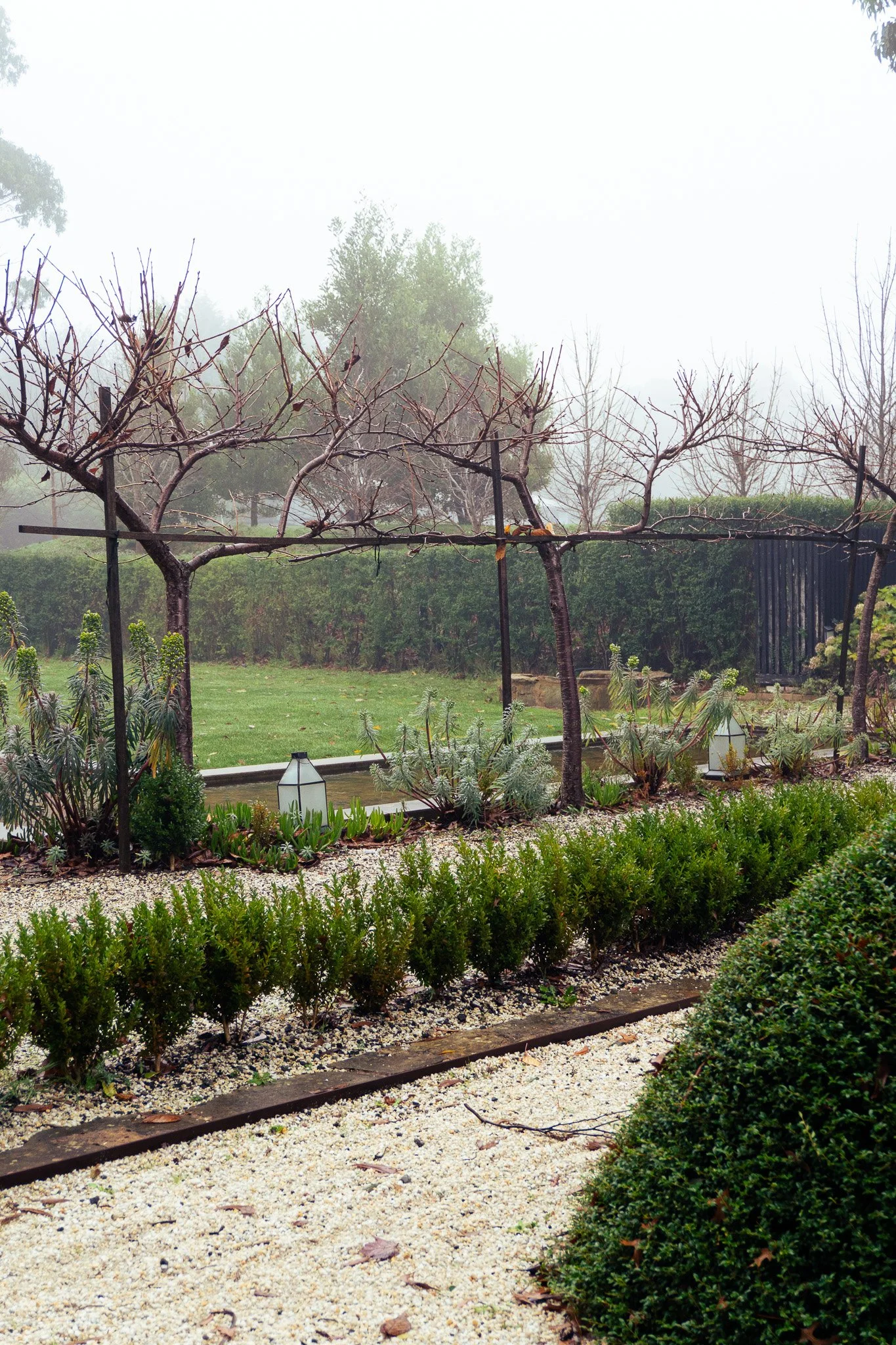
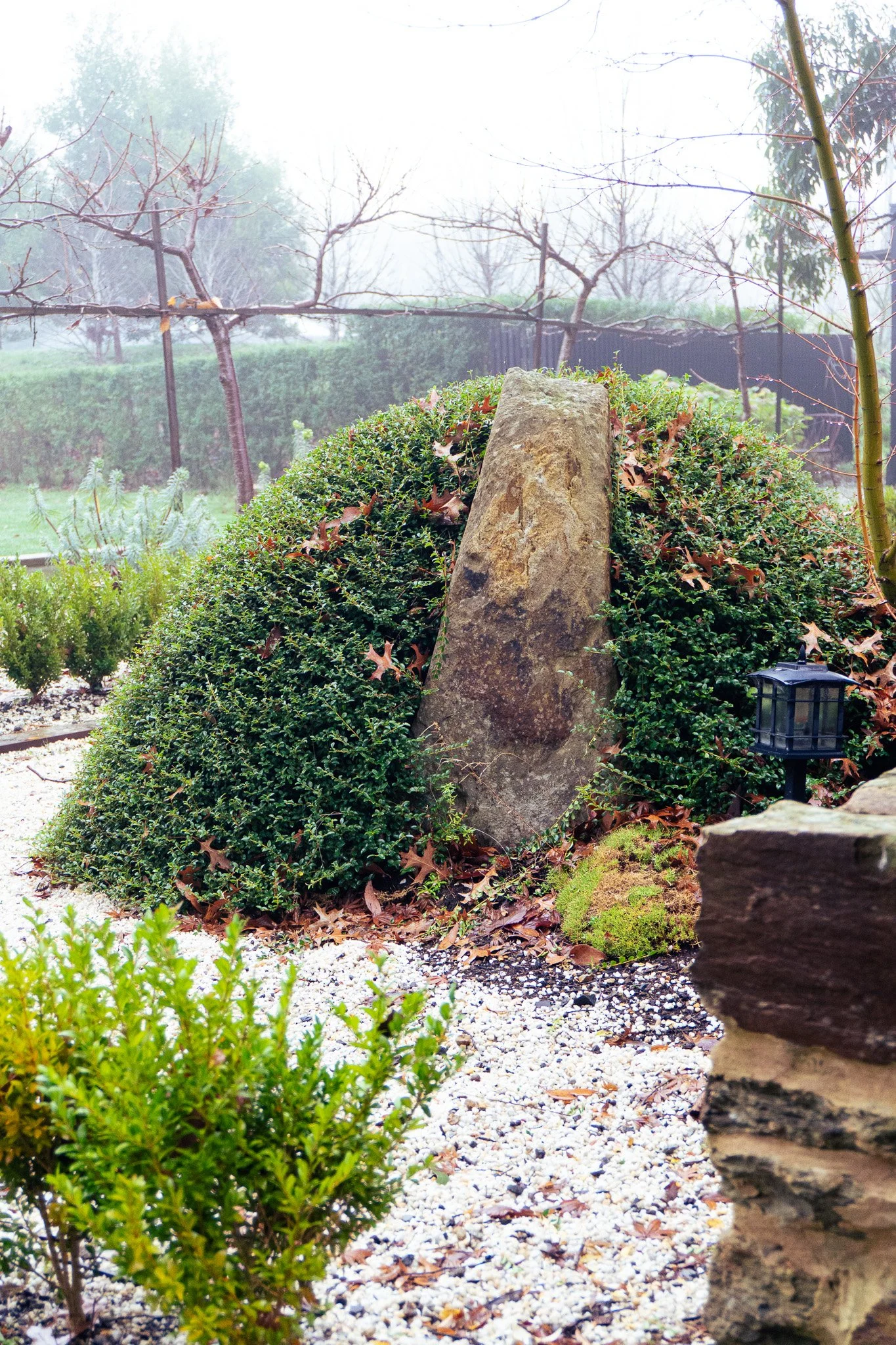
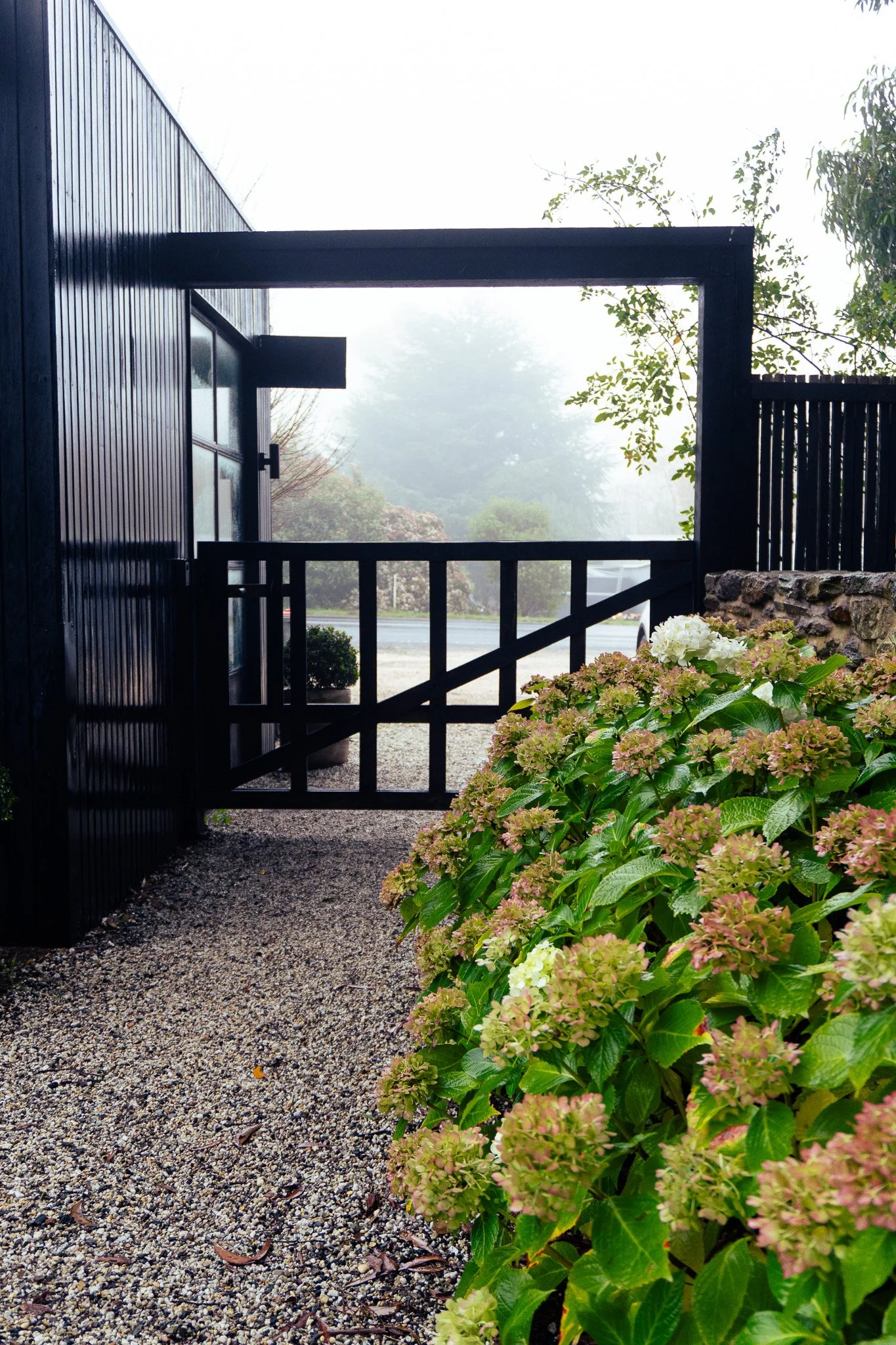
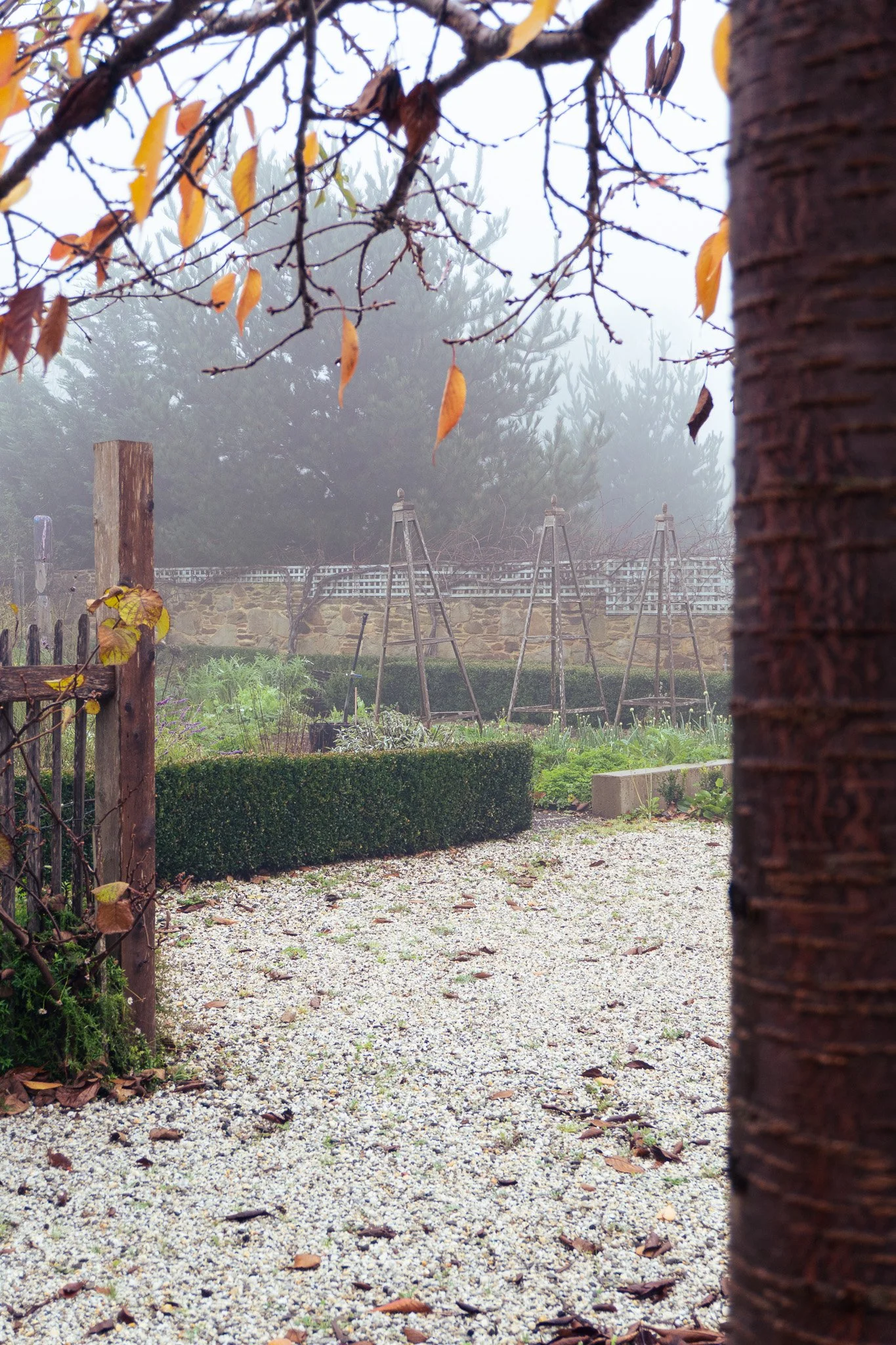
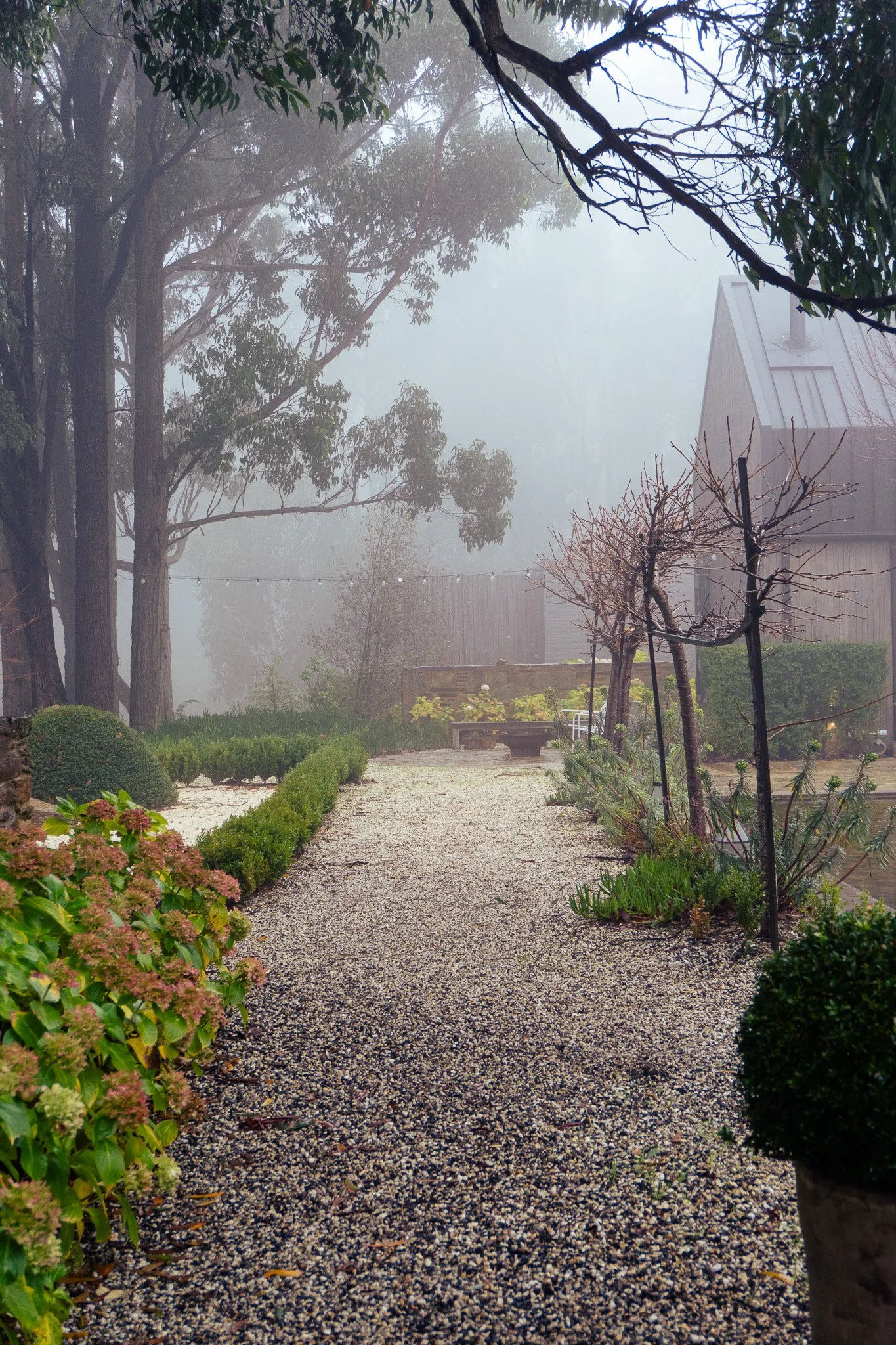
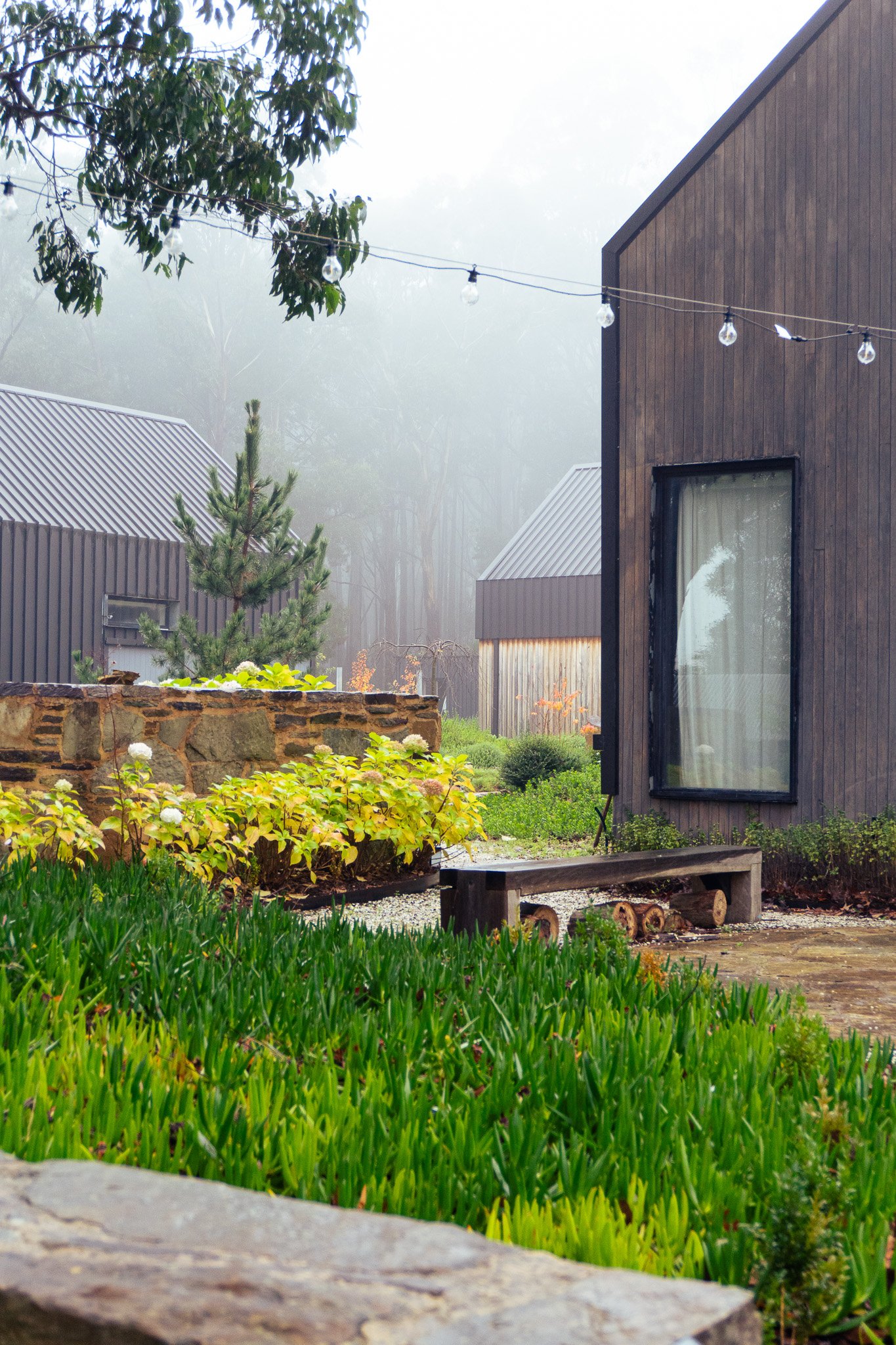
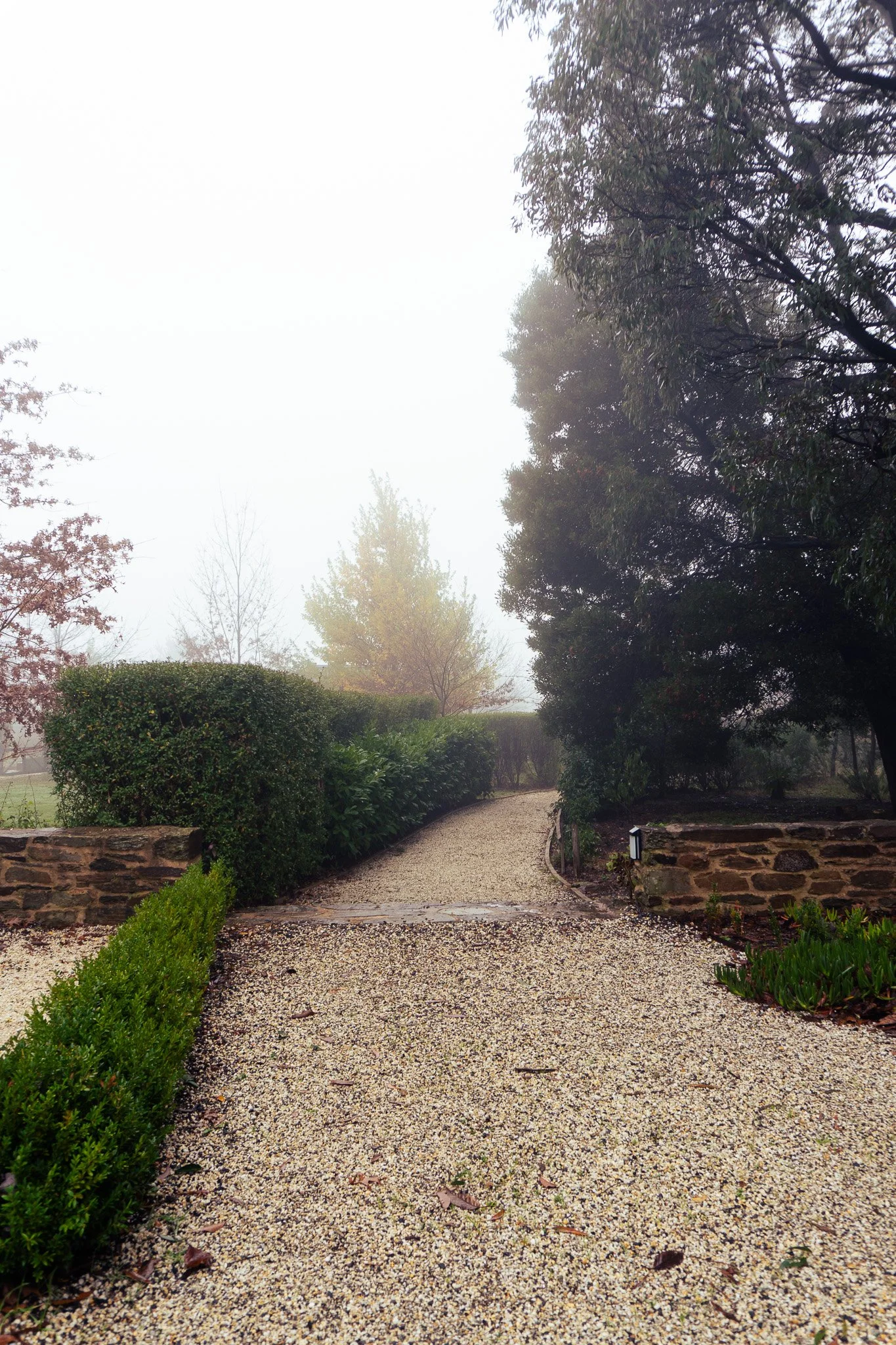
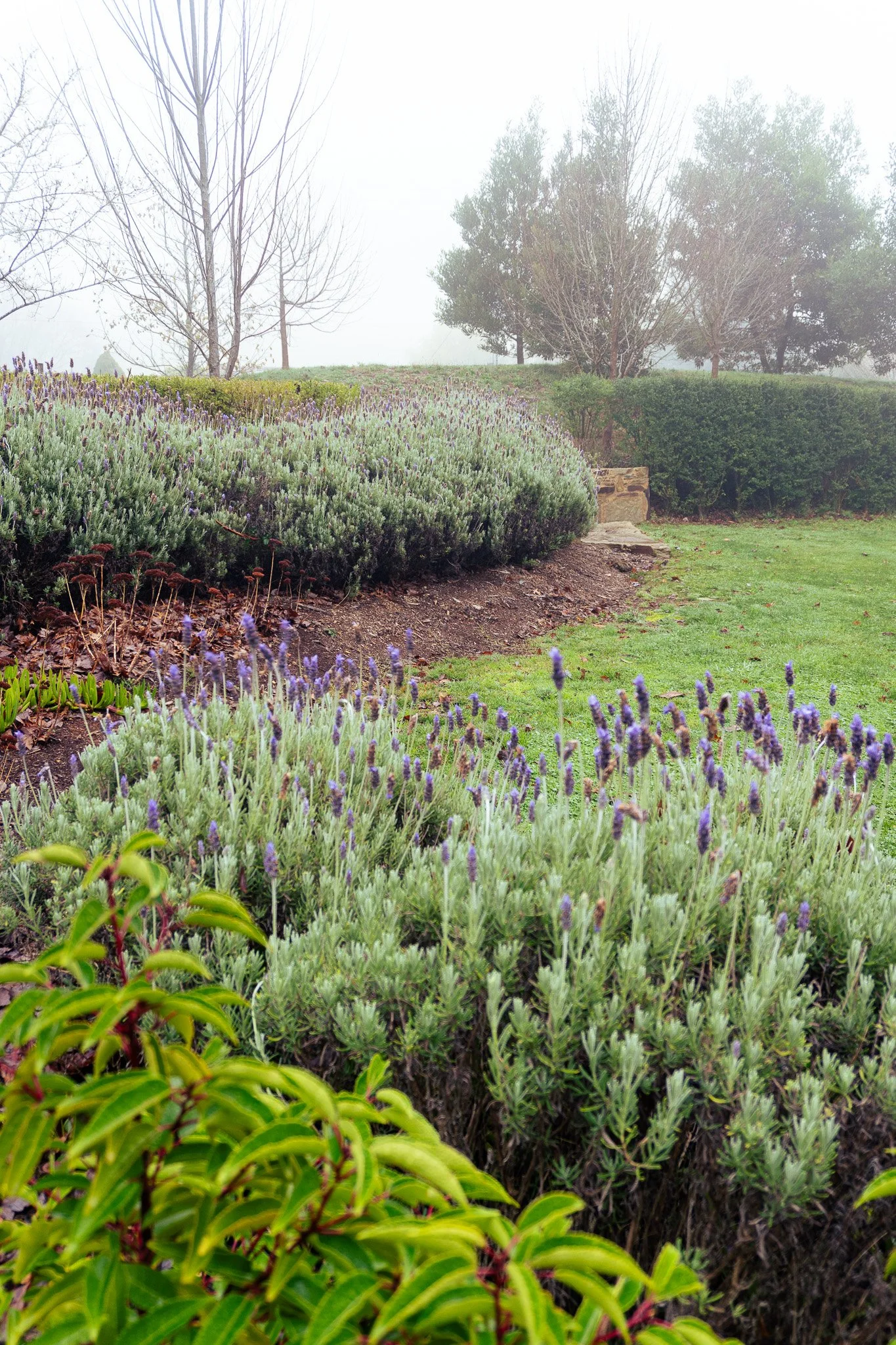
He comes to structure from the opposite direction to me, through paint, and he reads the gaps in a garden as the load-bearing parts: the space between two bare branches, the void between one plant and the next, the thing that gives a composition its tension. The black barn buildings he has set across the land do the same work as Des's monochrome ground. They hold the colour the way an underpainting holds the bloom.
I have tested this at both ends of the scale. At Oak & Monkey Puzzle, my old five acres at Spargo Creek, the gesture that organised the whole garden was a long sweep of open lawn — a spine — and it was every winter, when the planting drew back, that I could see whether it still held the place together. The emptiest part was the most important part. The frost-crusted lawn at Little Cottage on a Hill now teaches me the same lesson in miniature, small enough to take in at a single glance.
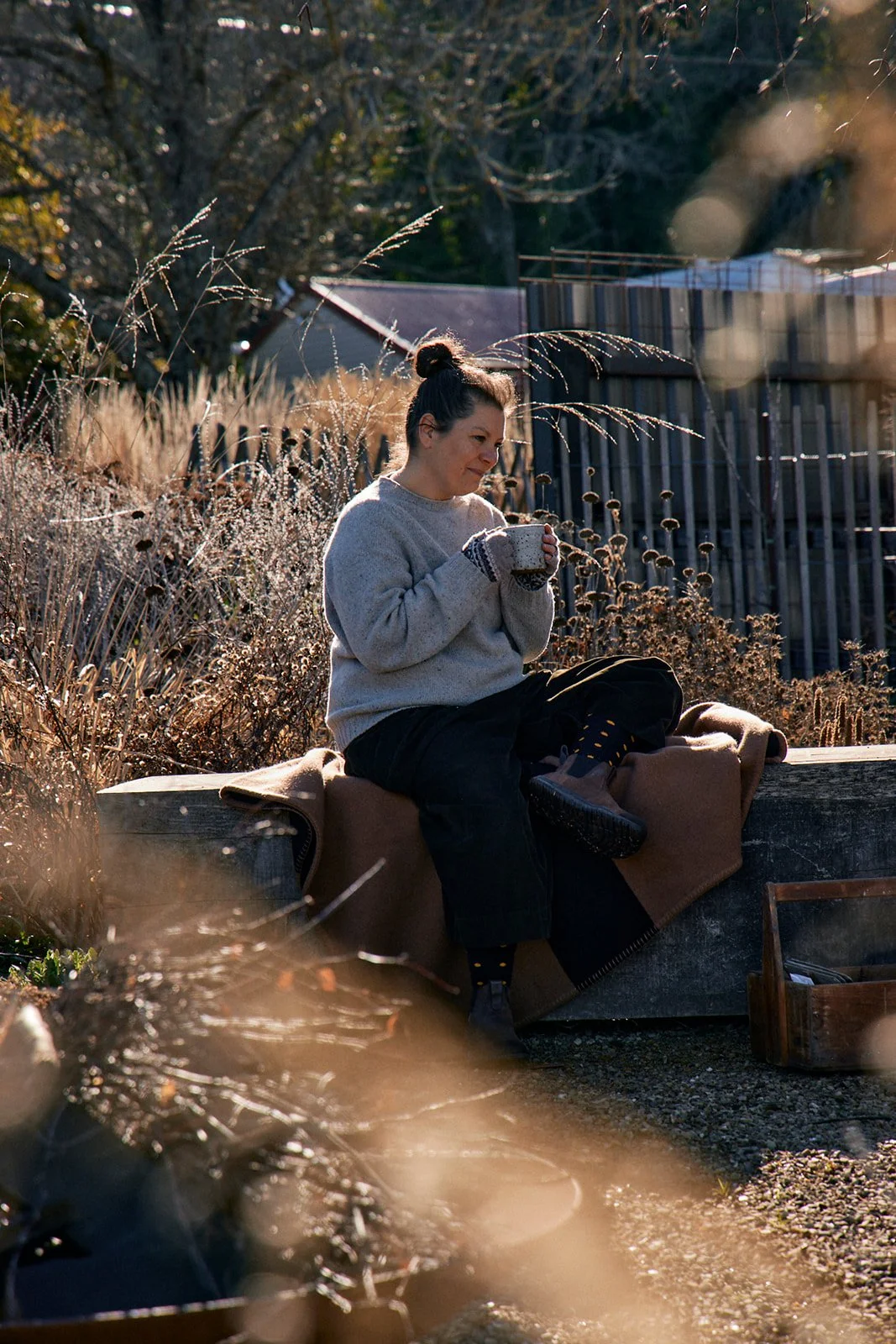
People think of winter as the end of the gardening year. Since leaving city life and learning to live with the land, I have never been able to feel it that way. For me it is the prelude — the season of greatest promise, the months I spend dreaming and planning before anything is asked to grow. I sit with a cup of tea and I look: where the frost settles, where the structure isn't yet holding. You lay the monochrome ground first, in the cold, and everything bright comes afterwards, and comes better, because of it. This is the thinking that runs underneath my book, The Productive Garden Companion — that you plan by observation rather than by dates, and that the quiet seasons are where the foundations are laid. It is also what Andrew and I are opening both our gardens for, on a single and rare Sunday in July: a day to put your hand on a cold wall and your eye to a stripped border, and feel the argument for yourself.
The sun reaches the lawn eventually. The frost lifts in the first hour, and by then the garden is already reorganising itself in my head — the greys turning into a map of what they will hold once the colour comes back over the top.
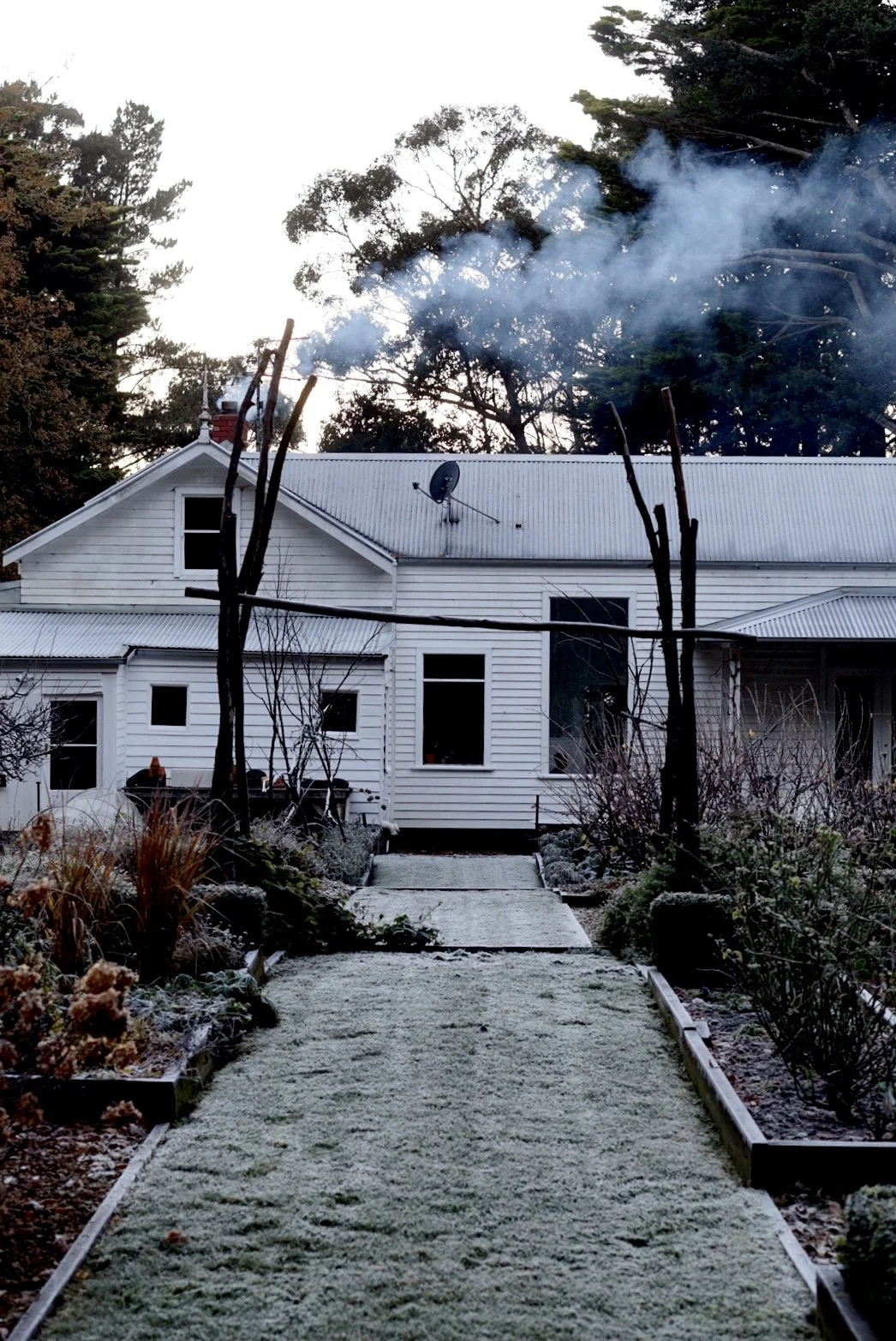


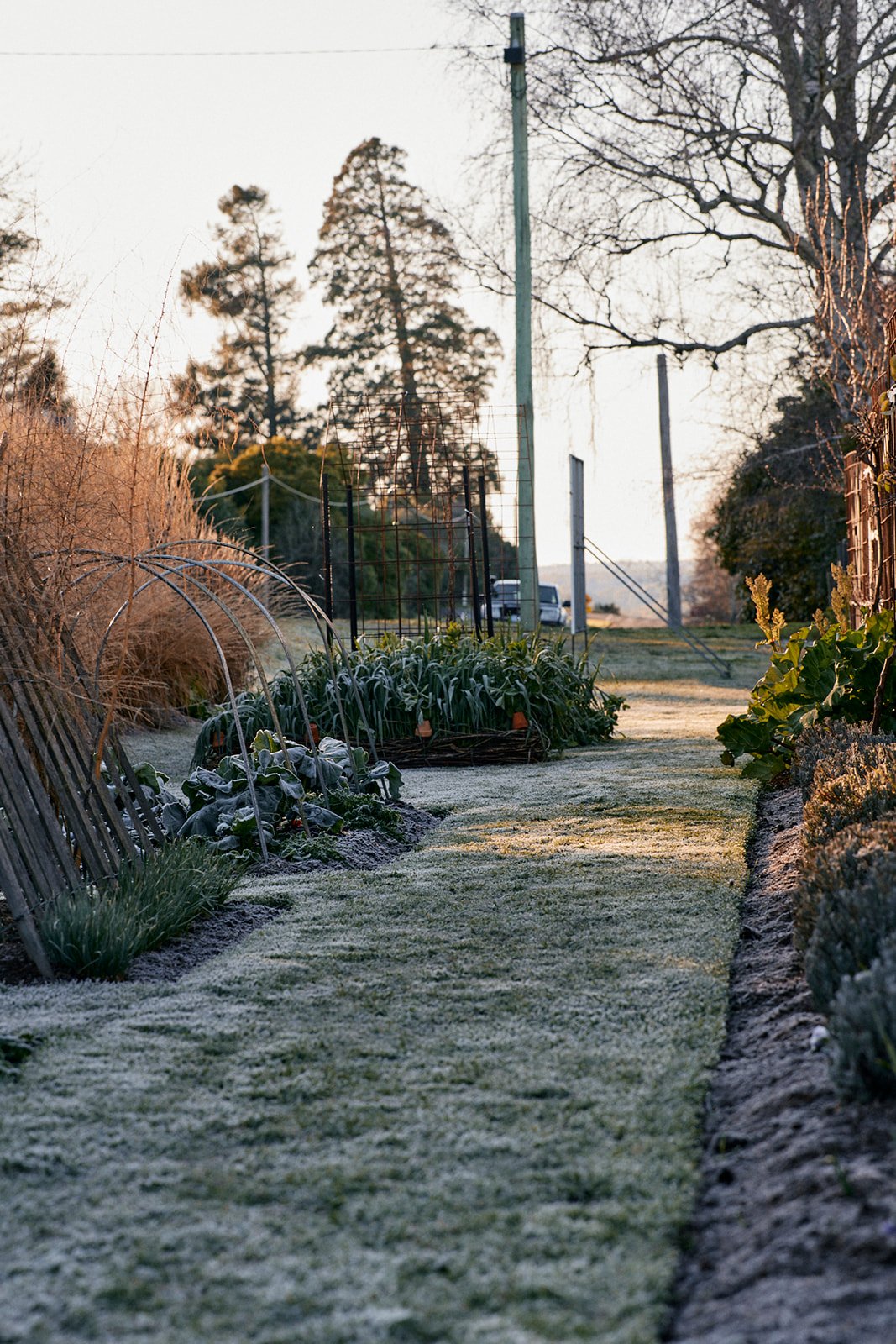
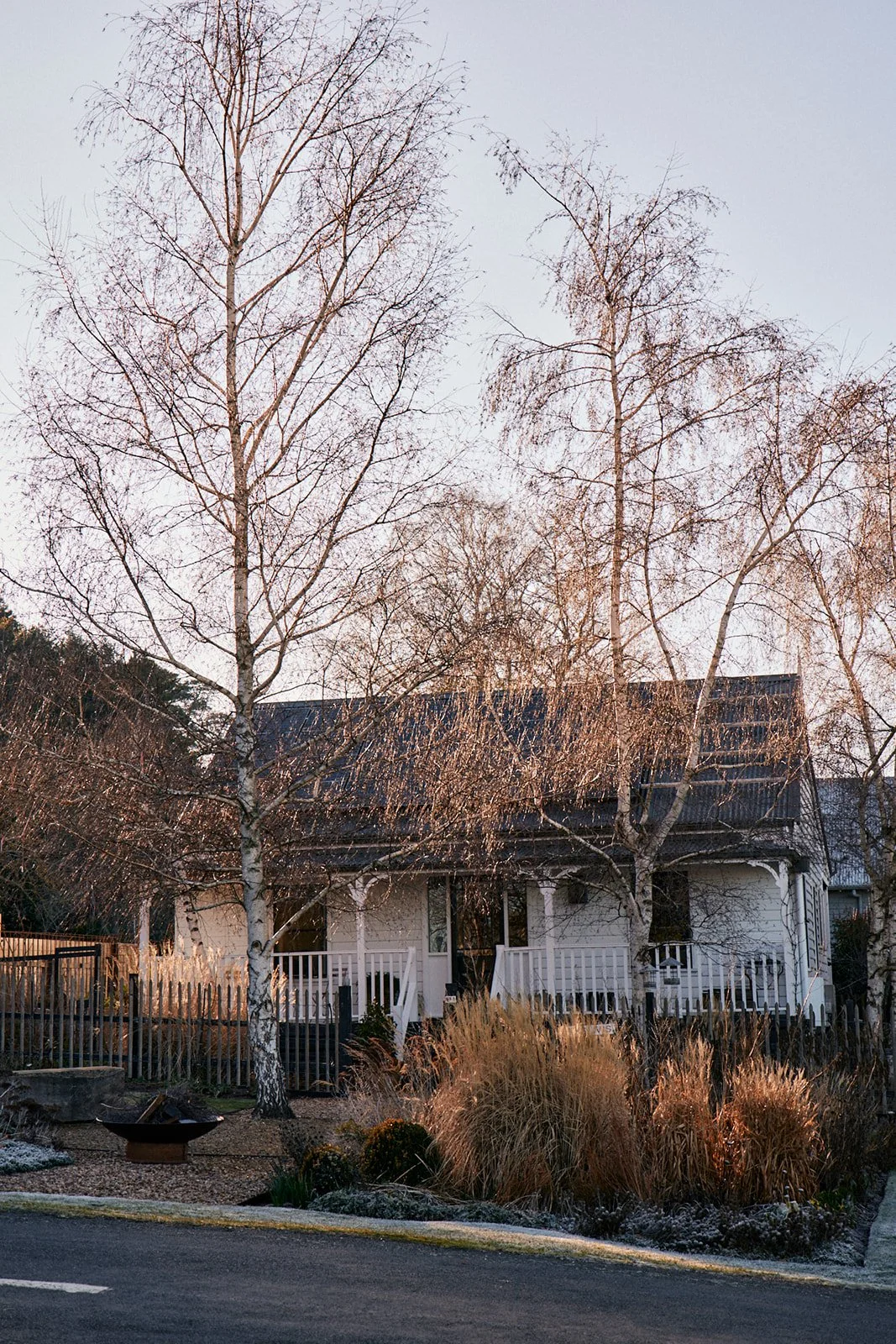

Winter Structure Masterclass — with Andrew O'Brien of Stonewalls and Natasha Morgan.
Sunday 12 July
10.30am–3pm
Little Cottage on a Hill, Daylesford & Stonewalls, Musk
Limited to 25 places
Continue your gardening journey with me
If you enjoy this kind of content, my workshops offer more detail and guidance on design, productivity and seasonal care.
If you are building your garden from home right now, my e-books on Wicking Bed Gardens, Introduction to Backyard Chicken Keeping and Compost for Beautiful Productive Gardens offer practical step by step guidance that pairs well with the workshops.
I share seasonal tips, behind the scenes at Little Cottage on a Hill, and new resources through my newsletter. Subscribe to receive my entire plant list from the garden as a personal thank you.
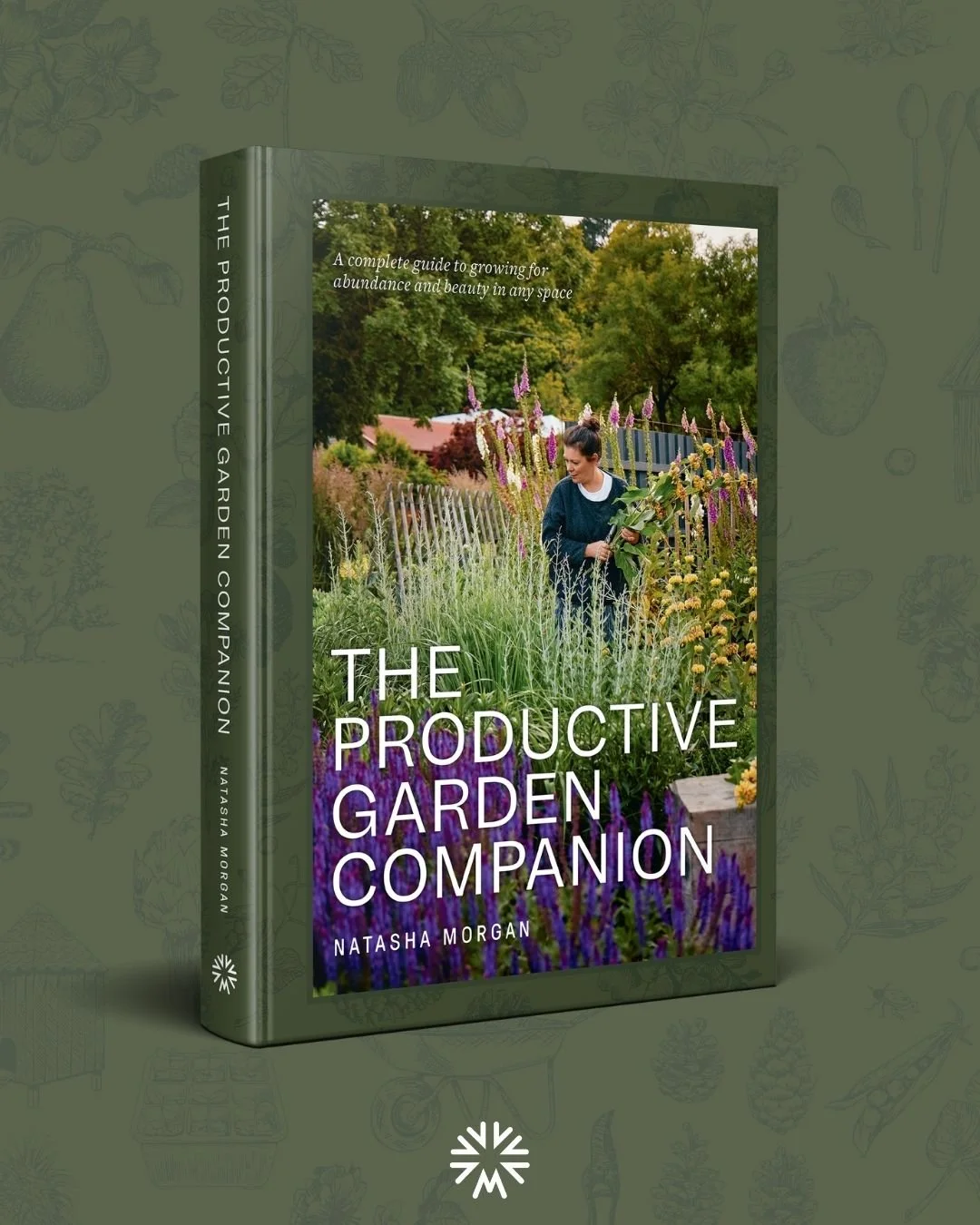
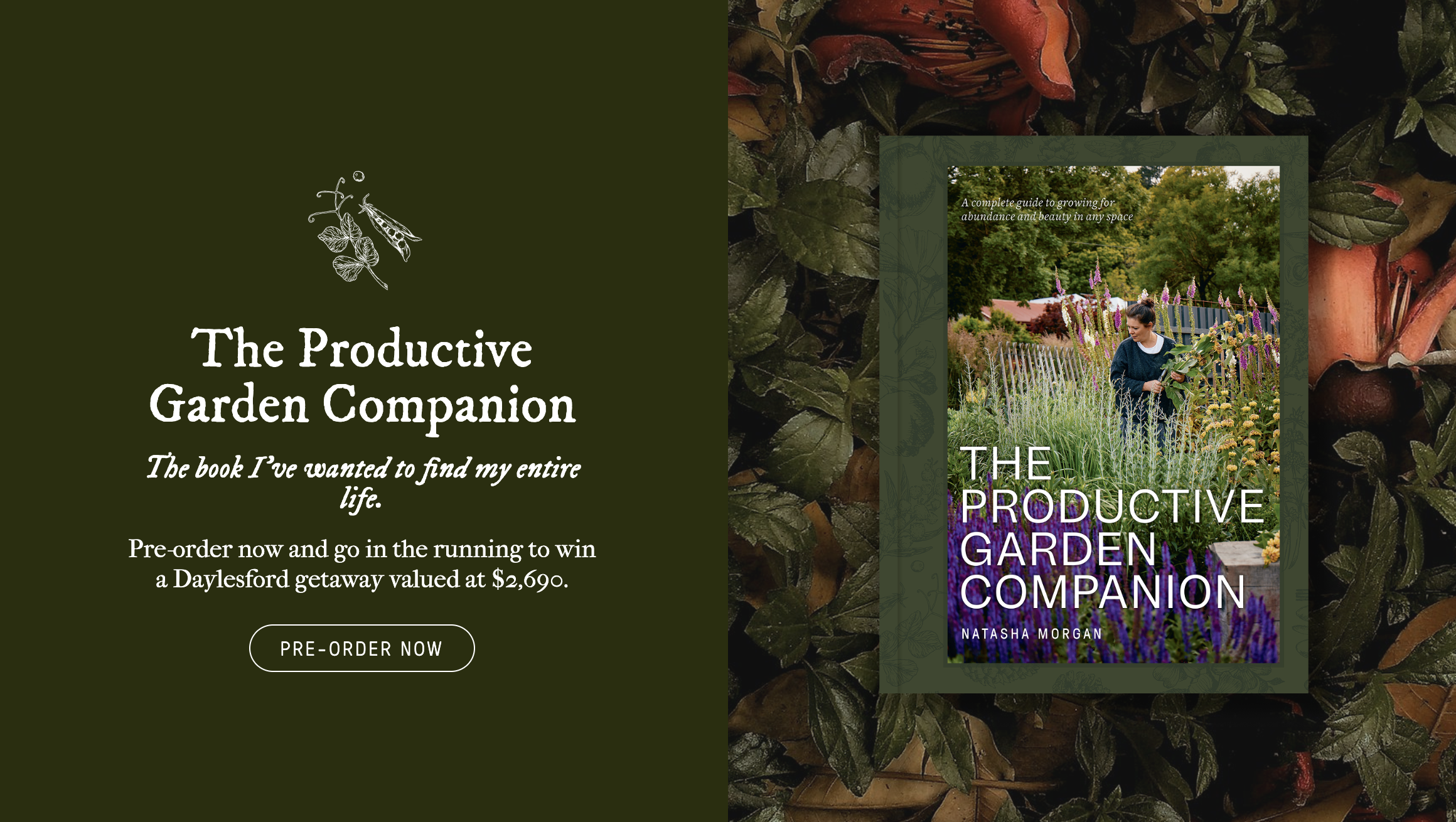
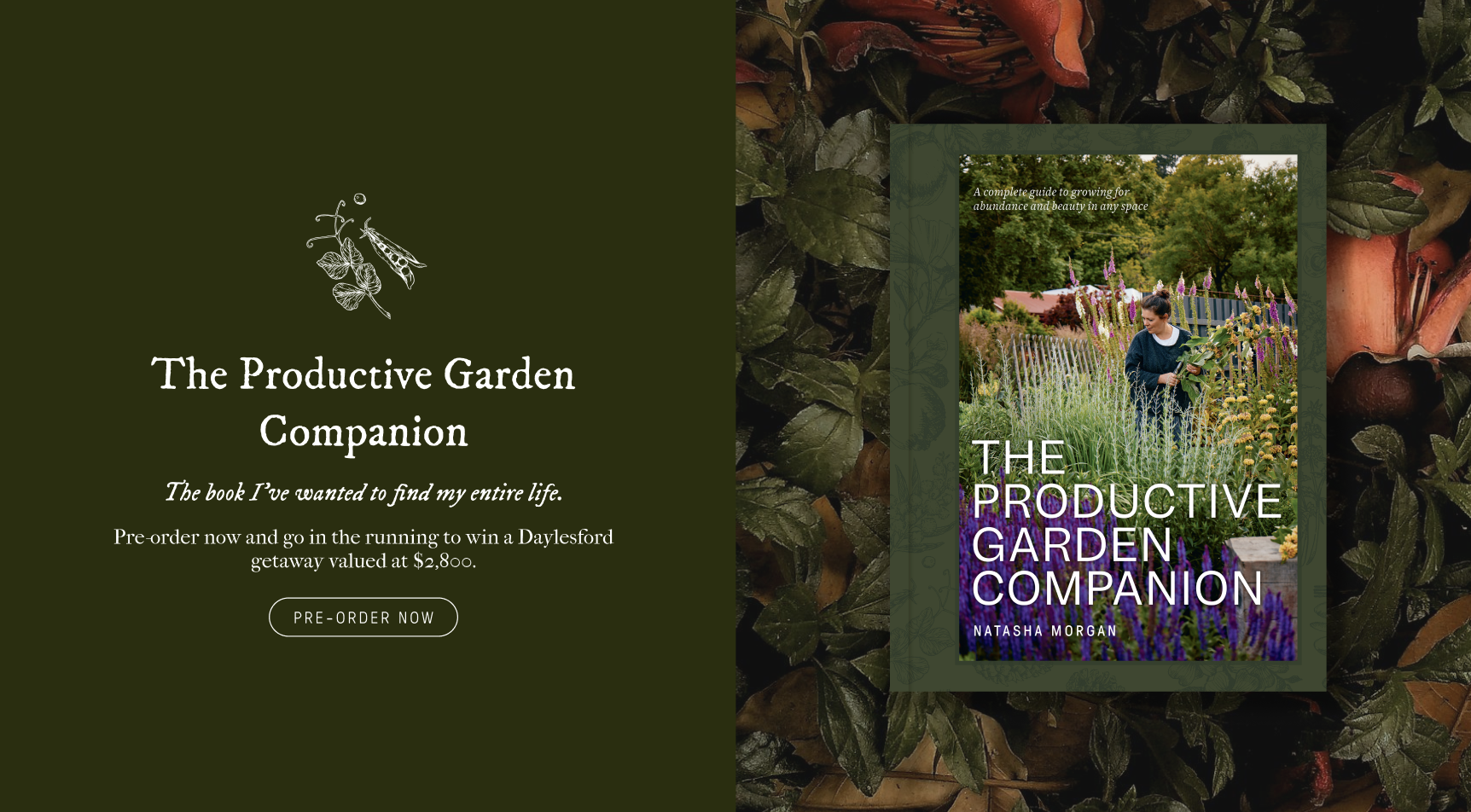
You can also pre-order my book The Productive Garden Companion, the book I have wanted to find my entire life. A complete guide to growing for abundance and beauty in any space. The Productive Garden Companion is a practical, reassuring and visually rich modern gardening book that meets gardeners wherever they are, from windowsill pots to generous acreage.
You may want to check out my related content below:
Looking Back - A Rare Glimpse Inside Oak and Monkey Puzzle
My top 5 plants - from Oak & Monkey Puzzle
Lessons in Abundance - Life at Little Cottage on a Hill
Stay connected for more seasonal inspiration:
Instagram | Facebook | Gardenstead | LinkedIn | Pinterest | YouTube | Website | Newsletter
Thanks so much for following along.
Natasha xx

Feijoas: the fruiting hedge that gives back
Feijoas: the fruiting hedge that gives back
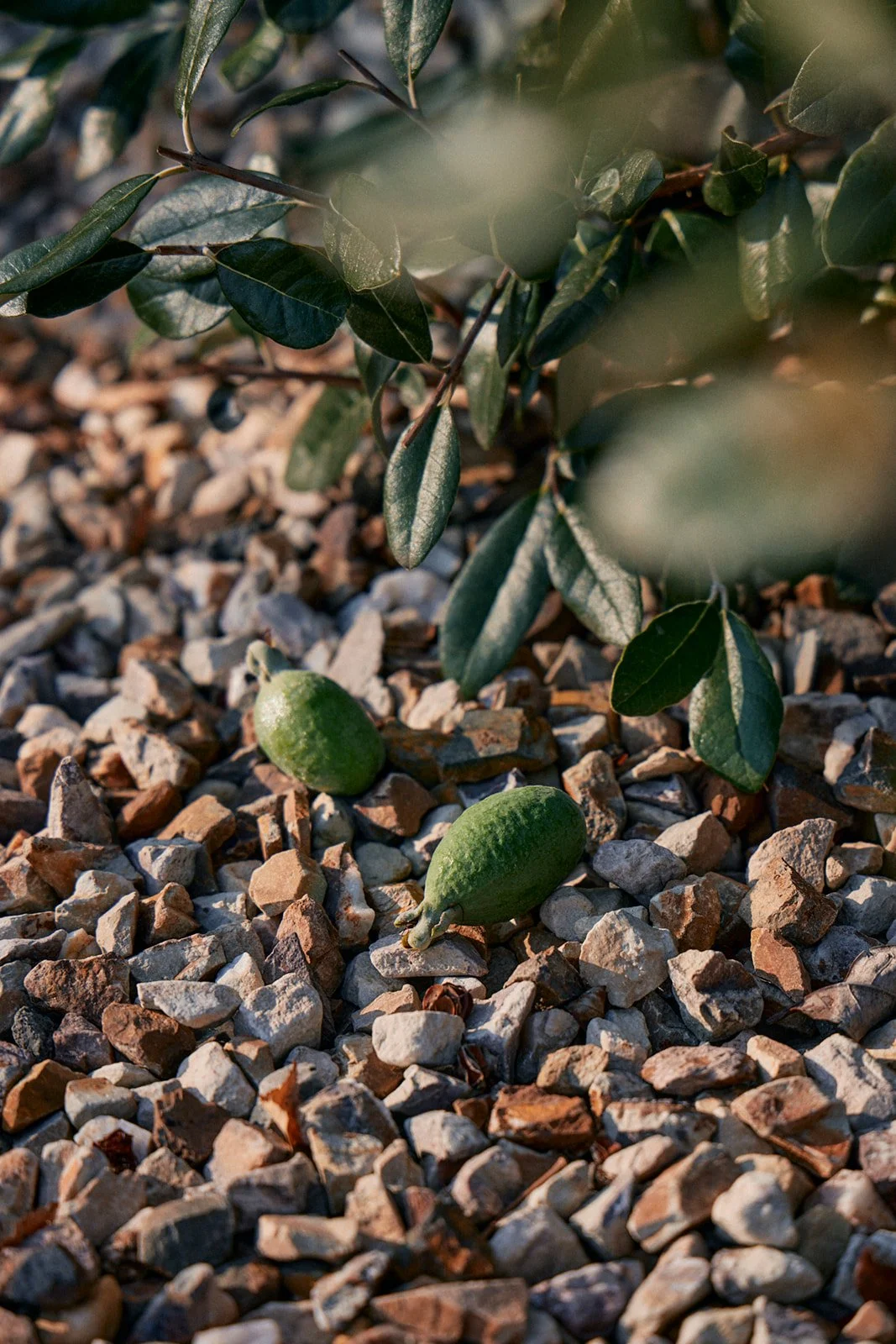
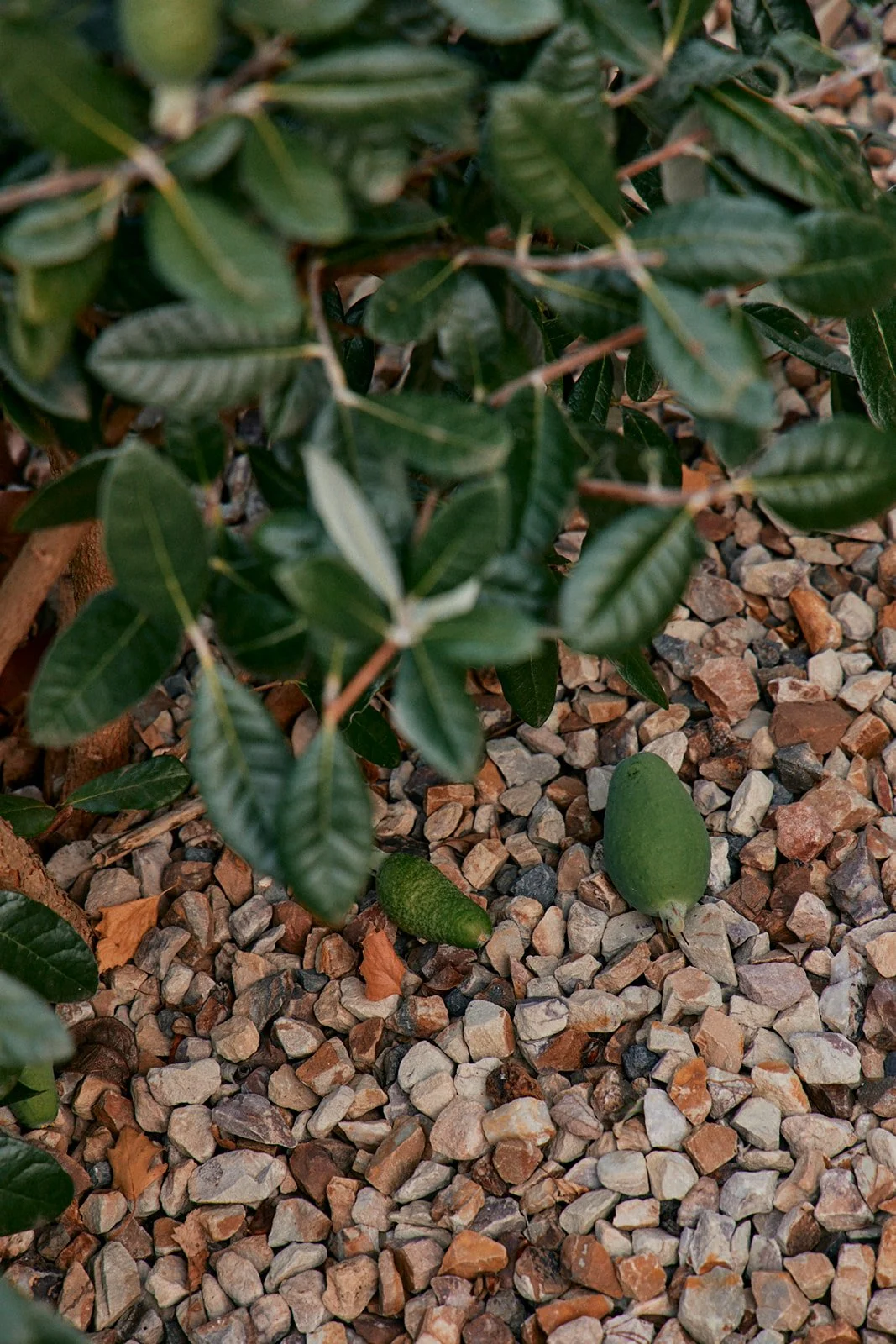
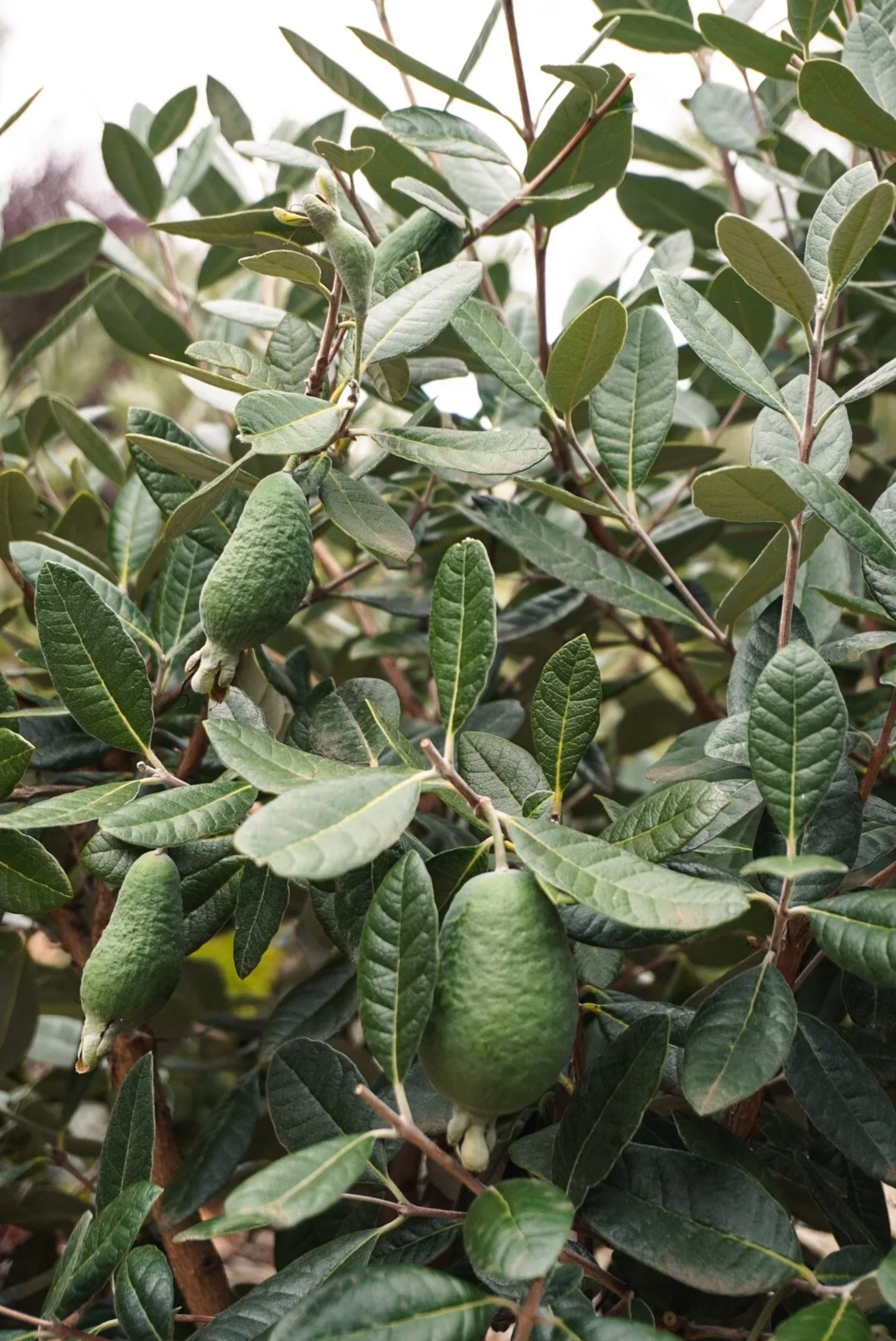
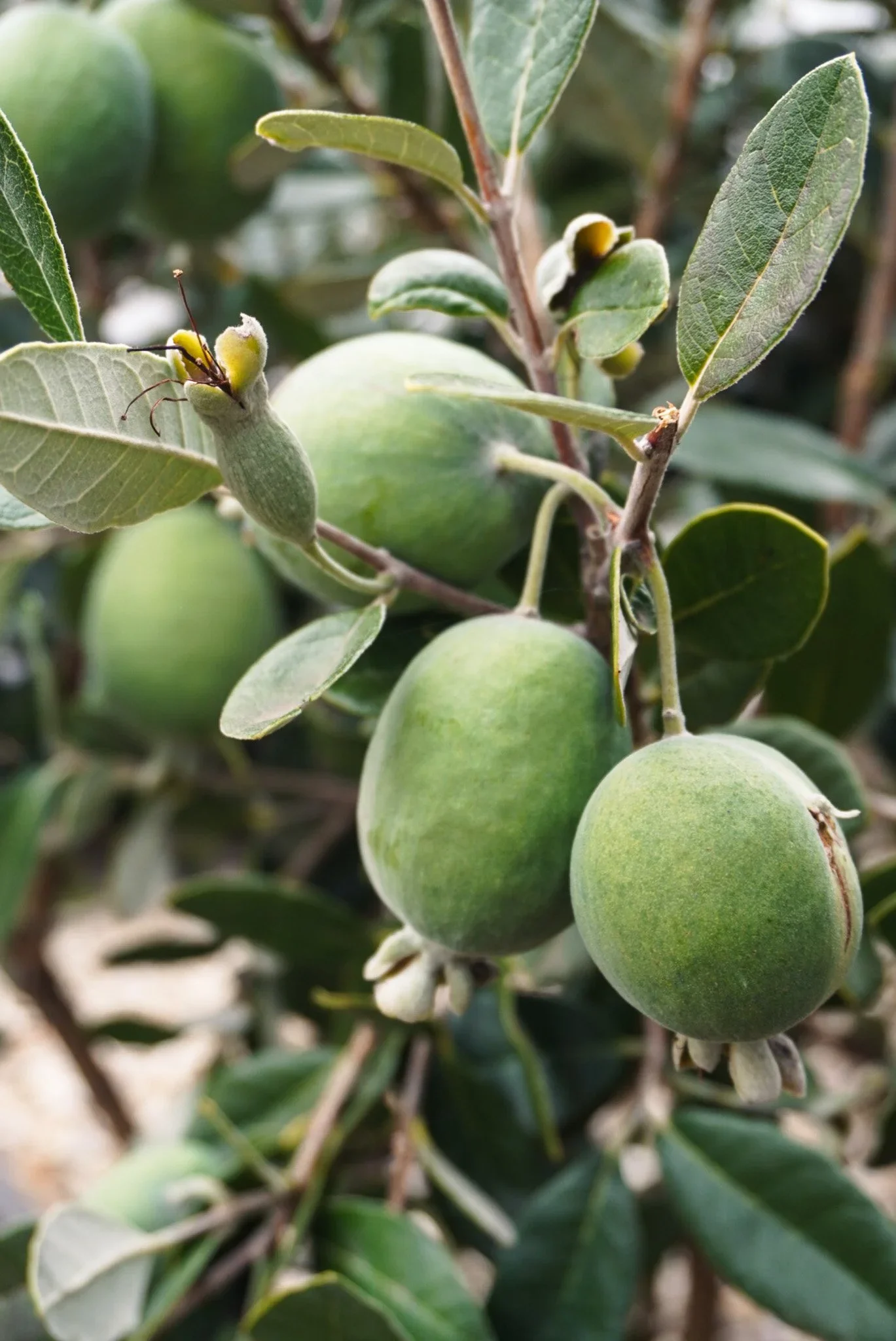
I smell them before I see them. I'll be walking the front of the garden on some errand that has nothing to do with fruit, and there it is — that perfume coming up off the gravel. Pineapple, guava, something floral underneath, a sherbet edge to it. I stop. I look down. And there, half-tucked under the foliage or sitting in the stones where they've fallen, are the feijoas. Plain green. Easy to miss entirely if your nose hadn't already told you they were there.
I still find it astonishing that a fruit so unremarkable to look at gives itself away by scent alone.
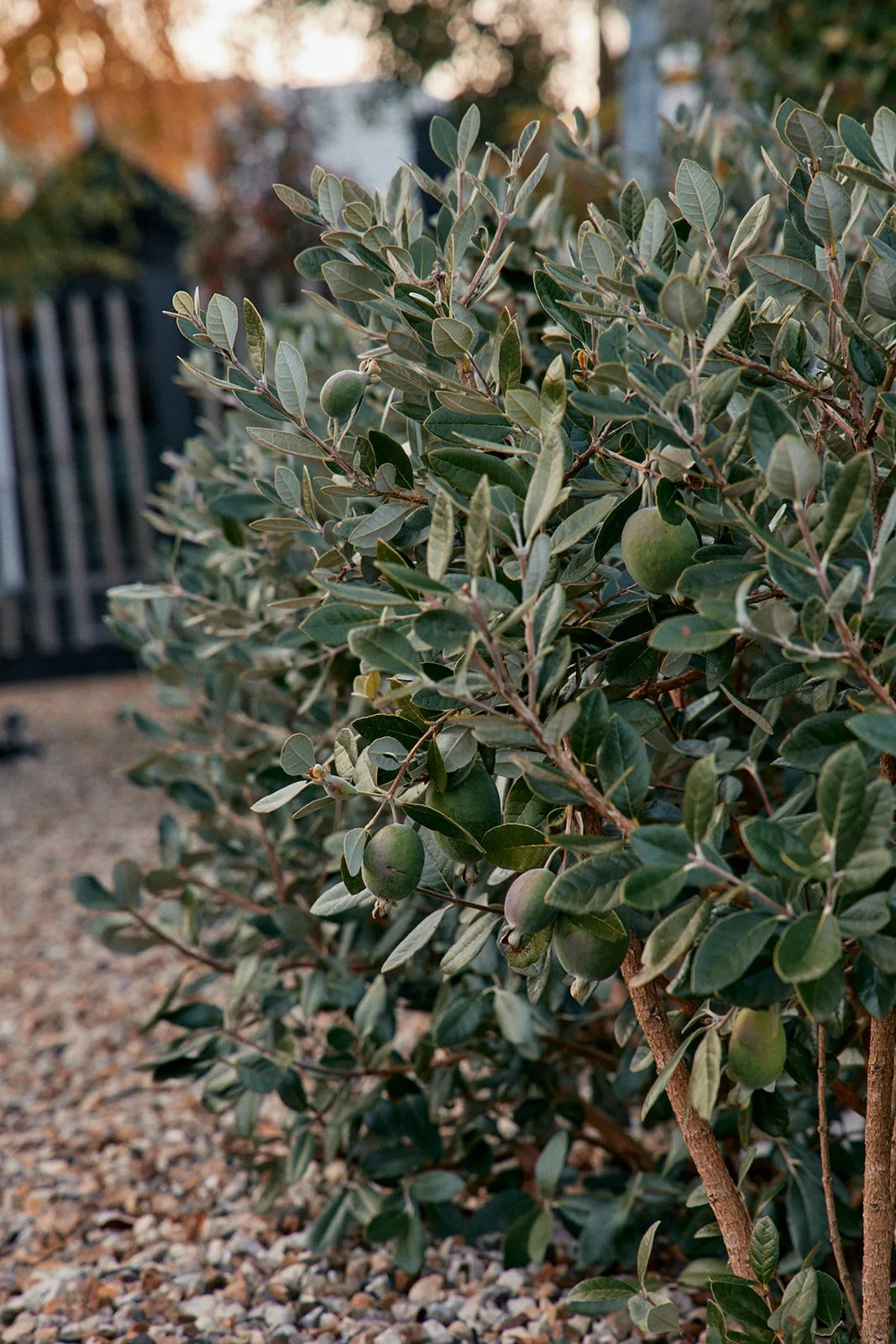
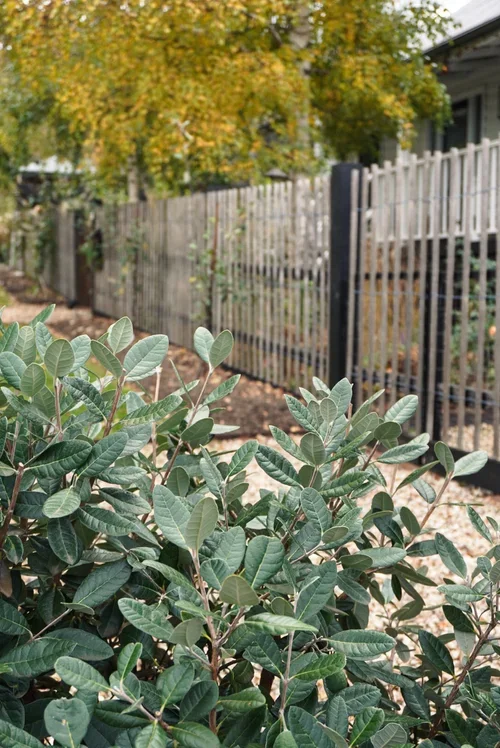
When I wrote about this hedge last year, the plants were barely a metre high and had only just begun to fruit. It was thrilling, and it was mostly promise. I'd put them in for fruit, yes, but also for structure, and for the privacy of a living screen that would, in time, soften the neighbouring rooftops that sit between me and the hills.
A year on, the rooftops are still there. Slightly less of them. The hedge hasn't reached its height — I didn't expect it to in a single year — and it hasn't yet done the screening job I planted it to do. But it has thickened and settled, and it has begun to behave like a part of the garden with something to do, rather than a row of new plants hoping to make it. And this year it has fruited properly.
That's where the satisfaction actually sits for me. Not in the finished picture — gardens rarely hand us that on our own timetable — but in the evidence that the thing is working. The roots have taken. The plants have read the place. A decision I made a couple of seasons ago has started to give something back.
Why a hedge, and why feijoas
At Little Cottage on a Hill, every plant has to earn its keep. That doesn't mean it has to be edible. It means it has to contribute. A plant might hold structure through winter, feed the bees, soften a fence, throw a little shade, carry scent, frame a view, or simply pull me out the back door in the morning. The ones I value most do several of those things at once.
Feijoas are exactly that kind of plant.
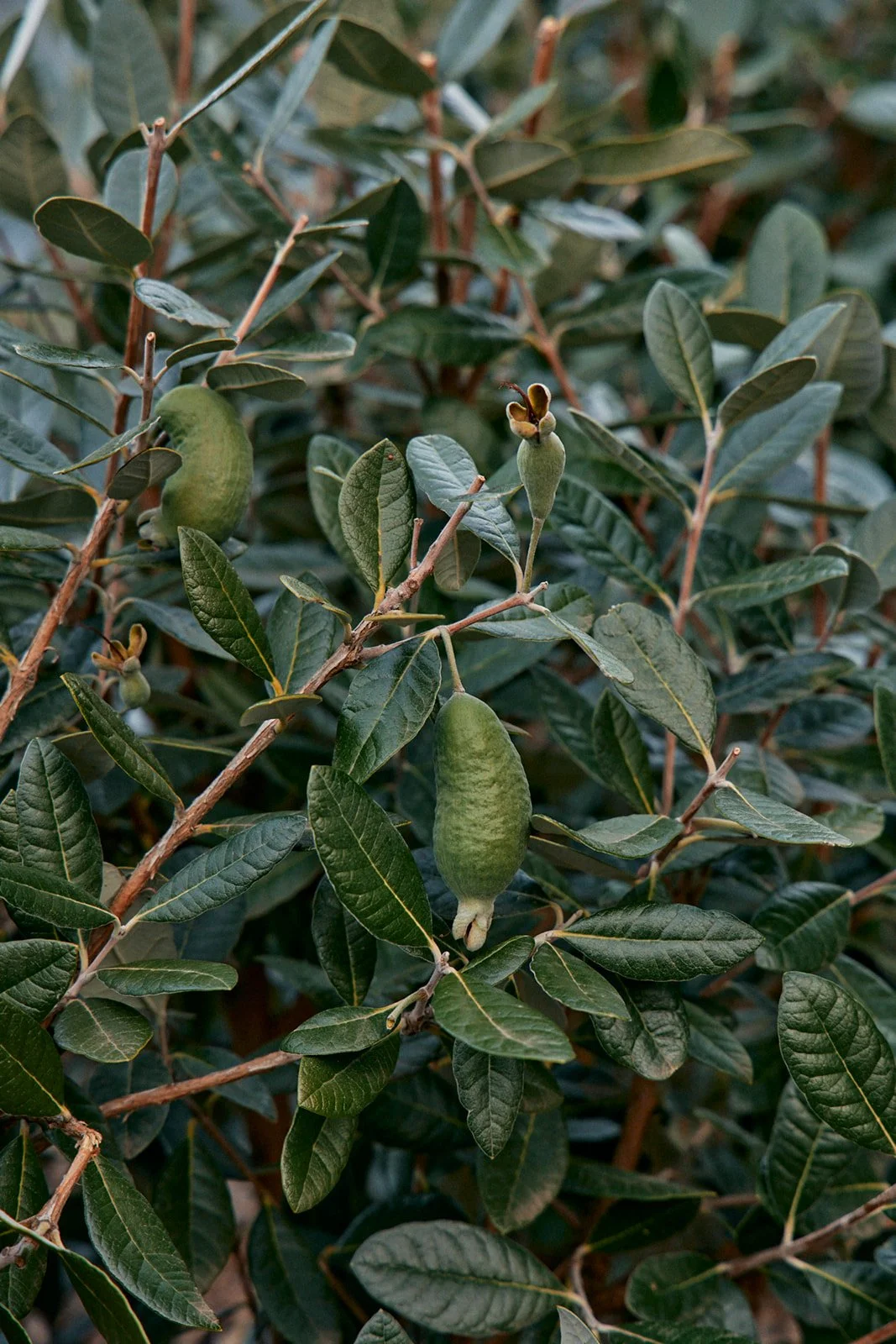
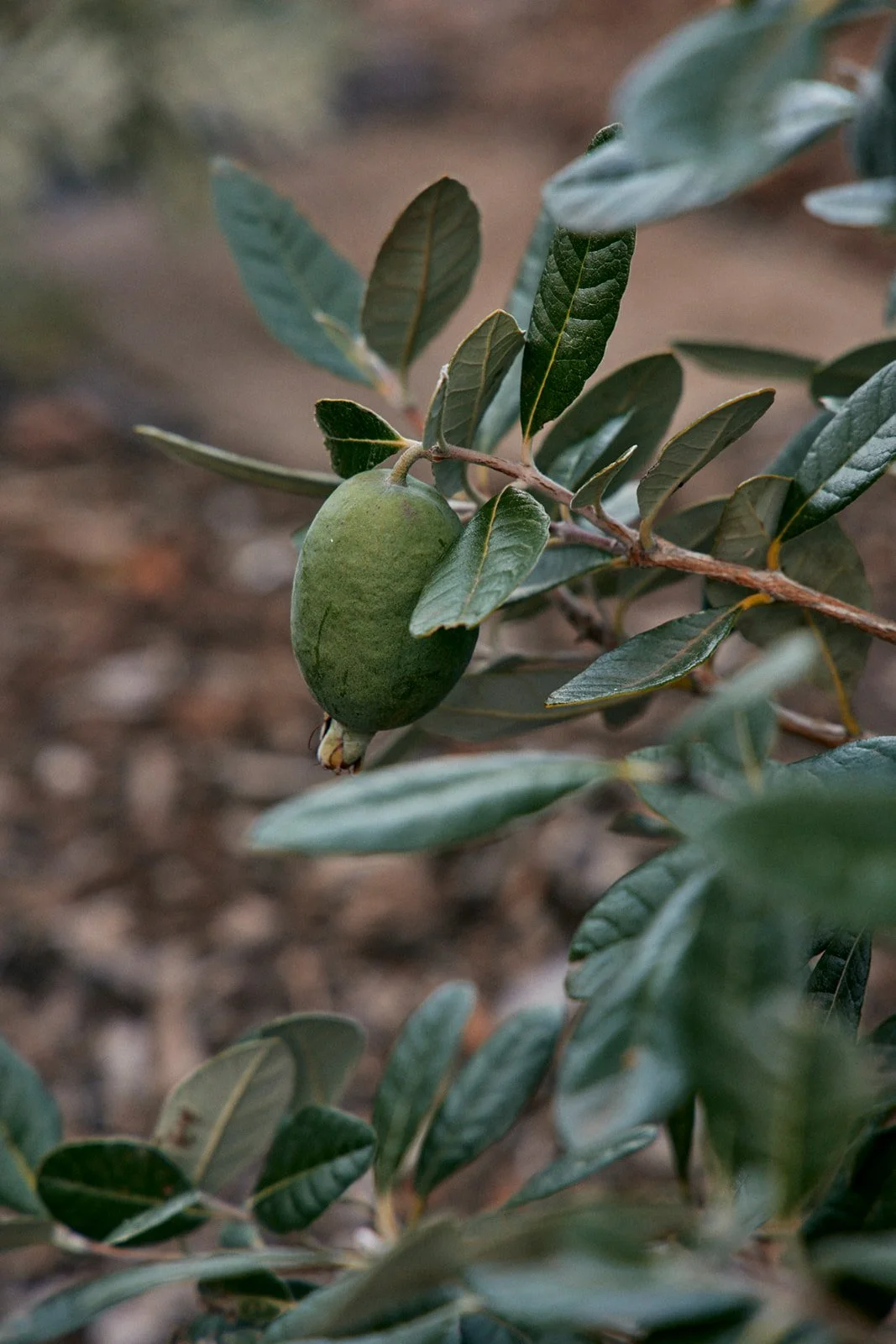
Pineapple guava, to use the other name — an evergreen shrub or small tree with thick, silver-green leaves, edible flowers, and that fragrant autumn fruit. You can grow a single specimen happily enough. For my block, a hedge made far more sense. I wanted a boundary that worked: something to hold the edge, screen the roofline over time, and still feed me. In a small garden I come back to this logic constantly. A hedge can also fruit. A windbreak can feed you. The plant that gives you privacy can also become part of what's happening in the kitchen.
They aren't flashy. They ask very little. For most of the year they sit in the background holding their shape, and then in spring the flowers come — fleshy, sweet-petalled — and at the cold end of autumn, when much of the productive garden is winding down, the fruit begins to drop.


A fruit for the edge of winter
The timing is a large part of why I love them.
In a cool-climate garden, by the time feijoas ripen the berries are long gone, the stone fruit finished, the apples and pears winding down. The garden is moving into its quieter rhythm. And then the feijoas start to fall. They stretch the productive season out at exactly the point it can begin to feel as though the garden is closing in for the year. There's still fruit to gather. Still scent in the kitchen. Still something to scoop straight from the skin, or stew, or put away for later.
That last generous offering, right before the deeper work of winter begins, matters more than it might sound.
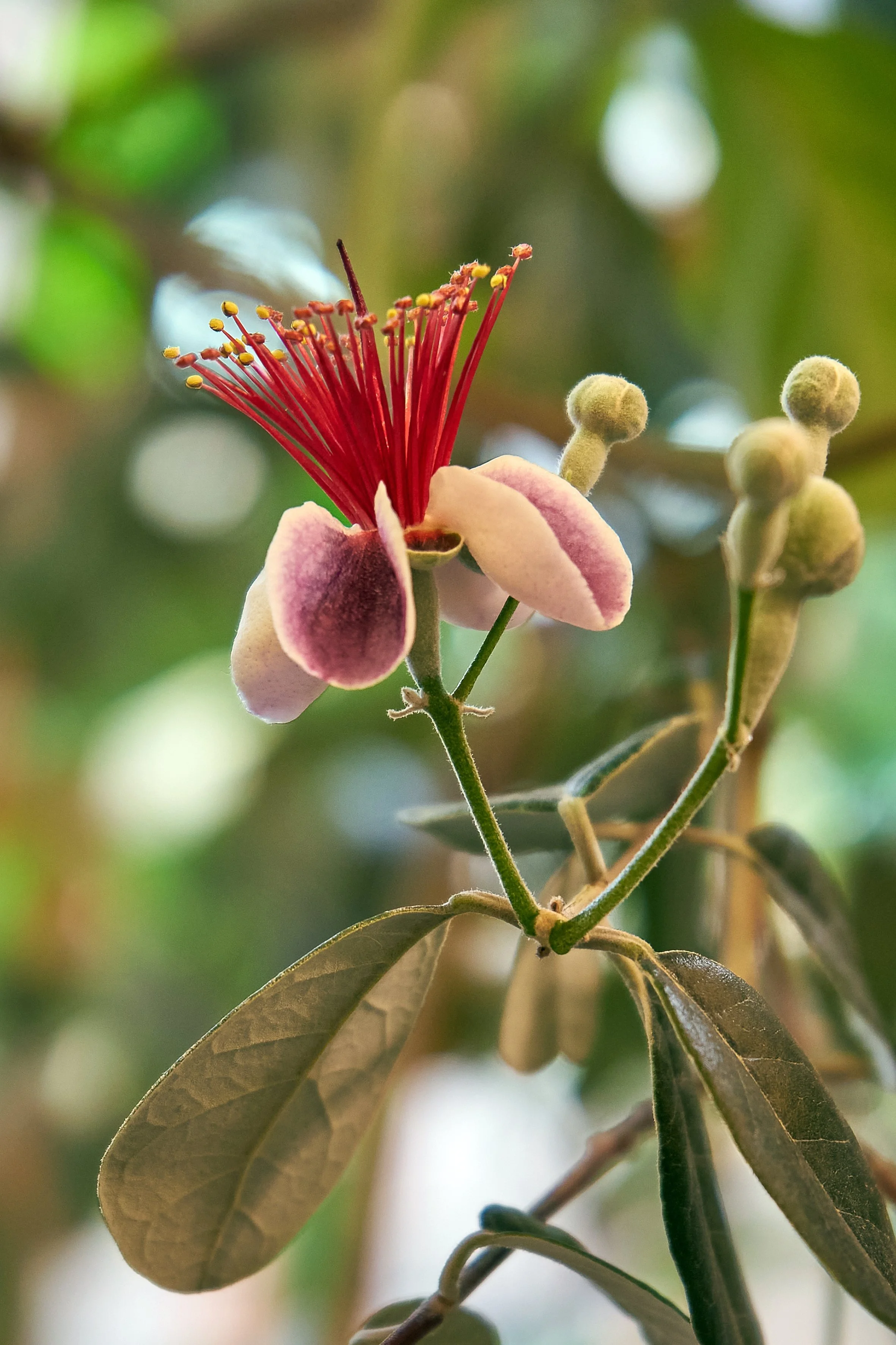
Feijoa blossoms.
A year on
This year the hedge has really started to give.
Not the way an old, established feijoa gives, where the fruit carpets the ground and you stand there wondering how you'll ever use it all. Mine is young. But against last year the shift is unmistakable — more fruit, more often, and more of those moments of bending down as I pass and coming up with a handful.
It still stops me. I think that's the part I love most about growing food at home — the way it punctuates a day. You're on your way to do something else, you glance down, and the garden has interrupted you. Gently. Asking you to notice.
The feijoas aren't doing everything I planted them for. The neighbours are still in view. The screen isn't there yet. But the fruit is the reminder that a garden doesn't have to be finished before it starts to give. We plant for a future we can't quite see, and we're fed along the way.
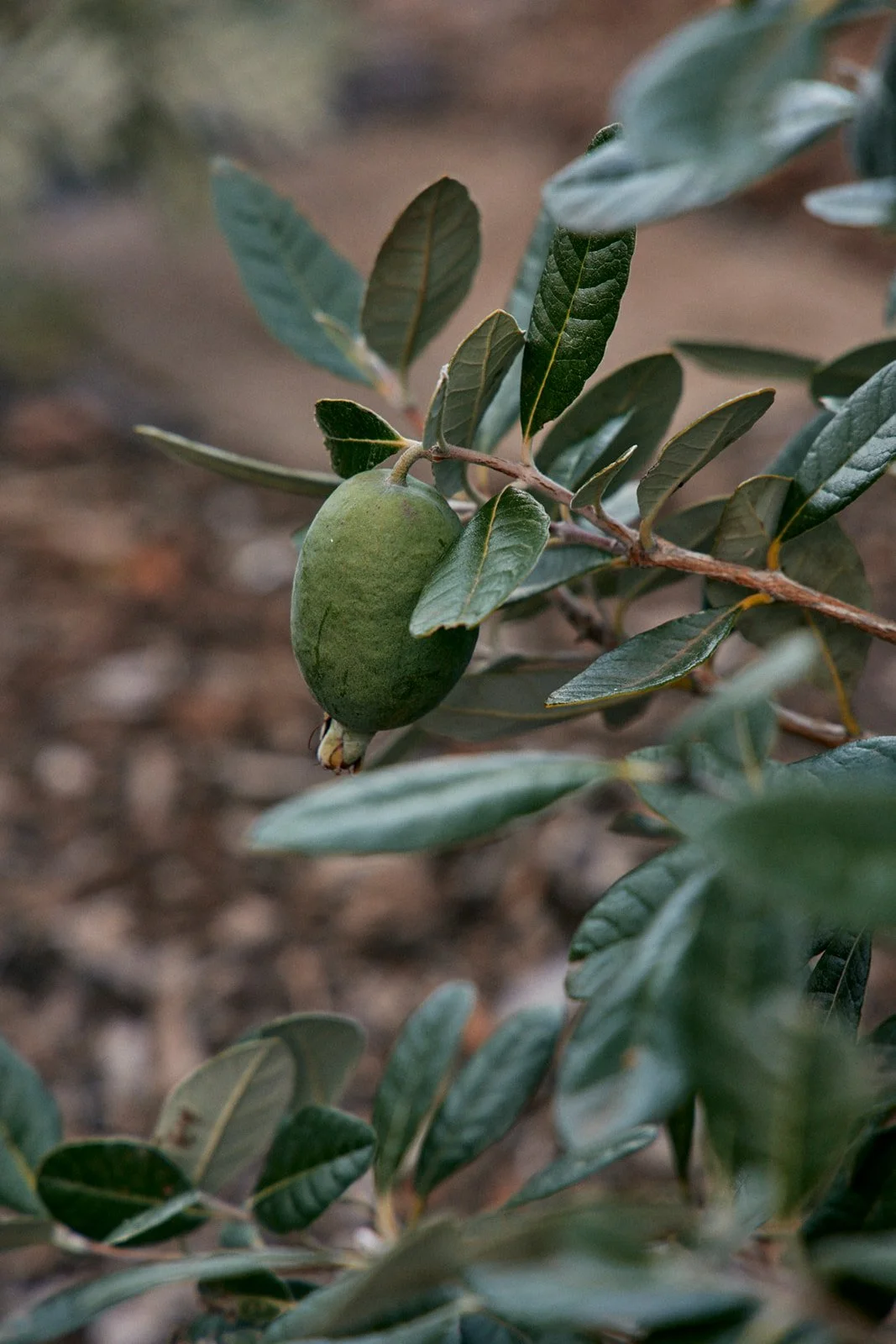
How to grow feijoas well
Feijoas get called easygoing, and they mostly are. Easygoing isn't the same as ignore-them-entirely, though. Like any fruiting plant, they reward thoughtful establishment, a bit of watching, and some seasonal care.
Plant more than one. Some varieties are self-fertile; many crop better with a partner for cross-pollination. In a home garden, more than one variety is the safer bet if it's fruit you're after rather than foliage. I planted mine as a row, which gives me the hedge and improves pollination at once. One plant can be useful. A repeated line of them becomes structure.
Give them light. Feijoas will tolerate some part shade, but they want sun, and for fruit I'd give them all the light the site allows. They want drainage too. They're tough, but they don't want wet feet. In heavier ground I plant them slightly proud of the surface and work in compost; on dry or exposed sites, mulch well and keep the water up while they establish. At Little Cottage the hedge sits where it can be both useful and seen — I don't like hiding the productive parts of a garden away.
Plant at the right time. For much of Australia, March to May is the window. Autumn planting lets the roots settle before the spring push, while there's still some warmth in the soil. In genuinely cold or frost-prone pockets I'd be more careful — young plants may want protection through their first winter, or you might wait for the soil to warm again in spring. Read your own site before anything else.
Water while they settle in. Established, they're resilient. Young, they still need you — deep watering through dry spells, especially as the fruit forms. I don't drown them and I don't forget them, and in a hedge that's worth saying twice, because closely planted shrubs end up competing with one another. A good mulch layer does an enormous amount of the work.
Prune with restraint. The temptation with a hedge is to shear it into a wall, but hard pruning costs you flowers and fruit, so I keep a light hand. I want density without stiffness — thickening and screening, but with light and movement still coming through. After fruiting I take out anything dead, crossing or awkward, and lightly shape where it's needed. In a cold area I'd hold off until the worst frosts have passed.
Let the fruit fall. This is one of the loveliest things about them. You don't tug, you don't guess. When they're ripe, they drop — that's the cue. I collect off the ground daily once they start. A ripe one has the strong perfume and a slight give: not squashy, just yielding. They bruise easily and they don't keep, so this isn't fruit to leave sitting in a bowl for a week.
Taste the flowers — gently. The petals are edible, sweet and soft, with that sherbet quality that's hard to resist while you're still waiting on the fruit. But no flowers, no fruit. So I taste a few and leave the rest to the bees. That's the constant negotiation in a productive garden: take what's offered, but not in a way that stops the next offering.
Making the most of the harvest
I still love them fresh — halved, scooped with a teaspoon, standing in the kitchen or out in the garden.
But roasting them changed how I think about the fruit entirely. The first time I had roasted feijoa was in a galette from Two Fold Bakehouse here in Daylesford, paired with apple and folded into sourdough pastry. Something shifted. The sharp, perfumed thing I knew turned soft and deep and almost spiced. I've been far more interested in cooking them ever since.
They stew beautifully, spooned over porridge or yoghurt or cake. They go into crumbles with apple. They make good jam, especially with ginger or fig or lemon. And they take well to preserving — bottled, fermented, folded into syrups and shrubs, where that floral perfume can be carried well past the short window it's actually here.
Because that's the thing with feijoas. The season is generous and brief. Once they begin to fall you have to keep up. Some get eaten where I stand, some go over the fence to neighbours, some sit scenting the kitchen for a day. But when the fruit really arrives, preserving stops being a romantic idea and becomes a practical rhythm — a way of carrying a short season forward into the cold months. A glut in May becoming syrup in July. That's the right kind of abundance, to my mind.
Would I do it again
Without hesitation. I'd probably plant more.
Every feijoa I find on the gravel reminds me why they went in: for the fruit, but also for the shape the garden is still growing into, for the privacy I'm waiting on, for the way a small block can hold so much more than seems possible when every plant is asked to pull its weight. One day I hope the hedge meets the horizon and the rooftops vanish behind the silver-green. For now, I'll take the fruit.
And if you're thinking about your own front garden, a boundary, or a verge, the feijoa is a good example of one plant doing several jobs at once — screening, flowering, fruiting, feeding pollinators, softening a street edge, and stretching the season into the start of winter.
Not every verge will suit one, mind. Council guidelines, sightlines, services, the path, car doors, the mature height of the plant — all of it matters. But where there's room and your local rules allow, productive screening is a clever and generous way to make a public edge work harder.
That's exactly the kind of thinking I get into in my newest free ebook, Nature Strip Gardens: Fundamentals for Beautiful, Compliant Verges — a practical guide to reading your site, working with your council's guidelines, building better verge soil, choosing plants with care, and making a strip of ground that's beautiful, safe, useful and generous to the street.
Download it, share it, and start with the ground you already have.
Thanks so much for following along.
Natasha xx
Continue your gardening journey with me
If you enjoy this kind of content, my workshops offer more detail and guidance on design, productivity and seasonal care.
If you are building your garden from home right now, my e-books on Wicking Bed Gardens, Introduction to Backyard Chicken Keeping and Compost for Beautiful Productive Gardens offer practical step by step guidance that pairs well with the workshops
I share seasonal tips, behind the scenes at Little Cottage on a Hill, and new resources through my newsletter. Subscribe to receive my entire plant list from the garden as a personal thank you.
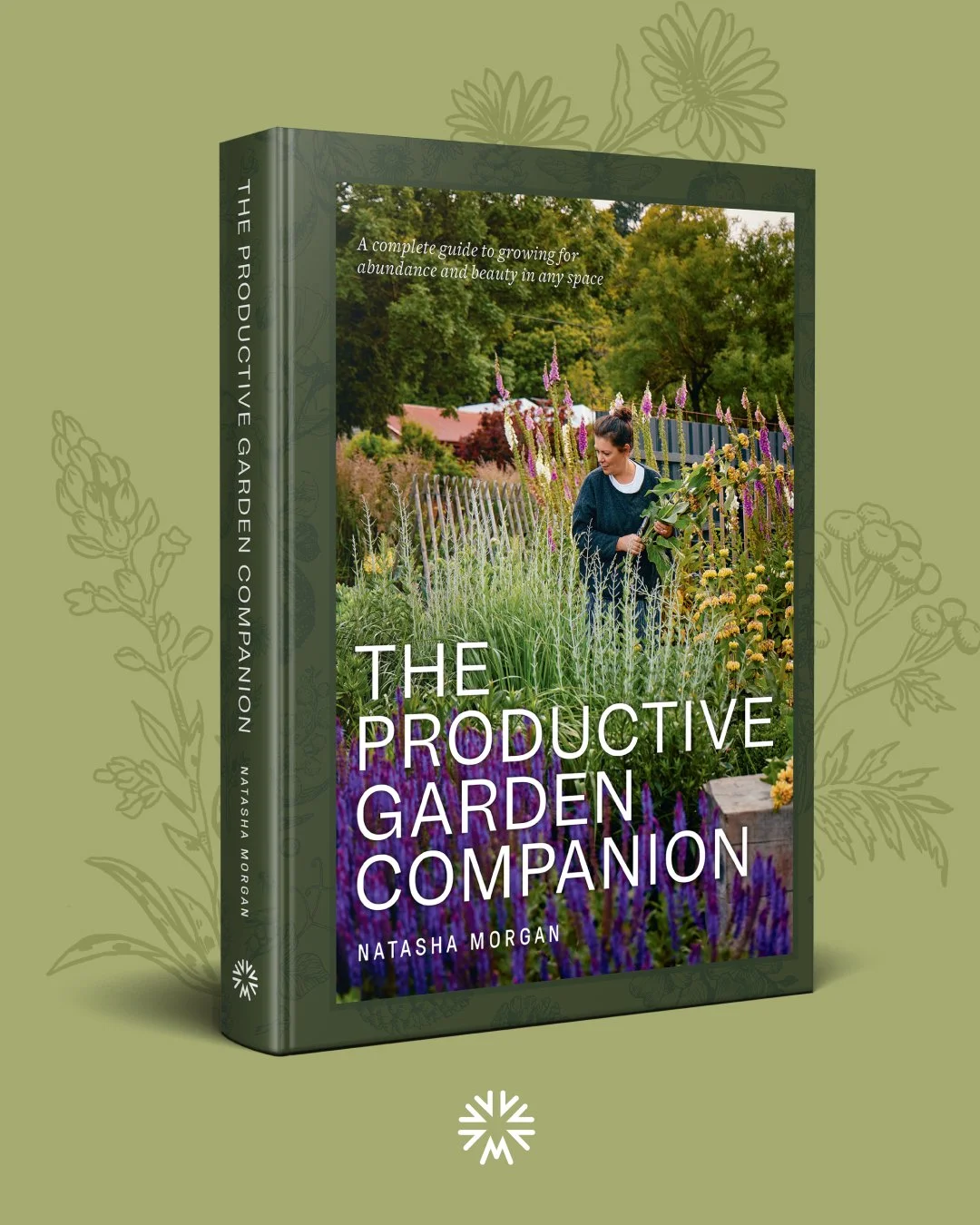
You can also pre-order my book The Productive Garden Companion, the book I have wanted to find my entire life. A complete guide to growing for abundance and beauty in any space. The Productive Garden Companion is a practical, reassuring and visually rich modern gardening book that meets gardeners wherever they are, from windowsill pots to generous acreage.
You may want to check out my related content below:
June Garden Tasks - For Australian Climates
Landscape Lingo - The ‘Chelsea Chop’ and Ways to Have Plants Look Their Best
No Dig Gardening - Less Work, Healthier Soil
Stay connected for more seasonal inspiration:
Instagram | Facebook | Gardenstead | LinkedIn | Pinterest | YouTube | Website | Newsletter
Thanks so much for following along.
Natasha xx
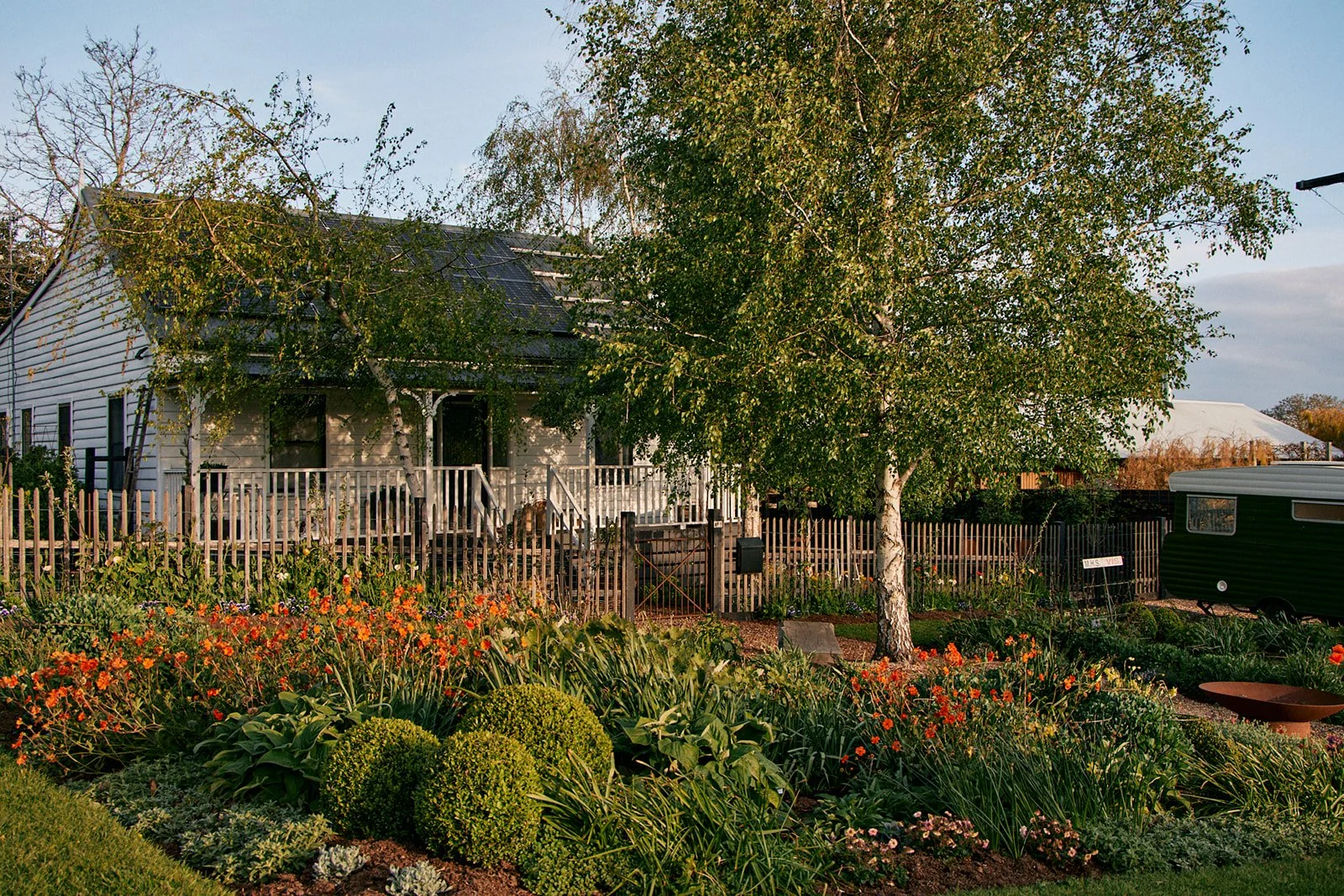
The western verge garden at Little Cottage on a hill.
Why I started with the verge
Why I started with the verge
On moving from five acres to 515 square metres, and learning that the most exposed strip of ground was the place to begin.
The removal truck had gone by lunchtime. I stood at the front of Little Cottage on a Hill — 515 square metres, after five acres — and the first piece of ground I wanted my hands in was the one I had the least real claim to. The verge. That strip of tired grass between the fence and the road, the part of a garden you'd assume you'd get to last, once everything behind the fence was sorted.
I didn't get to it last. I started there.
For nearly a decade, Oak & Monkey Puzzle in Spargo Creek had been my proof of everything — five acres where I could test an idea at full size and live it in its fullness too. Leaving it for a small town block in Daylesford felt, for a while, like an exercise in origami, folding something enormous into a tiny drawer. The question that kept me up wasn't whether I could garden here. It was whether the life I'd built out there on acreage — the seasonal rhythm, the room to be generous, the sense that a place could hold more than its own boundary — could survive the shrinking. Thrive in fact.
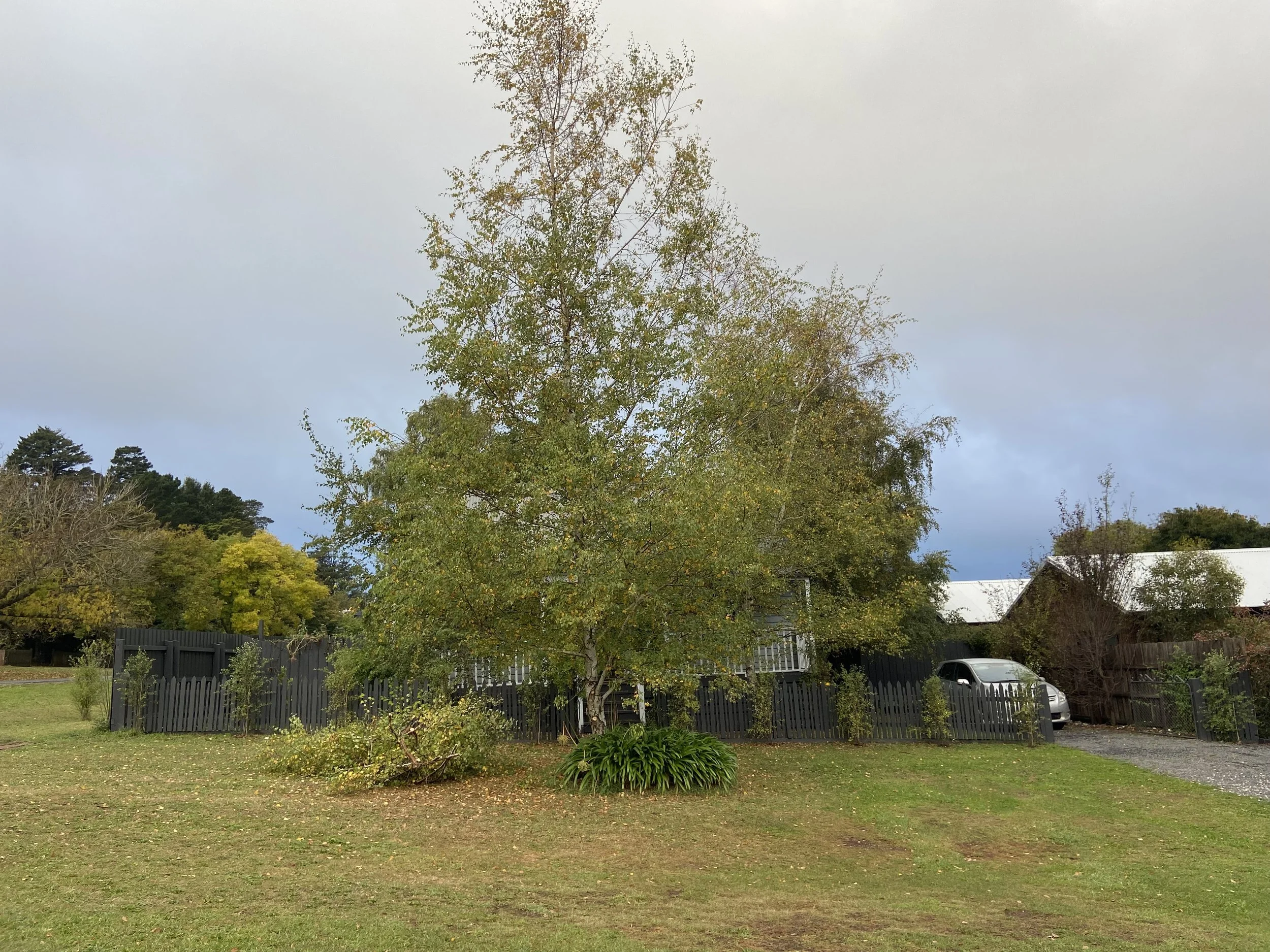
The western verge garden before.

The northern verge garden before.
The verge is where I found my answer. That might surprise you, because the verge is the often thought of as the hardest ground on a property. It's public land, really, not even half mine. It's the most visible part of the whole garden and the most bound by rules. In Hepburn Shire, where I am, the planting guidelines are firm: no raised beds, no solid edging, sightlines kept open at the crossing, clearances left around services and the path that might one day run through. On paper that reads like a list of things you can't do. I saw it as an opportunity.
I've spent a working life reading briefs like that. Years on public landscapes far larger than a front strip taught me that the constraint is usually what gives a design its grit. So I stopped reading the guidelines as a fence around what was possible and started reading them as the brief. The offsets, the height limits, the open ground left for a future path: those became the structure I designed within.
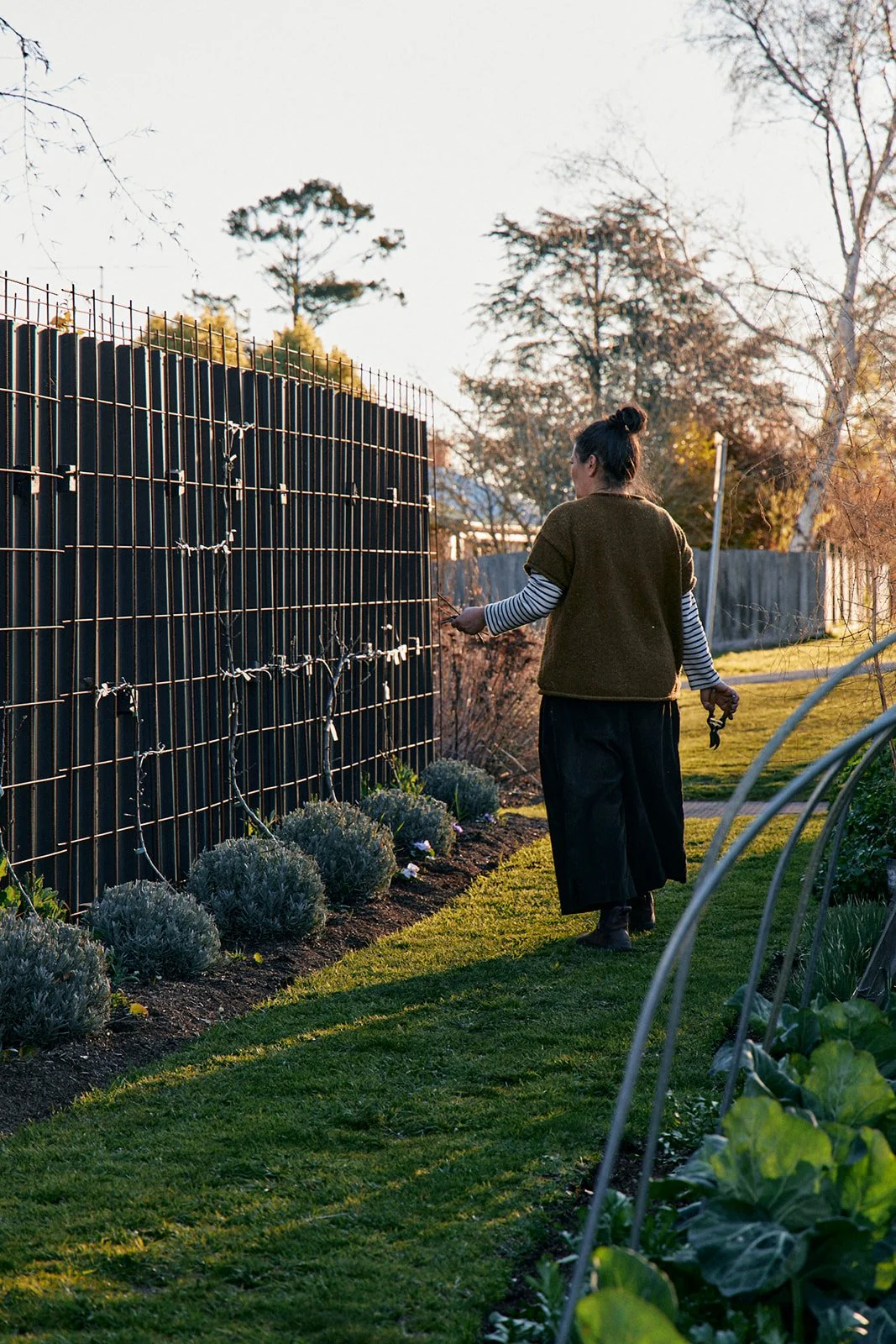
What came out of it was more considered than anything I'd made at Oak & Monkey Puzzle, and perhaps truer to the place. Beds cut with a clean spade edge instead of timber. Planting kept low and open near the corner so a driver and a child can see each other. A deliberate gap of bare ground where a path may one day go — negative space, left on purpose, doing as much work as anything planted. The strip softened the long northern fence without becoming a wall. It taught me that I hadn't lost the five acres. I'd distilled them.
That is the real thing the verge gave me, and it's why I keep returning to it. A garden doesn't matter because of its size. It matters because of whether it gives more than it takes. A 515-square-metre block can do that. So can a single bed. So, it turns out, can a strip of council grass.
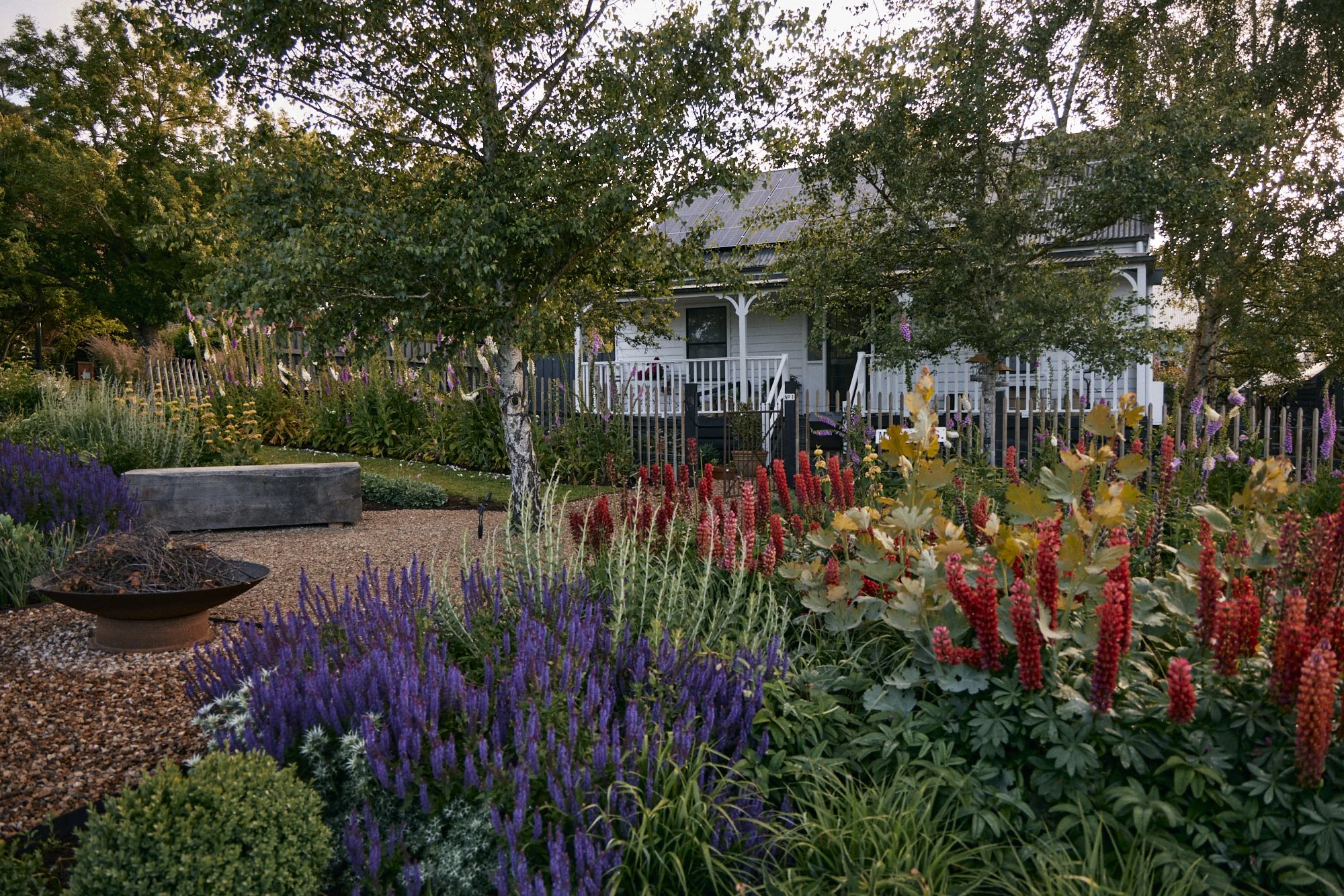
The western verge garden at Little Cottage on a hill in full bloom.
There's a line I come back to: grow one thing, and share it. One herb, one flower, one crop you have in small abundance. If each of us did that and let the overflow go over the fence, we'd build a kind of resilience into our streets that none of us could manage alone. The verge is the most honest place to practise it, because it's the part of your garden the street can see. When it's tended, people notice. When something's growing there you're happy to give away, they stop and ask. Daylesford has taught me that community rarely arrives through the front door — it comes through side doors and in-between spaces. A note left on a doorstep that says for you. Strawberry runners that Lizzie at the café pressed on me one season, still fruiting. Generosity, I've found, is the currency that has never once left me feeling broke.
All of which brings me to this little ebook, and to Donna Livermore.
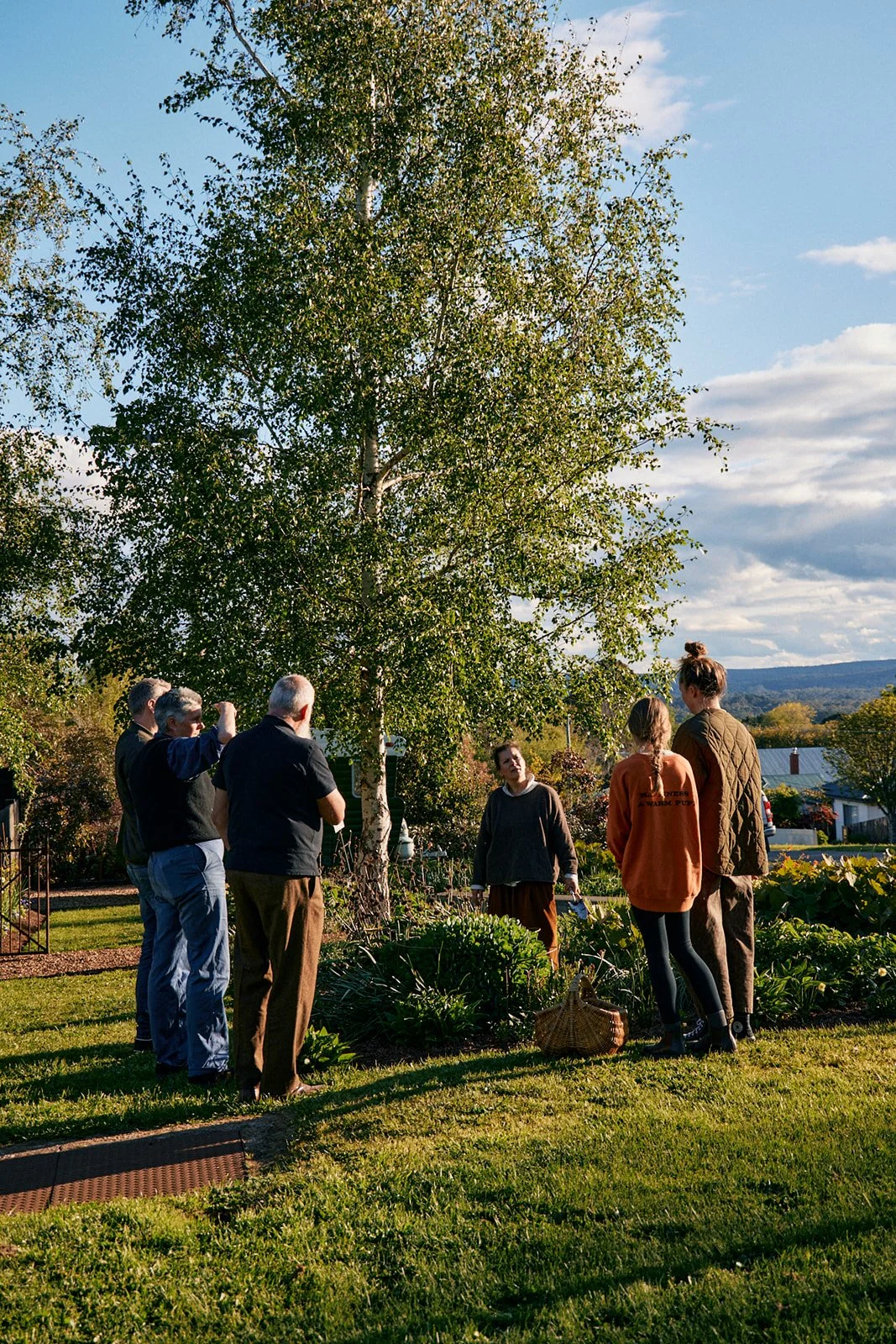
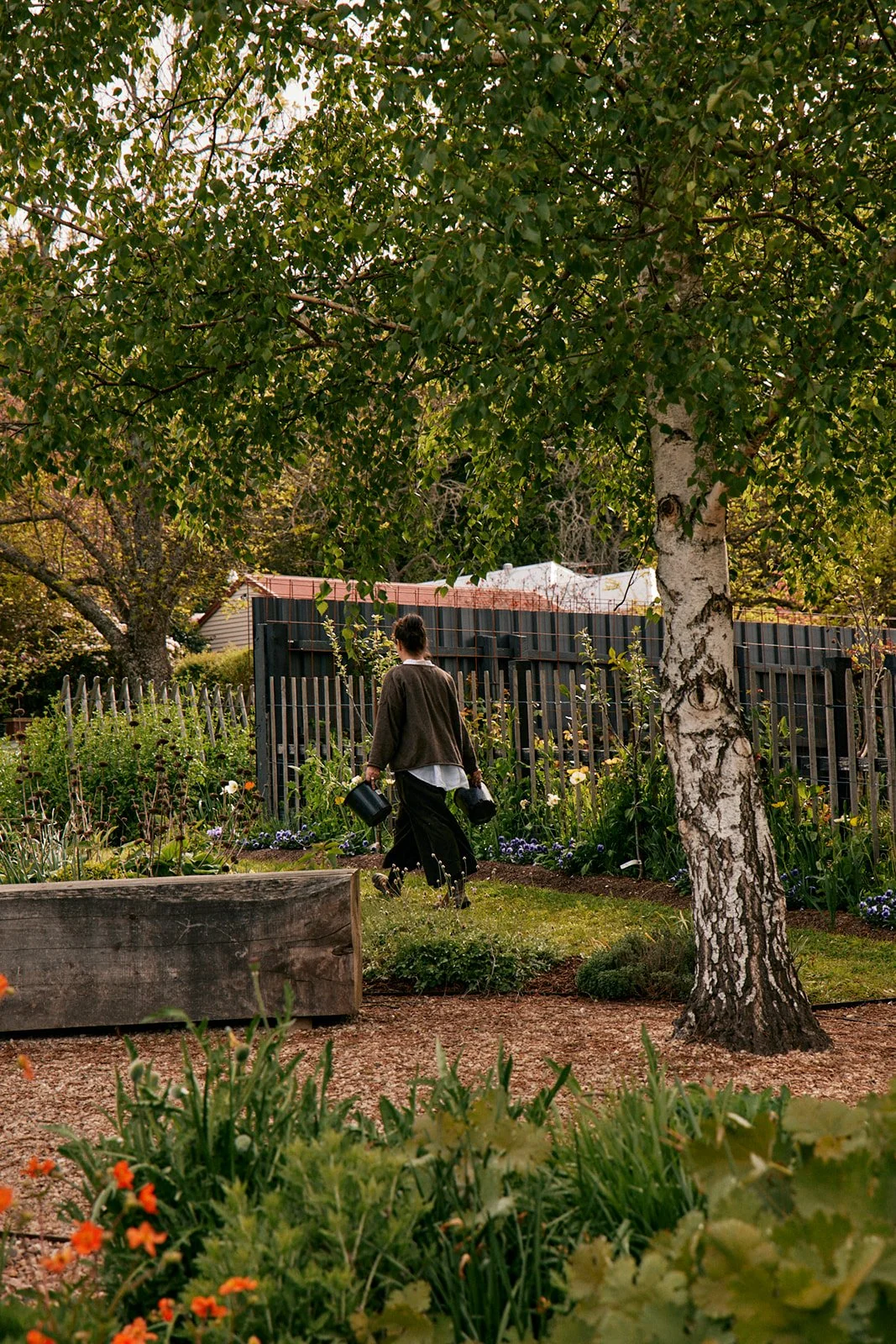
Nature Strip Gardens ebook came out of the first local verge workshop Donna and I ran together — an afternoon of people standing on Little Cottage on a Hill’s western and northern verge gardens, sharing what our council actually allows and considering what they might want for their own patch and how to bring it to fruition. It's a concise, practical fundamentals guide: how to read your site, how to apply the rules as a brief wherever you live, how to build tired verge soil over time, what to plant where people walk and where car doors open. Enough to get you started on a metre or two, then return to as the season turns.
We're giving this ebook away for free, and I want to be plain about why.
The work that pays — my book, my workshops, my partnerships and collaborations — is what makes the giving possible. When someone buys The Productive Garden Companion or books into a workshop, some of what they pay goes straight back out: into the free ebook, the verge working bees, and an ecosystem of resources that are available at no price, just like this blog! That's the model I'm building for myself, deliberately — a practice where the paid work holds up the generous work, so I get to live by what I value deeply — sharing skills, empowering action, creating a world where we can give more than we take one small patch of soil at a time.
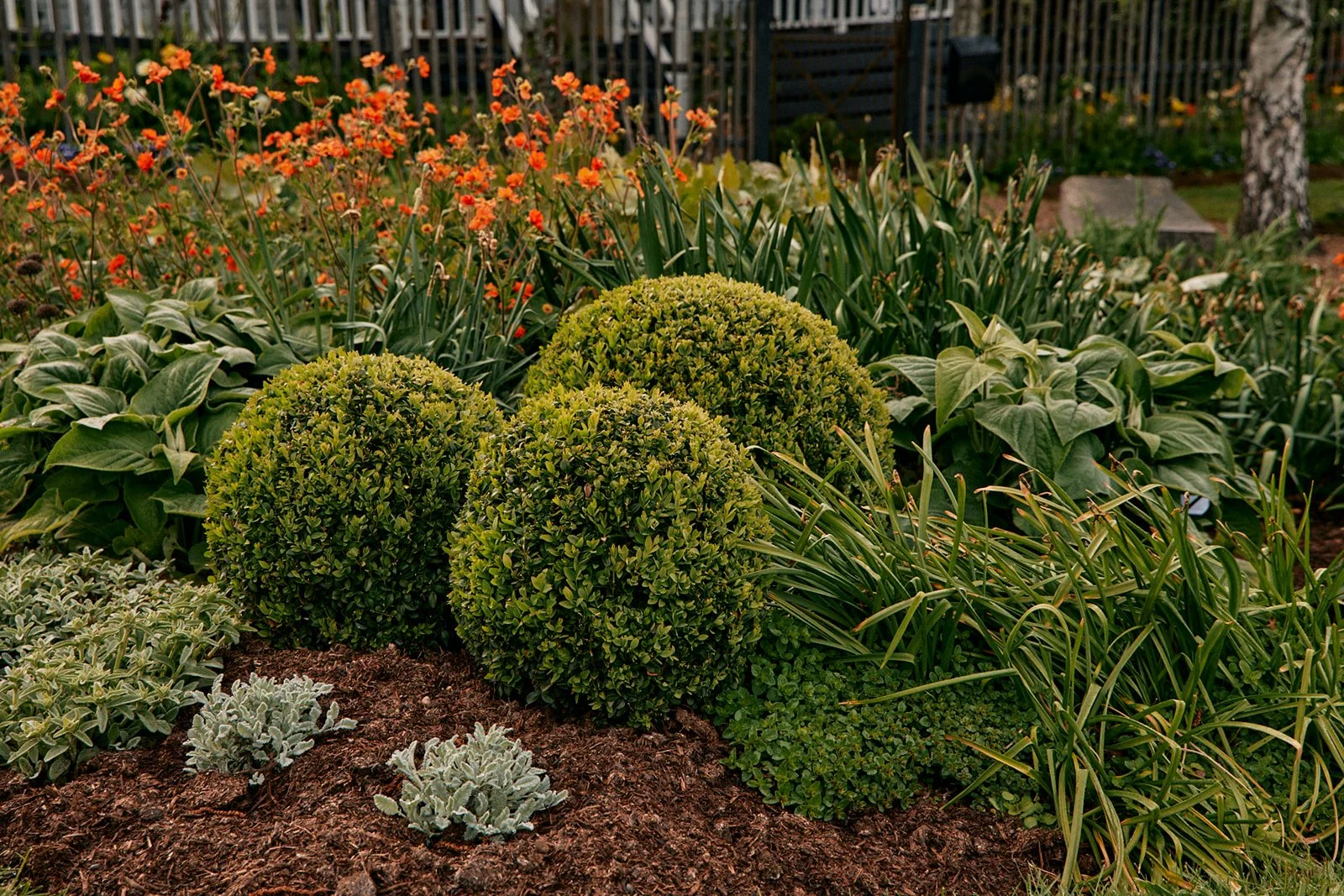
Details in the western verge garden.
We're hosting all of it on Gardenstead, in the Hepburn Shire Growers Network group — a local group inside the platform where I work as Global Community Manager. It's our living noticeboard: planting experiments, swaps, the odd question someone worried was too basic to ask. Wherever you live, the ebook will send you back to your own council's rules and your own street. But if you're nearby, that's where the conversation keeps going after you've read the last page.
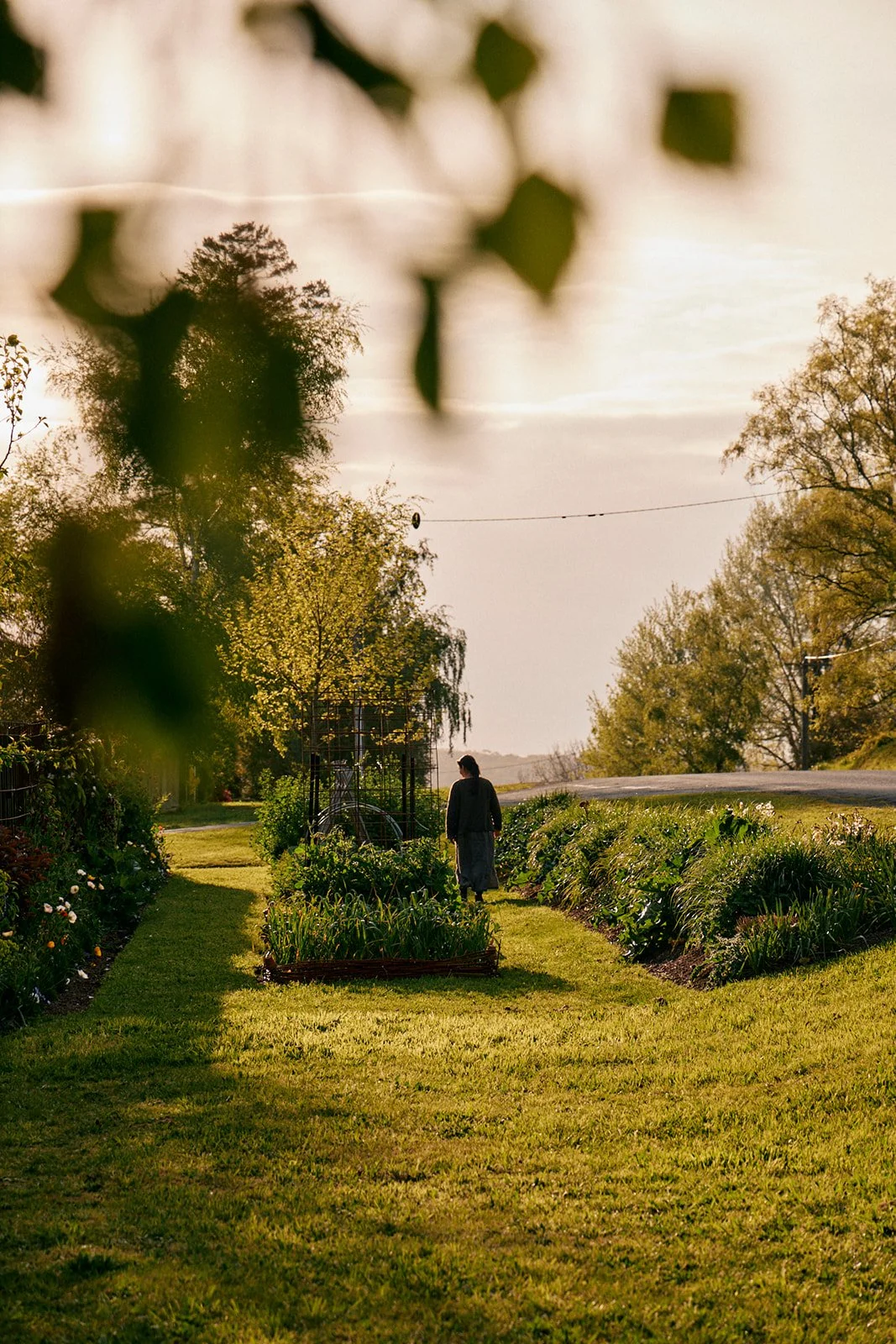
So — the strip out the front. The bit most thought I'd do last. It's the first thing visitors see now, and the first thing I check on my five-minute morning walk, snipping anything flopping over the path, noticing what the bees have found. I still don't have the five acres. I've stopped wanting them back. There's a path I've left room for that hasn't been built, and may never be, and I find I like the garden better for the space I've kept open in it.
Download Nature Strip Gardens: Fundamentals for Beautiful, Compliant Verges — free.
Start with one small section. Grow one thing. Share it.

Front cover of Nature Strip Gardens - Fundamentals for Beautiful Compliant Verges.
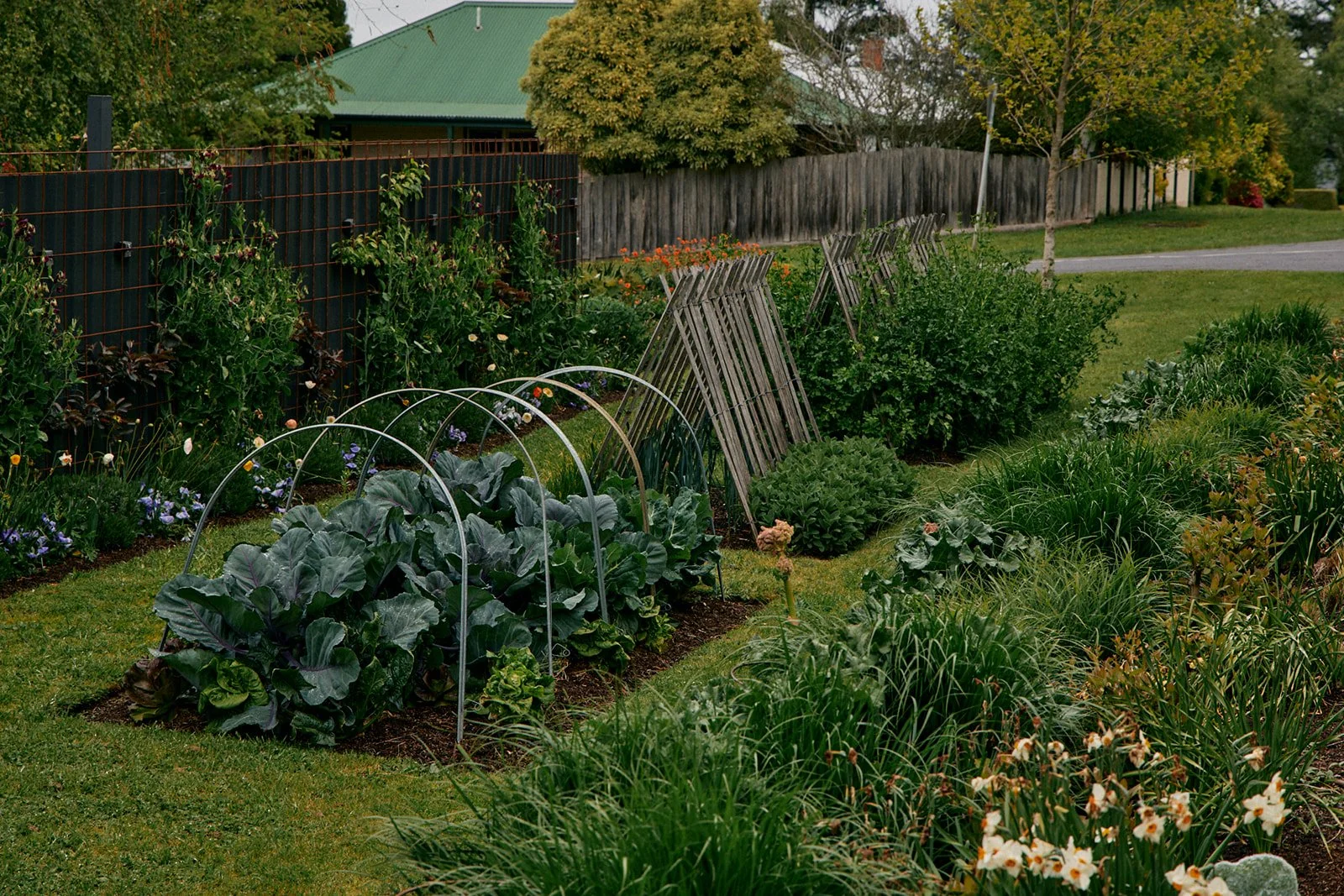
The northern verge garden.
Continue your gardening journey with me
If you enjoy this kind of content, my workshops offer more detail and guidance on design, productivity and seasonal care.
If you are building your garden from home right now, my e-books on Wicking Bed Gardens, Introduction to Backyard Chicken Keeping and Compost for Beautiful Productive Gardens offer practical step by step guidance that pairs well with the workshops
I share seasonal tips, behind the scenes at Little Cottage on a Hill, and new resources through my newsletter. Subscribe to receive my entire plant list from the garden as a personal thank you.
You can also pre-order my book The Productive Garden Companion, the book I have wanted to find my entire life. A complete guide to growing for abundance and beauty in any space. The Productive Garden Companion is a practical, reassuring and visually rich modern gardening book that meets gardeners wherever they are, from windowsill pots to generous acreage.
You may want to check out my related content below:
June Garden Tasks - For Australian Climates
Growing Pumpkins Up - Maximising Small Spaces for a Thriving Productive Garden
Green Manure - Green Manure - The Soil-Building Secret Most Gardeners Overlook
Stay connected for more seasonal inspiration:
Instagram | Facebook | Gardenstead | LinkedIn | Pinterest | YouTube | Website | Newsletter
Thanks so much for following along.
Natasha xx


Issue 03 AIR of BILLY magazine
A Field Series — my new column for BILLY Magazine
A Field Series
My new column for BILLY Magazine
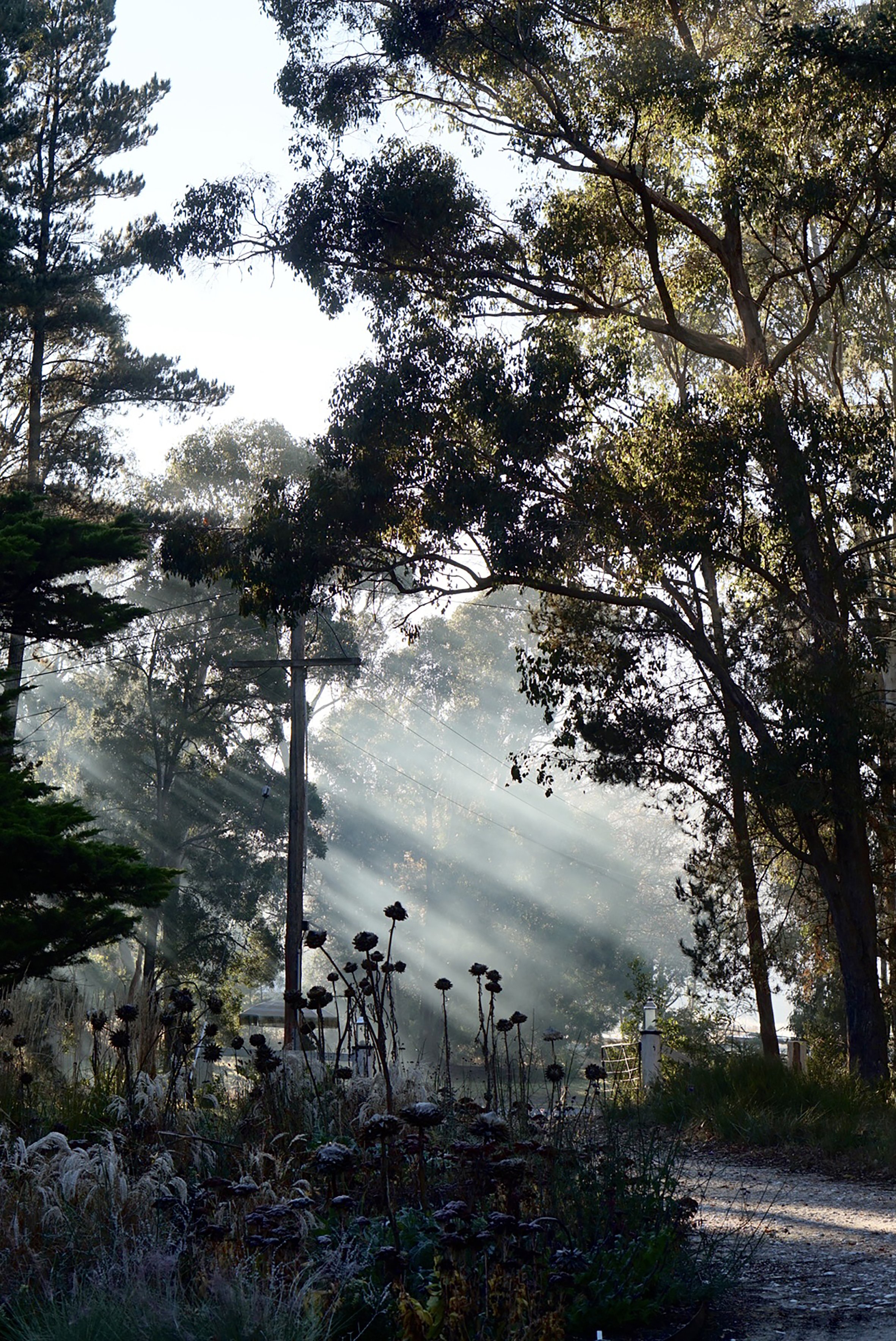
Across the road from my Daylesford verge garden, the wintersweet (Chimonanthus praecox) is just beginning at Wombat Hill Botanic Gardens. My daughter and I walked up there last week to look for it. You smell it before you see it — the flowers almost nothing, waxy and translucent against the bare branches, but the scent stops you mid-step. And then you stand there a while.
I walked back to our little cottage, knowing this was the week to share the news.
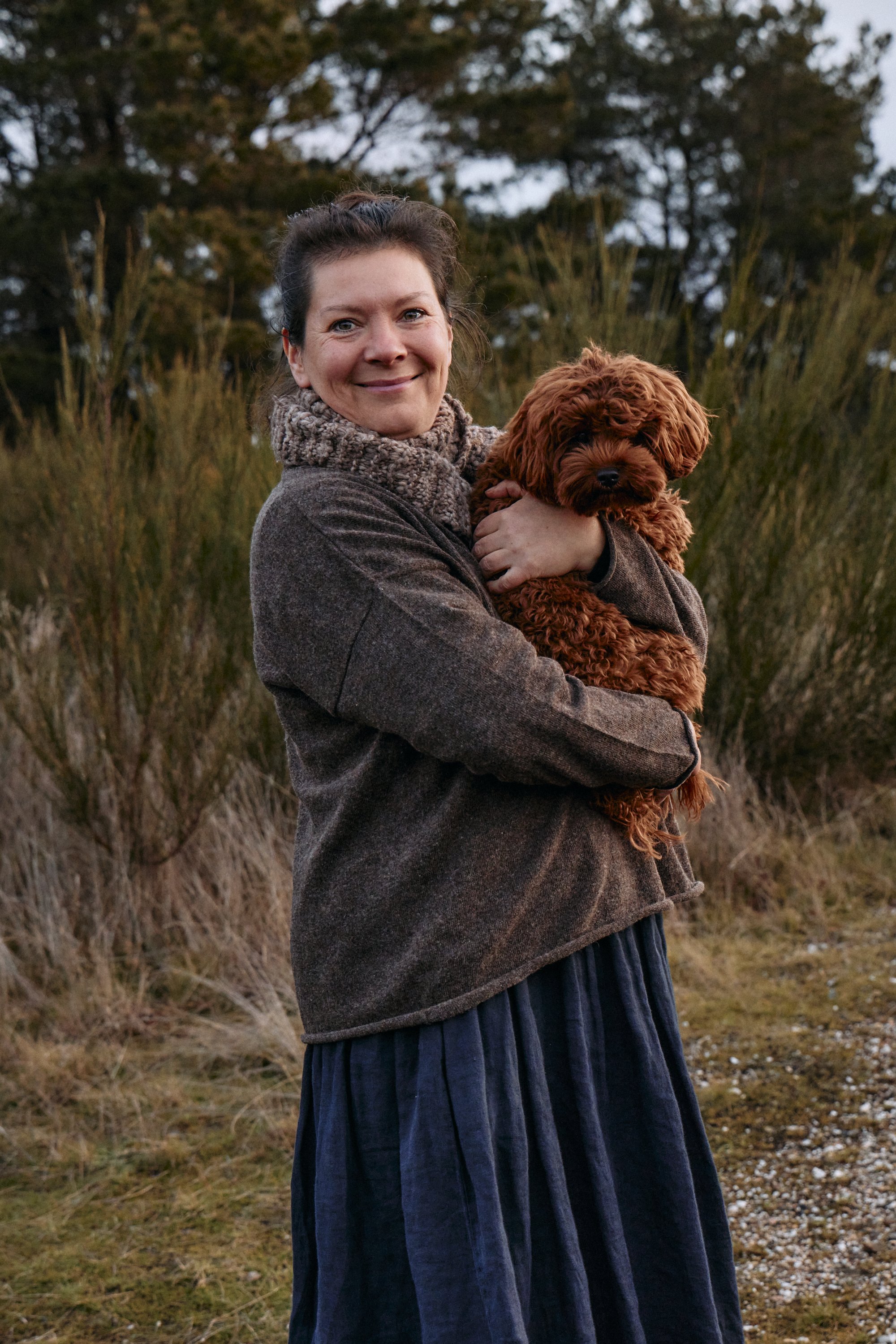
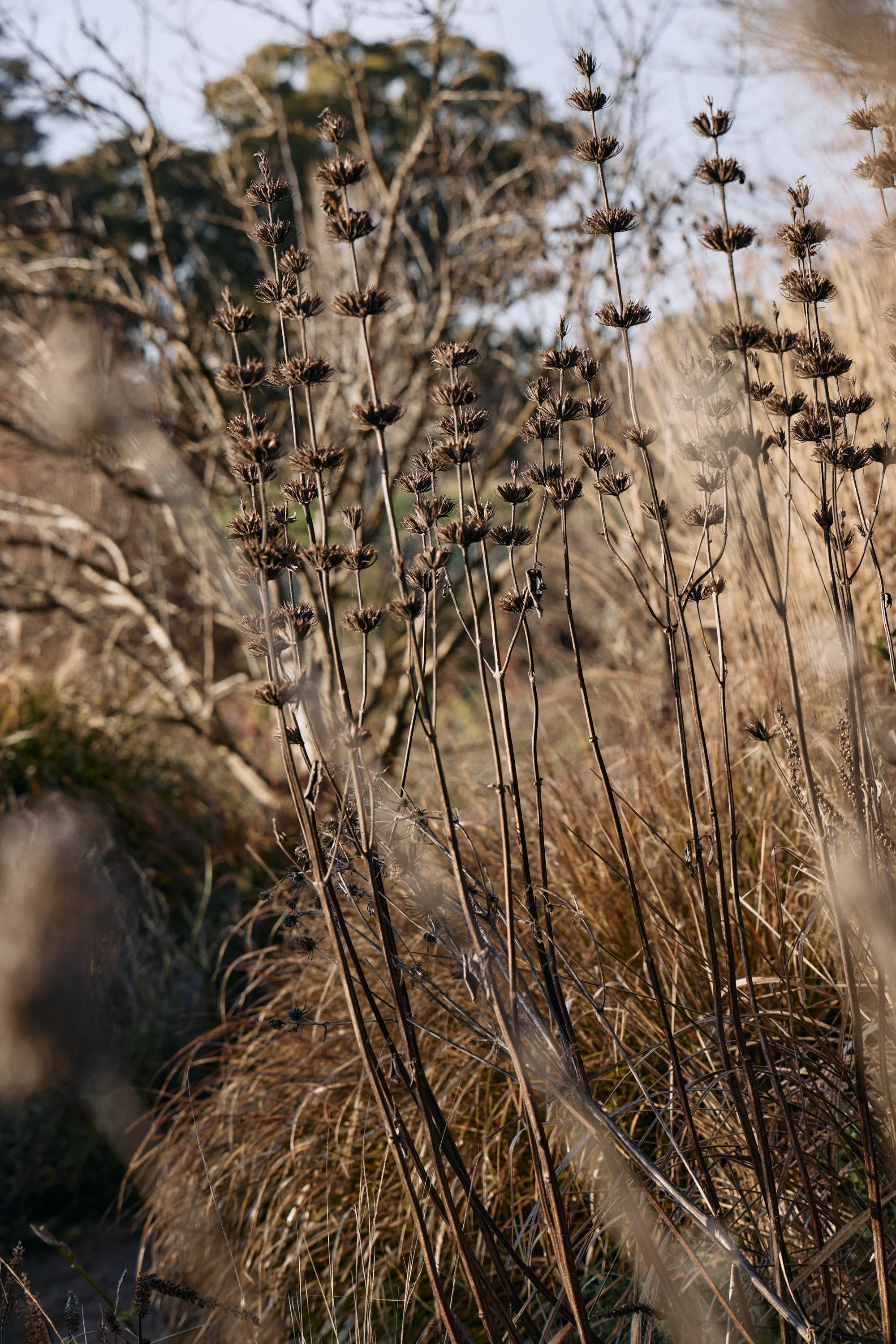
A Field Series — my new column for BILLY Magazine
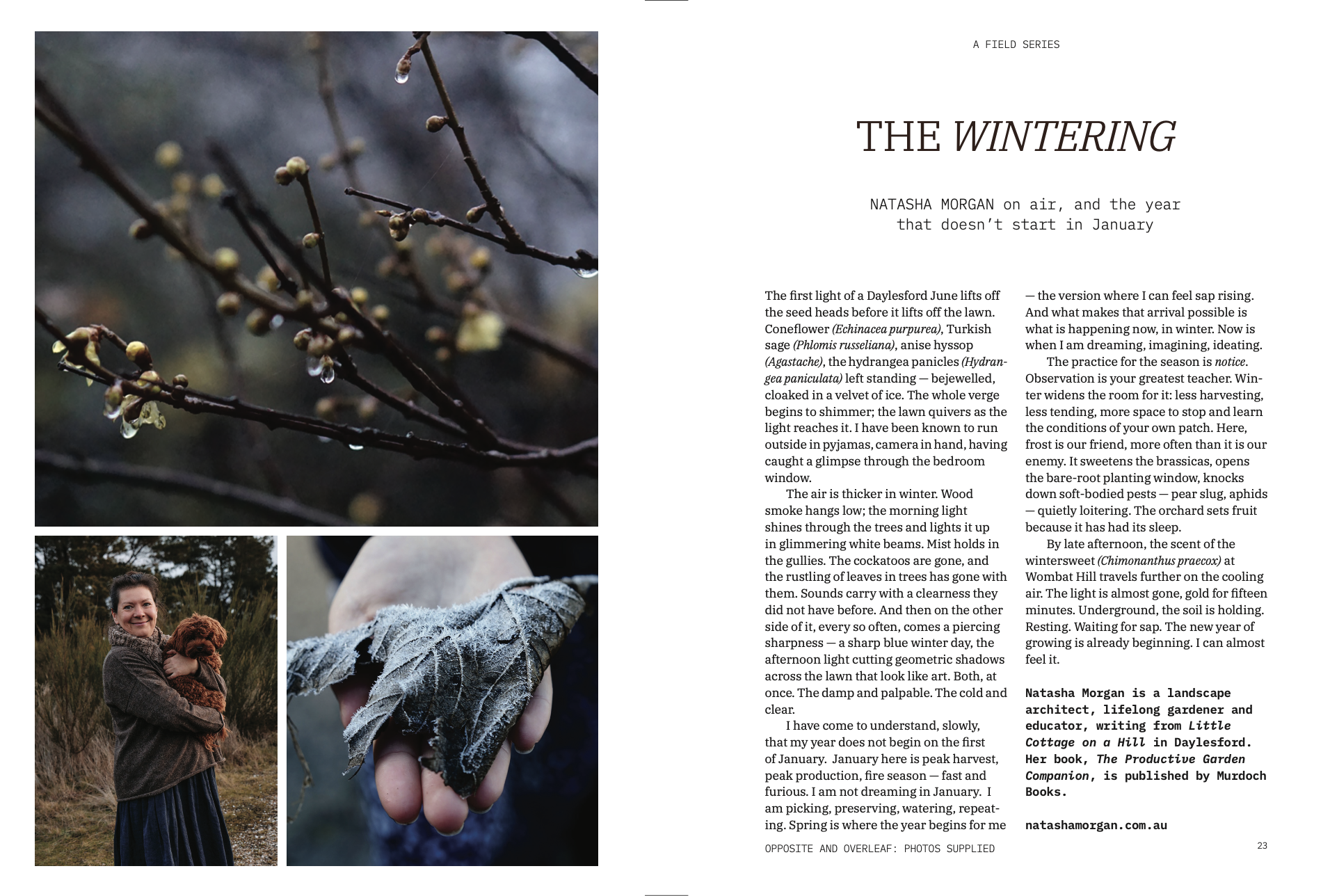
A Field Series by Natasha Morgan is my new quarterly column for BILLY Magazine. The first piece, The Wintering, lands in BILLY Issue 03 — Air — this winter, right now in fact. I am BILLY's first columnist, and I could not be more delighted.
The masthead is locked. The format is locked. Four issues a year — one for each season — and each piece runs to that season's BILLY theme. The Wintering sits inside Issue 03's Air. The Quickening follows in Issue 04, Flora — spring. A returning artefact, rendered four times a year, in print and in voice.

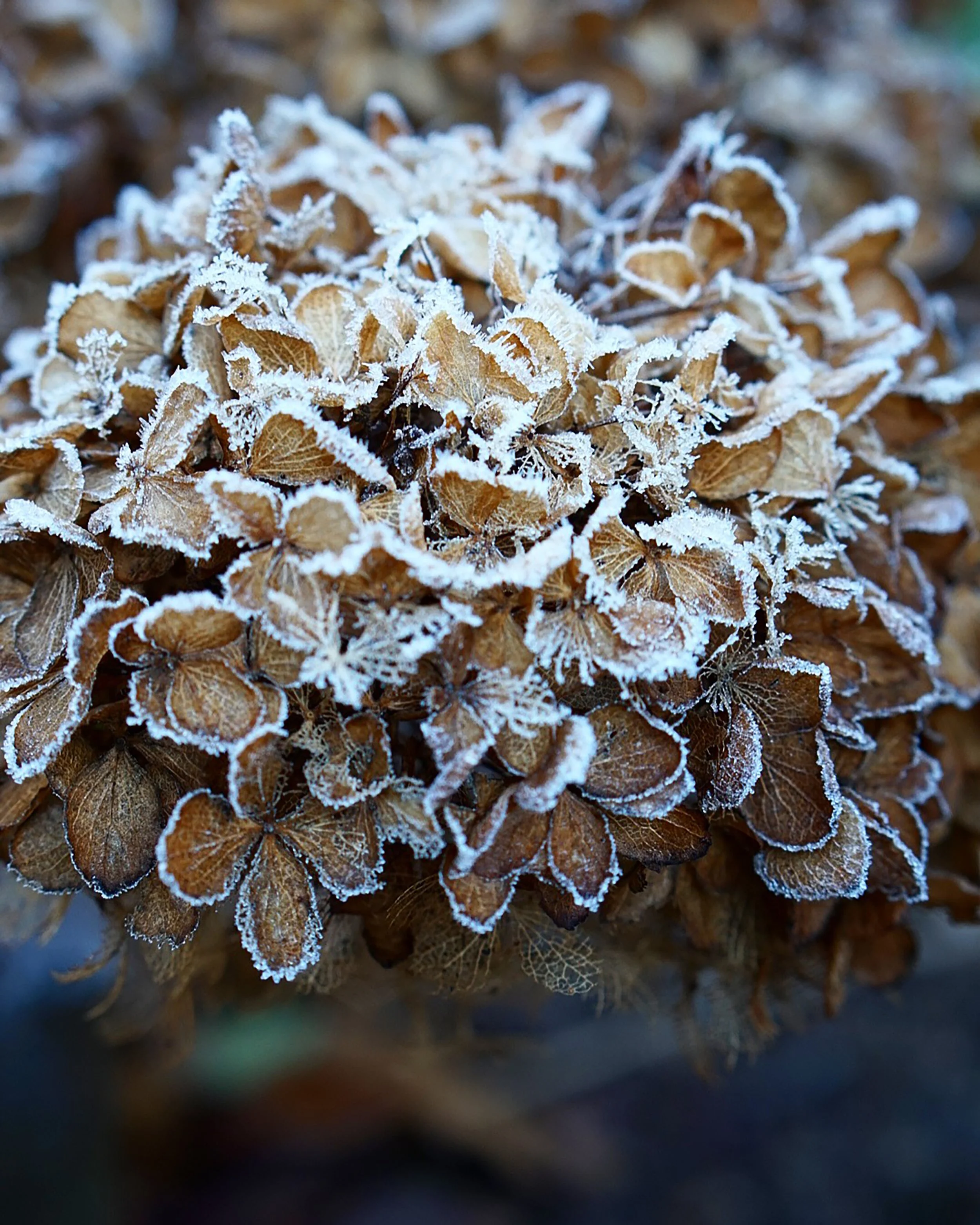
How this came about
I came to BILLY the way many of you will — as a reader. I picked up Issue 01 in a café and brought it home, the way you bring home a thing you don't want to throw away. It does what good print should do. It stays.
So I wrote to Phoebe Hartley, BILLY's editor, to tell her I loved what she was making.
What followed was generous. Phoebe came to Little Cottage on a Hill and spent a couple of hours with me — and from that visit she wrote Grow One Thing, the BILLY story about the work I'm doing here. (Some of you have already read it.) Earlier this year I was invited to join the Issue 02 Earth launch panel at the Victoria Hotel in Woodend. BILLY is more than a magazine; it is a series of activations and gatherings, and that night was one of them. Vibrant, engaging and utterly cup-filling.
I had been thinking about a column-as-series for a while. But we definitely landed on this beautiful collaborative and value-sharing opportunity together. Alongside her warmth and generosity, Phoebe has given me extraordinary freedom to shape the column — the kind of freedom an editor can only offer when her own vision for the magazine is solid enough to hold the work. Phoebe's is.
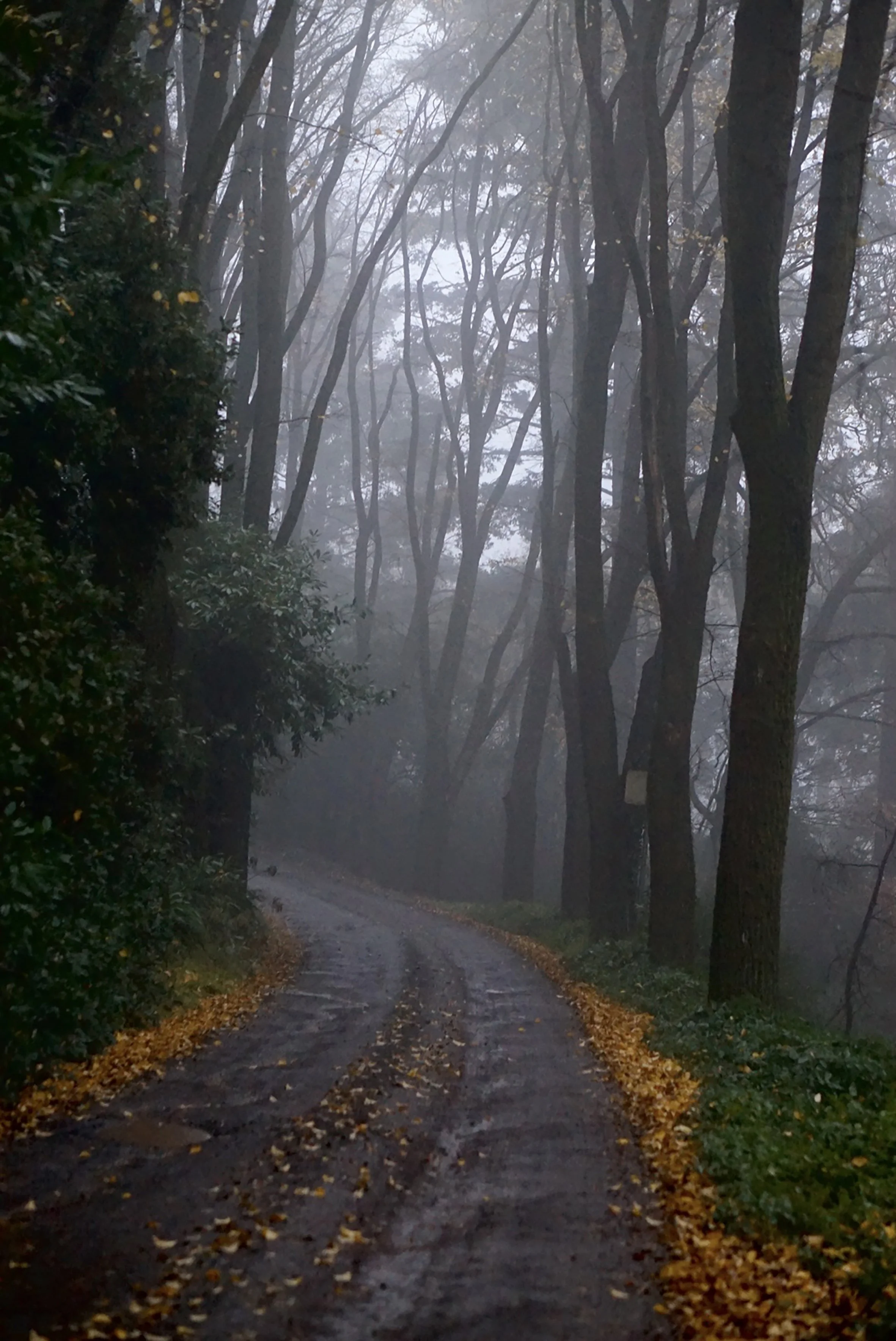
A winters day at Wombat Hill.
What I want this column to be
An anchor. A returning piece of writing that is deeply of this region — rooted in the terroir of a cool temperate climate, Daylesford, the Macedon Ranges and beyond — and that takes readers back to their environment, to observation, to curiosity, to small and doable practices for the season. A column that earns its place on a BILLY reader's coffee table for the same reason BILLY does. Because it stays.
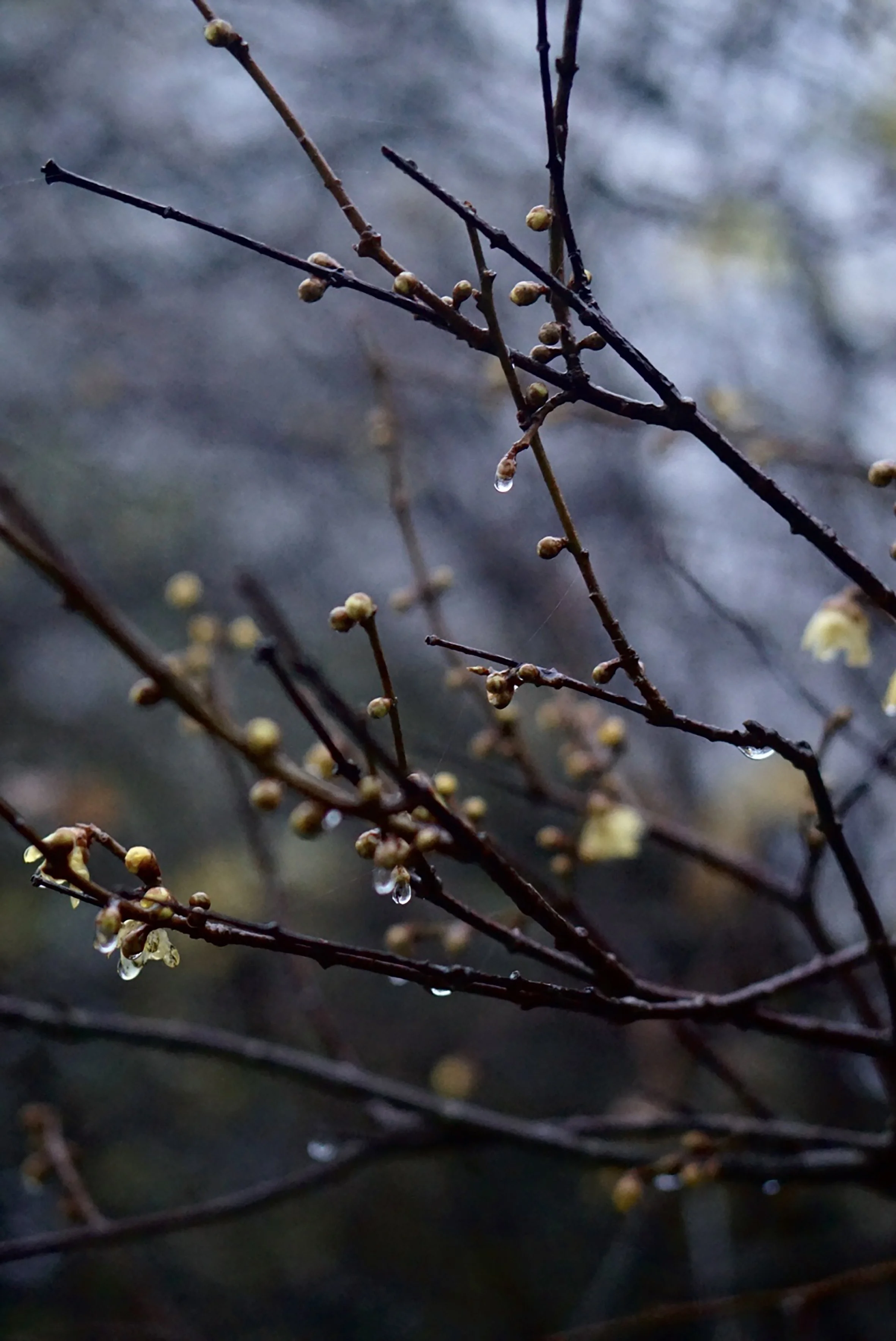

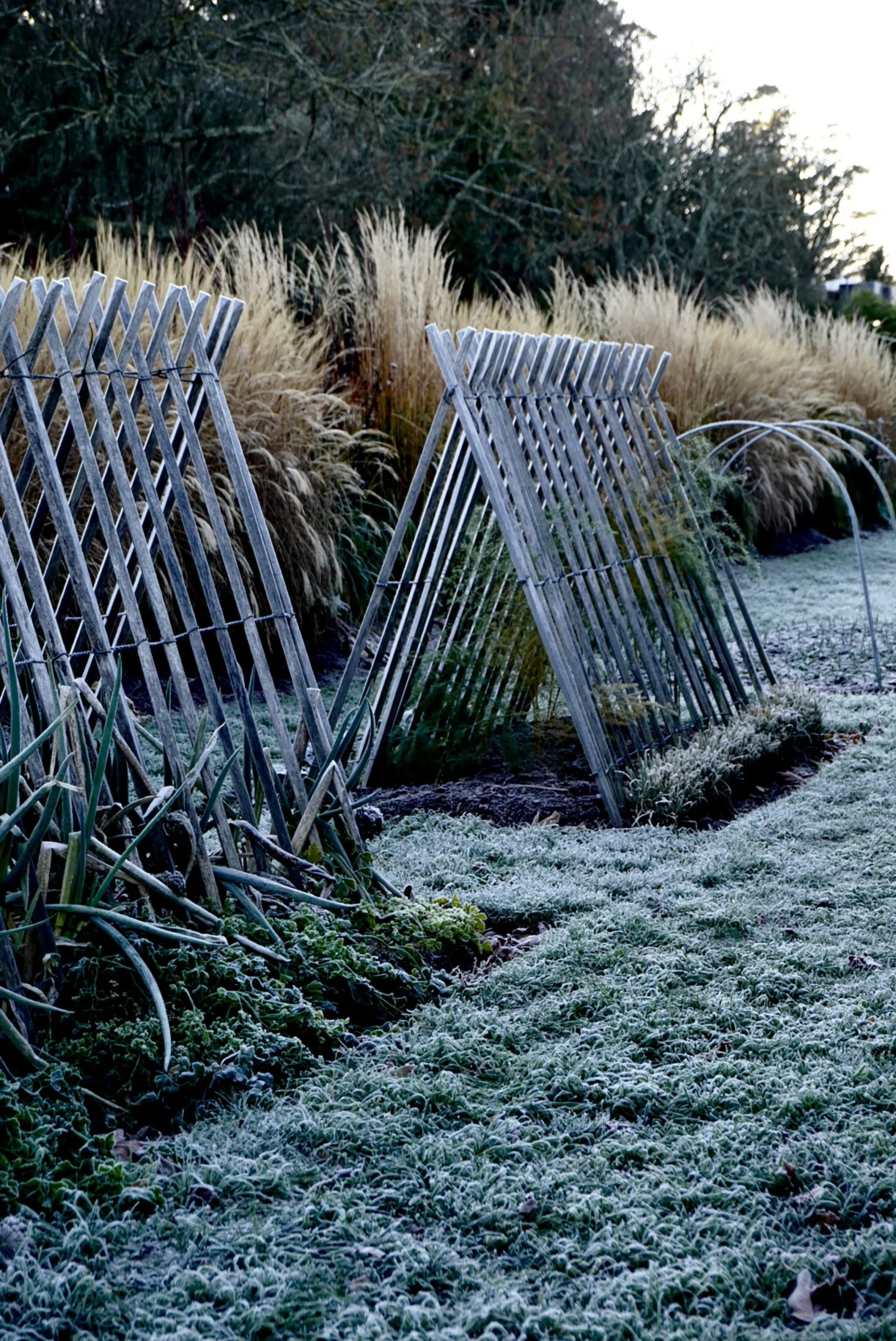
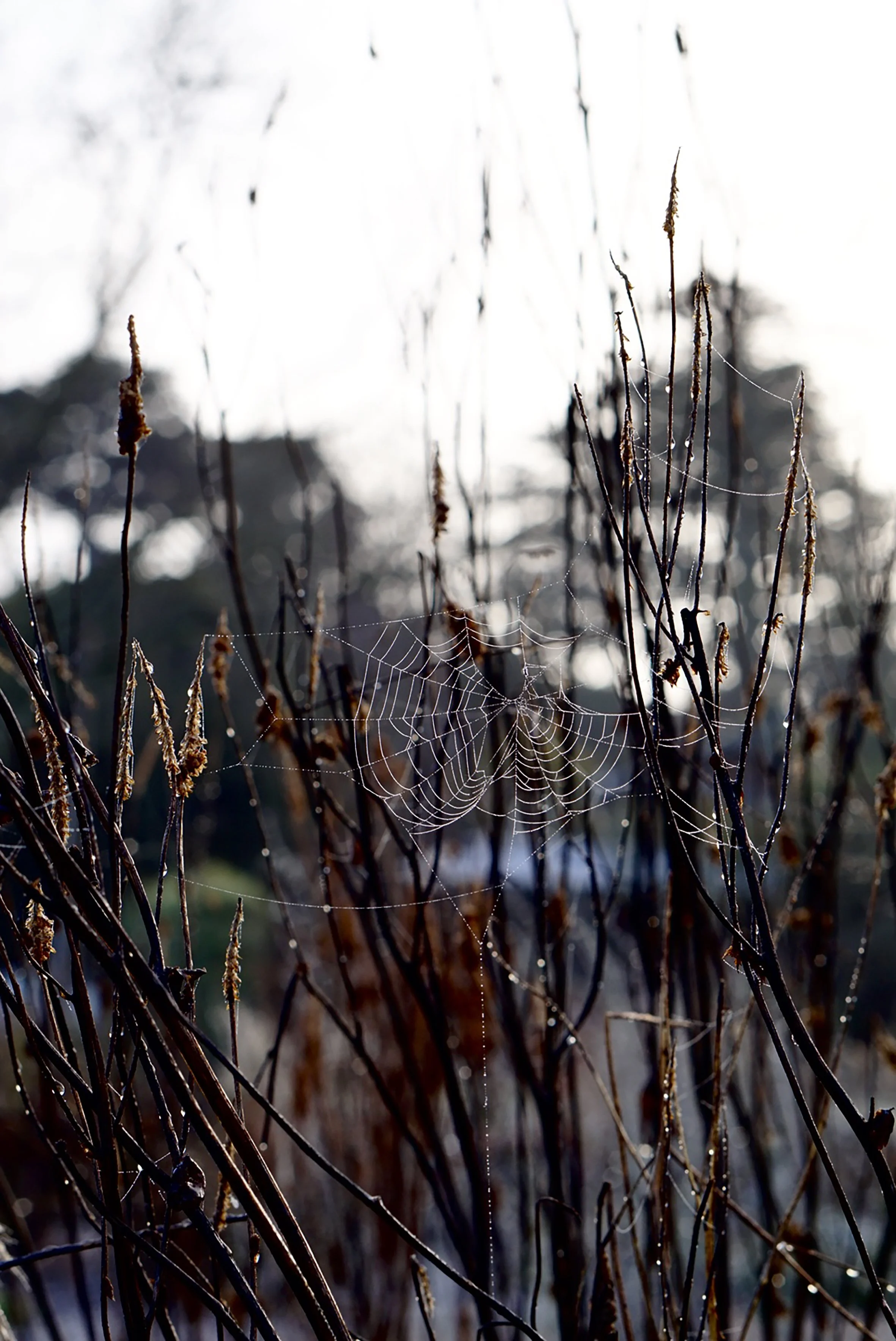

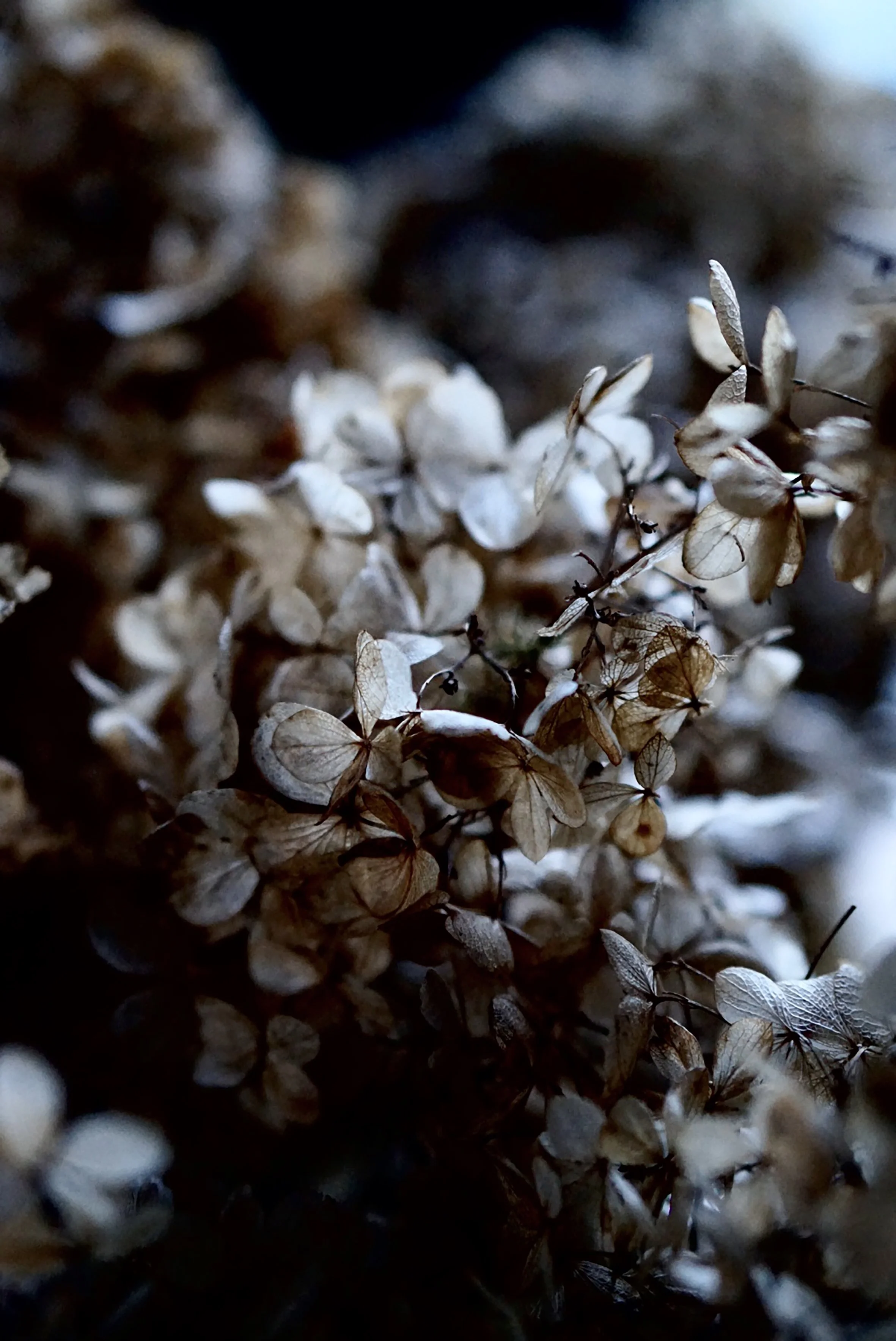
The Wintering — BILLY Issue 03
The inaugural piece sits in BILLY Issue 03, AIR, out now. It opens with the seed heads bejewelled at first light on the verge here at Little Cottage on a Hill. It turns on a year that begins with sap, not January, and on observation as the gardener's greatest teacher. The sidebar carries a handful of things to do now in a cool-climate winter garden — what to prune, what to plant bare-root, what frost is for.
You'll find BILLY at any of the seventy-plus stockists Phoebe has across the region — from Sunbury to Castlemaine. The full list is at billypress.com/stockists.
A note on BILLY
If you have a business in this region and you're looking for a values-led print publication to support through advertising, BILLY is one I'd highly recommend. I have no vested interest in saying this beyond a wish to see independent regional media in our community thrive. Phoebe is building something for the long arc. Backing BILLY is backing the storytelling of this place.
Then The Quickening
After The Wintering comes The Quickening — my piece for BILLY Issue 04, Flora. Spring. Sap rising. More on that when we get there.
For now: walk up the road to your nearest stockist. Take BILLY home. Read.
The wintersweet is doing its work whether we notice it or not. But noticing is the practice. Also the joy.
Continue your gardening journey with me
If you enjoy this kind of content, my workshops offer more detail and guidance on design, productivity and seasonal care.
If you are building your garden from home right now, my e-books on Wicking Bed Gardens, Introduction to Backyard Chicken Keeping and Compost for Beautiful Productive Gardens offer practical step by step guidance that pairs well with the workshops
I share seasonal tips, behind the scenes at Little Cottage on a Hill, and new resources through my newsletter. Subscribe to receive my entire plant list from the garden as a personal thank you.
You can also pre-order my book The Productive Garden Companion, the book I have wanted to find my entire life. A complete guide to growing for abundance and beauty in any space. The Productive Garden Companion is a practical, reassuring and visually rich modern gardening book that meets gardeners wherever they are, from windowsill pots to generous acreage.
You may want to check out my related content below:
June Garden Tasks - For Australian Climates
Growing Soil: Growing Soil: The Foundation to Vibrant Gardens and Nutrient-Dense Plants
Growing Philosophies: Permaculture for Beginners
Stay connected for more seasonal inspiration:
Instagram | Facebook | Gardenstead | LinkedIn | Pinterest | YouTube | Website | Newsletter
Thanks so much for following along.
Natasha xx
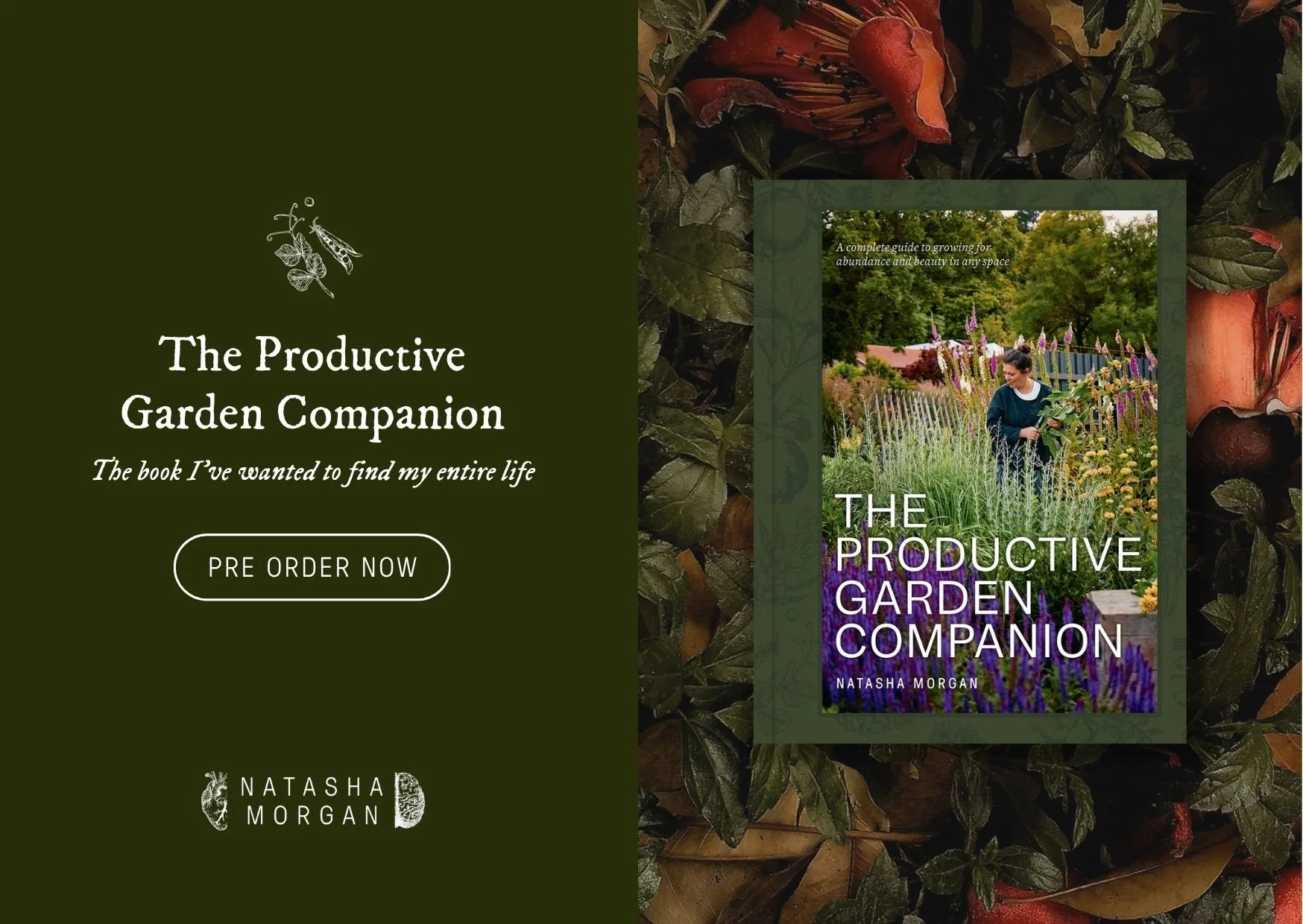
Explore my new book The Productive Garden Companion by clicking on the image above!
June Garden Tasks for Australian Climates
June is the beginning of winter, but not the end of the garden.
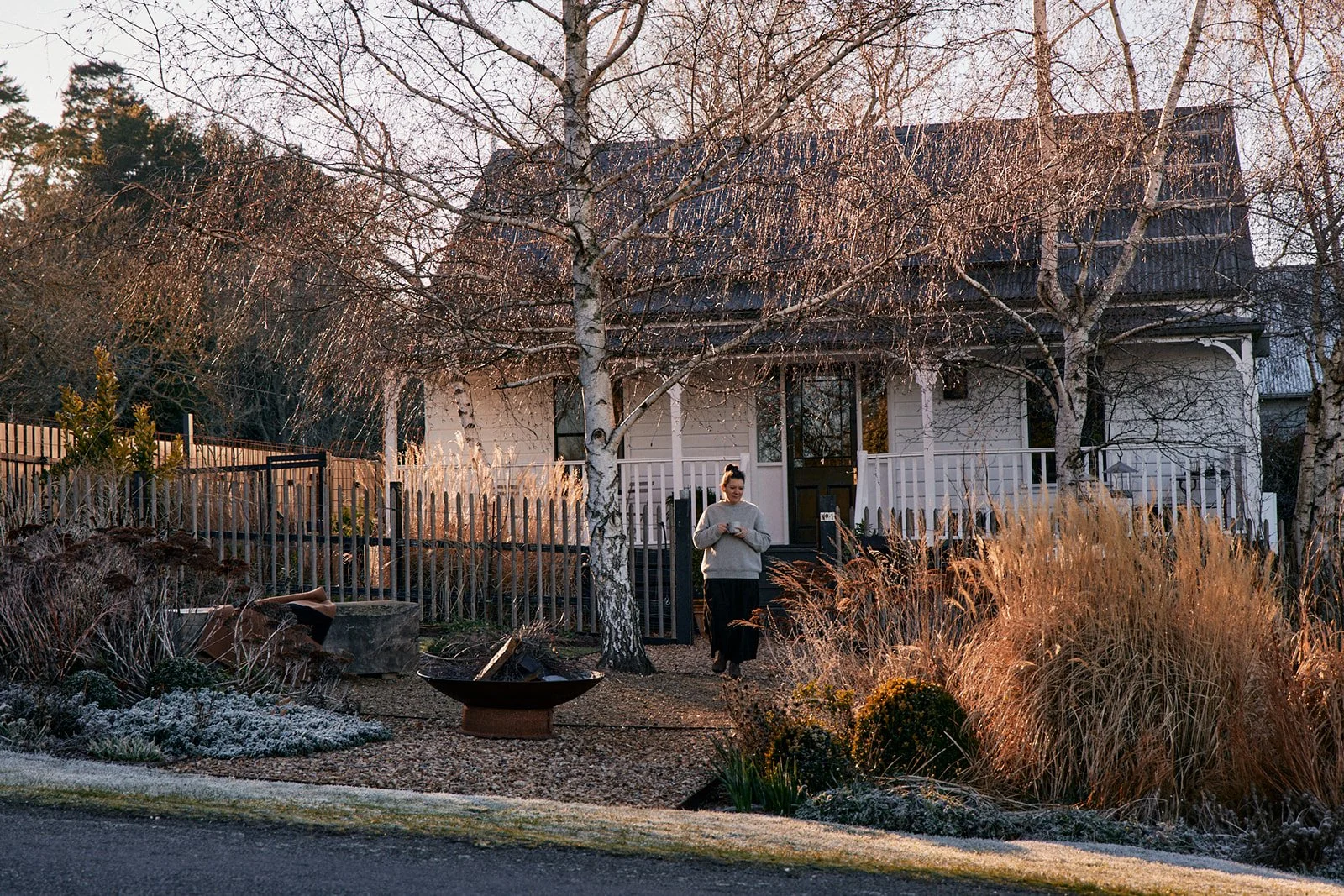
In my Daylesford garden, June arrives in the frost before it arrives anywhere else. The first light lifts off the seed heads before it reaches the lawn. Echinacea, phlomis, agastache and hydrangea panicles stand silvered and still, and the whole garden can feel reluctant to wake.
But winter is not a dead season. It is a clarifying one.
The leaves drop. The structure appears. Paths, fences, hedges, fruit tree frameworks, bare stems, trellises and the true shape of the garden come forward. What was softened by summer growth is suddenly visible again. You can see where the design holds, where the soil is exposed, where water sits, where frost lingers, and where the next layer of the garden might begin.
For me, June is not a month for rushing. It is a month for watching carefully, feeding the soil, planting what suits the cold, and working with the slower intelligence of winter.
In many climates, June is also one of the most useful months for planting deciduous trees, roses, cane fruit, garlic, broad beans and winter greens. In others, particularly subtropical and tropical gardens, it can be a generous growing window, with cooler conditions making it easier to establish food crops and flowering plants.
As always, the calendar is only part of the story. Your own garden will tell you more.
Where does frost settle?
Where does the winter sun reach?
Which beds are too wet to work?
Which paths are asking to be widened?
Which structures need repair before spring growth returns?
Start there. Observe first, then act.
Tasks for all Climates:
Observe the garden before you clean too much away. Notice frost pockets, drainage, wind exposure, winter light and the structure of your beds.
Keep soil covered with compost, mulch, living crops or green manure. Bare soil is vulnerable soil.
Gather fallen leaves and use them for compost, leaf mould, mulch layers or chicken bedding if you keep chickens.
Plant bare rooted deciduous trees, roses, vines and cane fruit where suitable for your climate and soil conditions.
Sow or plant cool season crops such as broad beans, peas, snow peas, spinach, lettuce, mizuna, mustard greens, radish and parsley where conditions suit.
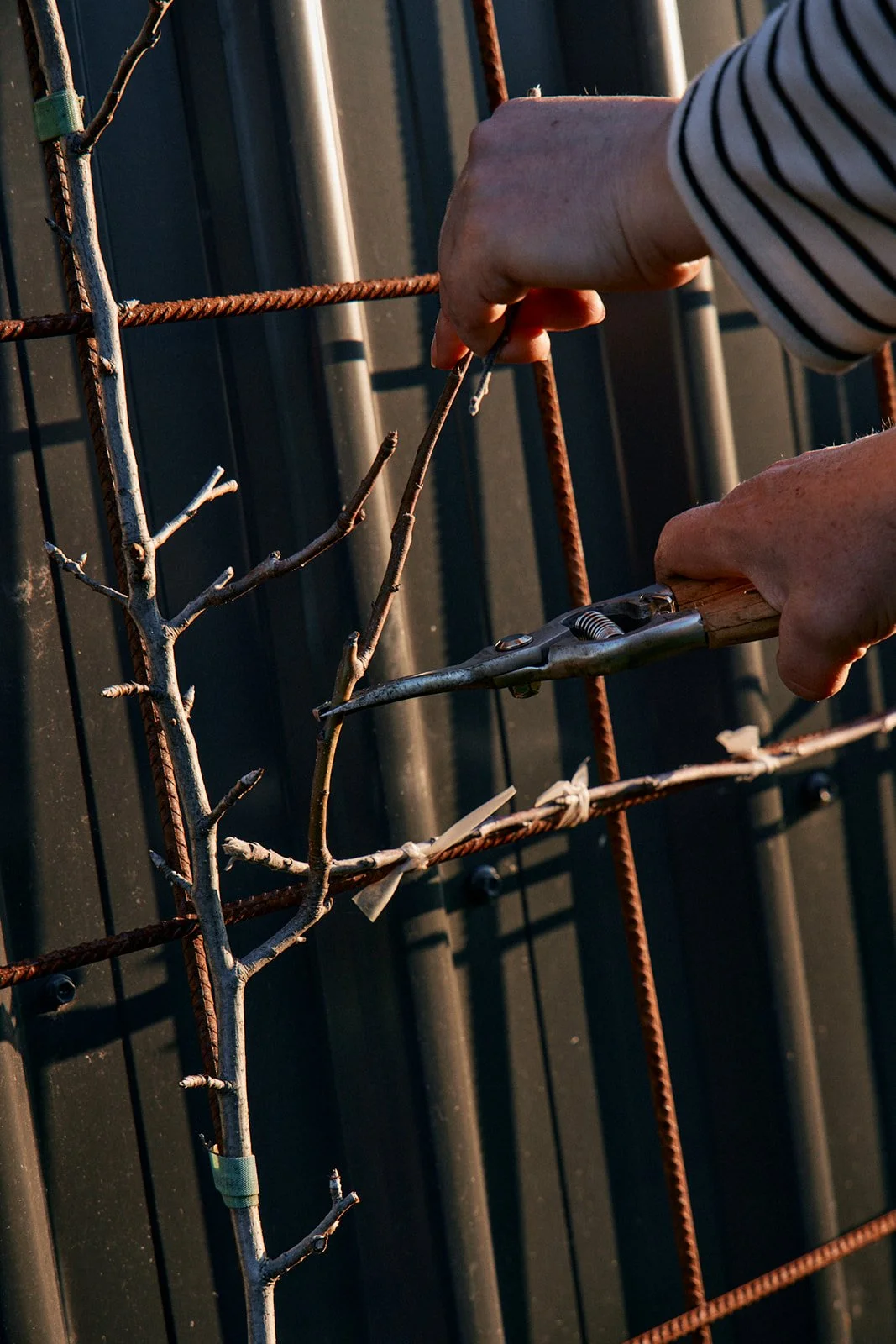
Prune deciduous fruit trees and grape vines once dormant, but leave apricots to dry, late autumn pruning where disease risk is lower.
Take hardwood cuttings from grape vines, currants, gooseberries, figs and other suitable woody plants.
Check espalier wires, tree ties, trellises, stakes, arches and climbing frames while the growth is bare and easy to read.
Protect frost tender plants overnight when hard frost is forecast, using hessian, frost cloth, shadecloth, straw, cardboard or another breathable cover.
Avoid working saturated soil. If it sticks heavily to your boots or tools, wait.
Refresh productive beds with compost or well rotted organic matter before planting the next crop.
Keep harvesting what winter is offering, especially leafy greens, herbs, citrus, brassicas, root crops and late autumn crops that are still holding.
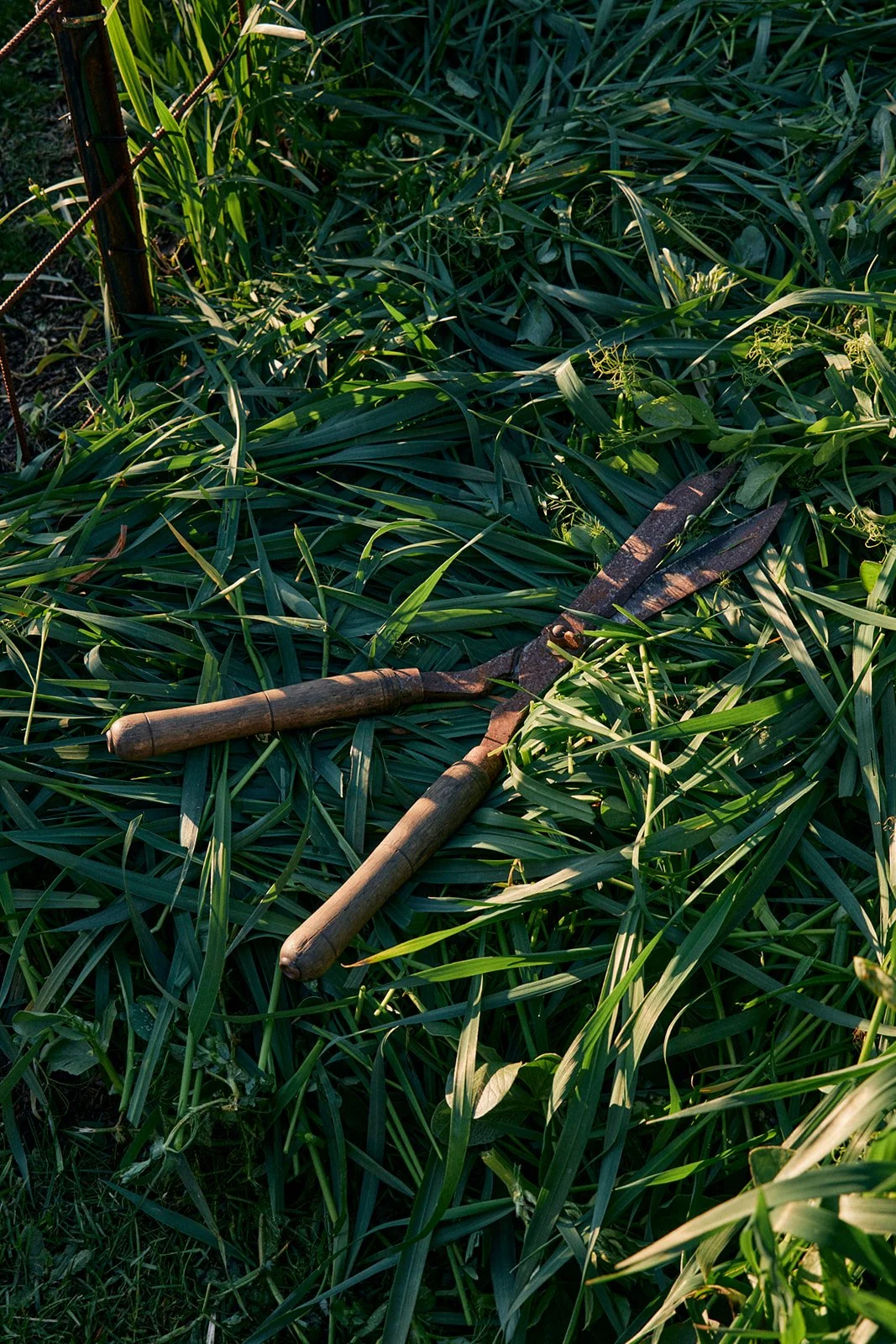
Clean, sharpen and oil secateurs, snips, spades and other tools so they are ready for pruning and winter planting.
Sort seed packets, make notes from the last growing season and begin planning what you want to grow when the garden wakes again.
A note on compost
You’ll notice that many of these June tasks come back to the same foundation: compost. It is one of the simplest and most effective ways to improve soil, reduce waste and keep fertility moving through your own garden system.
If you would like more practical guidance, my new eBook, Compost for Beautiful Productive Gardens, steps through the composting systems I use and teach, with clear guidance for choosing an approach that suits your garden, your space and the way you live.



What to sow and plant now, and tasks by climate.
Temperate
Edible: broad beans, garlic, lettuce, mizuna, mustard greens, parsley, peas, radish, rocket, shallots, silverbeet, snow peas, spinach, spring onion and strawberry runners.
Flowers and ornamentals: alyssum, billy buttons, calendula, Canterbury bells, cerinthe, cornflower, delphinium, foxglove seedlings, hollyhock, lupin, mignonette, pansy, poppy, pyrethrum, sweet pea, viola and bare rooted roses.
Tasks:
Plant bare rooted trees, roses, vines and cane fruit while they are dormant and the soil is workable.
Sow broad beans, peas, snow peas, spinach, radish and other hardy greens in small successions rather than all at once.
Prune dormant deciduous fruit trees and grape vines, leaving apricots alone unless your local conditions are dry and suitable.
Add compost to beds that will carry winter crops, then mulch lightly to protect soil structure.
Watch for frost, especially in low areas, and cover vulnerable seedlings overnight when needed.
Alpine and cool
Edible: broad beans, garlic and spinach. In protected pockets or under cover, you may also try hardy greens such as rocket, mustard greens and winter lettuce, but let the soil temperature and frost decide.
Flowers and ornamentals: billy buttons, hellebores, pansies, violas, primulas, wallflowers, bare rooted roses, deciduous shrubs, deciduous trees and hardy perennials.
Tasks:
Treat June as a slow, precise planting month. Plant only when the soil is not frozen, waterlogged or compacted.
Plant garlic, broad beans and spinach in the best drained, sunniest beds you have.
Protect new plantings from frost and cold wind, especially young evergreens and newly planted perennials.
Prune dormant deciduous fruit trees and grape vines, and take hardwood cuttings while the structure is visible.
Use winter to study the bones of the garden. In cool climates, June reveals where frost lies, where sun reaches and where structure is needed.
Subtropical
Edible: beetroot, broad beans, cabbage, carrot, cauliflower, celeriac, celery, chicory, chives, collard greens, endive, garlic, kale, kohlrabi, lettuce, mizuna, mustard greens, onion, pak choy, parsley, parsnip, peas, potato, radish, rocket, shallots, silverbeet, snow peas, spinach, strawberry plants and strawberry runners.
Flowers and ornamentals: alyssum, borage, calendula, cerinthe, cleome, corn cockle, cosmos, delphinium, echinacea, everlasting daisy, false Queen Anne’s lace, hollyhock, lupin, marigold, nasturtium, salvia, sunflower, viola and zinnia.
Tasks:
Make the most of the cooler planting window for brassicas, leafy greens, peas, root crops and herbs.
Refresh beds after summer growth with compost, mulch and gentle soil care before planting hungry crops.
Keep airflow in mind. Subtropical winter can still bring fungal pressure where plants are crowded or foliage stays wet.
Plant strawberries, garlic, shallots and potatoes where your local conditions suit.
Prune deciduous fruit trees and vines where they are grown, and take cuttings from suitable woody plants.
Tropical
Edible: amaranth, basil, beans, beetroot, broccoli, cabbage, capsicum, carrot, cauliflower, celery, chilli, Chinese cabbage, chives, choko, collard greens, coriander, cucumber, daikon, dill, eggplant, fennel, garlic, ginger, kale, kohlrabi, leeks, lettuce, mizuna, mustard greens, okra, onion, oregano, pak choy, parsley, peas, pumpkin, radish, rocket, silverbeet, spring onion, sweet corn, sweet potato, tomato, turnip, Warrigal greens and zucchini.
Flowers and ornamentals: alyssum, borage, calendula, cleome, cosmos, marigold, nasturtium, salvia, sunflower and zinnia.
Tasks:
Use the dry season and milder conditions to plant a broad range of vegetables, herbs and flowers.
Sow fast crops such as beans, leafy greens, radish and herbs in small rounds so harvesting is steady.
Refresh soil with compost and organic matter before planting heavy feeders such as cucurbits, sweet corn and fruiting crops.
Keep pruning for airflow, especially where humidity, dense planting or lingering wetness can invite disease.
Add flowering plants such as calendula, cosmos, marigold, nasturtium, salvia, sunflower and zinnia to support beneficial insects and keep the garden active.
Arid
Edible: asparagus crowns, beetroot, broad beans, broccoli, cabbage, carrot, cauliflower, chives, collard greens, dill, endive, Florence fennel, garlic, globe artichoke, horseradish, Jerusalem artichoke, kale, kohlrabi, lettuce, mustard greens, onion, pak choy, parsley, parsnip, peas, radish, sage, silverbeet, snow peas, spinach, strawberry plants, swedes, thyme and turnips.
Flowers and ornamentals: alyssum, calendula, cornflower, everlasting daisy, marigold, nasturtium, poppy, sweet pea, viola and tough cool season seedlings suited to your local frost level.
Tasks:
Plant cool season crops while conditions are more forgiving, but water deeply at planting and mulch straight away.
Improve soil before sowing with compost and organic matter so it can hold moisture more effectively.
Watch for frost as well as dryness. Arid gardens can have sharp overnight temperature drops.
Plant deciduous trees, vines, cane fruit and roses while dormant, provided irrigation can support establishment.
Use mulch, wind protection and thoughtful spacing to reduce stress on new plantings.
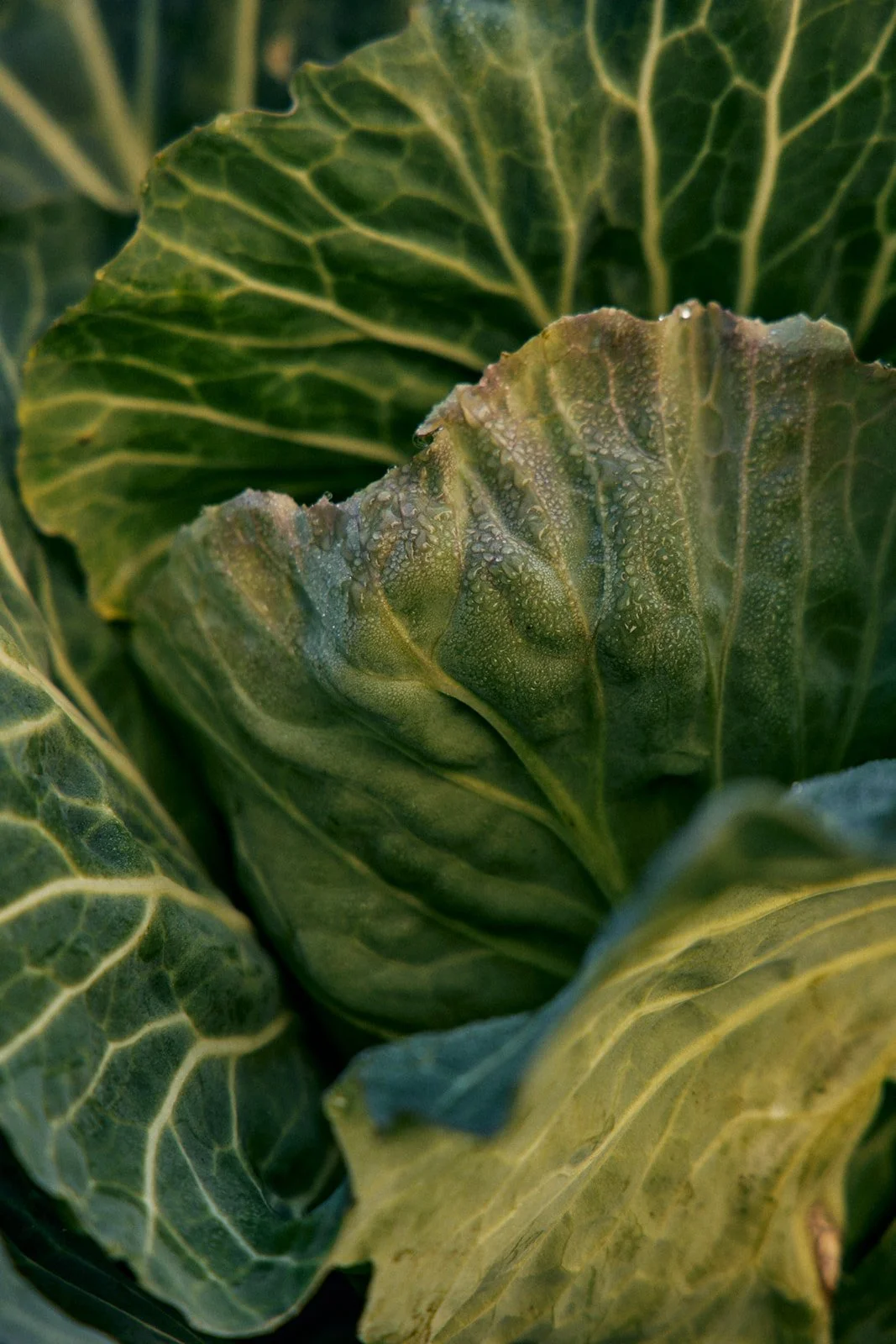
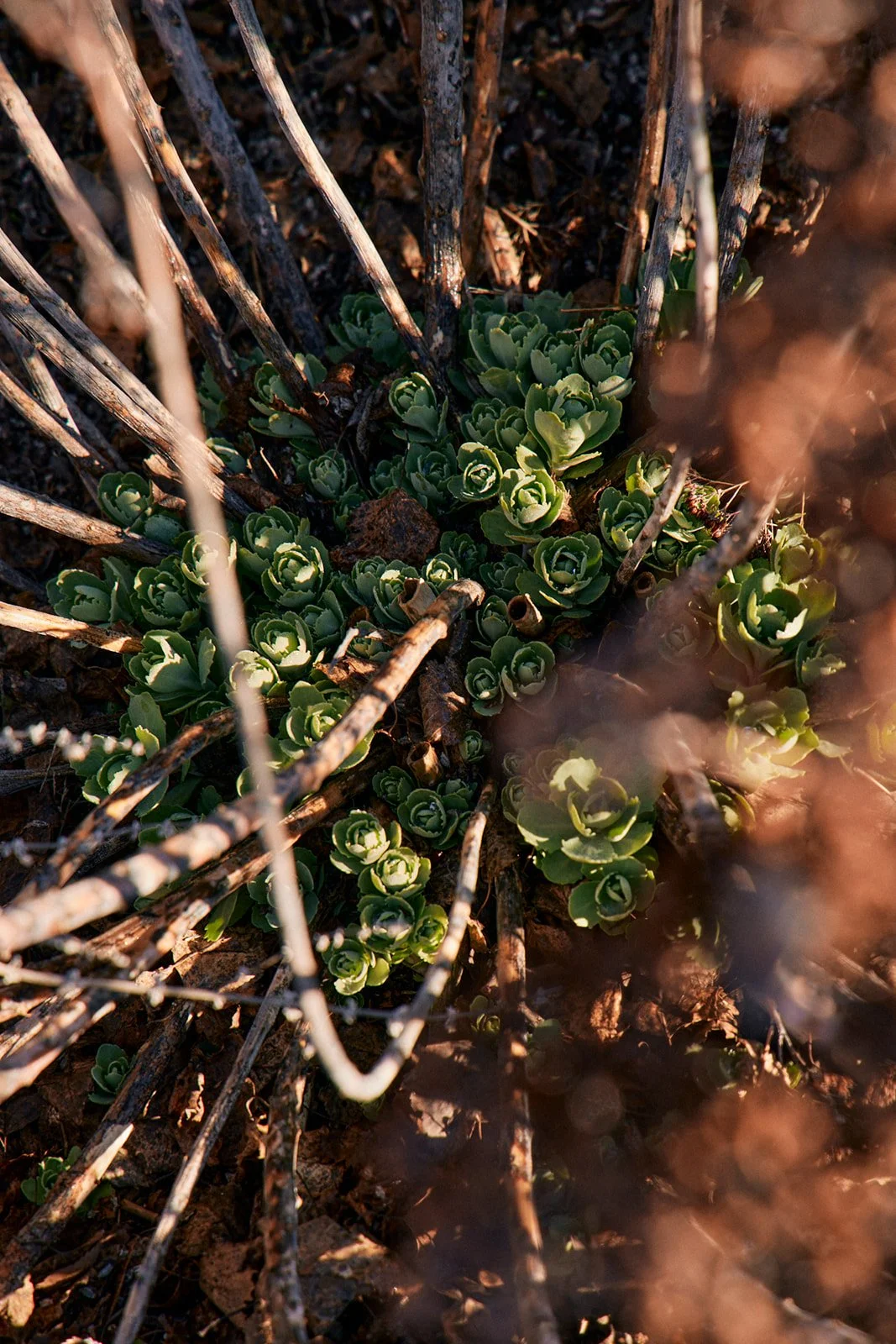
How I work with June.
June is the month when I can see the garden clearly again.
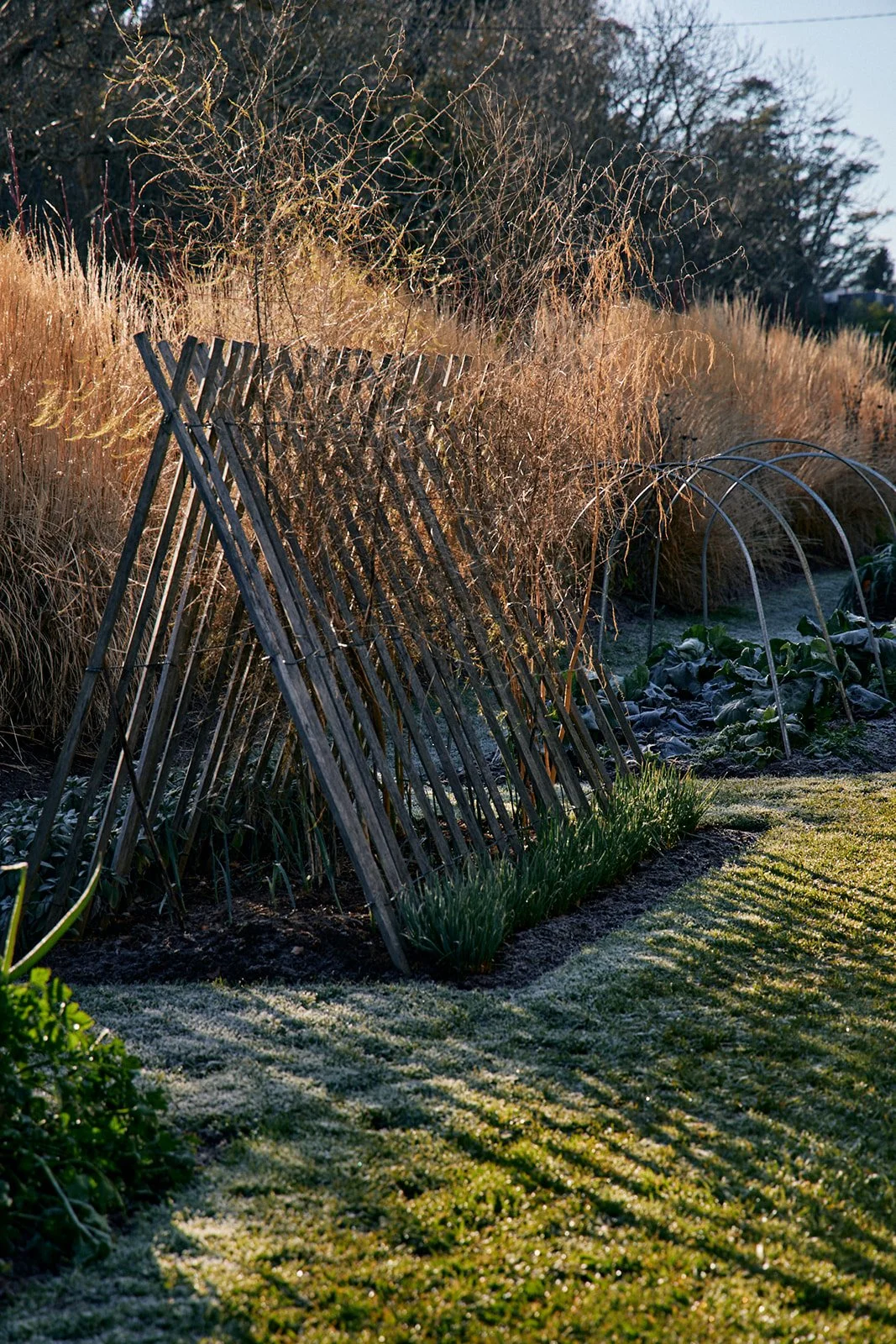
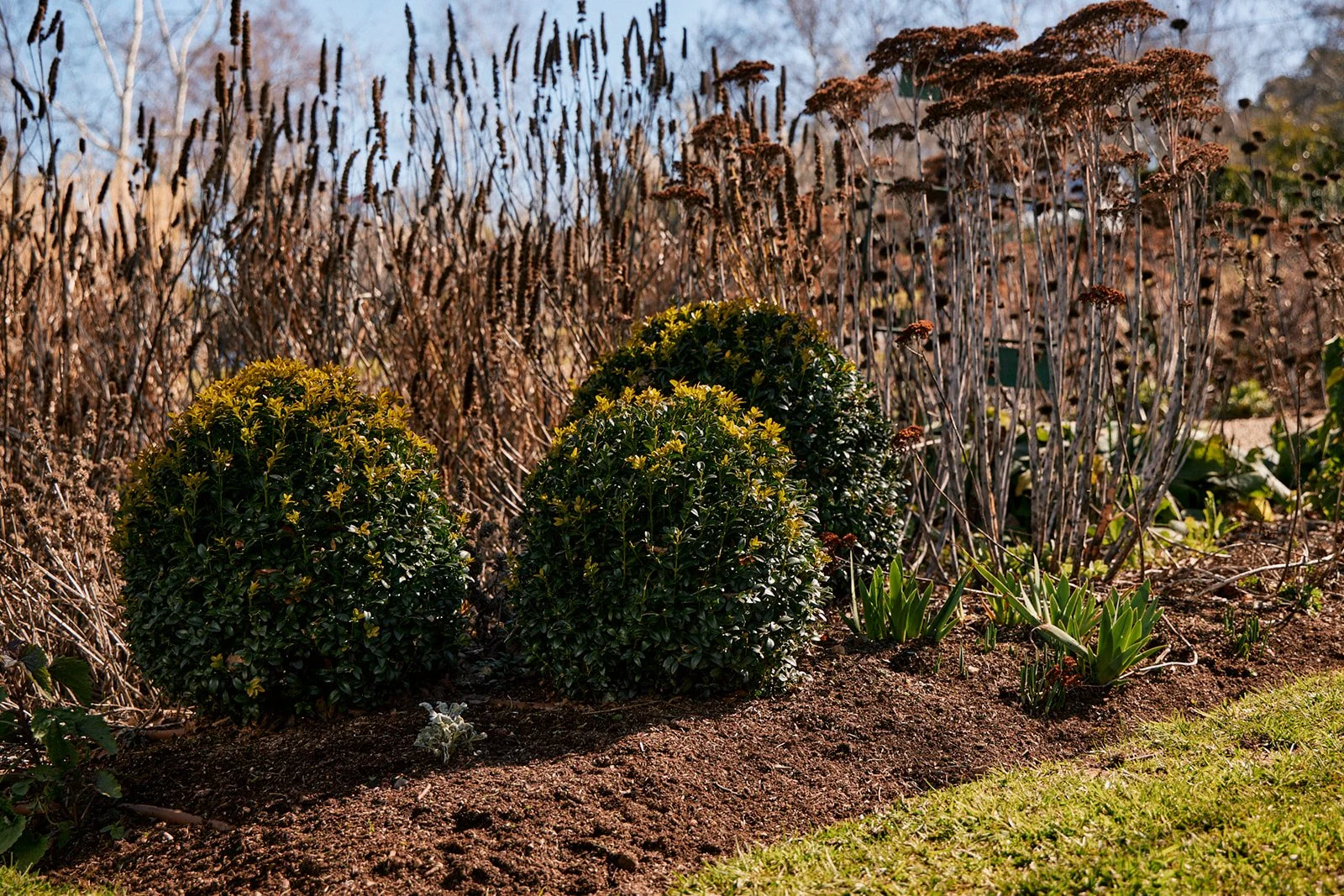
At Little Cottage on a Hill, the perennial growth has softened back and the structure does the holding. The box balls sit like small green anchors through the beds. The espaliered crabapples, pears and quinces become lines on the fence again. The seed heads I have left standing catch frost and low light. The garden is quieter, but not empty.
This is the season where I try not to rush in with secateurs. I leave more than my tidy instincts would sometimes like. Seed heads feed birds. Hollow stems shelter insects. Spent plants tell me where the wind has moved, where the frost has settled, where the soil is holding too much moisture.
I also use June to look at the practical bones of the garden.
Are the paths wide enough?
Can I still move a barrow through without brushing the beds?
Are the climbing frames in the right place?
Is there enough winter sun reaching the soil?
Which bed needs compost first?
Which space is asking for rest?
This is when the next growing season begins for me, not in the obvious way, but underneath. In the lists. In the seed boxes. In the quiet act of standing at the window and noticing where the light lands. In the decision to plant garlic before the solstice, or to leave a bed covered for a little longer, or to let compost continue its slow work out of sight.
I have come to understand that my gardening year does not begin in January. January is harvesting, preserving, watering and repeating. June is where I begin to imagine again.
Winter gives me room to think.
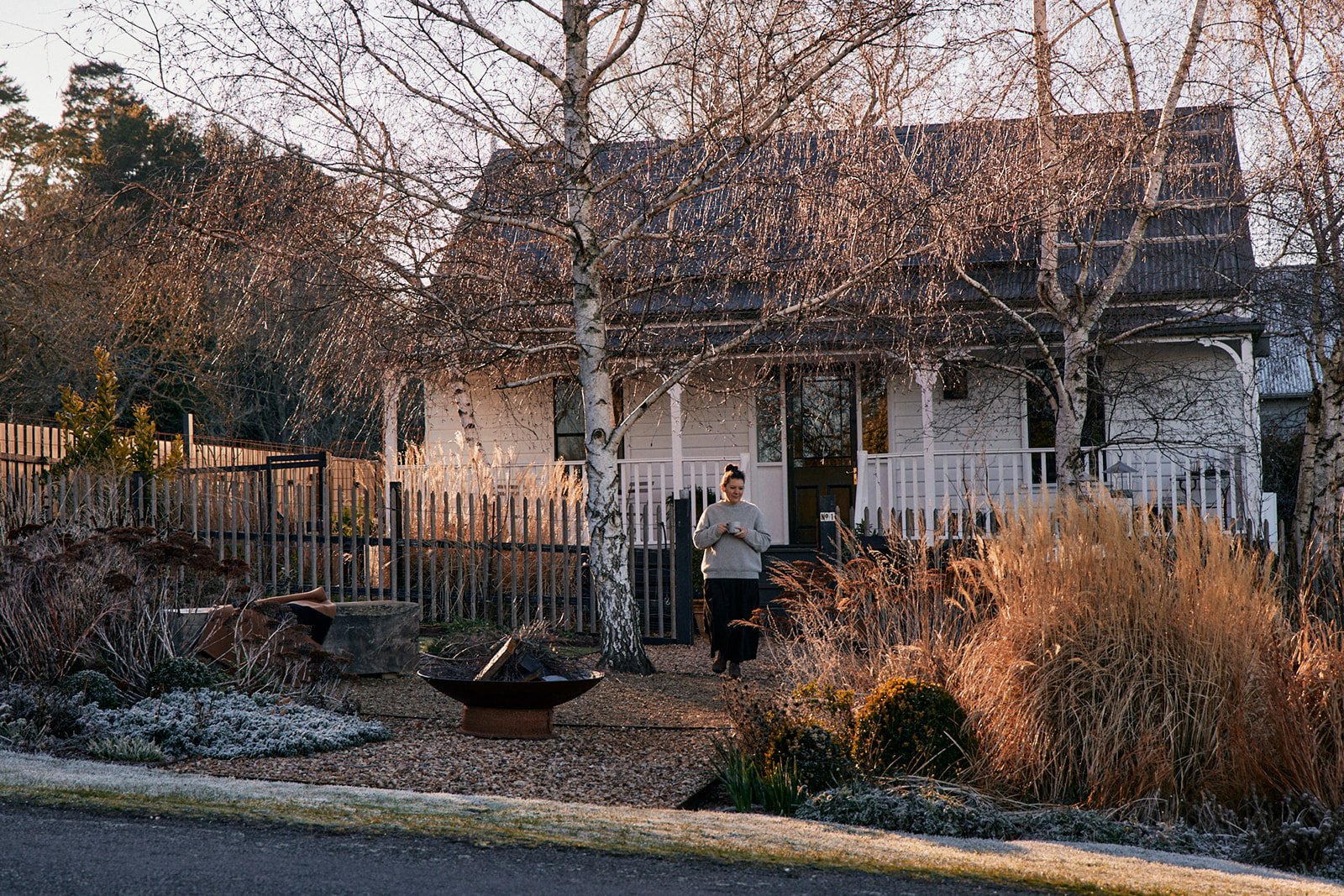
The verge garden on a crisp frosty winter’s morning.
Quick checklist.
Watch where frost settles before moving or planting anything important.
Keep soil covered with compost, mulch, leaves, straw, green manure or winter crops.
Plant garlic, broad beans, peas, snow peas and hardy greens where your climate allows.
Plant bare rooted trees, roses, vines and cane fruit while dormant.
Prune deciduous fruit trees and grape vines, but avoid pruning apricots in wet winter weather.
Gather fallen leaves for compost, leaf mould or mulch.
Check trellises, tree ties, espalier wires, stakes and climbing frames while plants are bare.
Protect frost tender plants when hard frost is forecast.
Avoid walking on or digging saturated soil.
Sort seeds, make notes and begin planning the next layer of the garden.
Continue your gardening journey with me
If this aligns with how you are thinking about your own garden, my workshops offer more detail and guidance on garden design, productive growing, soil care and seasonal practice.
June is also a good time to sign up to my newsletter if you do not already subscribe. I share seasonal notes from the garden, workshop updates, book news, upcoming events and practical ideas for creating a productive garden that works with your place.
My book, The Productive Garden Companion, is now available to pre order. It brings together decades of landscape architecture, gardening, teaching, preserving and lived practice, with guidance for creating beauty and abundance at any scale.
If you are building your garden from home right now, my eBooks on Wicking Bed Gardens, Introduction to Backyard Chicken Keeping and Compost for Beautiful Productive Gardens offer practical guidance that pairs well with this seasonal work.
Stay connected for more seasonal inspiration:
You may want to check out my related content below:
The Productive Garden Companion is now available to pre-order - This is the book I’ve wanted to find my entire life.
No Dig Gardening - less work, healthier soil
Caring for Ornamental Grasses - When (and Whether) to Cut Back
Stay connected for more seasonal inspiration:
Instagram | Facebook | Gardenstead | LinkedIn | Pinterest | YouTube | Website | Newsletter
Thanks so much for following along.
Natasha xx
Grow One Thing
Grow one thing.
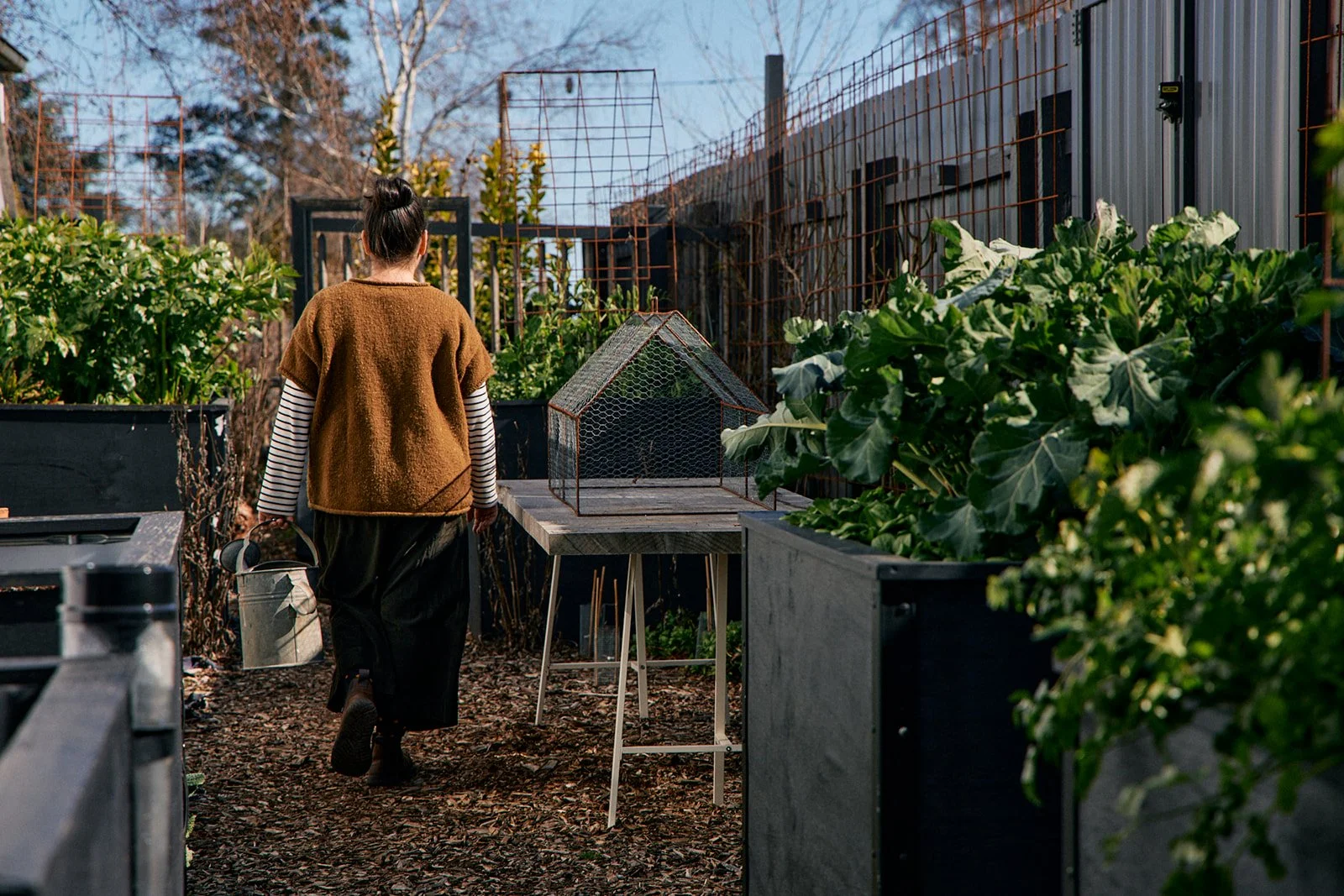
The verge runs the length of the front fence, 235 square metres of volcanic soil between the road and the gate. It is late May, and the season has been strange — cold the whole way through to Christmas, then hot, then cold again, now mild enough that three pumpkins are still hanging on a vertical frame and the espaliered quinces along the fence lines are giving me one or two to pick each morning.
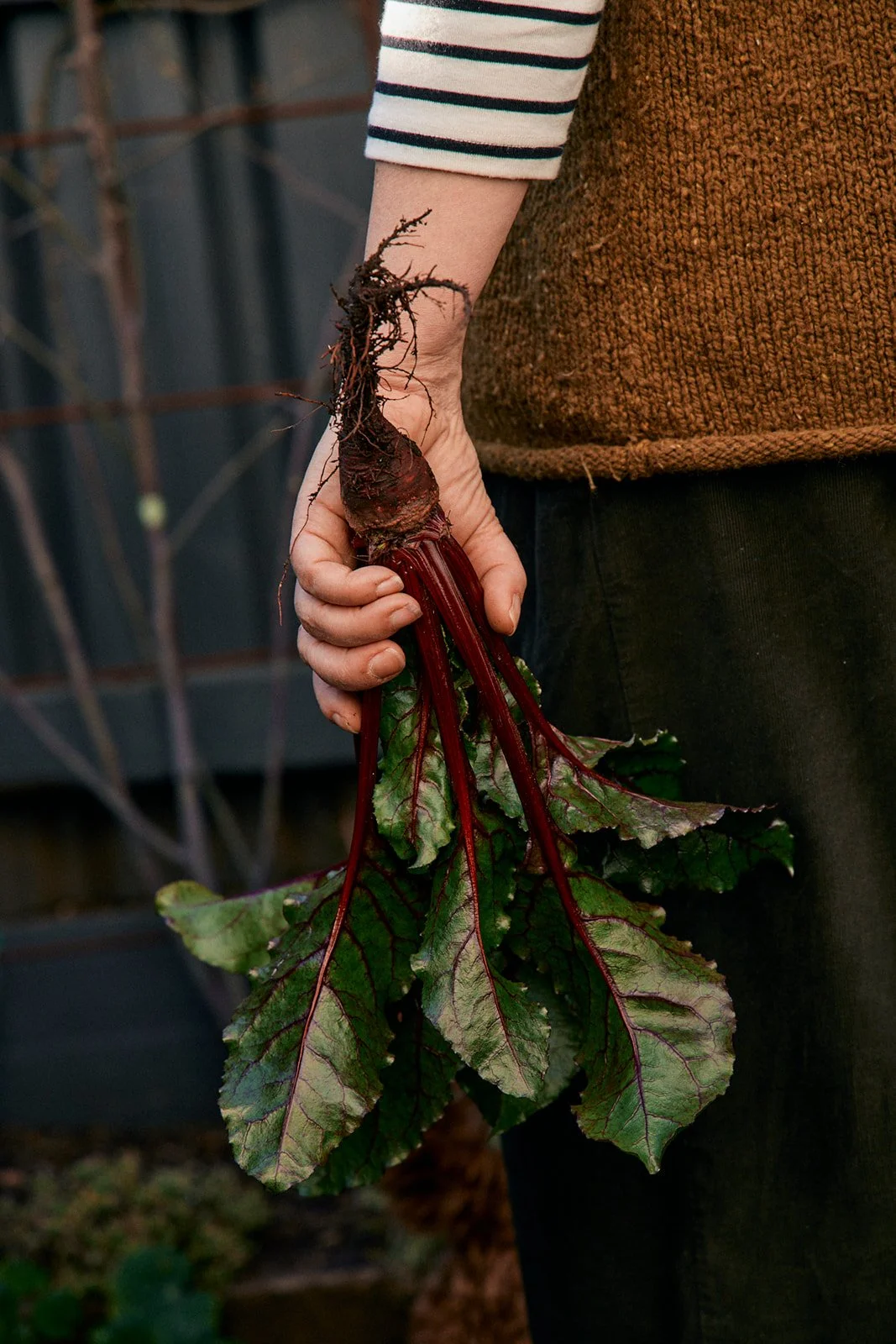
A paper bag of apples sat on the doorstep when I came out earlier. No note. This happens — not often, but often enough — and I never know who leaves them. I take them inside and put it on the kitchen bench, where it sits beside last week’s lemons that came from the neighbour who has more than she knows what to do with and who long ago told me, with the particular firmness of a woman who has produced too many lemons for too many years, do not grow lemons. I never have. She knows tomatoes and cucumbers and zucchinis will come back across the fence in summer, and we leave it there. It is not an arrangement. It is the small recurring fact of two people who grow different things and have agreed, without ever putting it into words, to keep doing so.
It was a few months ago, at Cliffy’s in Daylesford, that Donna Livermore and I sat down for an impromptu cuppa on a morning when the world was the kind of loud that lives in the shoulders before it lives in the news cycle. I do not have anything to add to those larger conversations that has not been said better elsewhere. But I do have a garden.
What Donna and I found ourselves saying to each other that morning — slowly, between sentences about other things — was that we were both looking at our patches of dirt this season and quietly wondering whether to put an extra thing in. We already had enough for ourselves. We were thinking about the world we were reading about, and the people we knew in it.
From that conversation came the small decision that we would run a workshop together on planting the naturestrip. People drove from across the shire to come. We didn’t know what we were starting. We still don’t, not really anyway. But we have a deep desire, plenty of ideas and are guided by our beautifully aligned values.

There was a year, a few years ago now, when the gates of Oak & Monkey Puzzle closed and the workshops stopped and there were no people to walk through the garden I had built. I had an existential crisis I think most people had in some form that year, which was to wonder what it had all been for. And then, somewhere inside the crisis, came something I could not have predicted. I noticed that the four things I needed in order to be all right were already there. Soil. Sky. Fresh air. Water.
The garden had been giving me these the whole time. I came to think of them as a currency. As long as I had access to those four, I would not go hungry and I would not lose the thing inside me that needs beauty and that needs the natural world. It is a kind of strange currency to count, but I have counted it many times since, in years that have not been easier, and the counting has held.
This is the part of growing that does not get said enough. A seed contains everything it needs to grow a plant. An egg contains everything it needs to grow a bird. Nothing has to be added. The conditions have to be right — soil, water, warmth, light, time — but the thing itself is already complete. You hold a tomato seed in the palm of your hand and you are holding a whole future plant, already written. There is no point in my life when I have not found this profoundly incredible. The word for what you feel when you have grown something yourself is agency. It is the feeling, in your hands, that you have made a thing happen that would not otherwise have happened. There are not many things in modern adult life that produce this feeling on demand. Growing food is one of them.
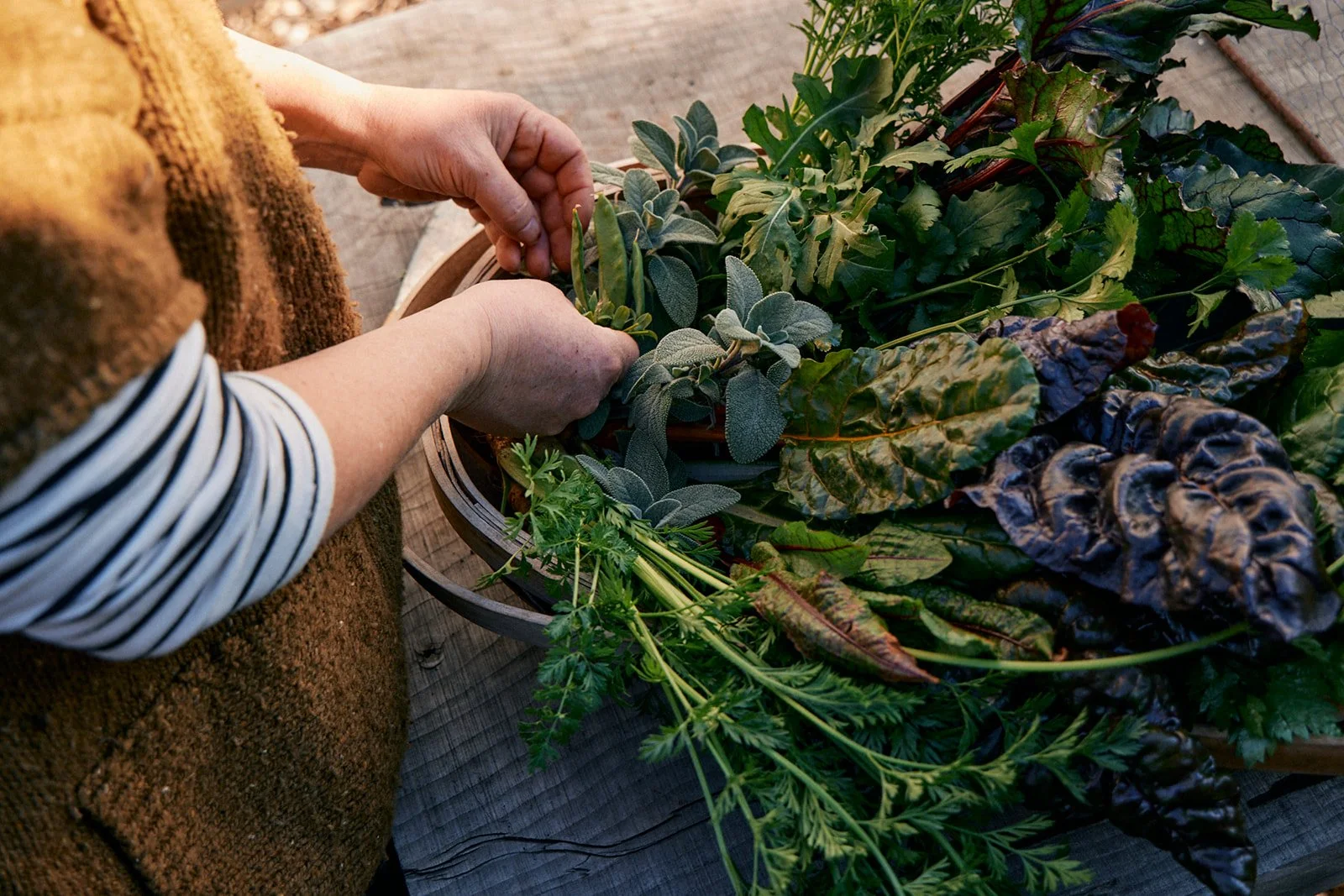
What I keep coming back to, after several years of writing about it in The Productive Garden Companion, is a question that is also a suggestion: what if every household, in whatever space they have, grew one edible thing this season. One. A pot of basil on a kitchen windowsill. A tomato in a polystyrene box on a balcony. A zucchini in a patch of borrowed dirt. A bean trained up a downpipe. One thing, grown from seed where possible, tended for a season, and eaten at the end. That is the whole proposition. There is no campaign attached to it. There is no pledge to take. Just the one thing, grown.
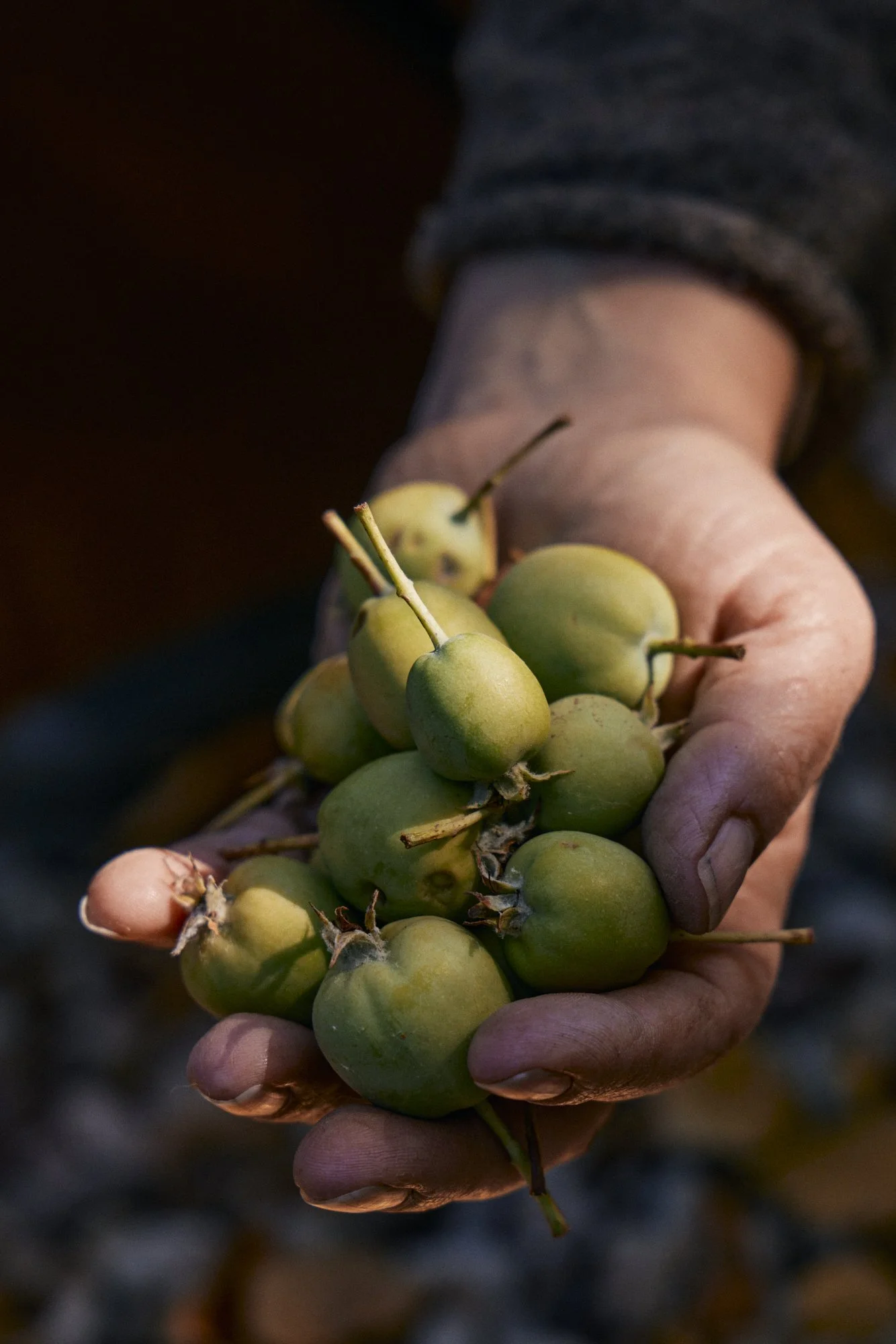
There are children alive now who have never tried a fresh pear. They have eaten pear, but always from a can. I find this almost impossible to sit with when I think about it for any length of time. Something has happened in our food systems that has put a small soft fruit, easily grown across most temperate climates, out of arm’s reach for an entire generation. The pear is not the point. The pear is one example.
What I have changed my mind about — and this is the most important shift since I first wrote this idea down — is the shape of the ask. There is no obligation to swap. There is no obligation to share. There is no obligation to scale. If a person grows one thing this season and eats it themselves and feels the small specific feeling of having grown the food on the plate, that is enough.
The ripple happens anyway. A paper cup with a seed in it, repeated a hundred times in a hundred different windowsills, is a hundred more conversions of seed to plant than there was before. There are no failures in growing. If the seedling dries out, you have learned what your seedling looks like before it dies of thirst. Every dead plant is a piece of information the next plant will benefit from. The only way to fail at growing is not to start.
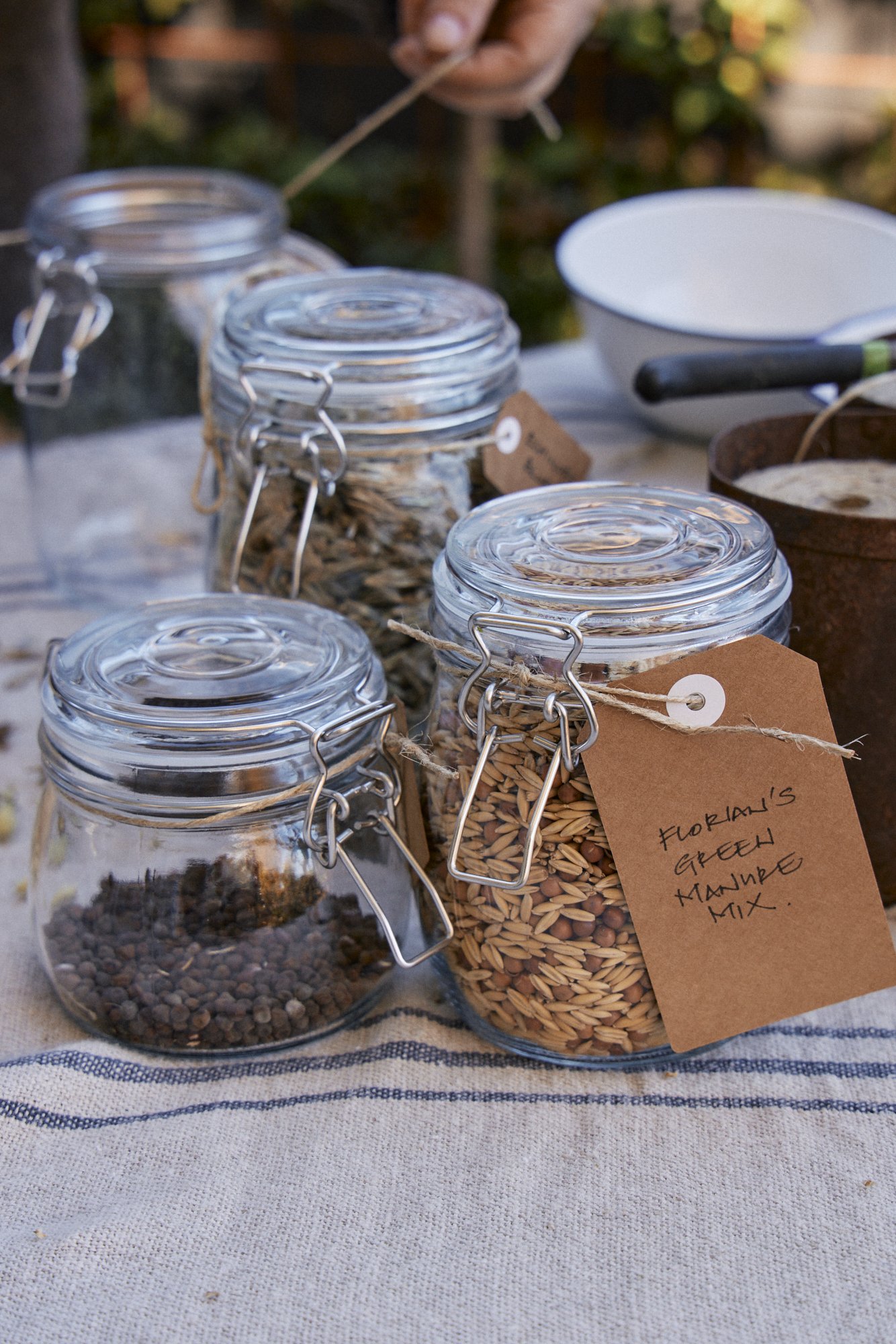
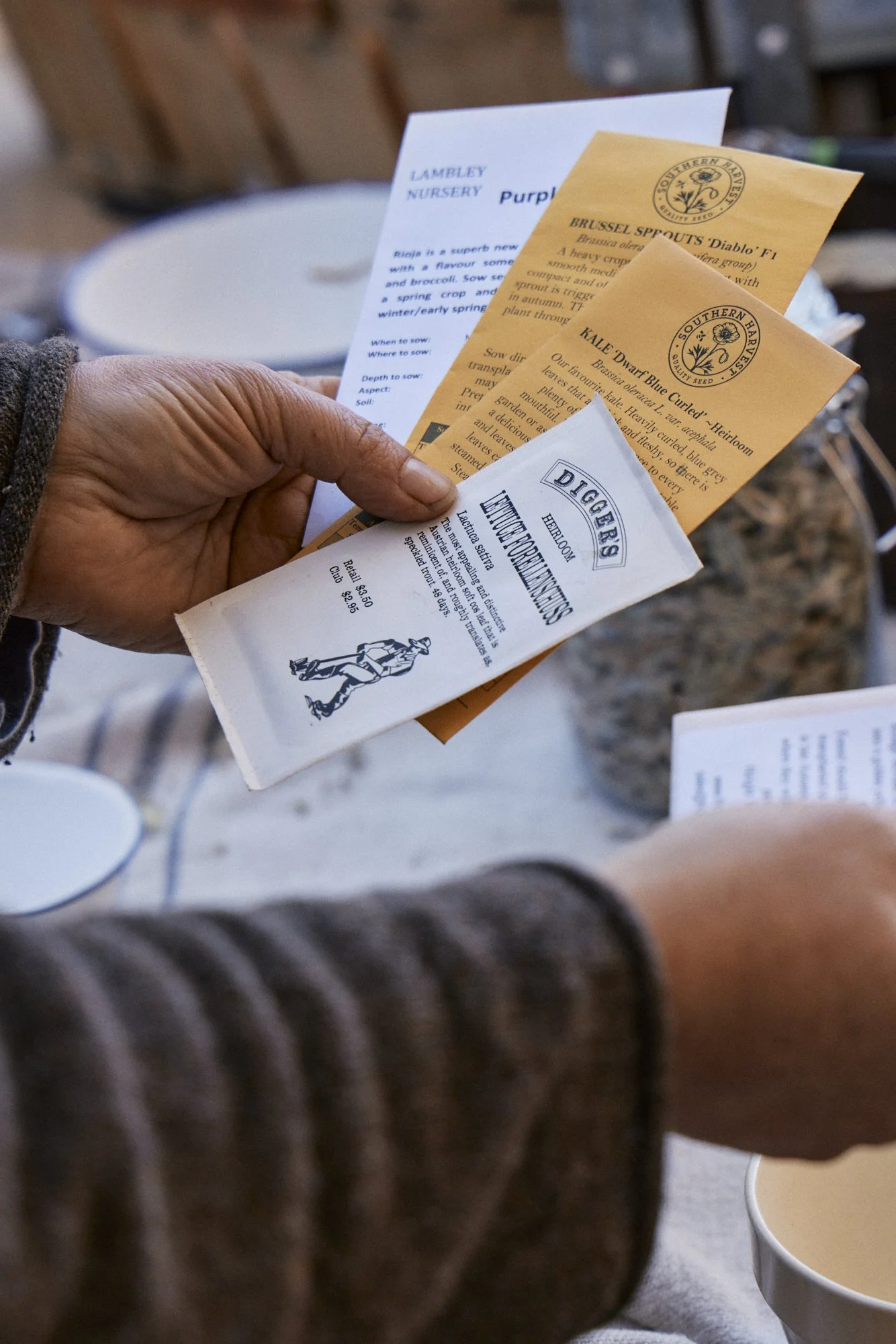
That, in the end, is what I am asking. Just the start. One thing, in whatever space you have. The seed that you put into the soil will do almost all of the work. You need to notice it once a day. You need to give it water before it wilts. You need to be there when something happens, and you need to be there when something does not happen, because both teach you the same thing about being a person who tends.
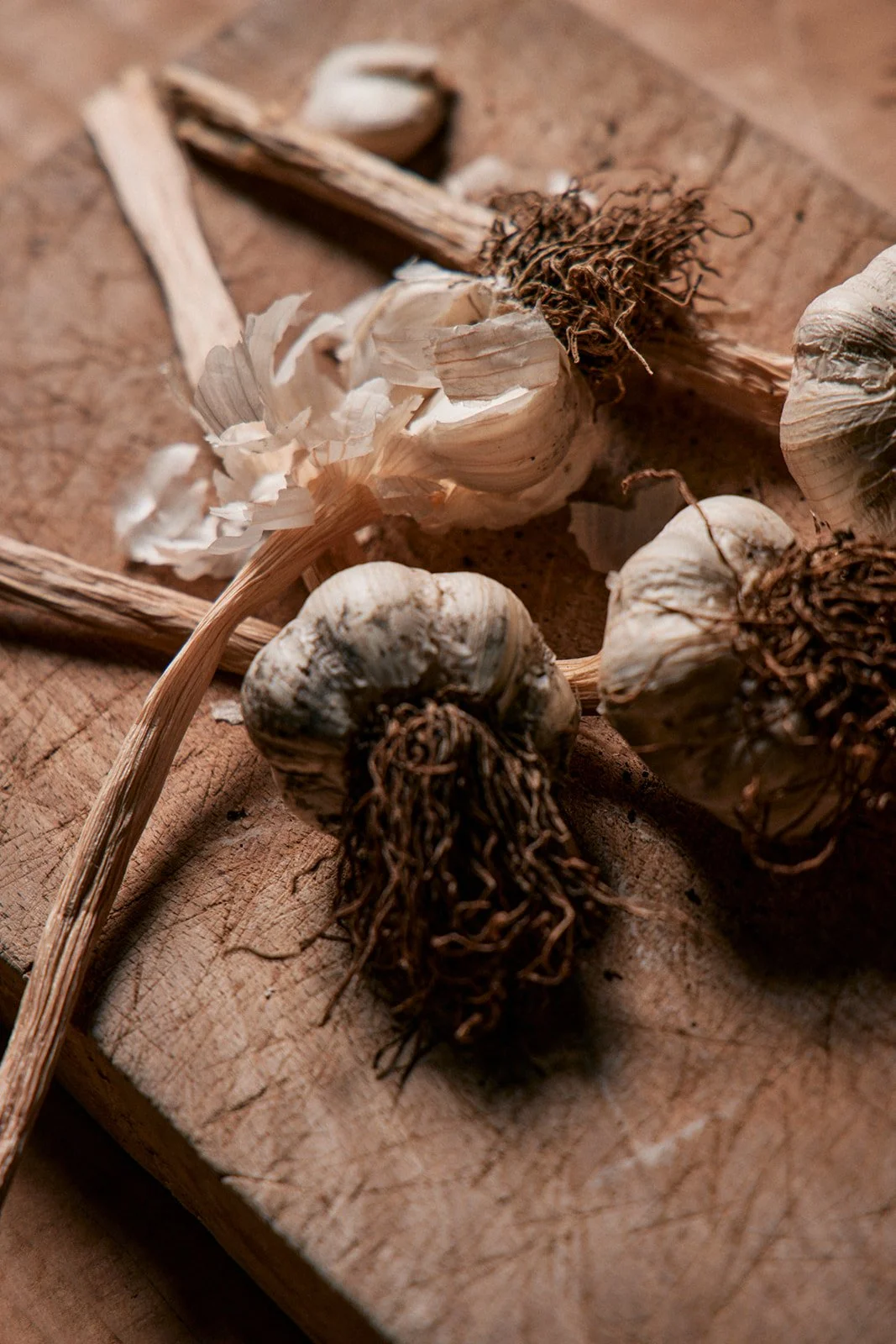
The paper bag of garlic is still on the kitchen bench. I do not know who left it. I will probably never know. The leeks are flowering and the parsley is a carpet. The seed is doing what the seed has always done, which is everything it needs.
Continue your gardening journey with me
If you enjoy this kind of content, my workshops offer more detail and guidance on design, productivity and seasonal care.
If you are building your garden from home right now, my e-books on Wicking Bed Gardens, Introduction to Backyard Chicken Keeping and Compost for Beautiful Productive Gardens offer practical step by step guidance that pairs well with the workshops
I share seasonal tips, behind the scenes at Little Cottage on a Hill, and new resources through my newsletter. Subscribe to receive my entire plant list from the garden as a personal thank you.
You can also pre-order my book The Productive Garden Companion, the book I have wanted to find my entire life. A complete guide to growing for abundance and beauty in any space. The Productive Garden Companion is a practical, reassuring and visually rich modern gardening book that meets gardeners wherever they are, from windowsill pots to generous acreage.
You may want to check out my related content below:
When the World Feels Uncertain - Grow One Thing
Why I Grow. Why I Design. Why I Return. - Finding comfort in small daily acts.
Romanesco - fractal beauty from the brassica bed
Stay connected for more seasonal inspiration:
Instagram | Facebook | Gardenstead | LinkedIn | Pinterest | YouTube | Website | Newsletter
Thanks so much for following along.
Natasha xx
What a productive garden means to me
What a productive garden means to me
You had to move the rug, lift the lid, and climb down.
My baka's cellar was under her kitchen floor. Cool, dim, slightly damp, with shelves around you and Fowlers Vacola jars lined up. The smell of rubber seals and metal that stays with you. A smell of work and something held for later.
Baka is Serbian for grandmother, and her cellar was one of my first encounters with productivity, although I would not have used the word for years. In the world I grew up in, productive meant useful and industrious. My mother built a legal practice from a migration story, and her version of productivity carried survival inside it; my baka's cellar carried the same instinct in jars and rubber seals. Both held real love and real survival inside them. By the time I was old enough to feel the weight of the word, productive had become almost indistinguishable from identity. What I did seemed to stand in for who I was.

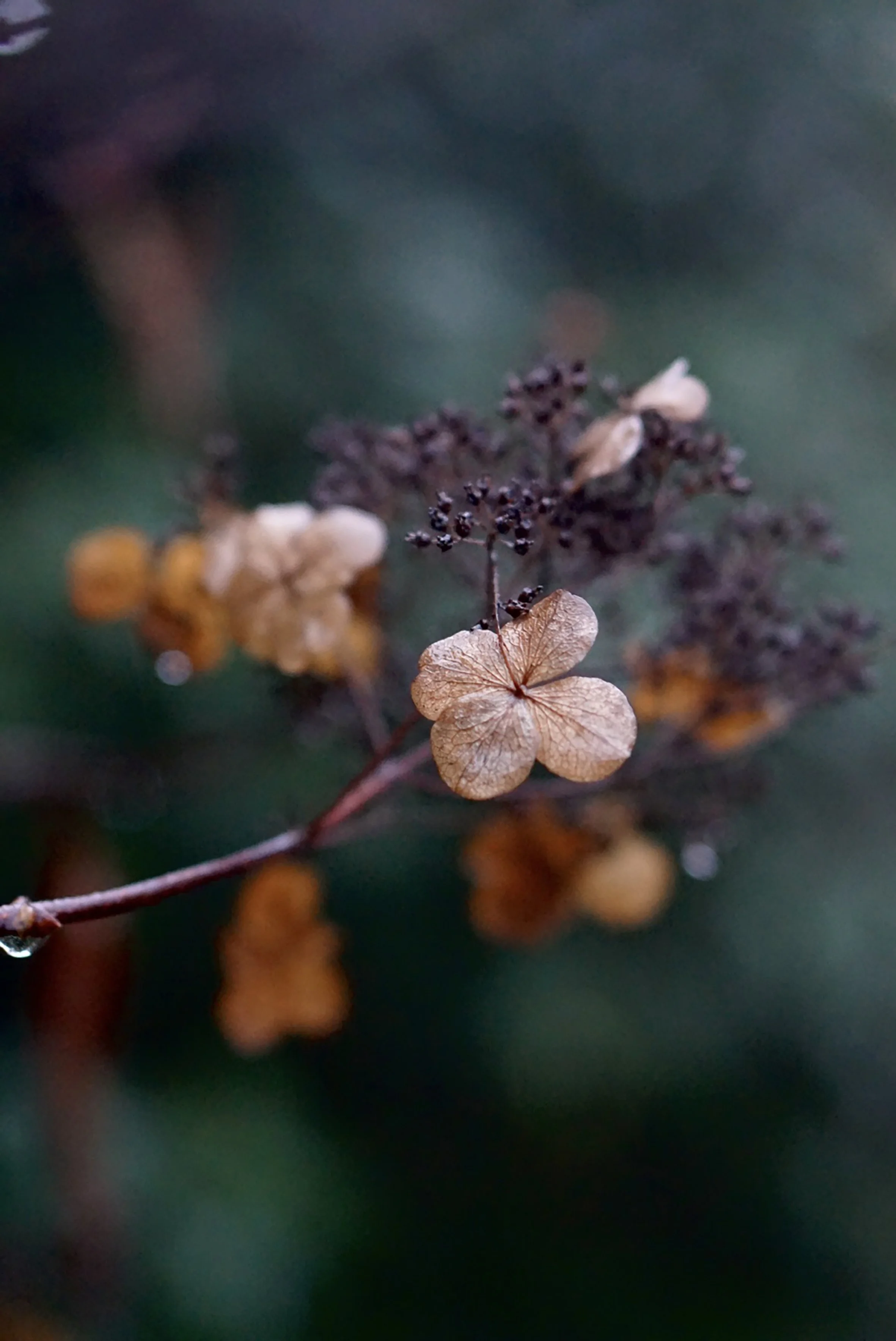
For a long time, I felt conflicted by finding beauty central to a garden. The garden books on coffee tables when I was small were affluent and clipped. Gardens too composed to inhabit. Seemingly devoid of people or the inhabitation of human life in any of the pictures. Beauty was the indulgence — the thing you added once the sensible work was done. I certainly don’t subscribe to that. Beauty helps us care. The borage lit gold at the back of the kitchen garden. The black hollyhock catching the last of the evening light. The intoxicating scent of wintersweet (Chimonanthus praecox - below) that pulls you closer in the cold. The line of a clipped box ball holding a winter garden together when everything else has slumped into sleep. Echinacea seedheads left standing because the birds might need them, and because I might need them too, in some way I can feel before I explain.
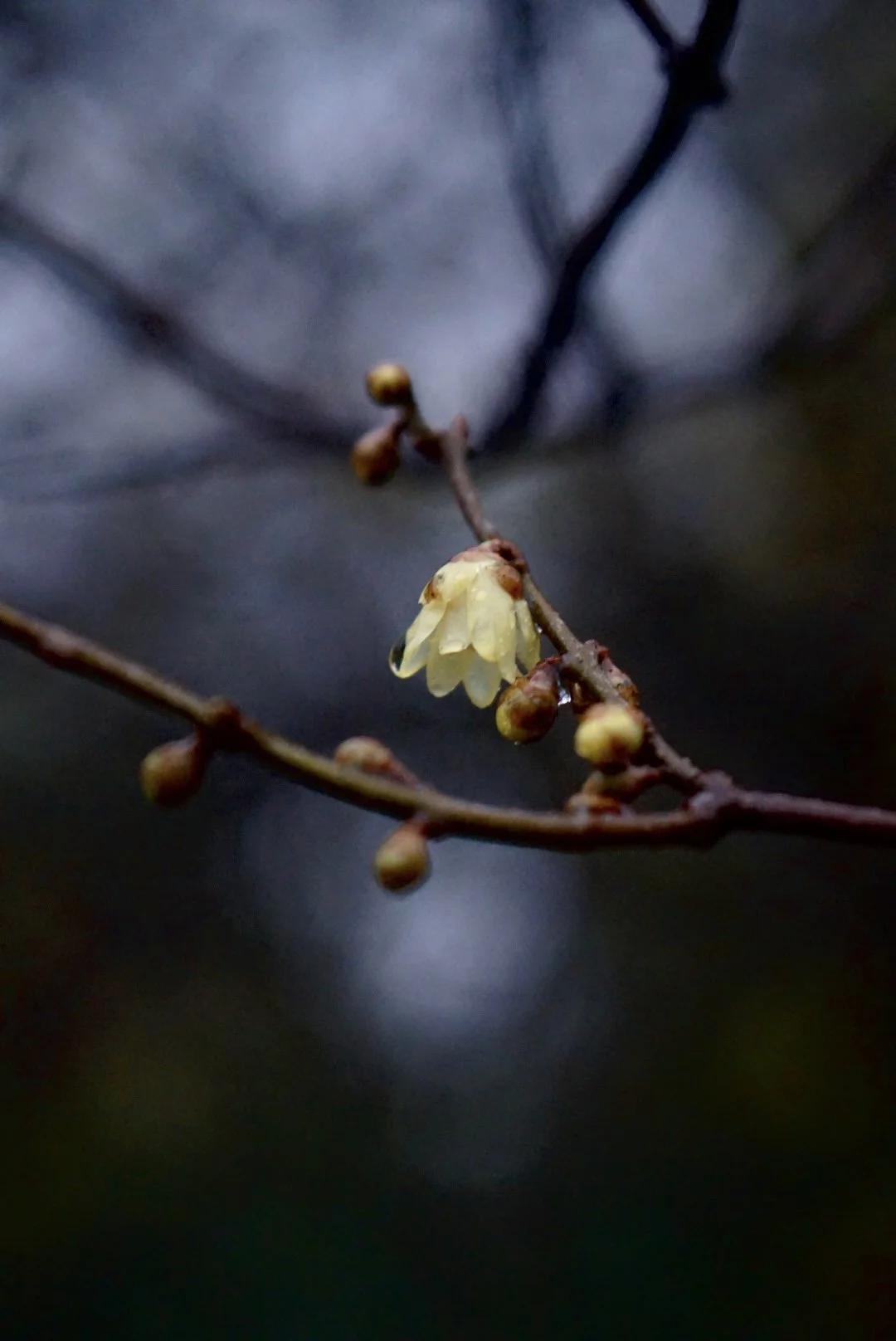
Wintersweet (Chimonanthus praecox)
Friend and landscape architect, Simone Bliss, has helped me name that more clearly in my book. Her landscapes are full of care without being sentimental. She understands the human brief and the land brief together — a seat with a protected back paired to a view of the horizon, an enclosed corner sized for someone to sit in safely. She understands that healing and productivity are the same conversation. A garden can produce the conditions for someone to stay in their own body a little longer.
When I left Oak & Monkey Puzzle in Spargo Creek — five acres in a forest clearing where the kitchen garden, the orchard, the chickens, the workshops and the long lunches all found a home — I thought I was downsizing. I was wrong. I was distilling. Five acres became 515 square metres, plus the verge, on a corner block opposite the Wombat Hill Botanic Gardens in Daylesford — my Little Cottage on a Hill. Inherited neat categories became useless almost immediately. The 27-metre northern fence could no longer remain a fence; I had no room for an orchard, so it became a double-layered espalier of stepover Huonville crabapples below, pears and quinces above. A driveway could not be only a driveway. Compost bays became towers, sometimes layered with potatoes because why not let the compost feed you twice. The kitchen garden moved across thresholds — some out on the verge for passers-by to pick, the rest in wicking beds pulled close to the house after a $900 water bill made the old way feel absurd.
Scale is not the measure of abundance. Attention is. Design is. Care is.
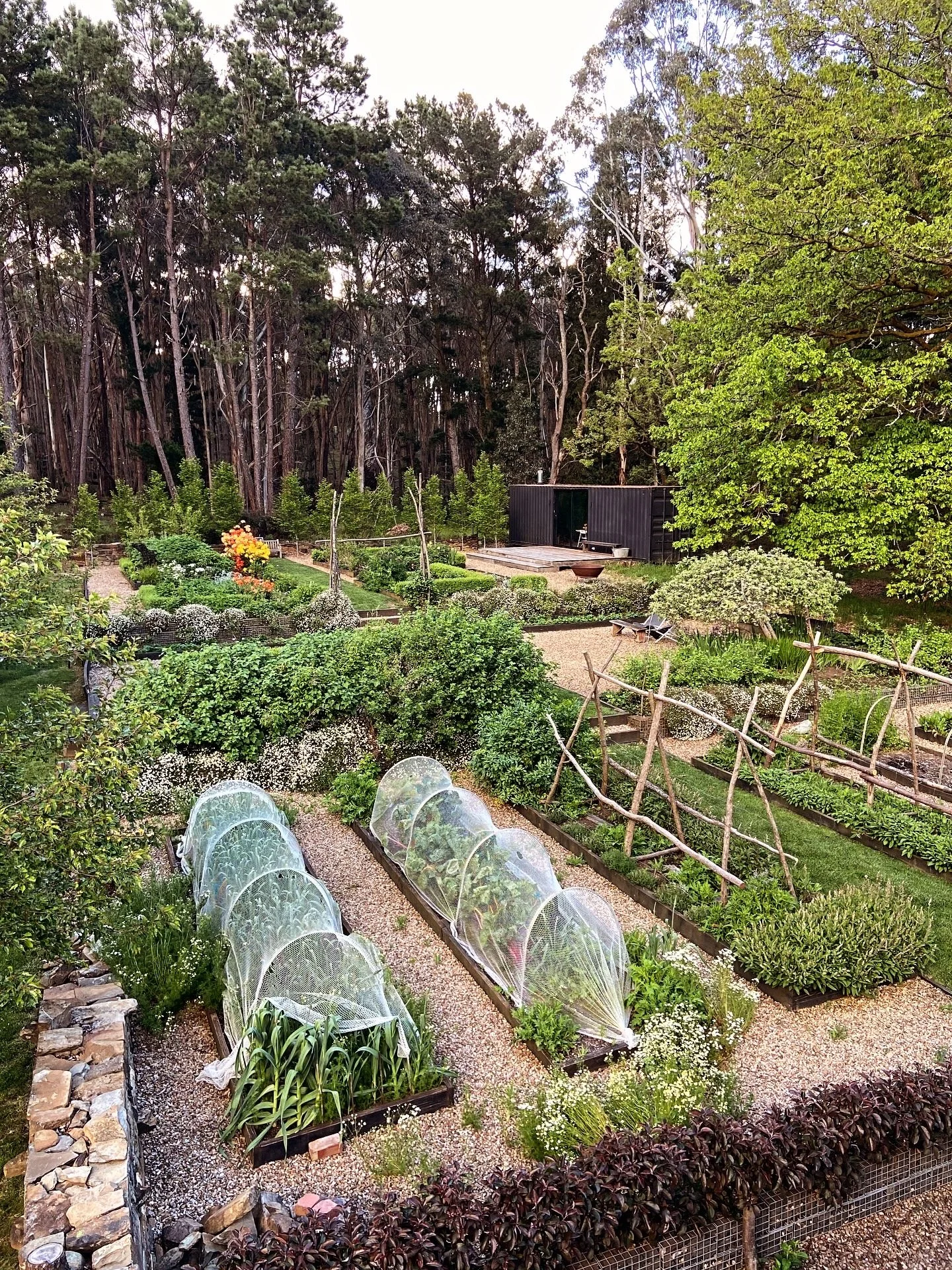
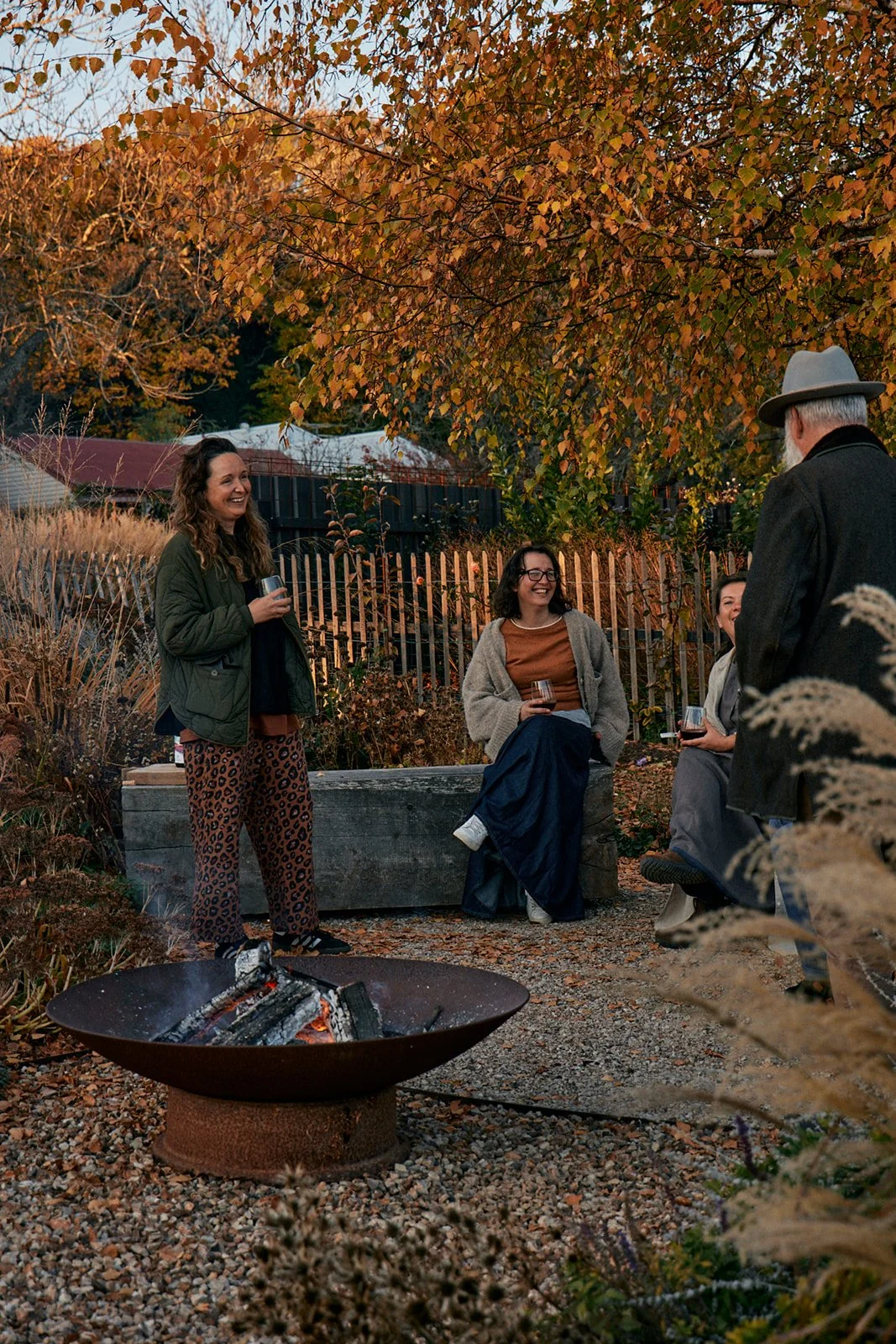
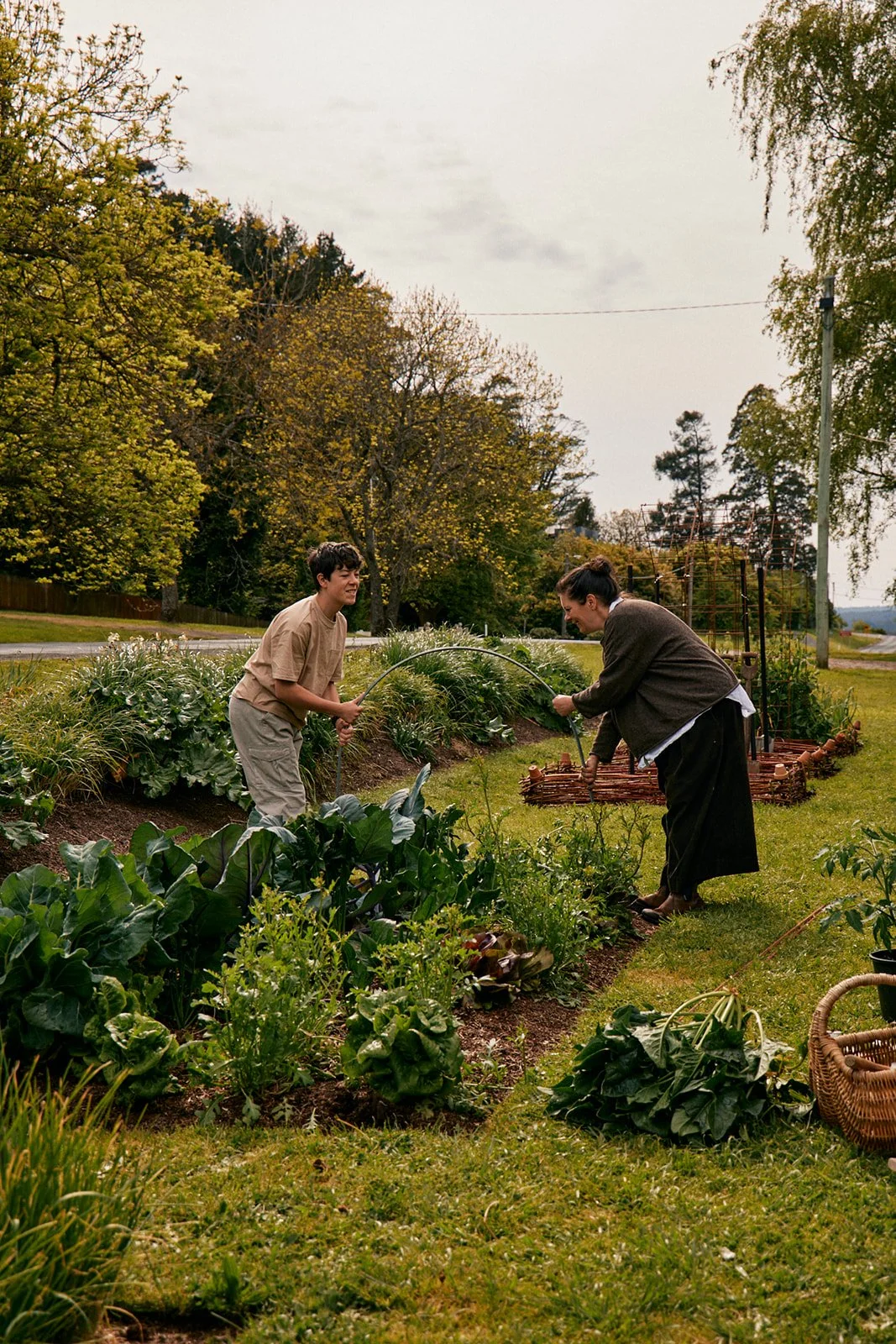
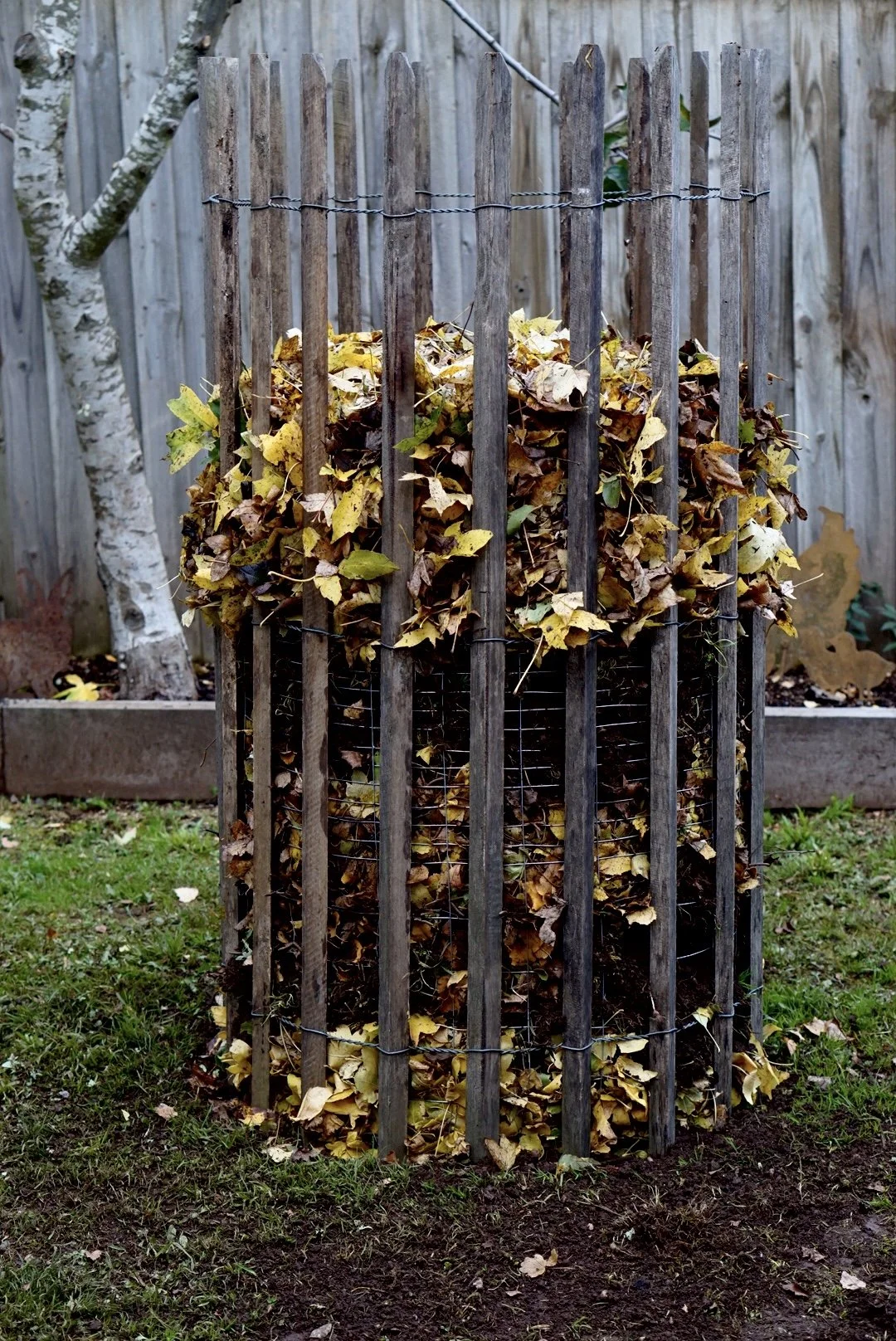
Mary Reynolds, book contributor and ‘reformed landscape architect’ whose ARK work asks what happens when we begin returning pieces of land to the more-than-human world, expanded the word again. A productive garden is habitat — a field station, a record of which species you are willing to live with and which you are willing to make space for. The verge along the western edge of Little Cottage has surprised me most. People stop their cars. A council compliance officer once came because someone thought I must be doing something illegal making a garden on public land. He looked at it and said: ‘Keep going. I love it.’
And there is Alla Olkhovska in Kharkiv. She tends a family garden where apple trees planted by her great-grandfather still blossom, where peonies from her great-grandmother carry memory through living roots. During the war her seed catalogue became livelihood. She cleans and dries seeds by candlelight through blackouts and sends them out into the world in small paper envelopes. A seed leaving Kharkiv and arriving in someone else's garden is botanical, yes, but also human. After Alla, no easy definition of productive will hold.
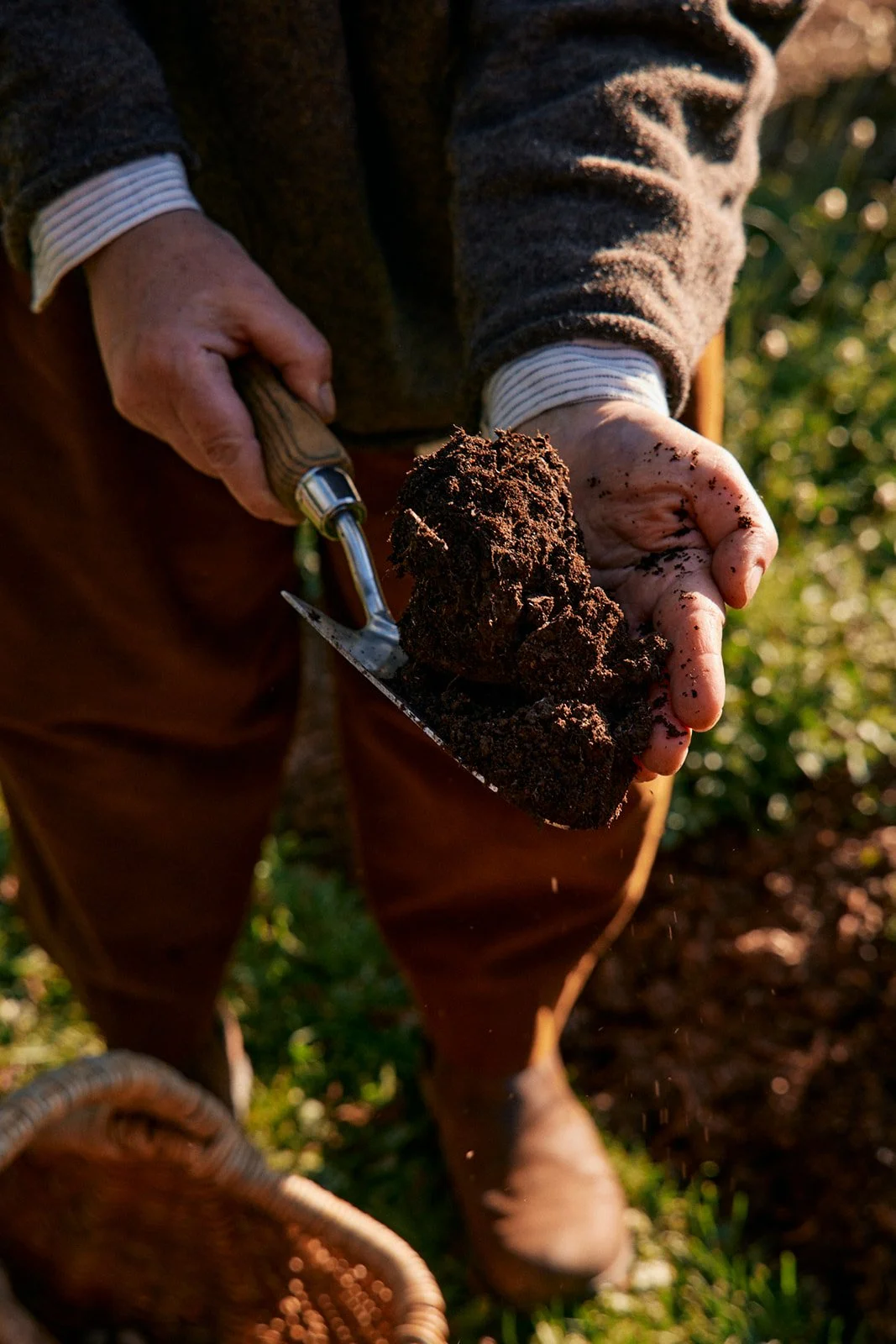
This is why so many people are reaching for gardens, or growing — and I say growing deliberately, because you do not need a garden. A windowsill grows something. A balcony grows something. A borrowed strip of land grows something. The world feels uncertain in ways that do not need to be itemised to be felt, and many people are looking for something real to do inside the reach of their own life. Agency in the garden is the feeling that I can make one decision that tends life. I can feed the soil in one bed. I can plant parsley exactly where I will use it. I can give a bunch of flowers to someone who has no words for their grief. I can make one corner more generous than it was yesterday.
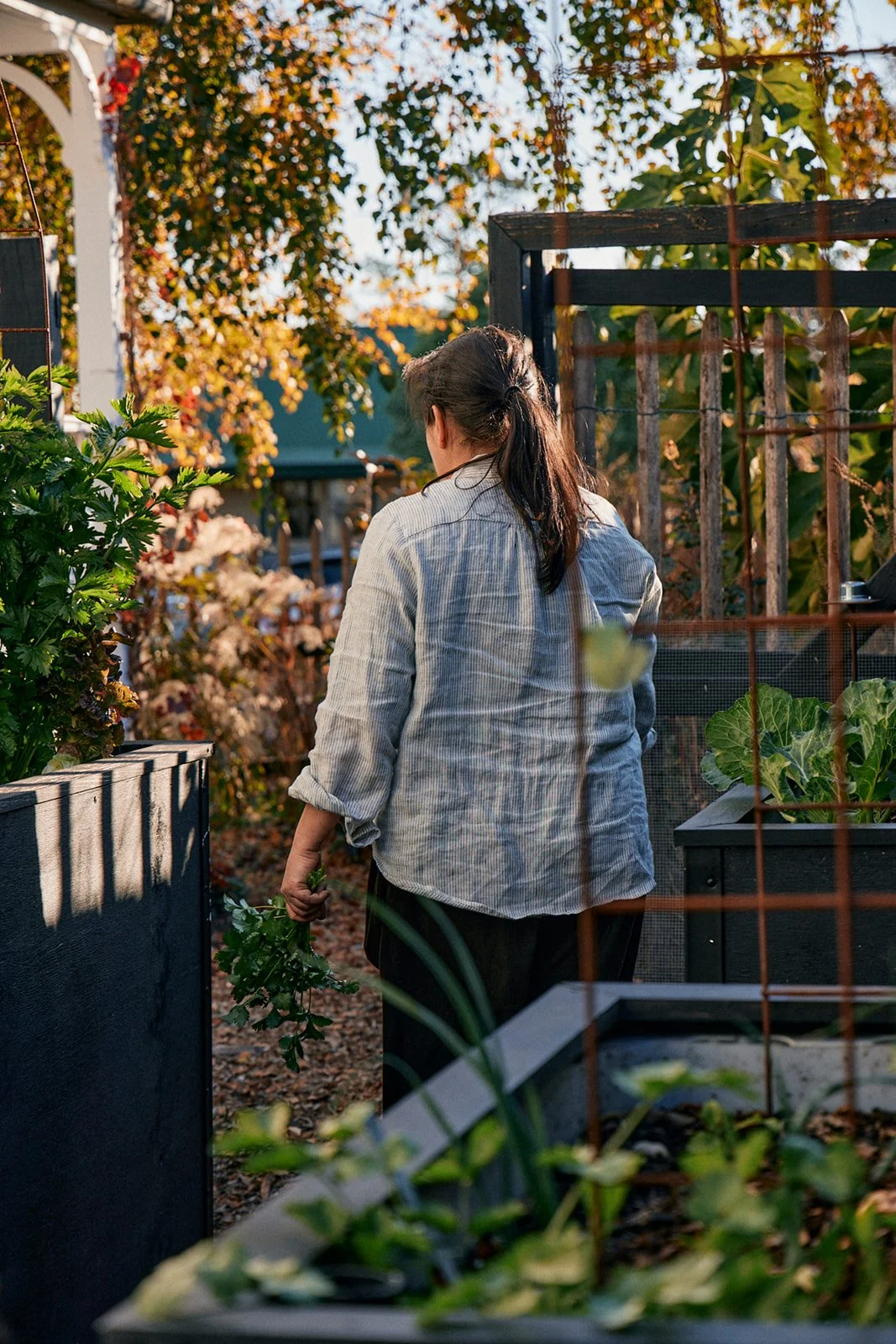
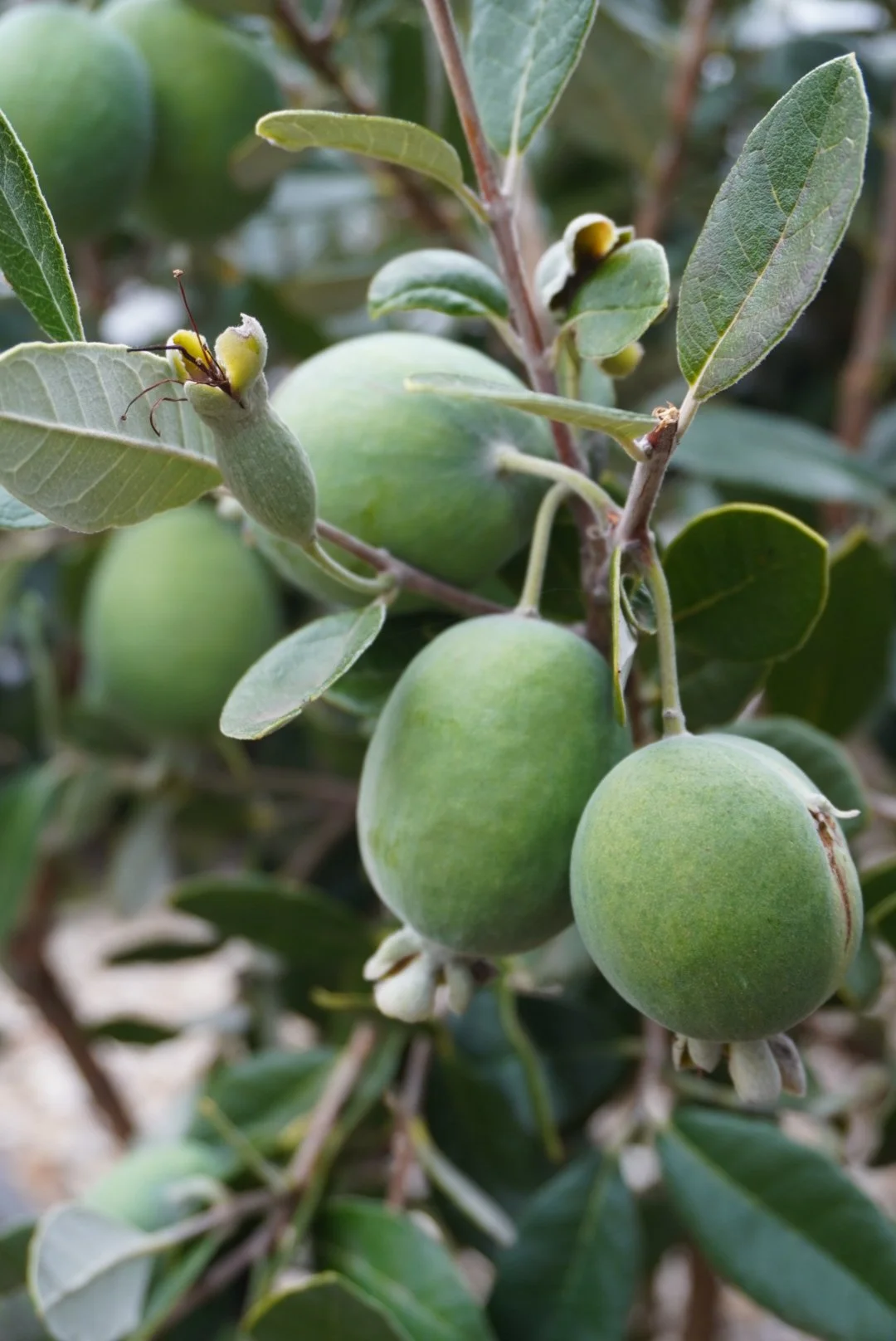

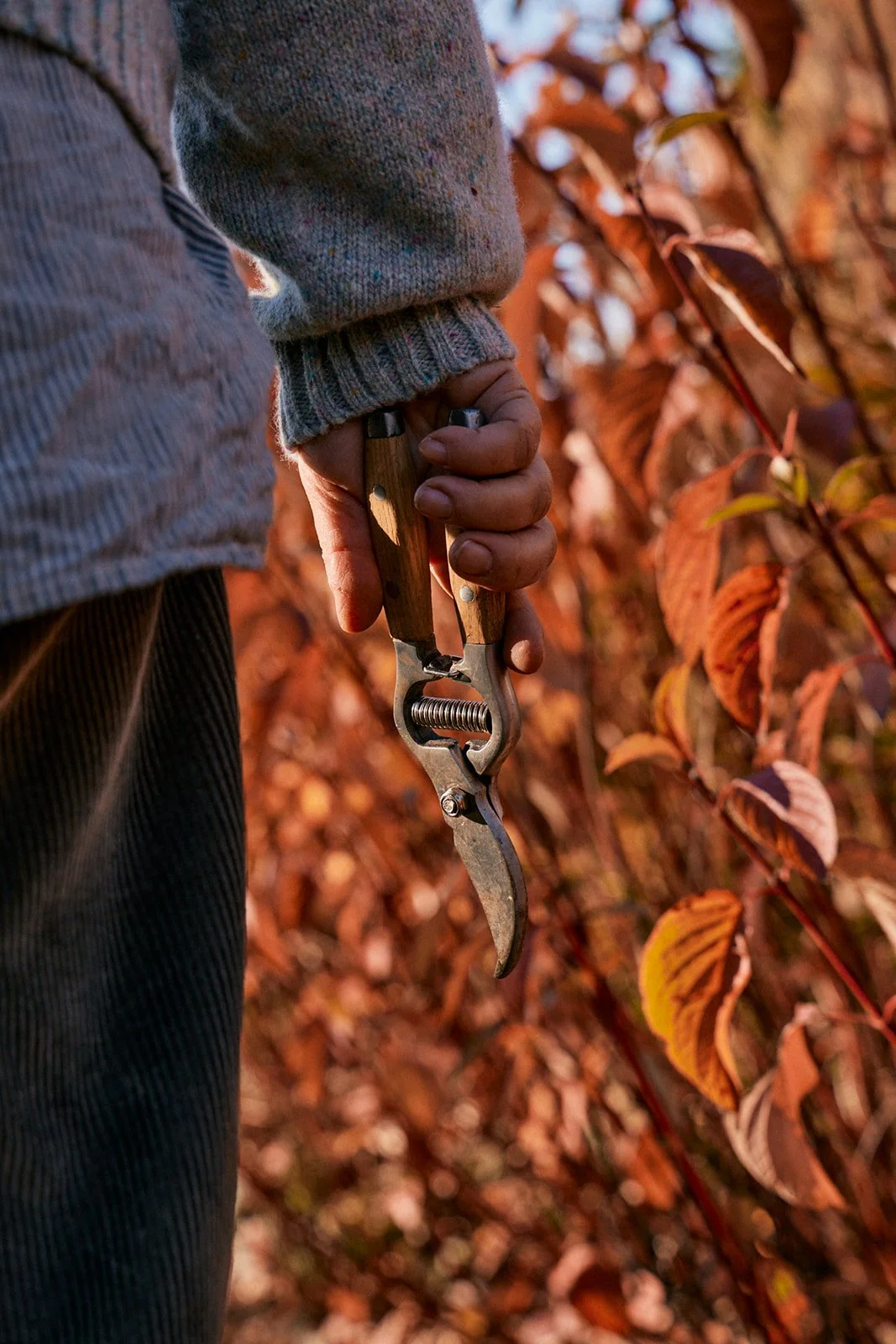
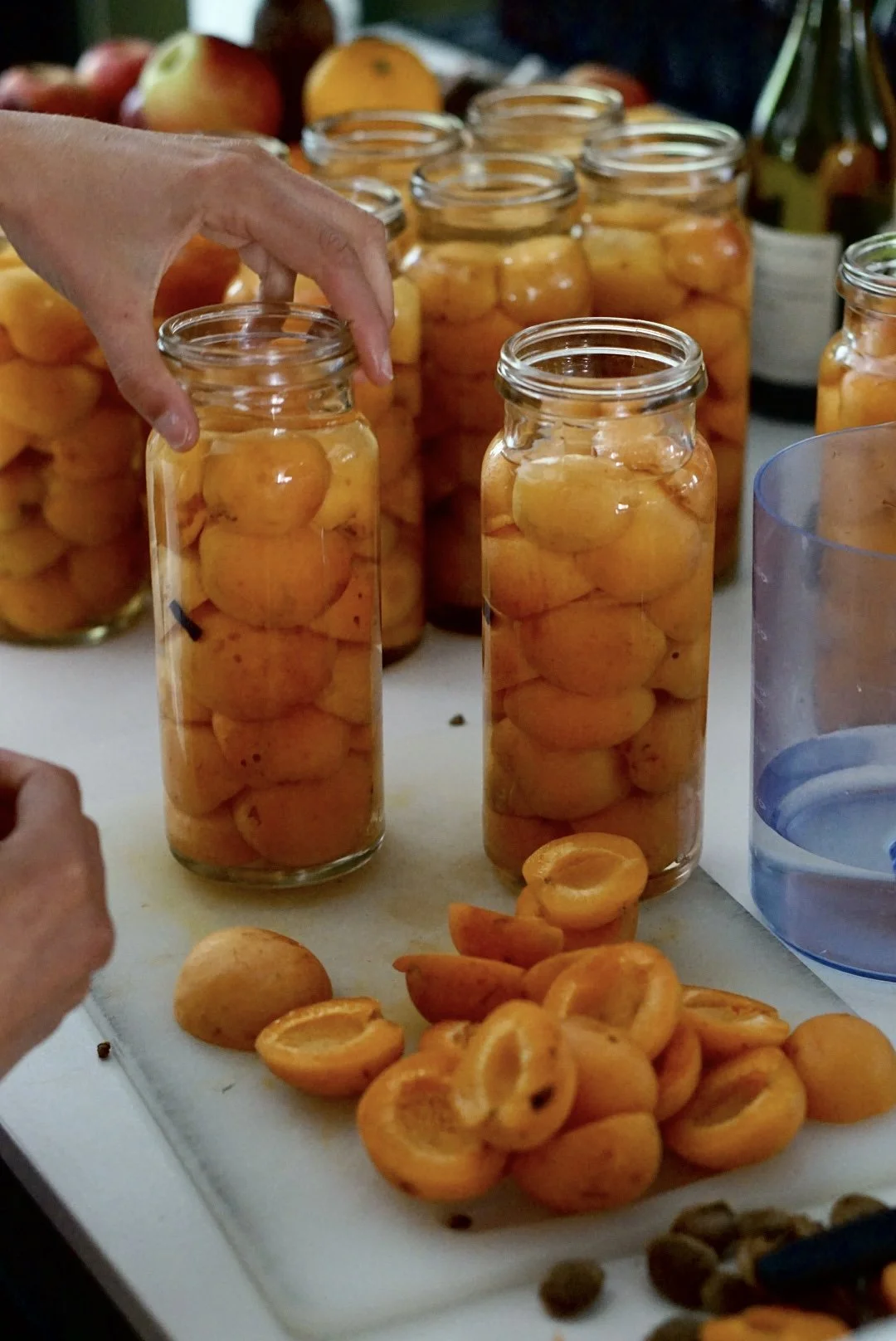
I think back to my baka's cellar — the dimness, the jars, the smell of rubber and metal. Food held underground because one day someone might need it. And then I think of myself now, standing at the gate at Little Cottage on a Hill with secateurs in one hand and a feijoa near my feet, watching someone slow down beside the verge. The garden is feeding insects. It is feeding us. It is building soil. It is producing fruit along the fence line, warmth in a wicking bed, flowers for a table, seeds for next season, questions from children, limes left by strangers, and conversations I could never have planned.
A productive garden is not measured only by what it produces. It is measured by what it makes possible.
I’m sure my definition will keep shifting and evolving. Just as a garden does. It’s unlikely to stop growing.
Join The Productive Garden Workshop with Natasha Morgan
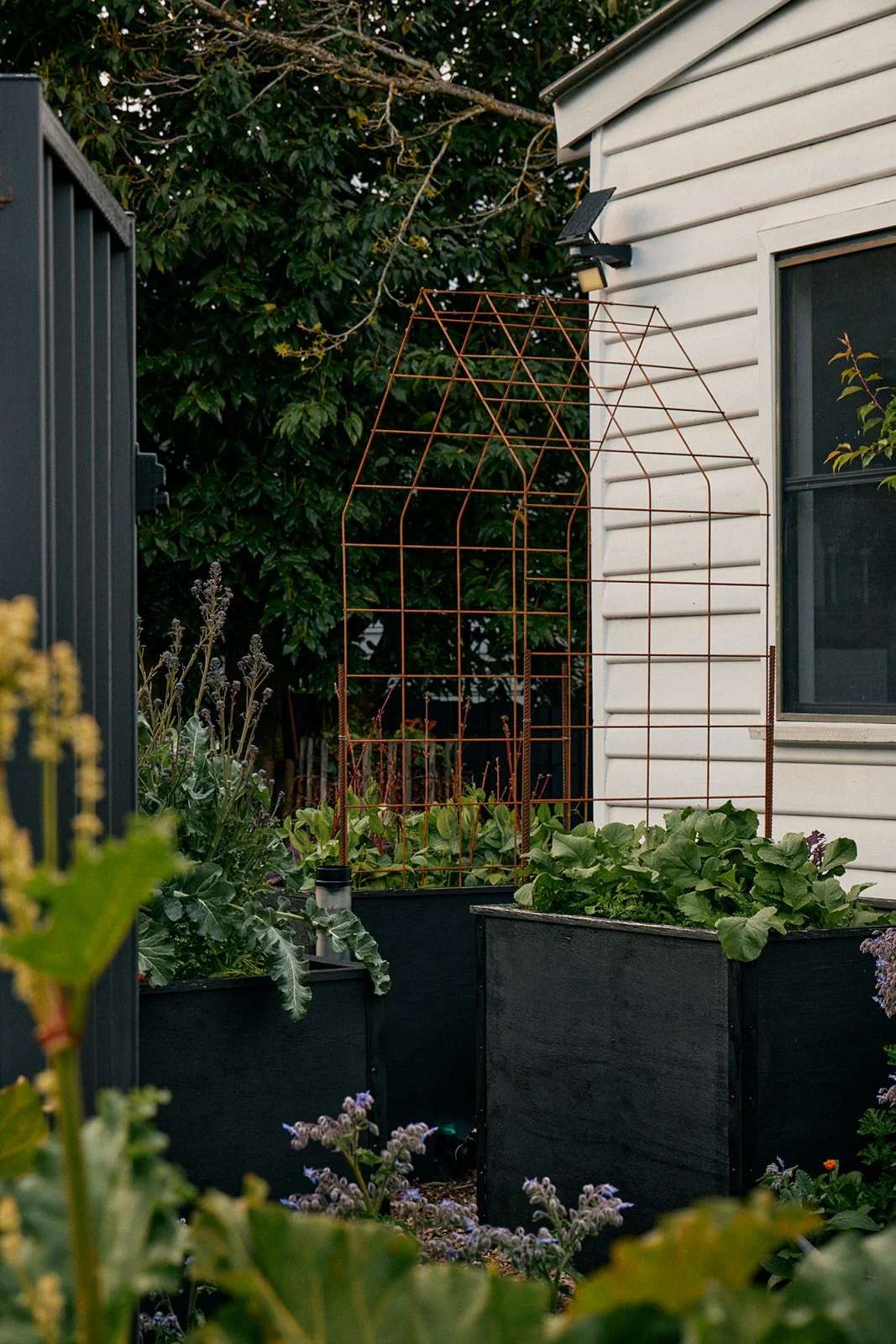
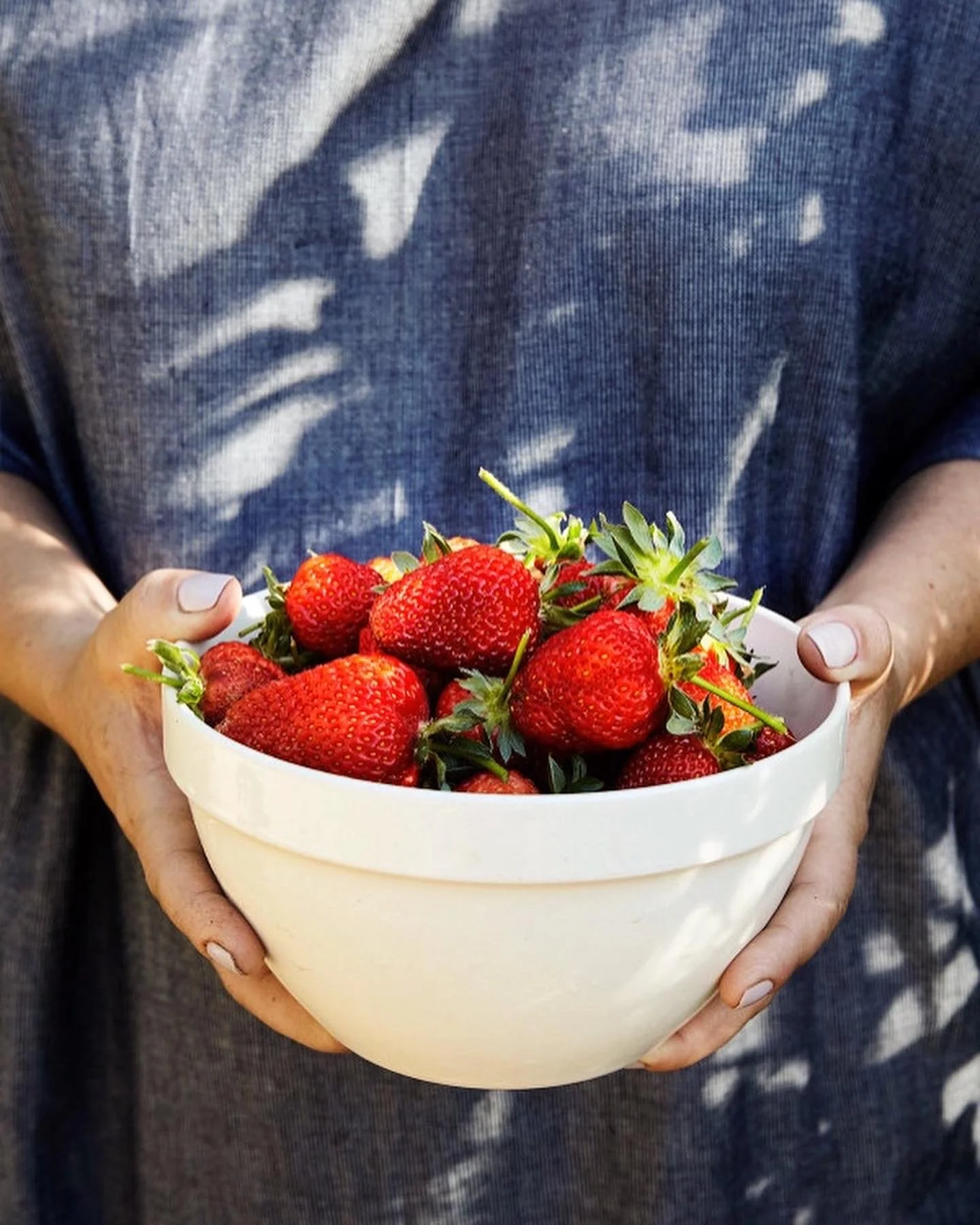
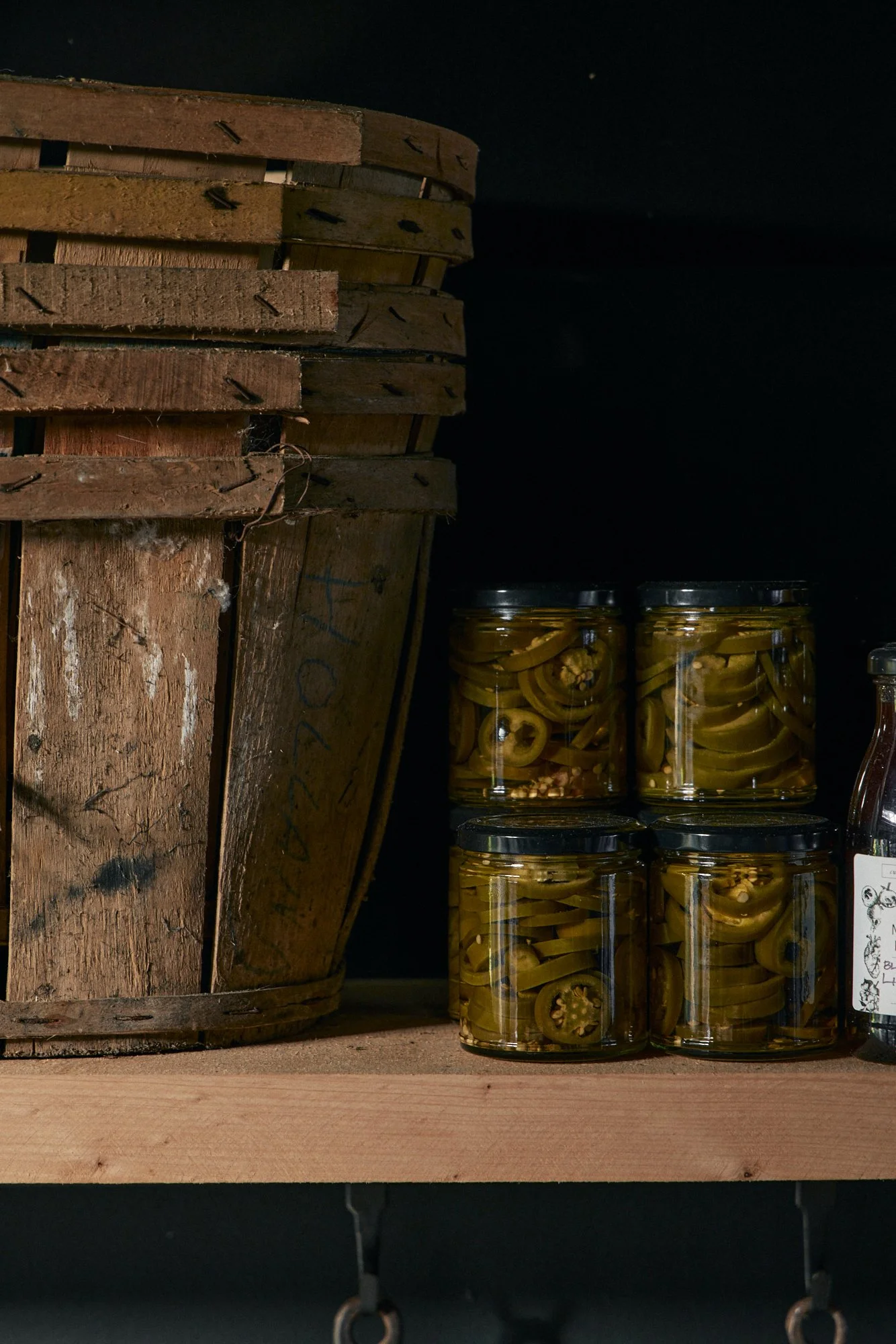
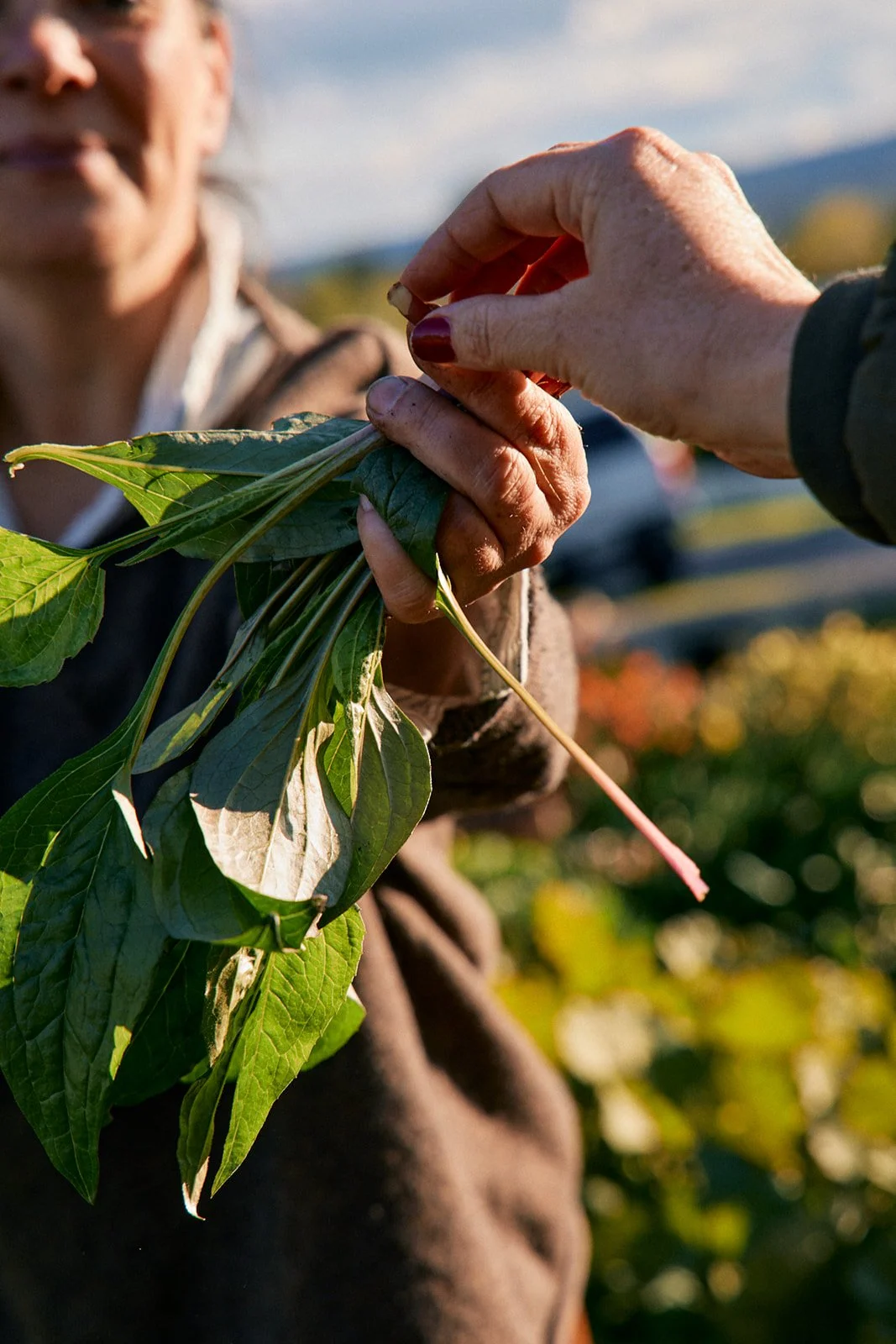
Growing abundance at any scale. We focus on the foundations of creating a truly productive garden, spatial thinking for small and larger gardens, vertical growing, soil and worm systems, espaliers, along with the simple seasonal tasks that keep things moving. Discover the inspiration behind my productive gardens, the tools and techniques to make places of beauty and abundance, grounded in sustainable and innovative practises. This is where beauty meets purpose through food, flowers, medicinals and ornamentals.
We begin with context so the garden in front of you makes sense. At Little Cottage on a Hill we walk and notice and talk through how things operate in real time. In The Productive Garden I also draw on my years at Oak and Monkey Puzzle to show how principles translate across scale.
Each workshop has its own rhythm, and the backbone is the same. Clarity, practice, and time together in the garden. The Productive Garden keeps design present but light, focussing on soil, systems, structures and seasonal work.
People often tell me they leave feeling welcomed, inspired and confident to begin. Small groups make this generous, rich and rewarding. There is time for questions. We break for tea and cake. We learn together. The energy comes from the room as much as from the garden, and everyone goes home with more than they arrived with.
Continue your gardening journey with me
If you enjoy this kind of content, my workshops offer more detail and guidance on design, productivity and seasonal care. May is also a great month to sign up to my newsletter if you do not already subscribe, where you can find out more about an exciting giveaway I am running for those who pre-order a copy of my book The Productive Garden Companion.
Explore current workshops in the shop.
This season’s offerings include:
If you are building your garden from home right now, my ebooks on Wicking Bed Gardens and Introduction to Backyard Chicken Keeping offer practical step by step guidance that pairs well with the workshops.
You may want to check out my related content below:
Win a bespoke Daylesford getaway - inspired by The Productive Garden Companion
May Garden Tasks for Australian Climates - May brings a quieter kind of momentum to the garden.
When the world feels uncertain - grow one thing
Stay connected for more seasonal inspiration:
Instagram | Facebook | Gardenstead | LinkedIn | Pinterest | YouTube | Website | Newsletter
Thanks so much for following along.
Natasha xx
Win a bespoke Daylesford getaway inspired by The Productive Garden Companion
Win a bespoke Daylesford getaway inspired by The Productive Garden Companion.
There are moments in a big project like a book where you stop, look around, and realise just how many people are holding it with you.
The launch of The Productive Garden Companion has felt like one of those moments for me.
This book has been years in the making. It carries so much of my life, my work, my gardens, my teaching, and the way I’ve come to understand beauty, abundance, seasonality, and living well. And when it finally went out into the world, the response was extraordinary. Warmth, encouragement, generosity, pre-orders, messages, comments, and a sense that this book was already beginning to find its people.
I wanted to mark that support with something deeply special. Not something flashy or generic, but something thoughtful, beautiful, and genuinely generous. Something that felt aligned with the spirit of the book and with the world that has shaped so much of my work.
So, to celebrate the pre-order launch of The Productive Garden Companion, every pre-ordered copy now goes in the running to win a bespoke Daylesford getaway valued at $2,690.
This is not just a giveaway. It is a thank you.
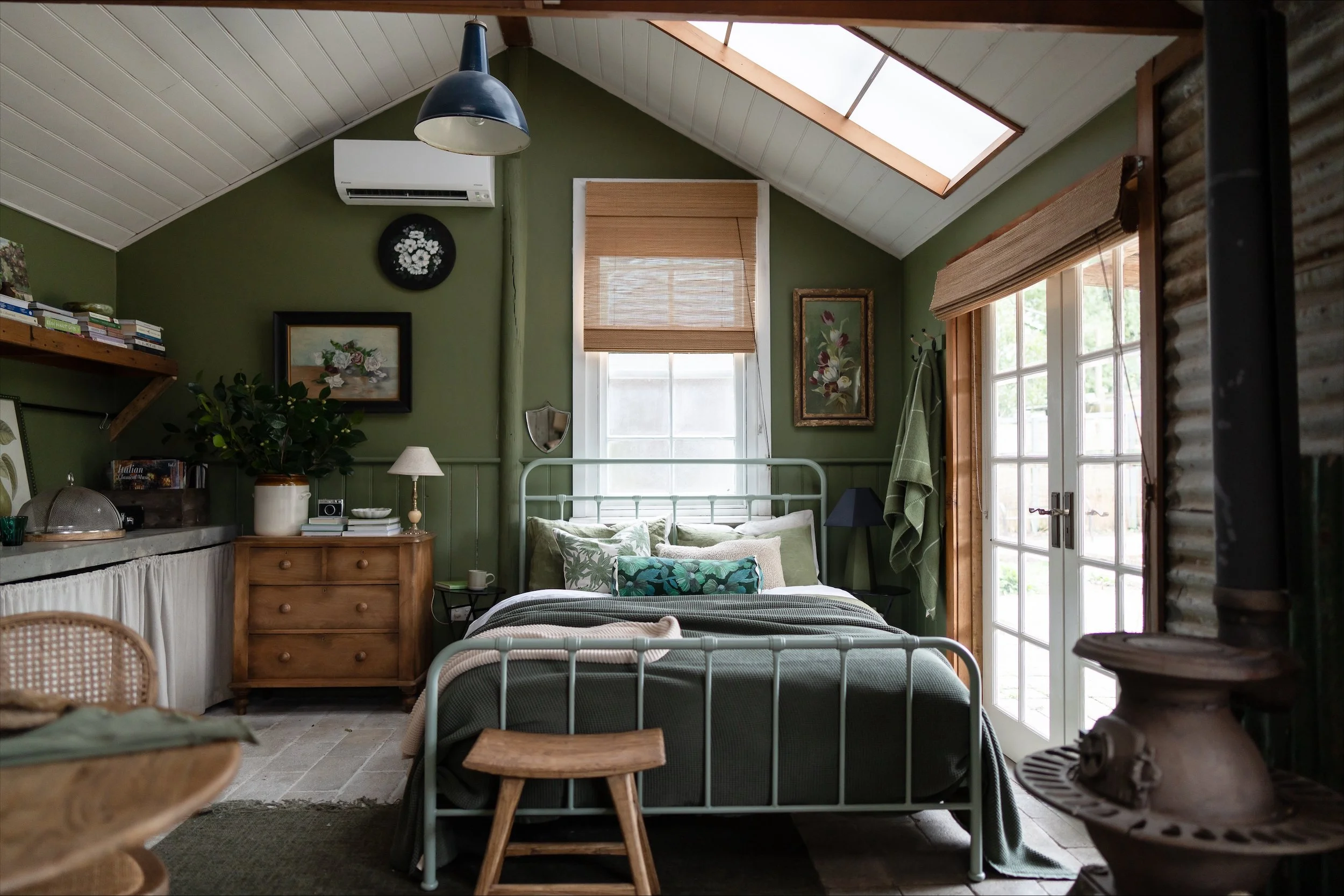
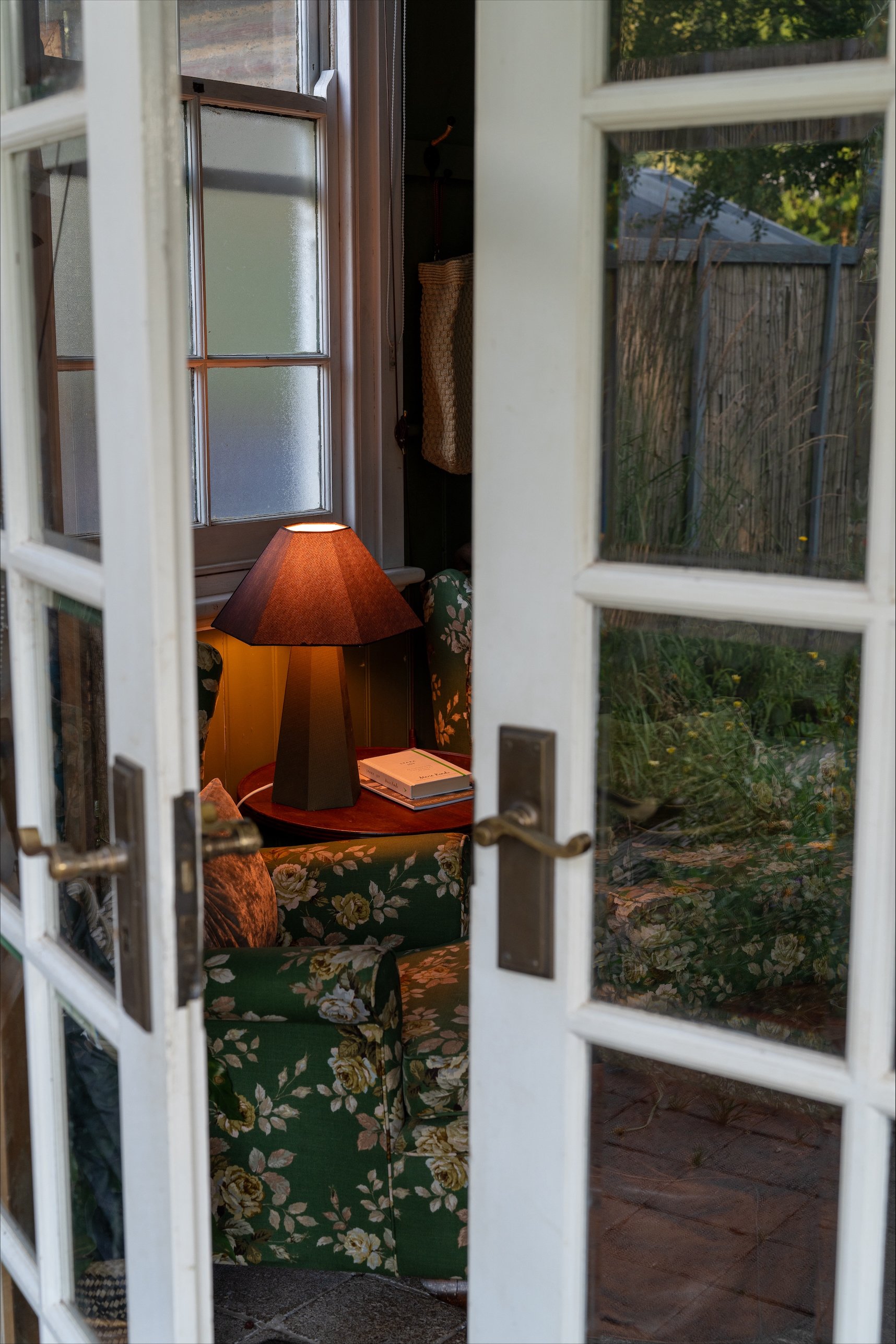
At the heart of it is a three-night stay at Acre of Roses in The Potting Shed Retreat. If you know Acre of Roses, you’ll know it is a place of extraordinary beauty and care. Sandy has been one of my greatest champions and supporters over many years, and also a wonderful collaborator. I am so incredibly grateful to her for the generosity behind this prize and for helping create something that feels so deeply aligned with this book and this season.
The giveaway also includes breakfast or lunch for two at Cliffy’s Emporium (the very place much of my book was written!), two tickets to a Natasha Morgan workshop, and one of my seasonal syrup packs. The Acre of Roses experience also includes curated breakfast provisions by Michael Furness, a Spinal Flow session with Simone Gilbert, and a restorative wellness experience by Catherine Laurent. Together, it has been shaped as an offering of beauty, nourishment, rest, and connection.
That matters to me.
Because this book has never just been about gardening as task or output. It is about the life that gathers around a garden. The rituals. The table. The pause. The learning. The return to what matters. I wanted this giveaway to reflect that same feeling.
Why pre-orders matter
I know people often hear that pre-orders are important for authors, but it really is true.
A strong pre-order campaign helps build early momentum around a book. It gives retailers confidence. It supports visibility. It influences print decisions. And it helps a book travel further from the very beginning. In very real terms, pre-orders help a book find its readers.
For an author, they are one of the most meaningful forms of support.
So if you have already pre-ordered, thank you. Truly.
And if you have been thinking about it, this is a beautiful time to do so.

What’s included
The Potting Shed Experience at Acre of Roses
A three-night stay for up to two guests in The Potting Shed Retreat, shaped around beauty, stillness and restoration.
Also included:
Curated breakfast provisions by Michael Furness
Access to the private outdoor bath pavilion beneath the trees
A firepit experience during your stay
A Spinal Flow session with Simone Gilbert
A restorative wellness experience with Catherine Laurent
Breakfast or lunch for two at Cliffy’s Emporium
Two tickets to a Natasha Morgan workshop
A Natasha Morgan seasonal syrup pack
Total prize value: $2,690 AUD

How to enter
To go in the running:
Pre-order one or more copies of The Productive Garden Companion
Email your proof of pre-order to hello@natashamorgan.com.au
Include your full name and contact details
Each copy purchased counts as one entry. So if you pre-order multiple copies, you receive multiple entries.
You can find the full giveaway details here: Daylesford giveaway
And you can pre-order the book here: The Productive Garden Companion
Entries close at 8.00pm on Sunday 31 May 2026 (AEST)
Thank you so much for supporting this book. It means more than I can say.
Join a workshop
Explore current workshops in the shop.
This season’s offerings include:
If you are building your garden from home right now, my e-books on Wicking Bed Gardens and Introduction to Backyard Chicken Keeping offer practical step by step guidance that pairs well with the workshops.
Continue your gardening journey with me
If you enjoy this kind of content, my workshops offer more detail and guidance on design, productivity and seasonal care. May is also a great month to sign up to my newsletter if you do not already subscribe, where you can find out more about an exciting giveaway I am running for those who pre-order a copy of my book The Productive Garden Companion.
If you are building your garden from home right now, my ebooks onWicking Bed Gardens andIntroduction to Backyard Chicken Keeping offer practical step by step guidance that pairs well with the workshops.
You may want to check out my related content below:
From Fumigation to Flavour - What Happens to Imported Garlic Before It Reaches You
Gravel to the Edges – Blurring Boundaries
The Medicinal Garden Workshop with Caroline Parker & Natasha Morgan — Step into the magic of nature
Stay connected for more seasonal inspiration:
Instagram | Facebook | Gardenstead | LinkedIn | Pinterest | YouTube | Website | Newsletter
Thanks so much for following along.
Natasha xx
Explore my new book The Productive Garden Companion by clicking on the image above!
May Garden Tasks for Australian Climates
May brings a quieter kind of momentum to the garden.
The intensity of summer has eased. The days are shorter, the mornings colder, and the garden begins to ask something different of us. This is not a month of urgency. It is a month for noticing. For clearing what is finished, preparing beds with care, and making considered decisions about what comes next.
In many parts of Australia, May is one of the most useful planting windows of the year. Soil still holds some warmth, but growth has steadied. Moisture lingers longer. New plantings often establish more reliably, especially in cool season vegetable beds and newly planted perennials. It is also a valuable time to pay attention to what the garden has shown you through summer and autumn. Where did crops perform well? Which spaces felt tired or overworked? Where is frost beginning to settle, or water beginning to sit?
I tend to think of May as a month for quiet structure. Not stripping the garden back, but strengthening what matters. Feeding the soil. Repairing supports. Planting for the months ahead. Observing first, then acting with a little more clarity.
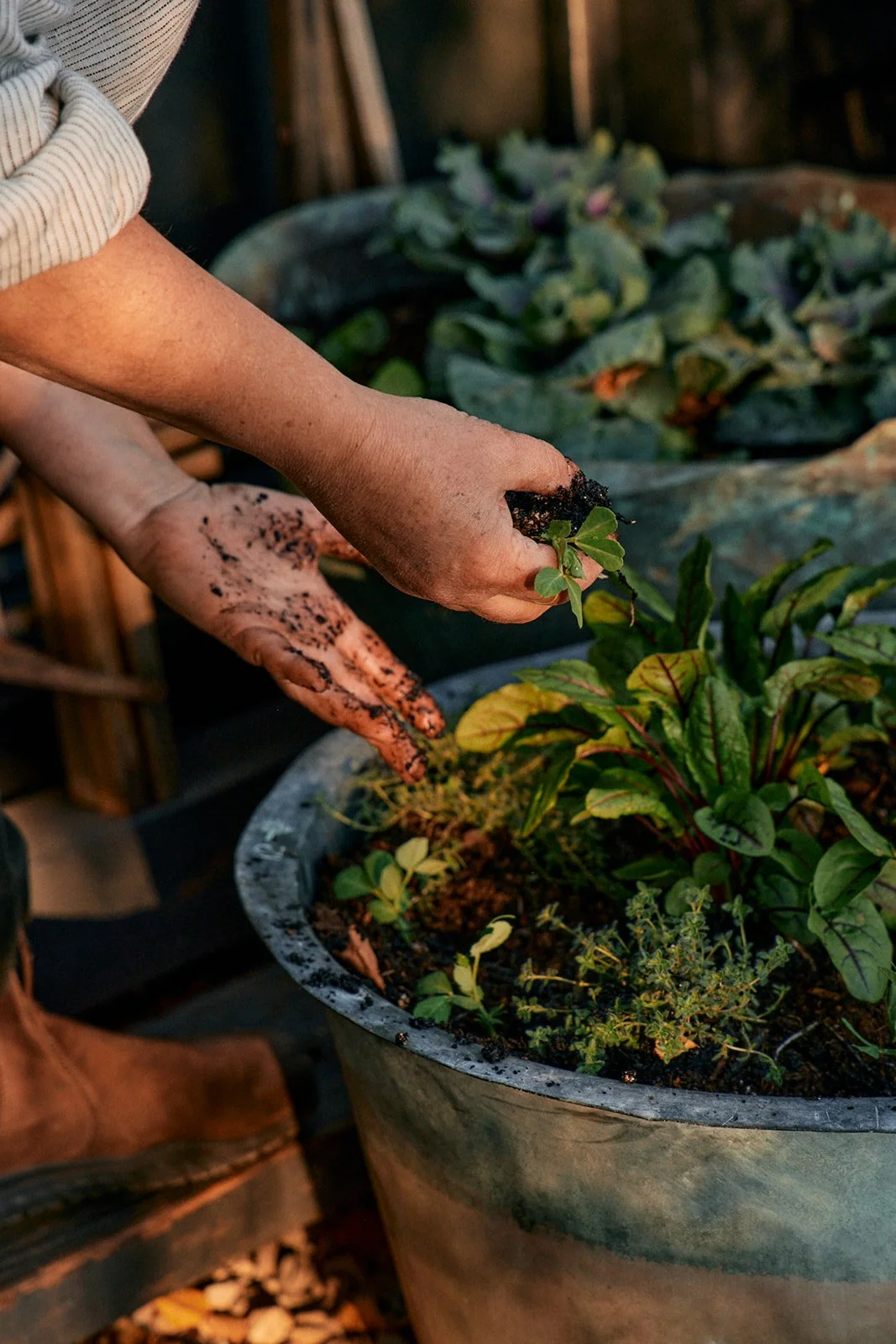
Tasks for all Climates:
Plant trees, shrubs, climbers, and perennials while the soil still holds some warmth.
Lift and divide perennials that have outgrown their space, giving tired clumps a new lease on life.
Cut back spent berry canes and tidy deciduous shrubs.
Compost fallen leaves, layering them to feed the soil.
Sow green manure crops such as mustard or vetch, or plant broad beans in any bed you want to keep active while building the soil.
Strengthen the structure of your garden: repair trellises, replace stakes, check tree ties before the winter winds arrive.

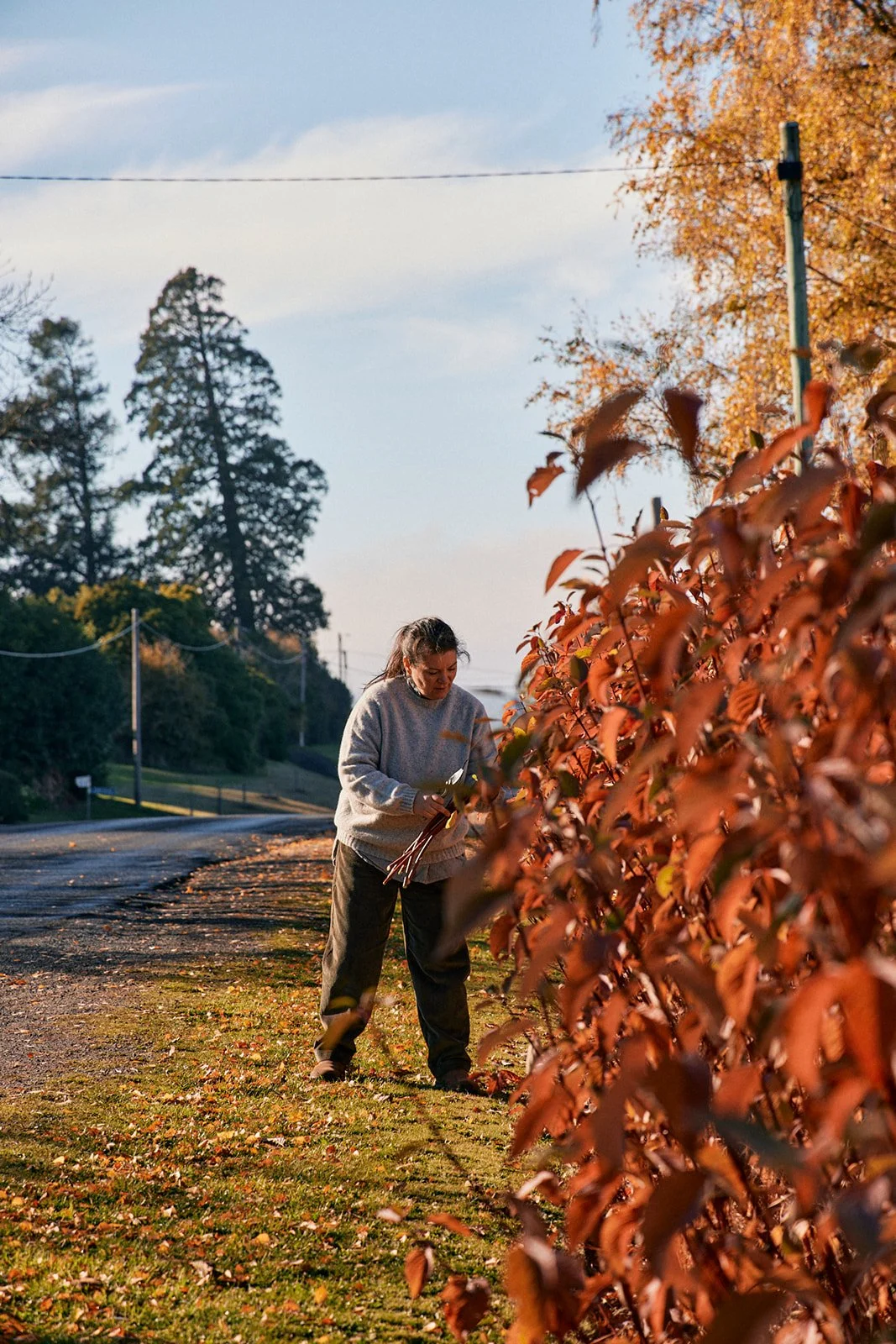
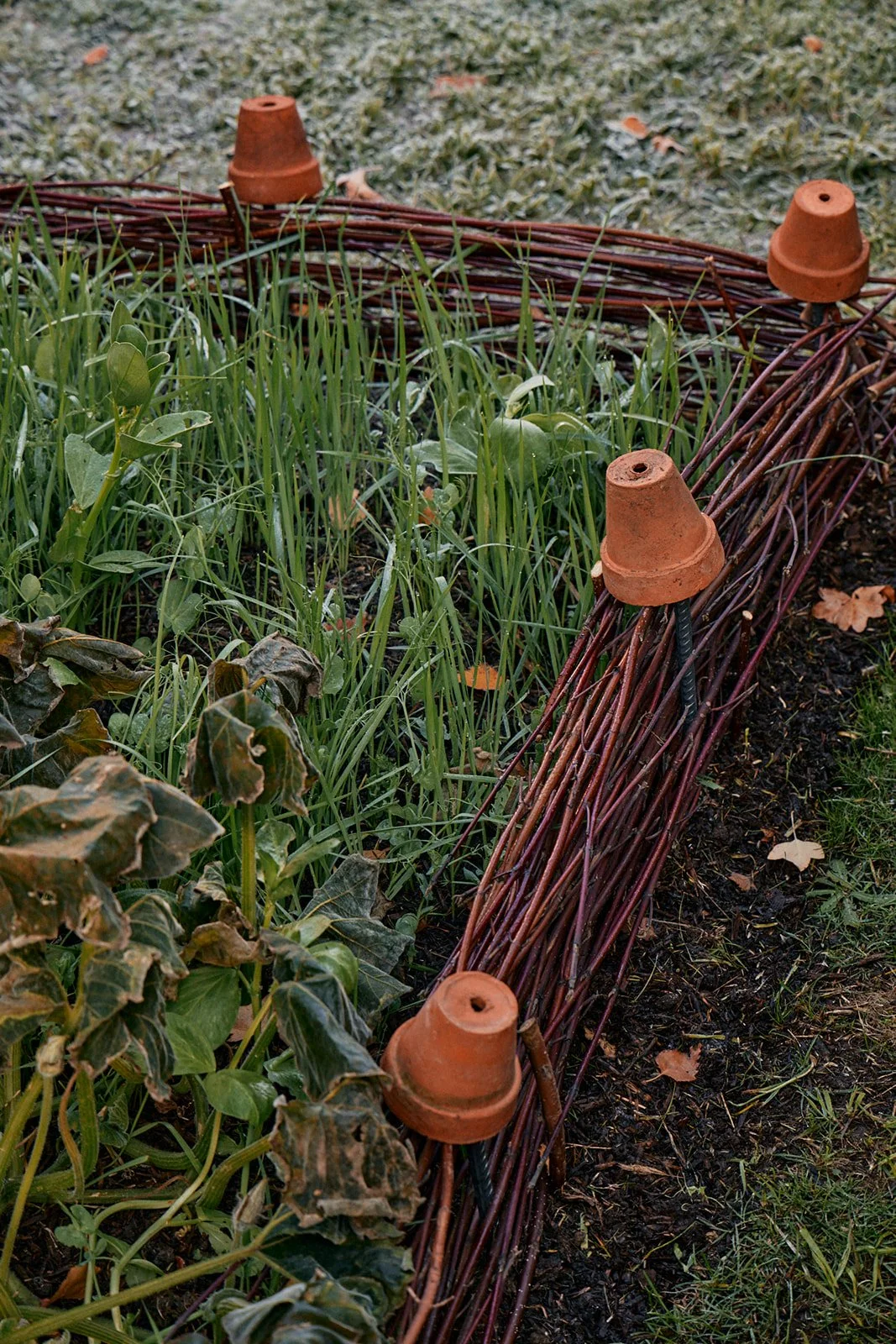
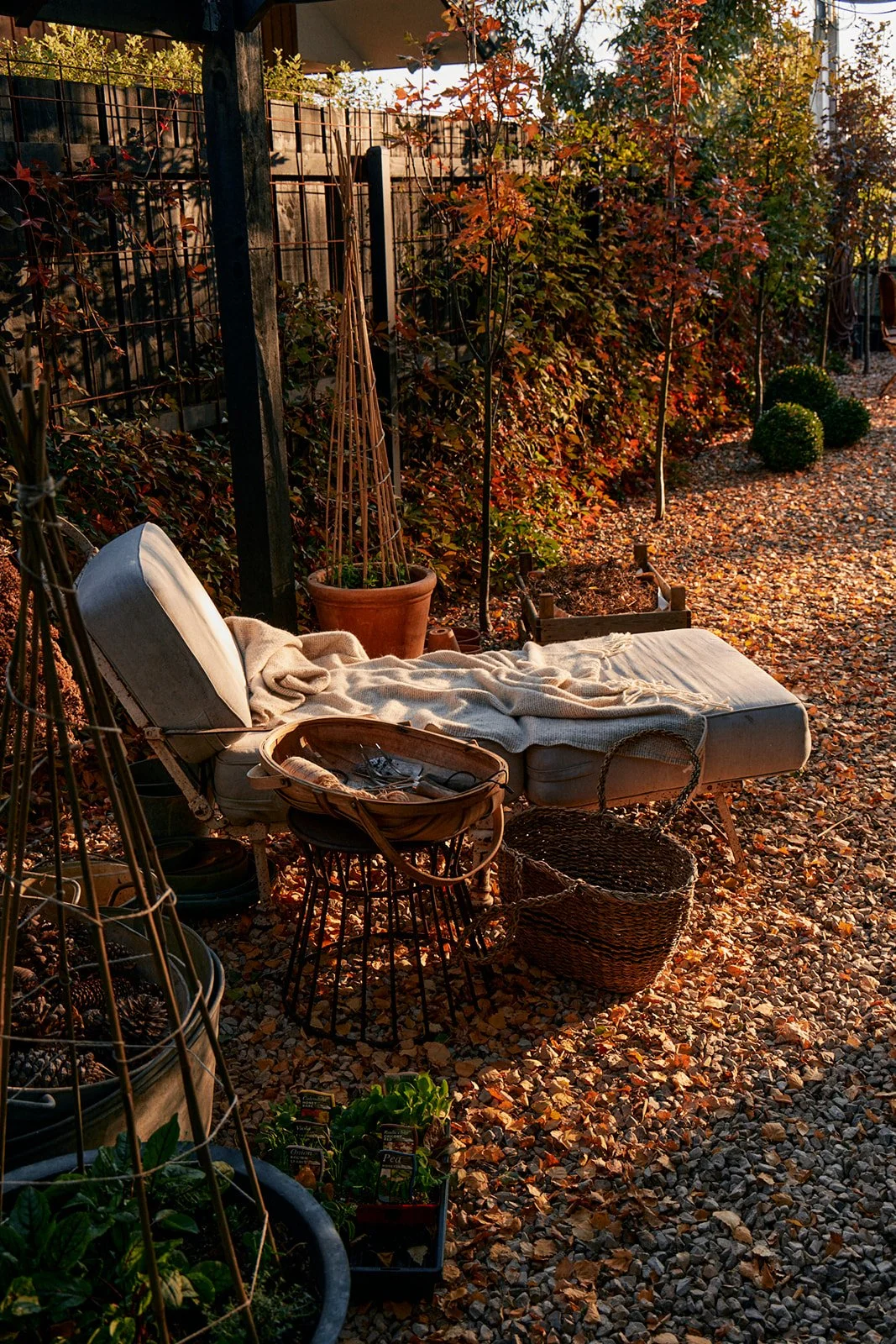
What to sow and plant now, and tasks by climate.
Temperate
Seeds to sow now.
Edible: Lettuce, cauliflower, peas, coriander, broccoli, spring onion, onion, parsnip, pak choy, thyme, strawberries, chives, garlic, parsley, radish, rocket, shallots, spinach, mizuna, swedes and turnips.
Flowers: poppies, billy buttons, cornflower, delphinium, tansy, alyssum, cerinthe, love in the mist, hollyhock, lupin, pyrethrum.
Tasks:
Plant cool-season crops while soils are still workable.
Direct sow or plant hardy greens in succession rather than all at once, so you have a continuous harvest through the colder months.
Tidy and prepare beds for winter cropping by removing spent summer plants, adding compost and keeping the soil covered. I chop plants off at the ground, rather than pulling them out, so the roots can decompose in the soil.
Plant flowering annuals for winter and spring display such as alyssum, cornflower, delphinium, hollyhock, lupin and poppy, depending on your local frost level.
Watch moisture and airflow as the season cools. In temperate areas, May is a good time to shift from growth-at-all-costs into steadier maintenance: less frequent watering, better drainage awareness and closer observation of fungal issues.
Cool and Alpine
Seeds to sow now
Edible: Broad beans, corn salad, garlic, mustard greens, rocket, shallots, spinach, spring onions.
Flowers: alyssum, billy buttons, cerinthe, corn cockle, false Queen Anne’s lace, hollyhock, poppy, pyrethrum, tansy and tulips.
Tasks:
Use frost to your advantage by continuing with cold-loving crops and planning around frost pockets rather than fighting them. Frost sweetens brassicas and root veg. May is the right time to notice how cold settles across the garden.
Divide or tidy perennial edibles such as rhubarb while growth is slowing.
Mulch and protect soil before winter deepens, especially around garlic, leafy greens and any newly planted seedlings. In cool zones, getting beds covered before the harshest cold is more useful than leaving them exposed.
Sow or plant cold-season flowers for later colour. Tulips are also typically planted from late autumn into early winter.
Plant the hardiest edibles only now, such as beans, garlic, spring onion.
Subtropical
Seeds to sow now:
Edible: Beetroot, broad beans, broccoli, burdock, cabbage, carrot, cauliflower, celeriac, celery, chicory, chives, collard greens, coriander, dill, endive, fennel, garlic, kale, kohlrabi, lettuce, mizuna, mustard greens, onion, oregano, pak choy, parsley, peas, potatoes, radish, rocket, shallots and strawberry runners
Flowers: nasturtium, poppy, pyrethrum, salvia, Sturt’s Desert Pea, sunflower, sweet pea, tansy, viola and zinnia.
Tasks:
Plant your main cool-season crops now. May is one of the best windows for broccoli, cabbage, cauliflower, carrot, beetroot, celery, fennel, kale, lettuce, peas, garlic and shallots in subtropical gardens.
Get root crops in promptly while conditions are still mild. Carrots, beetroot, radish and onions are all suited to this period in subtropical areas.
Feed and reset beds after summer exhaustion with compost, mulch and light cultivation where needed. May is very much about slowing down, tending and re-establishing what matters most.
Plant strawberries or strawberry runners if your local conditions suit it.
Sow or plant seasonal flowers such as nasturtium, poppy, salvia, sunflower, sweet pea, viola and zinnia to carry colour and pollinator interest into the cooler months.
Tropical
Seeds to sow now:
Edible: amaranth, angelica, asparagus, asparagus pea, basil, climbing beans, bush beans, beetroot, borage, broccoli, cabbage, capsicum, carrot, cauliflower, celery, chicory, chilli, chives, choko, collards, coriander, cucumber, daikon, dill, eggplant, endive, fennel, tarragon, garlic, ginger, globe artichokes, horseradish, kale, kohlrabi, leeks, lemon balm, lettuce, luffa, marrow, mint, mizuna, mustard greens, Warrigal greens, okra, oregano, pak choy, parsley, peas, potatoes, pumpkin, radish, rocket, rockmelon, rosemary and sage
Flowers: alyssum, borage, calendula, cleome, cosmos, marigold, nasturtium, salvia, sunflower and zinnia.
Tasks:
Make the most of the broad May planting window. Tropical gardeners can still plant a wide range of crops now.
Sow in stages rather than all at once, particularly for fast crops such as beans, lettuce, Asian greens and herbs, so you do not end up with a glut all at the same time. Tropical conditions can still drive quick growth.
Keep on top of pest pressure and airflow. Warm, humid conditions can still favour mildew, caterpillars and fungal issues, so spacing, pruning and regular checks matter.
Refresh beds with compost and organic matter before planting heavy feeders such as brassicas, cucurbits and fruiting crops. Tropical gardens can keep producing hard, so soil replenishment remains important.
Add flowering support plants such as calendula, cosmos, marigold, nasturtium, sunflower and zinnia to attract beneficial insects and keep the garden lively.
Arid
Seeds to sow now:
Edible: beetroot, broad beans, broccoli, burdock, cabbage, carrot, cauliflower, celery, chicory, collard greens, dill, endive, garlic, Jerusalem artichokes, kale, kohlrabi, leeks, lemon balm, lettuce, mustard greens, onions, pak choy, parsley, parsnip, peas, radish, rocket, silverbeet, snow peas, spinach, strawberries, swedes, thyme and turnips.
Flowers: alyssum, bergamot, calendula, Canterbury bells, cerinthe, corn cockle, cornflower, delphinium, false Queen Anne’s lace, hollyhock, lupin, mignonette, poppy, pyrethrum, sweet pea, tansy and viola.
Tasks:
Use May as a key planting window for cool season food crops. In arid gardens, it is often one of the more forgiving planting times of the year.
Prioritise soil preparation before planting by adding compost and organic matter. In arid gardens, improved water-holding capacity and soil structure are essential for success.
Mulch deeply after planting to reduce evaporation and buffer temperature swings. Even as temperatures fall, moisture conservation remains one of the most important jobs.
Watch for frost as well as dryness. Arid does not mean frost-free, and May can bring sharp overnight drops, so newly planted crops may still need protection depending on your local site.
Add tough seasonal flowers suited to autumn sowing.
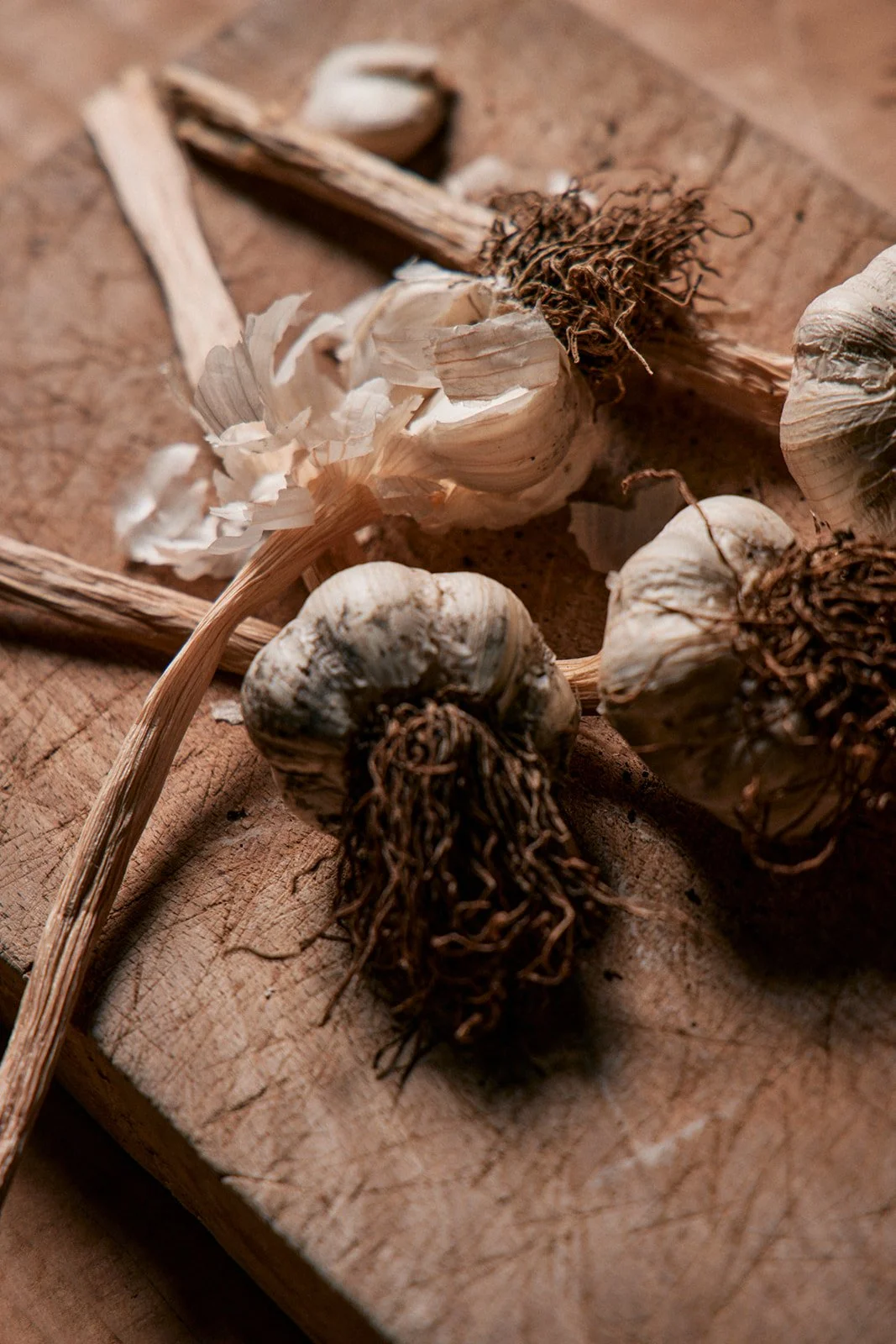
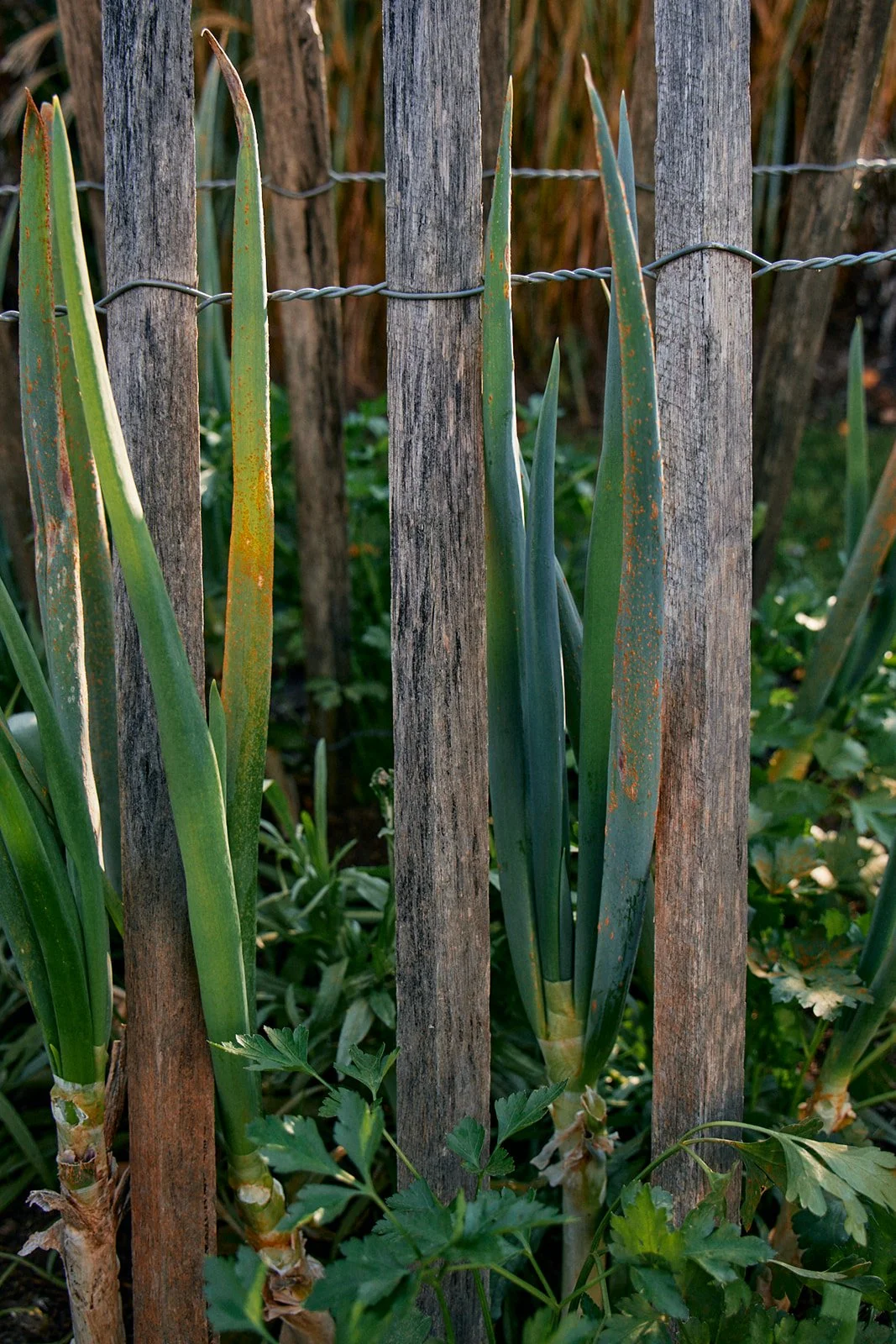
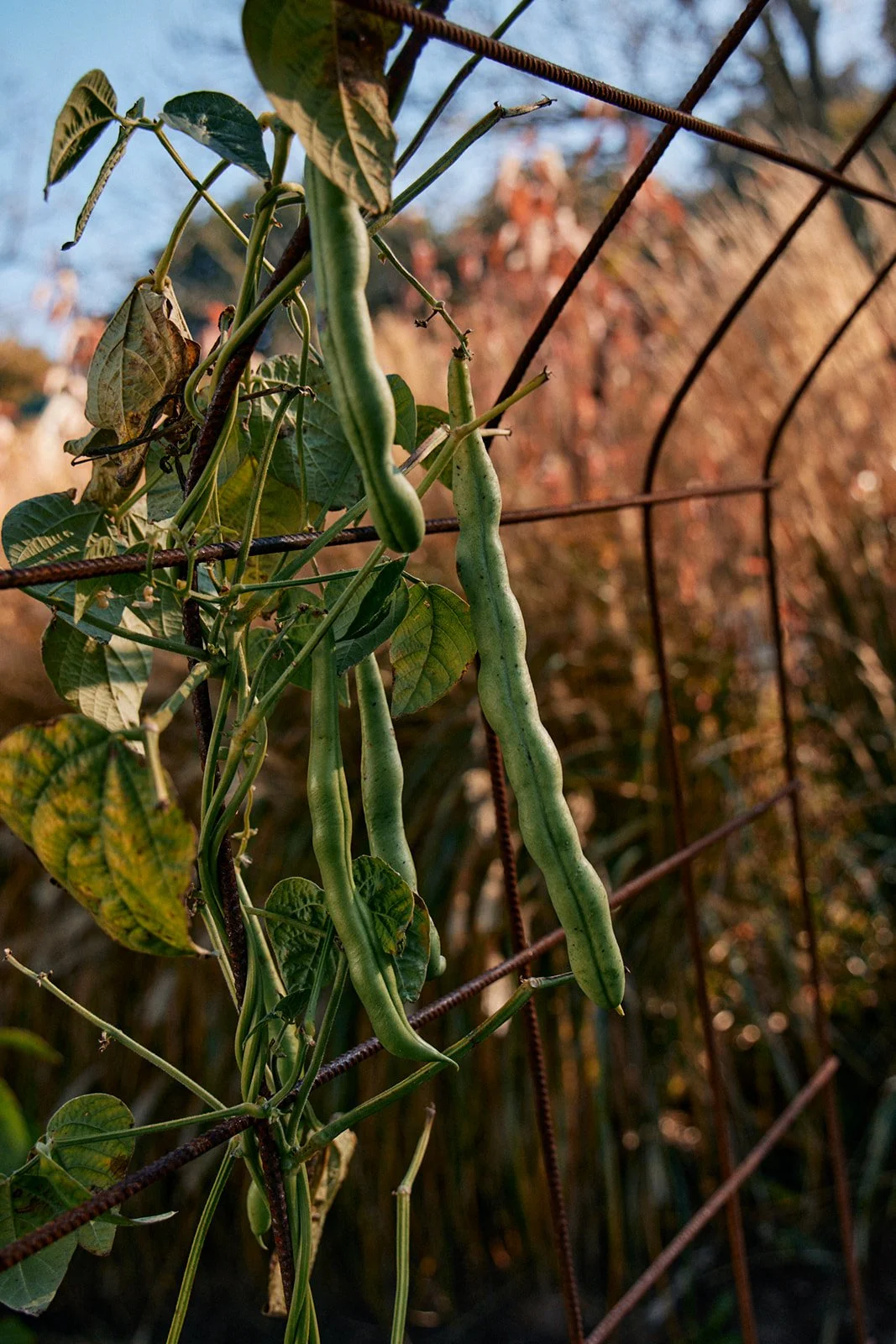
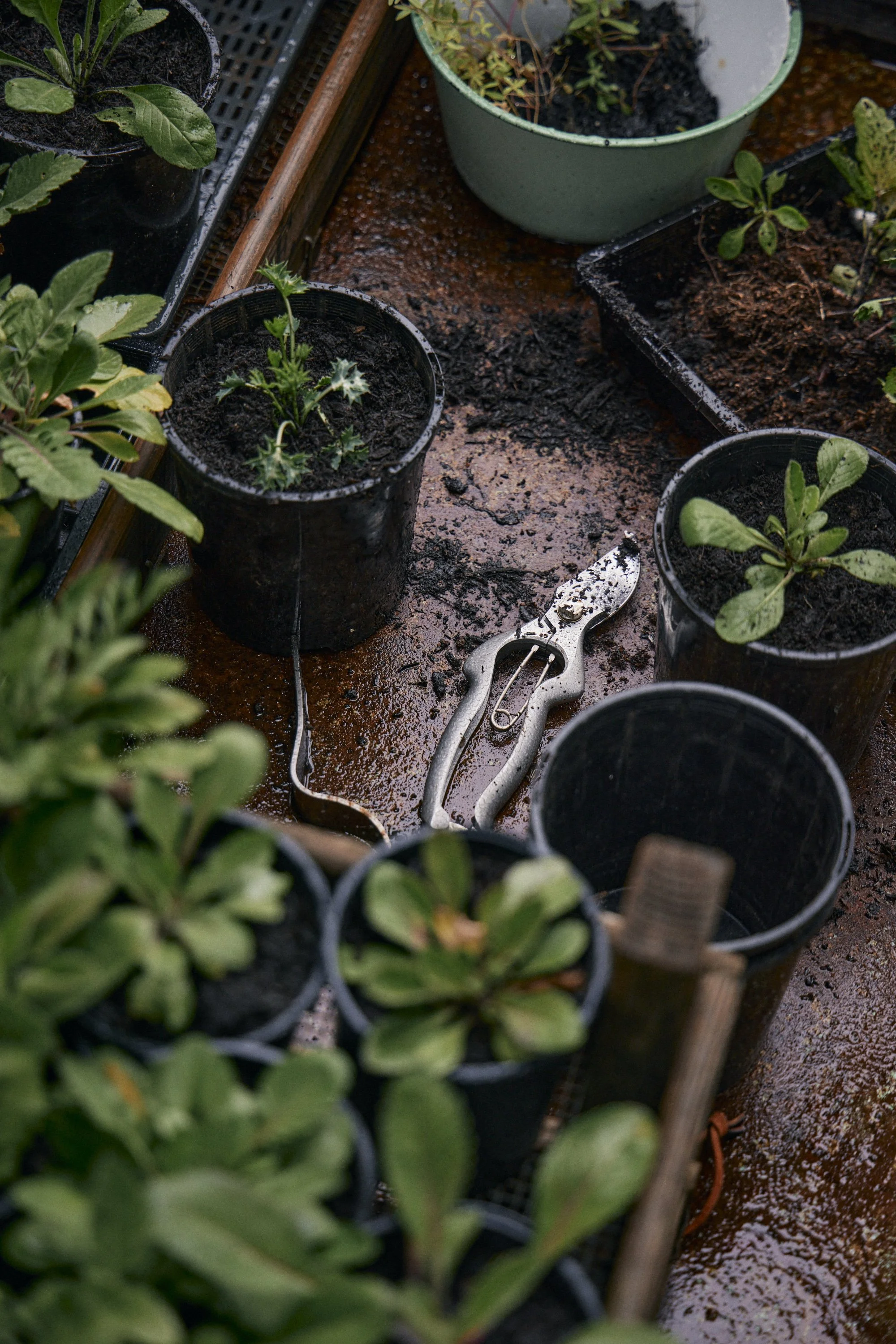
How I work with May.
I see May as a month of consolidation. The rush has passed, but the garden is not asleep. It is still moving, just more slowly, and that slower pace makes it easier to see what needs attention.
This is the month I start thinking more carefully about structure. I clear only what is properly finished. I feed beds that will carry winter crops. I mulch exposed soil. I check ties, arches and trellises before the weather turns rougher. And I pay close attention to how cold, moisture and shade are beginning to behave across the garden.
I am also thinking about continuity. I do not want bare gaps sitting for too long or soil left exposed through winter. This is something I talk to Matthew Evan’s, of Fat Pig Farm and author of Soil, in my book, The Productive Garden Companion.
I want the garden to keep carrying itself forward. That might mean succession sowing leafy greens, replanting a bed as soon as it opens up, or putting in something simple that protects and improves the soil while I decide what comes next.
May rewards that kind of steady, practical care.
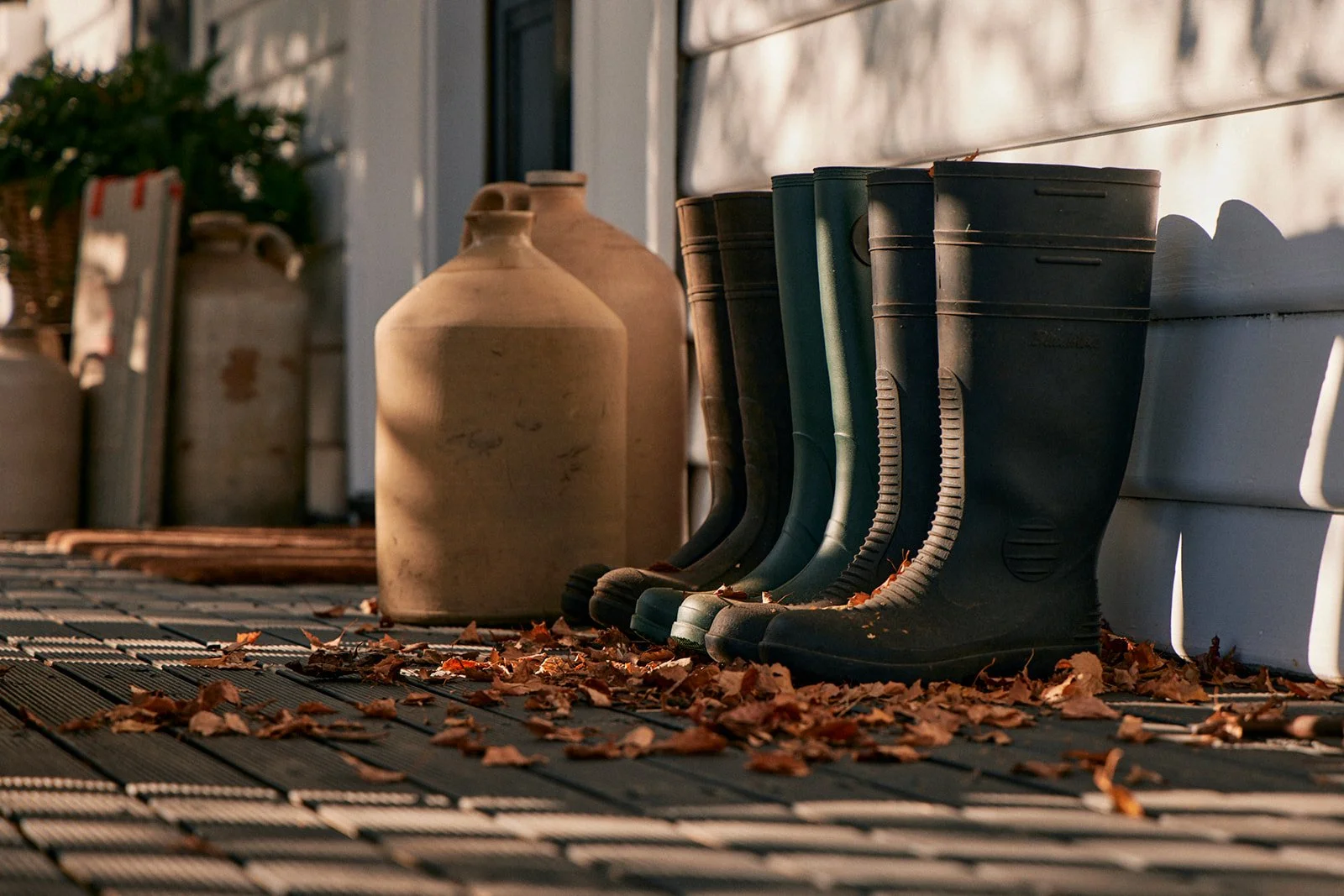
Quick checklist.
Clear out truly spent summer crops and tidy only what is finished.
Add compost or well-rotted organic matter to any beds you plan to plant next.
Mulch exposed soil to protect structure, hold moisture and buffer temperature shifts.
Plant or sow what suits your climate now, especially cool-season edibles in temperate, cool/alpine, sub-tropical and arid regions.
Weed early while the ground is still softer and easier to work.
Check trellises, ties, arches and other supports before late-autumn and winter winds strengthen.
Watch how water moves through the garden after rain and fix any drainage issues before winter deepens.
Notice frost pockets, shade shifts and wind exposure so you can plant more intelligently.
Keep succession sowing going for leafy greens, herbs or other quick crops where your climate allows.
Pause and observe what actually worked this season before making new decisions.
Continue your gardening journey with me
If you enjoy this kind of content, my workshops offer more detail and guidance on design, productivity and seasonal care. May is also a great month to sign up to my newsletter if you do not already subscribe, where you can find out more about an exciting giveaway I am running for those who pre-order a copy of my book The Productive Garden Companion.
If you are building your garden from home right now, my ebooks onWicking Bed Gardens andIntroduction to Backyard Chicken Keeping offer practical step by step guidance that pairs well with the workshops.
You may want to check out my related content below:
The Productive Garden Companion is now available to pre-order - This is the book I’ve wanted to find my entire life.
Beauty, Tending, Belonging: Why I Keep Growing Things - Growing things is how I remember who I am.
The Medicinal Garden Workshop with Caroline Parker & Natasha Morgan — Step into the magic of nature
Stay connected for more seasonal inspiration:
Instagram | Facebook | Gardenstead | LinkedIn | Pinterest | YouTube | Website | Newsletter
Thanks so much for following along.
Natasha xx
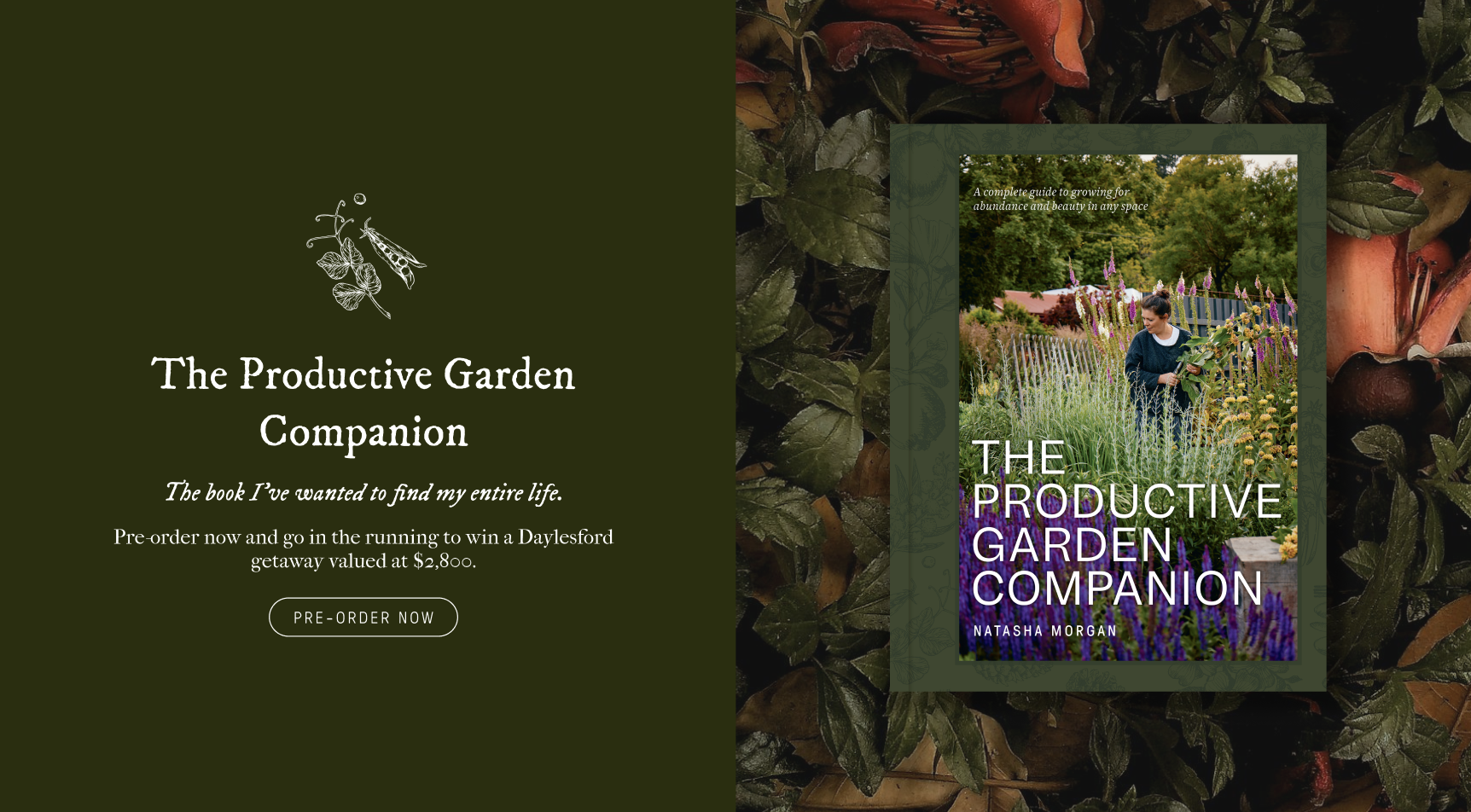
The Productive Garden Companion is available for pre-order
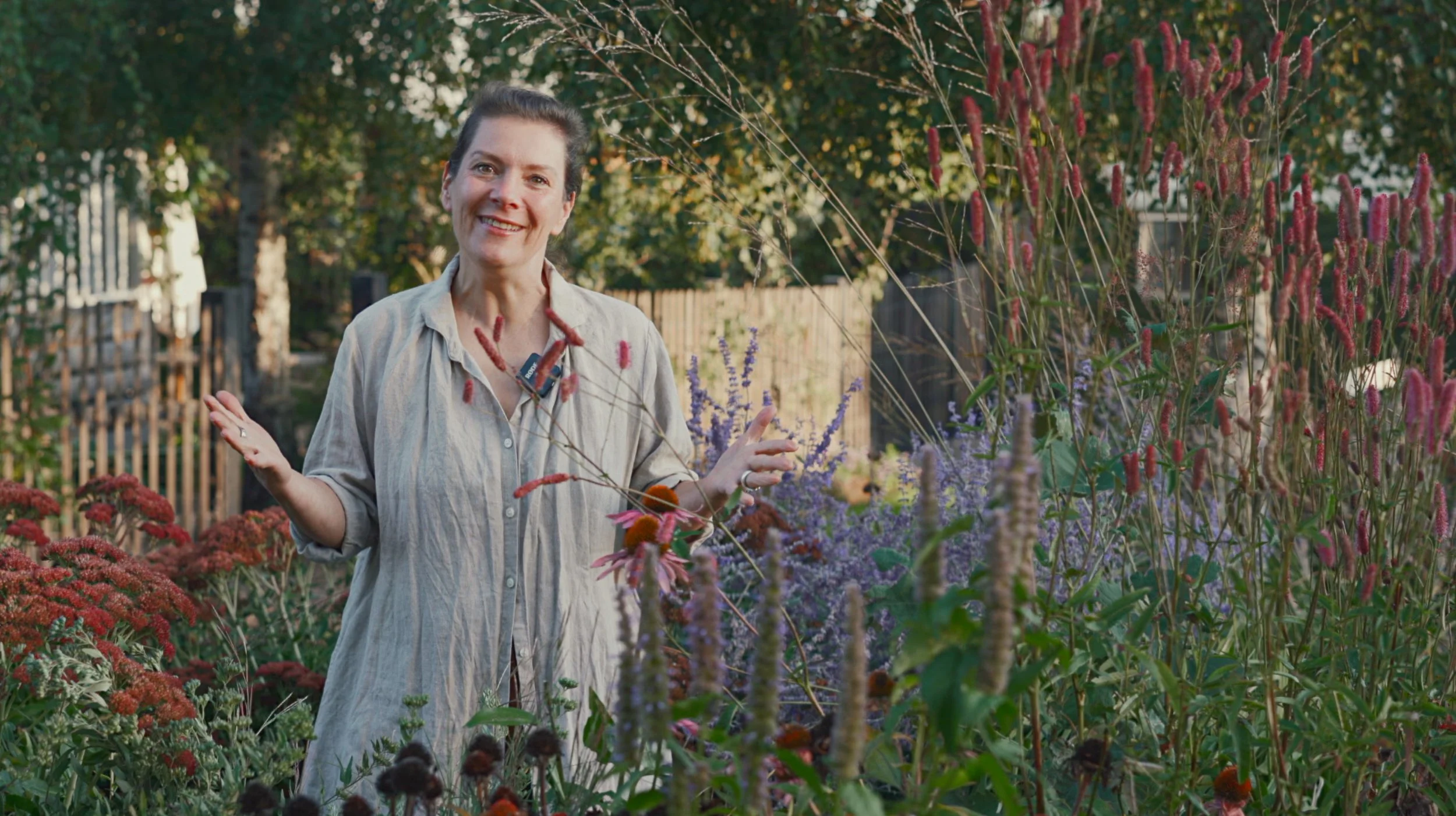
The Productive Garden Companion is now available to pre-order
This is the book I’ve wanted to find my entire life.
I have been waiting to write these words for over a year.
My book — The Productive Garden Companion — is now available to pre-order. And even sitting here writing that sentence, it feels completely surreal.
This is the book I have wanted to find my entire life. The one I kept reaching for and couldn’t find. So I wrote it.
I have poured everything into these pages. Every season of observation. Every lesson learned in soil. Every conversation with a gardener who taught me something I didn’t know I needed. Every moment of doubt, and every moment of complete conviction that this book needed to exist. I have left nothing in the tank.
What is The Productive Garden Companion?
It is not a book that simply tells you what to plant and when. It is something far more than that.
It brings together a lifetime of gardening, two decades of landscape architecture and design thinking, twenty years of teaching, and the lived lessons of two very different gardens — Oak & Monkey Puzzle and Little Cottage on a Hill. It holds my beliefs about beauty, abundance, seasonality, resilience, and generosity. And it holds my deepest conviction that a garden — any garden, at any scale — can play a profound role in helping us live more grounded, capable, and meaningful lives.
For me, a productive garden has never been just about output. It has always been about creating spaces that give more than they take. Spaces that are unapologetically beautiful as well as abundant. Spaces to be lived in, not just tended. Spaces that hold us through the hardest seasons and reward us with the most extraordinary ones.
That is what every page of this book is devoted to.
Who is this book for?
It was written for you. Exactly as you are. Exactly where you are.
Whether you are beginning with a single pot on a windowsill or working with acres. Whether you have gardened for decades or have never put a seed in soil. Whether you arrive at these pages with confidence, or simply ready to begin.
These pages are my way of walking beside you.
I wrote the dedication to this book before I wrote anything else. It has guided every single page since:
To you.
To you, beginning from exactly where you are: with a single pot on a sill, a small patch already full or only an idea you haven’t quite named yet.
To you, arriving with whatever you carry: experience or uncertainty, weariness or wonder, a lifetime in gardens or none at all.
These pages are my way of walking beside you, offering what I have learned and loved, in the hope that they keep you in good company as you grow your own way.
What is inside?
448 pages of everything I know, distilled as generously as I know how.
It features 24 extraordinary contributors from Australia and around the world — designers, growers, thinkers — whose voices you can sit with directly through QR-linked video conversations, as though you are simply in the room with us. You will hear from people whose work has shaped how I see gardens, growing, and the world.
Alongside their voices, you will find downloadable guides, templates and resources designed to extend the book far beyond its printed pages.
This book is not just something you read. It is something you live with — and return to, season after season. As much at home on a bedside table as on a potting shed bench.
It is, in every sense, a companion.
Why now?
Because I believe there has never been a more important time for a book like this.
So many of us are quietly looking for a way back to something that feels real, grounded, and within reach. Something we can tend with our own hands and feel the difference of. A garden gives you that. Not just food and beauty, but rhythm. Solace. Community. A reason to pay attention to the world around you.
That is what this book is for.
How to pre-order
You can pre-order The Productive Garden Companion now via the link below.
Simply click the link below and it will automatically direct you to the pre-order options available in your country — no searching, no navigating, just straight to where you need to be.
On sale:
Australia: 15 September 2026
UK: 17 September 2026
USA: 22 September 2026
Thank you for being here for this moment. For following along, for your patience, your encouragement, and your trust over this past year. It means more than I can say.
I cannot wait for this book to find its way into your hands.
Natasha xx
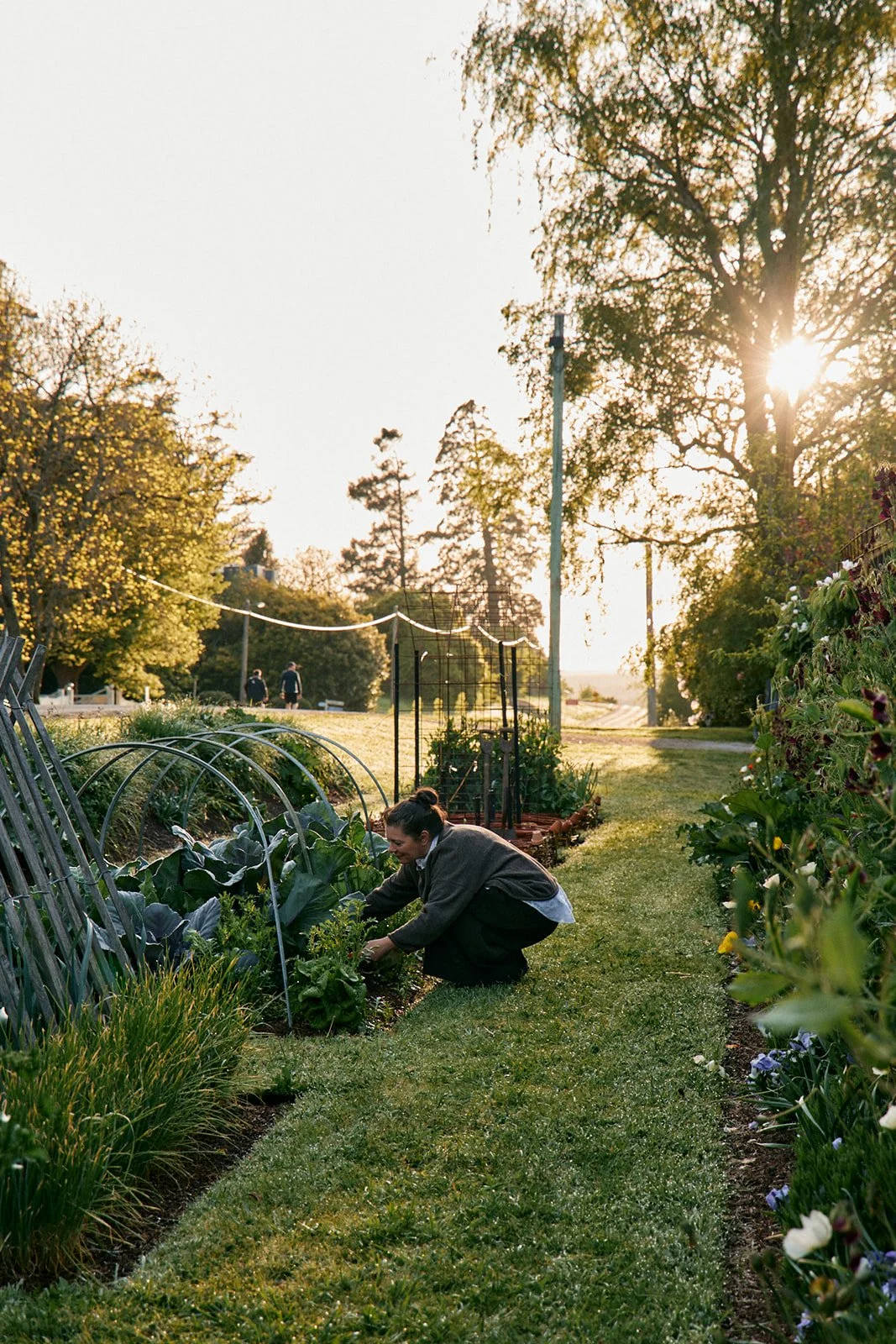
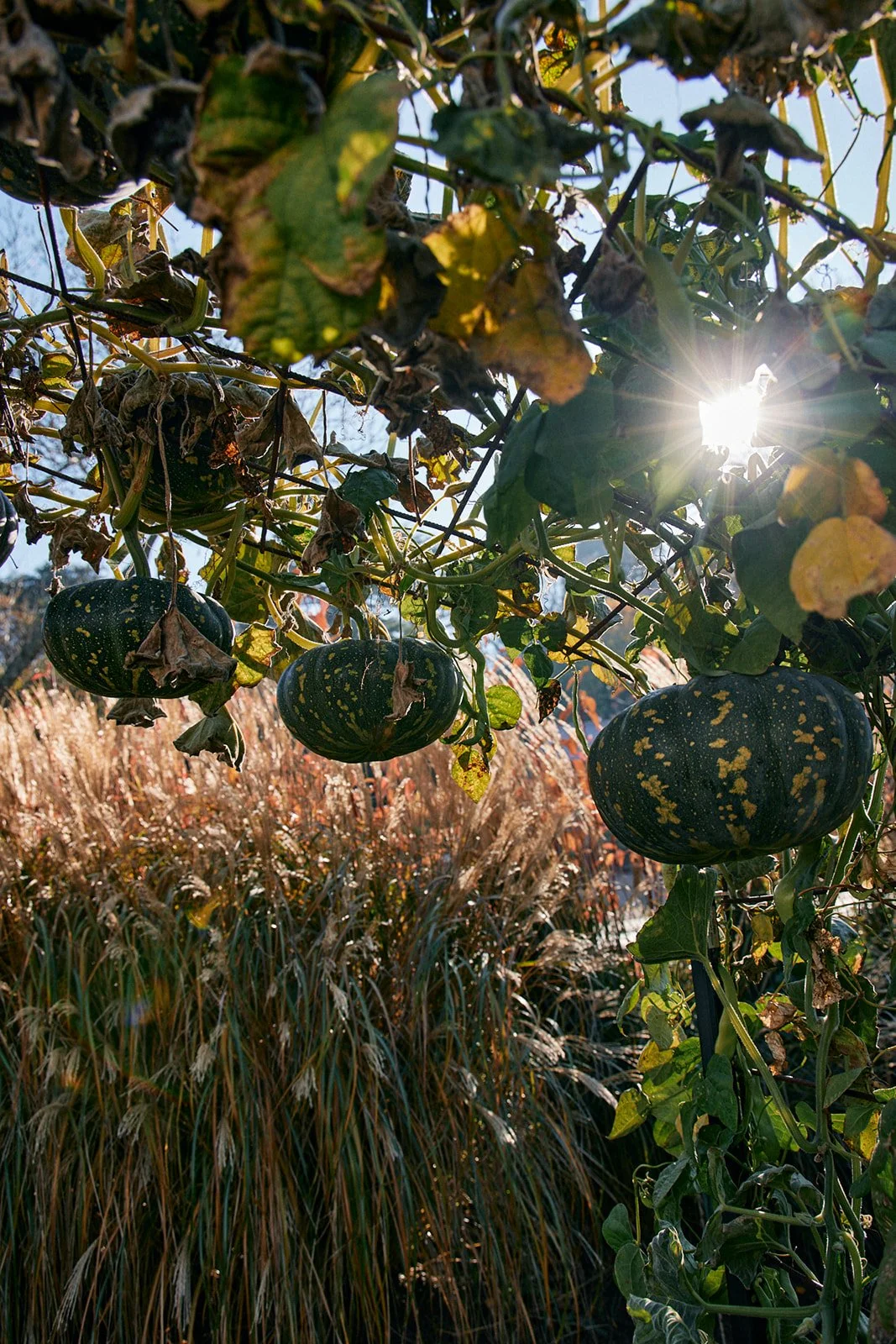

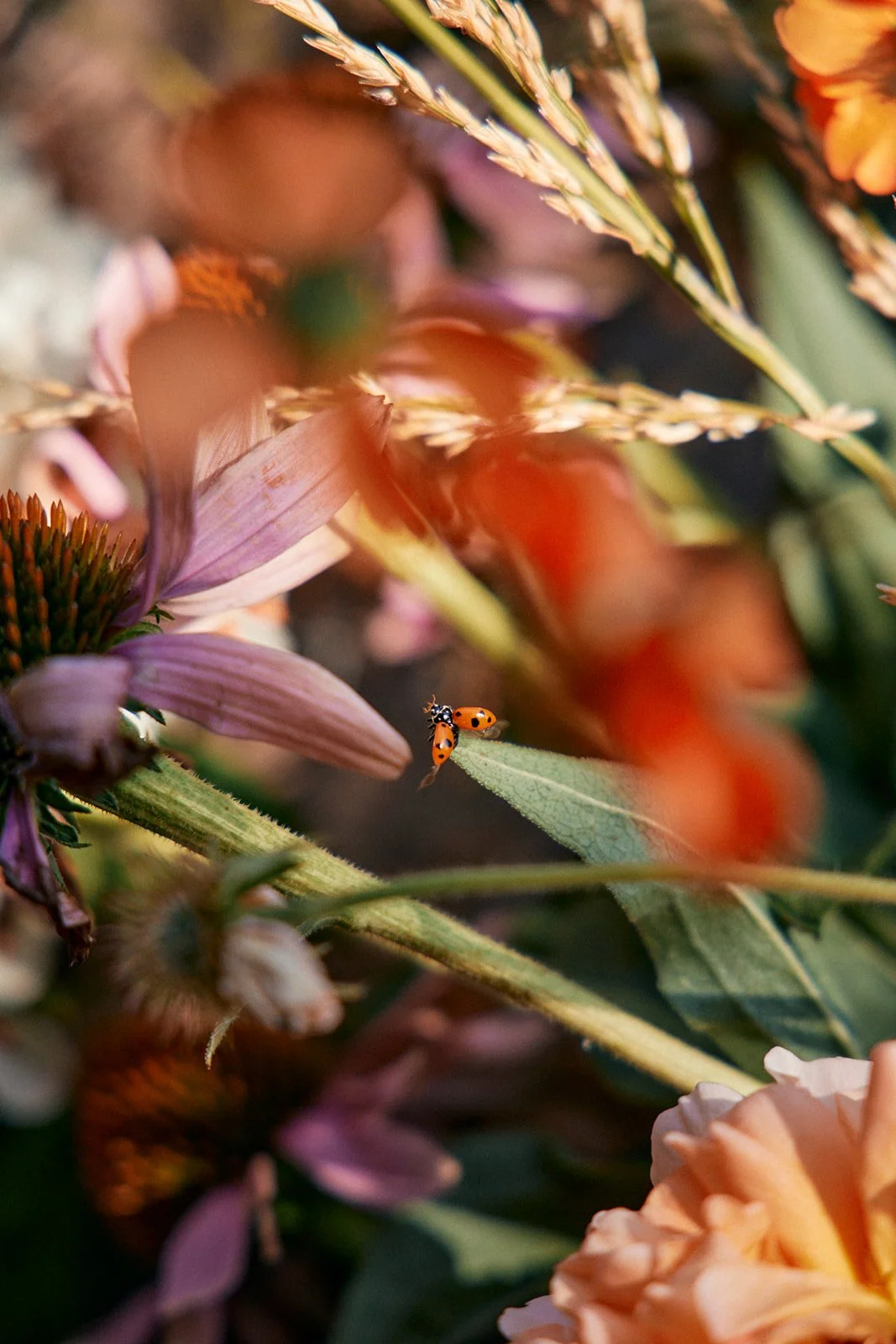
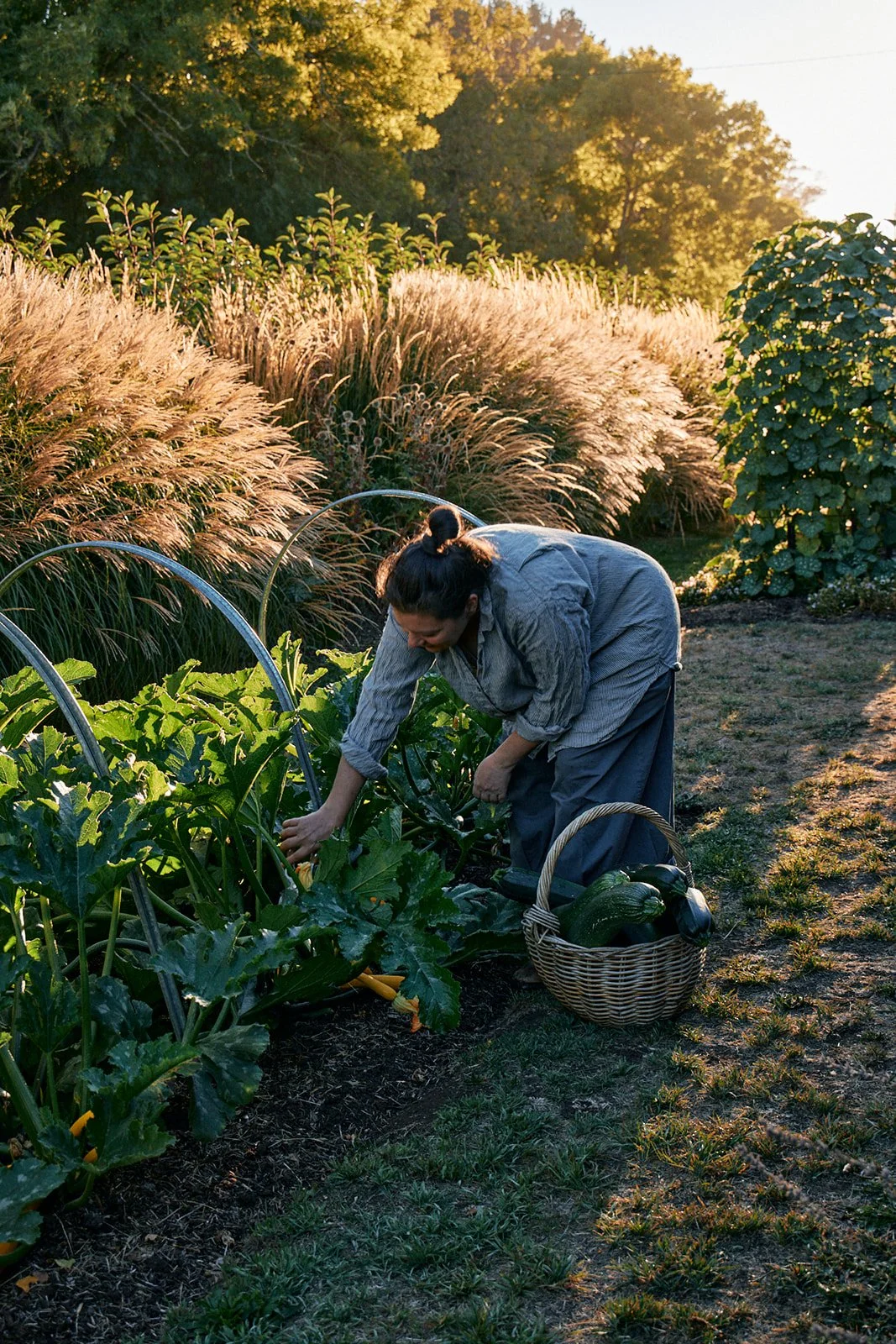
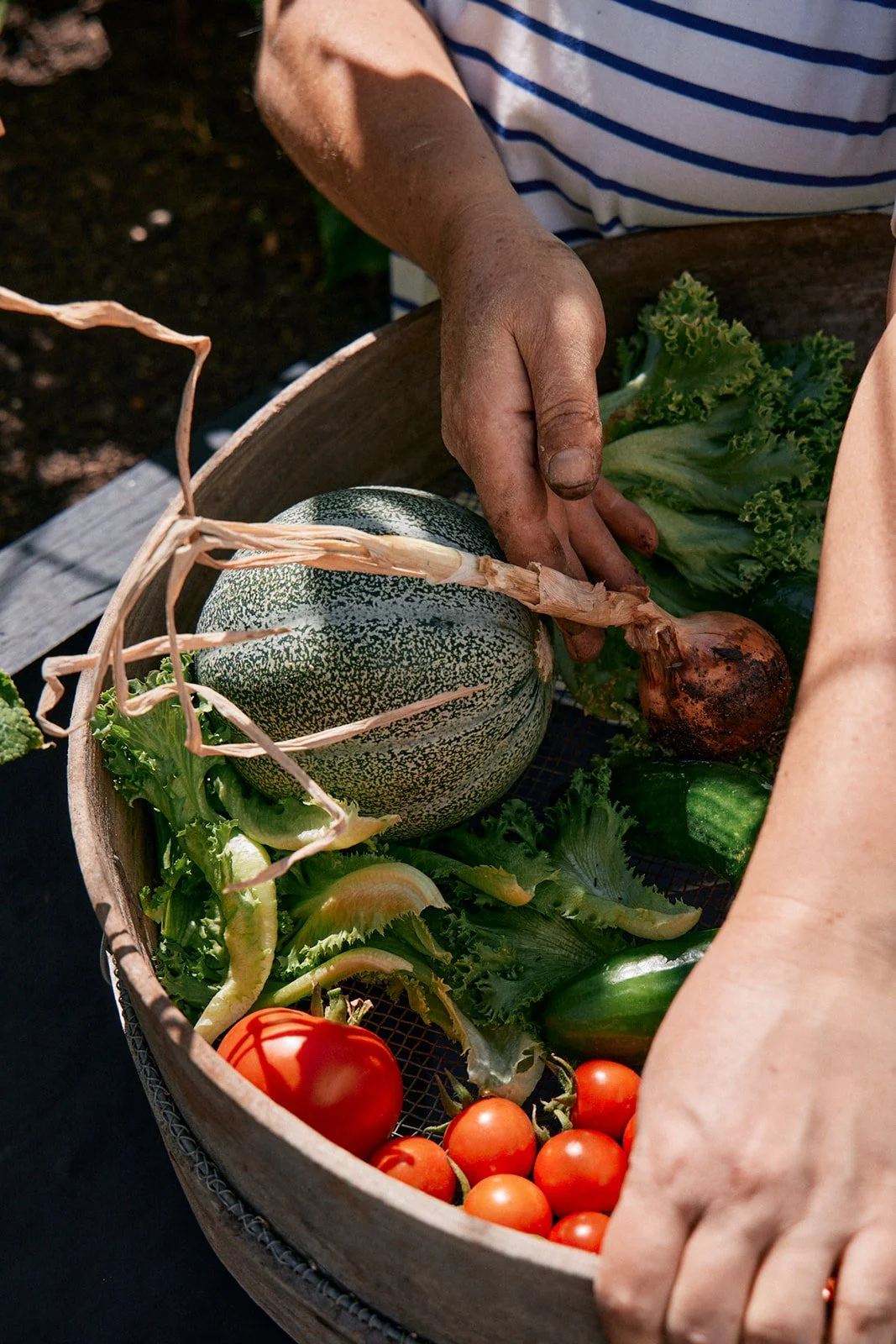
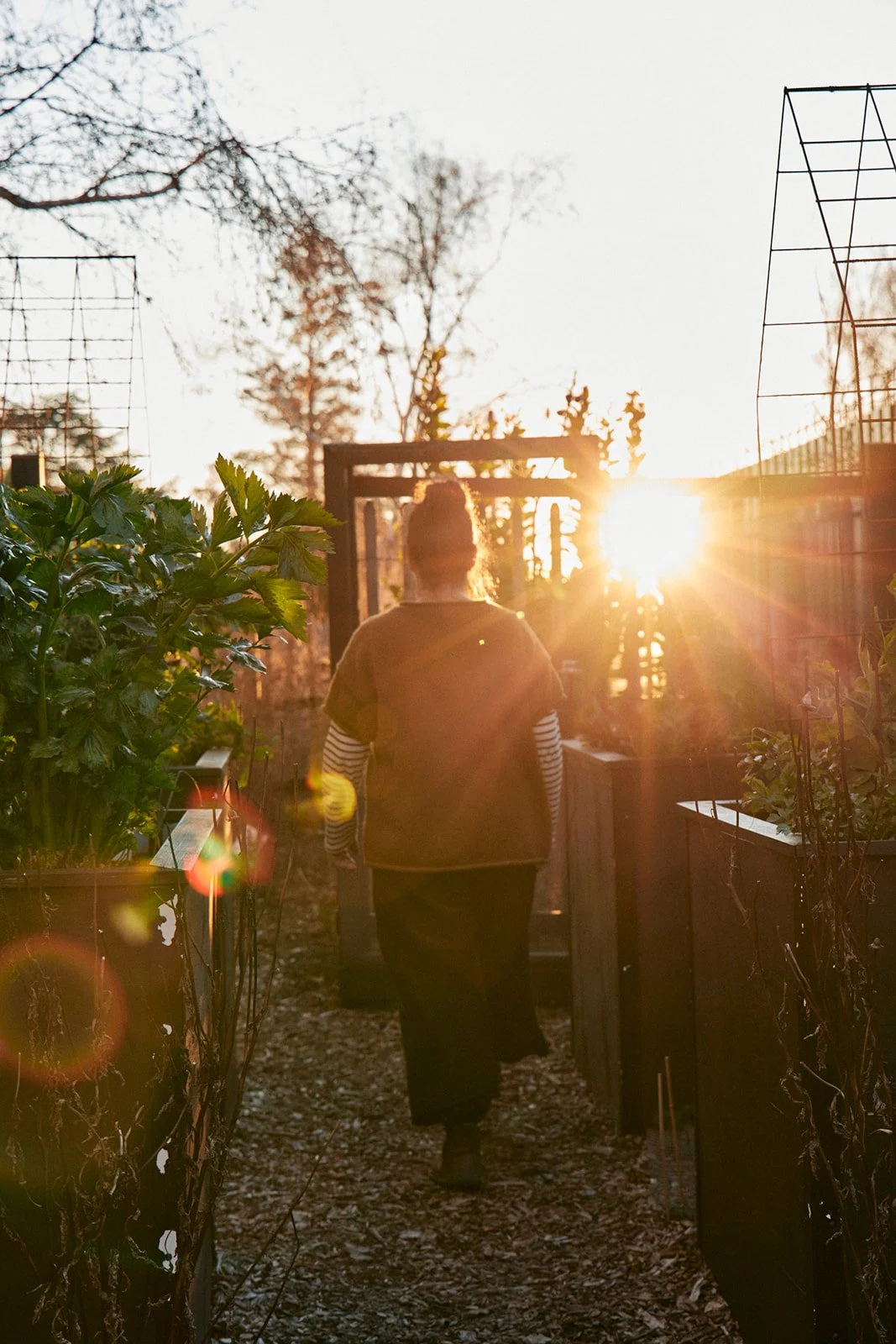
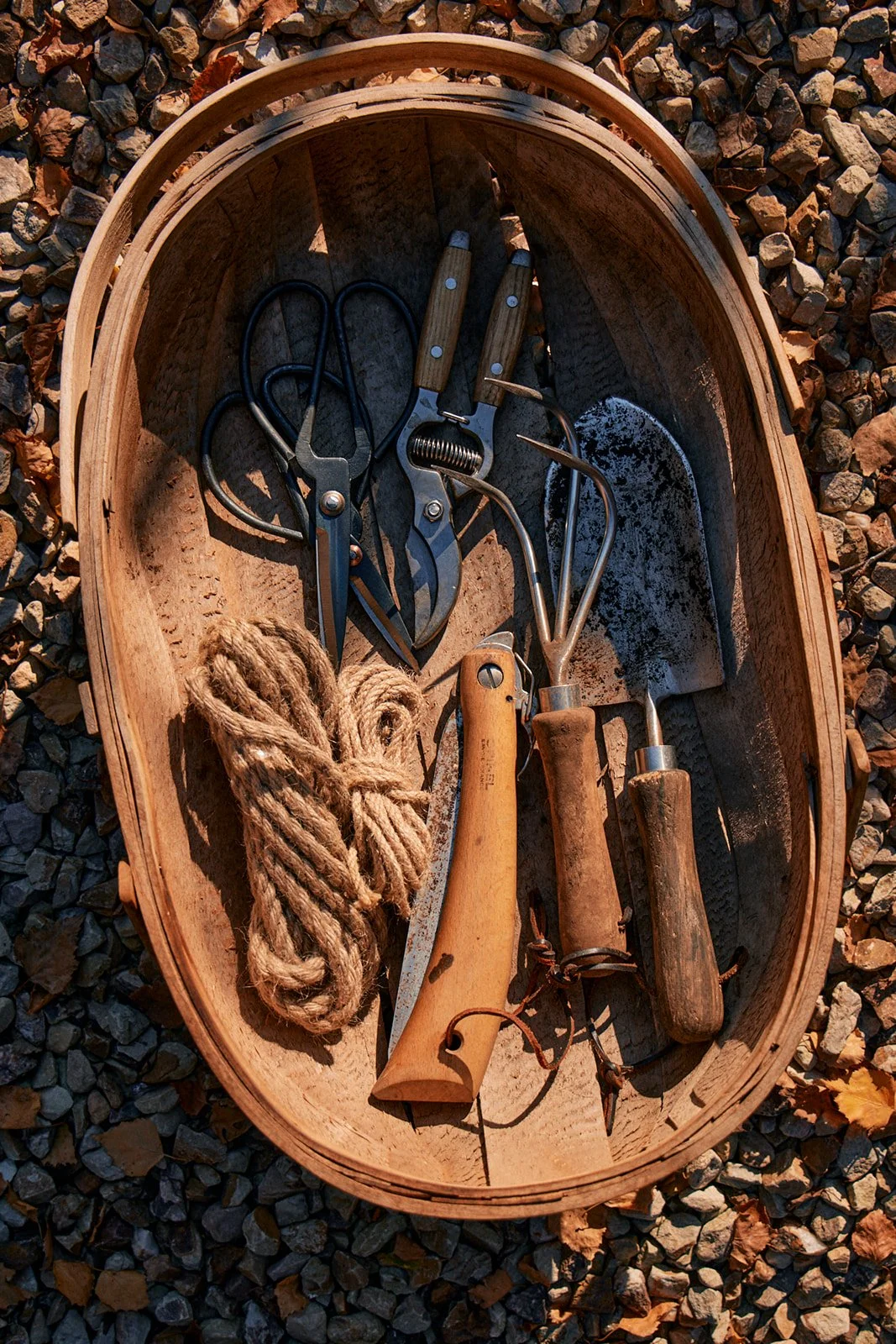
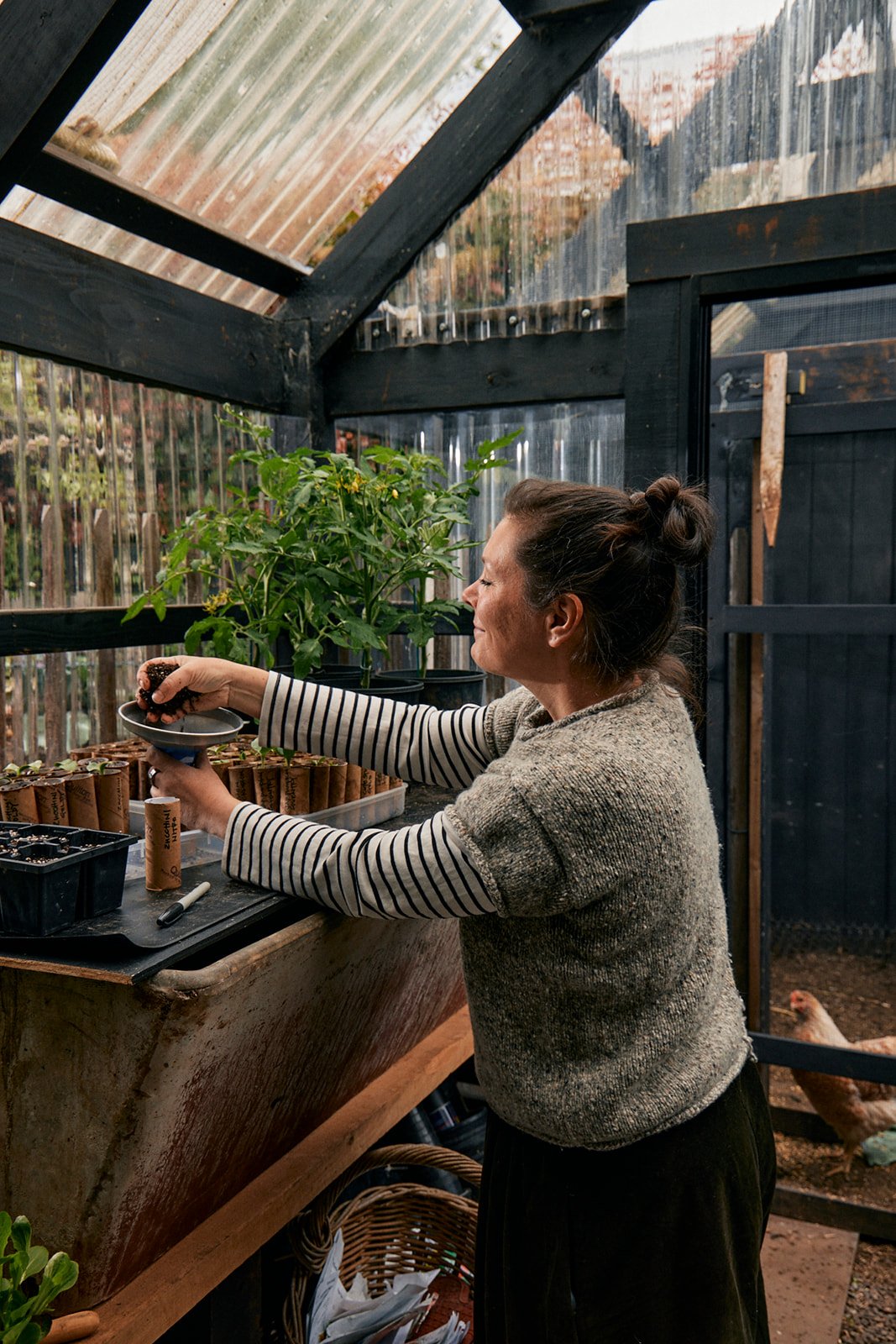
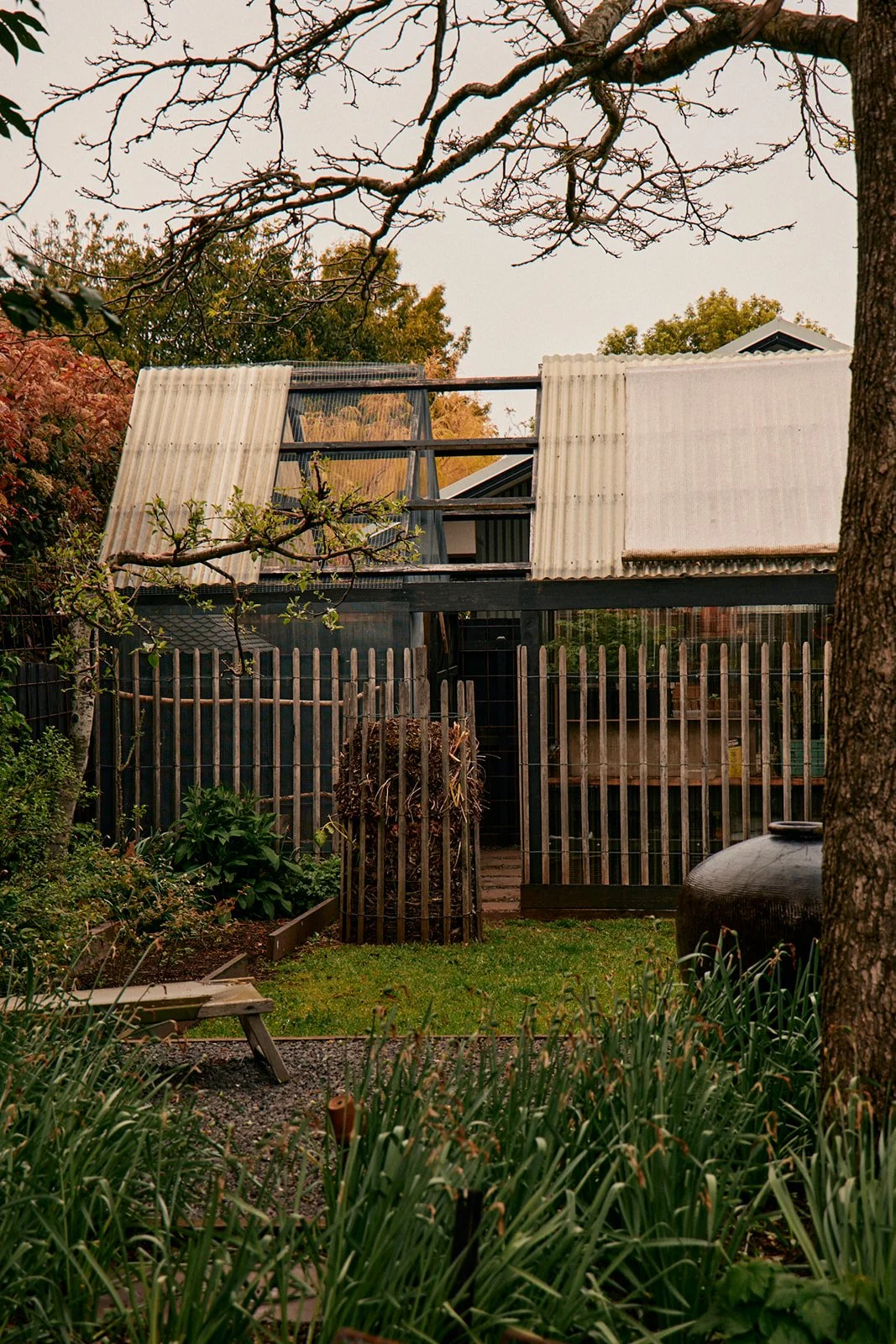
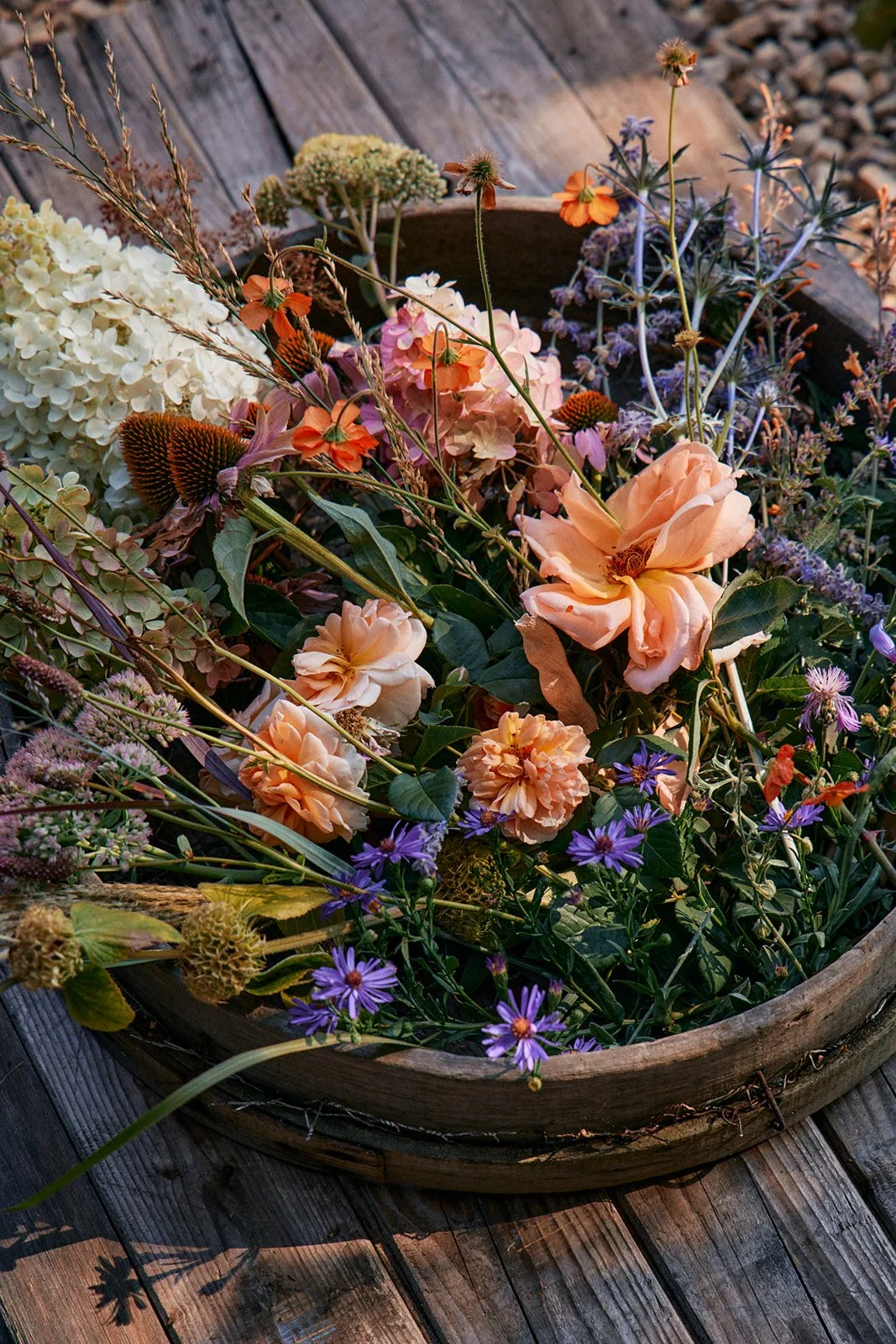
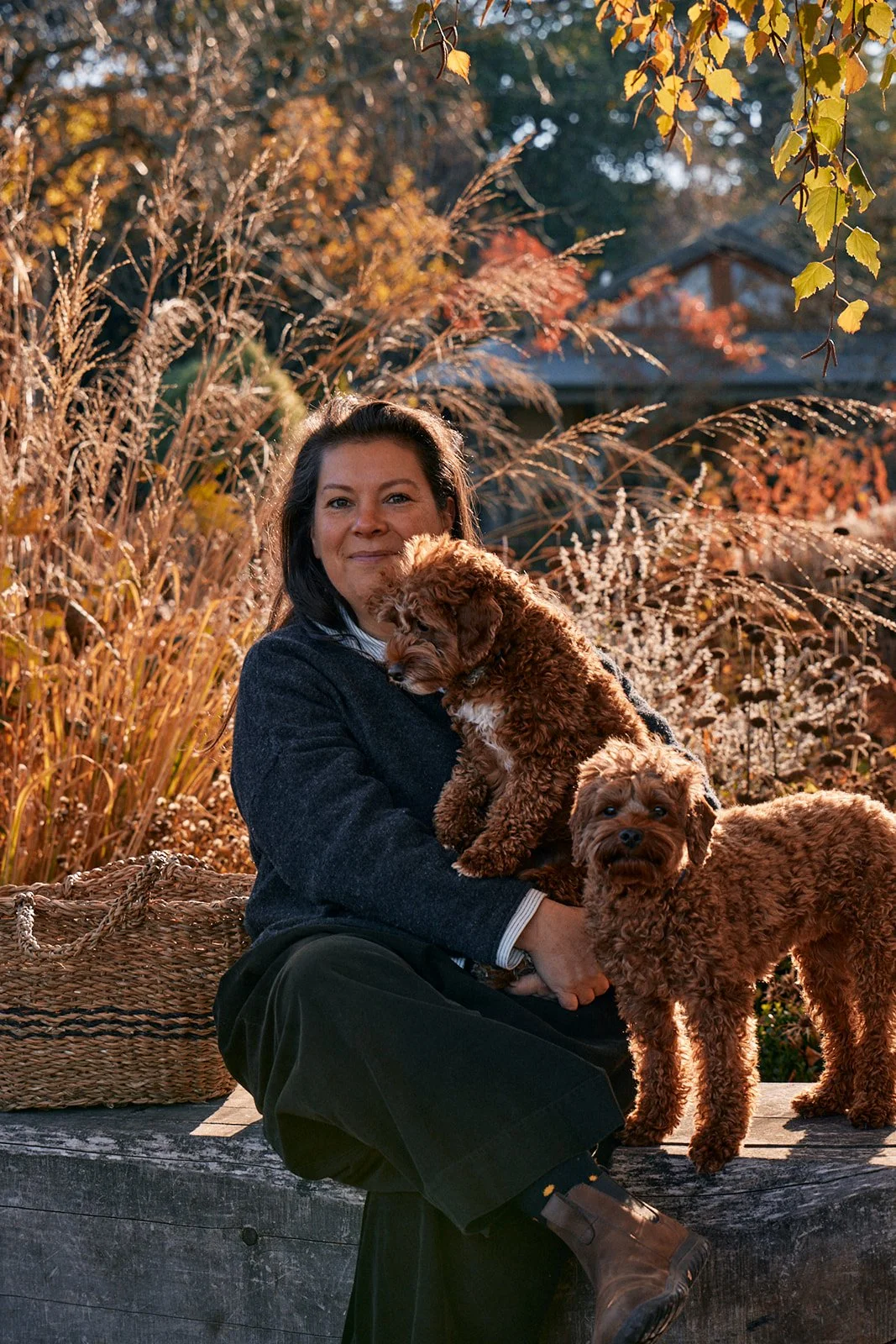

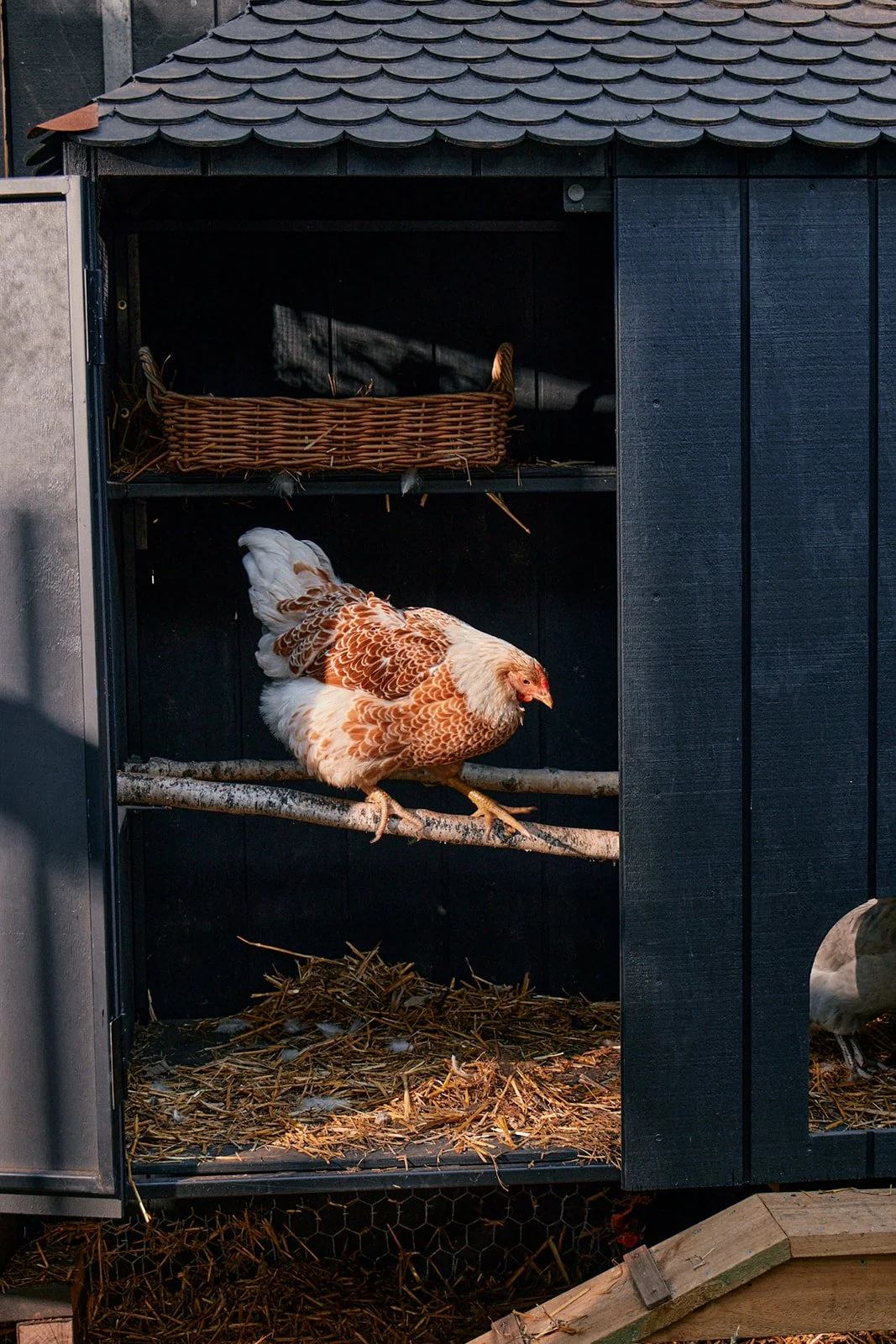
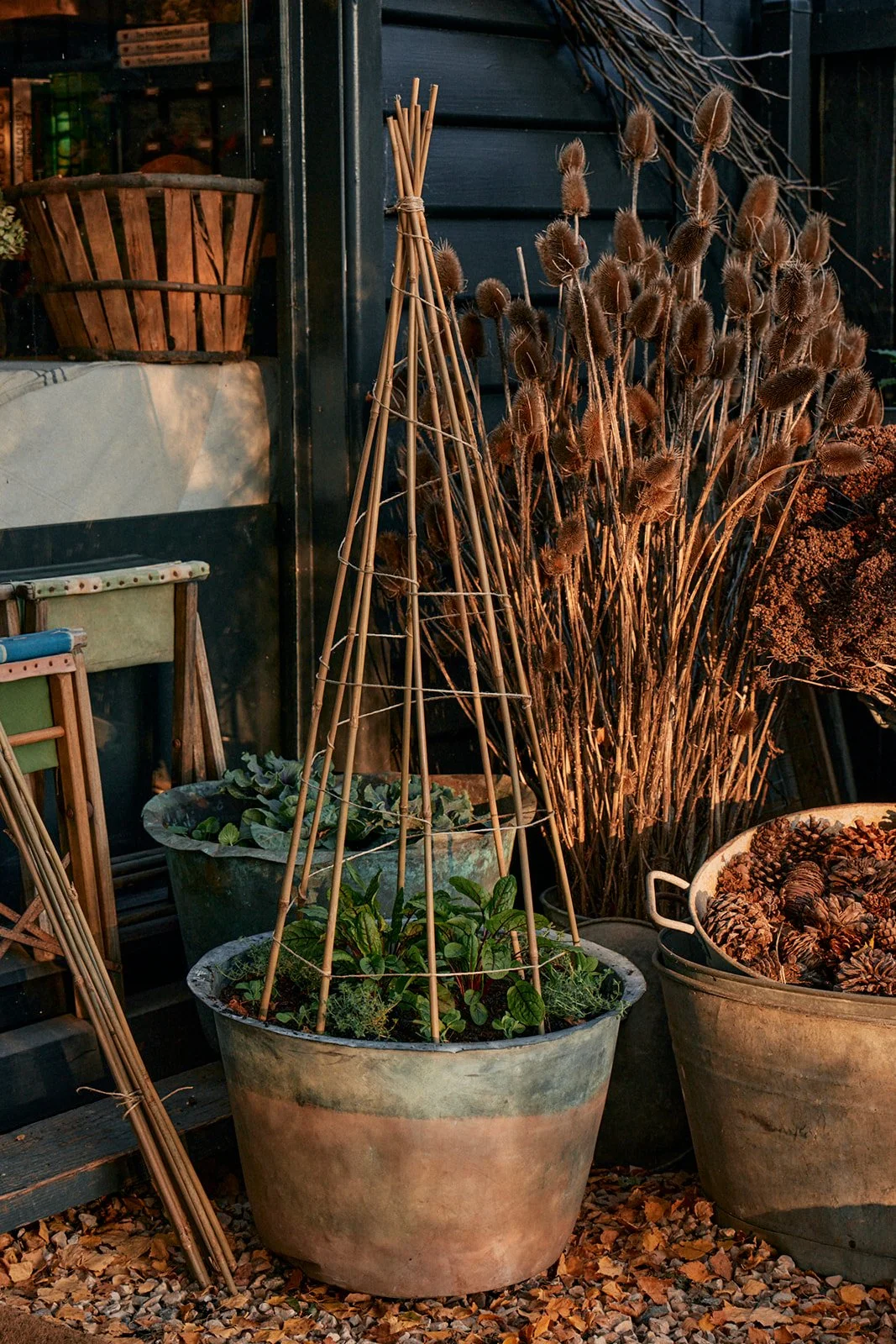
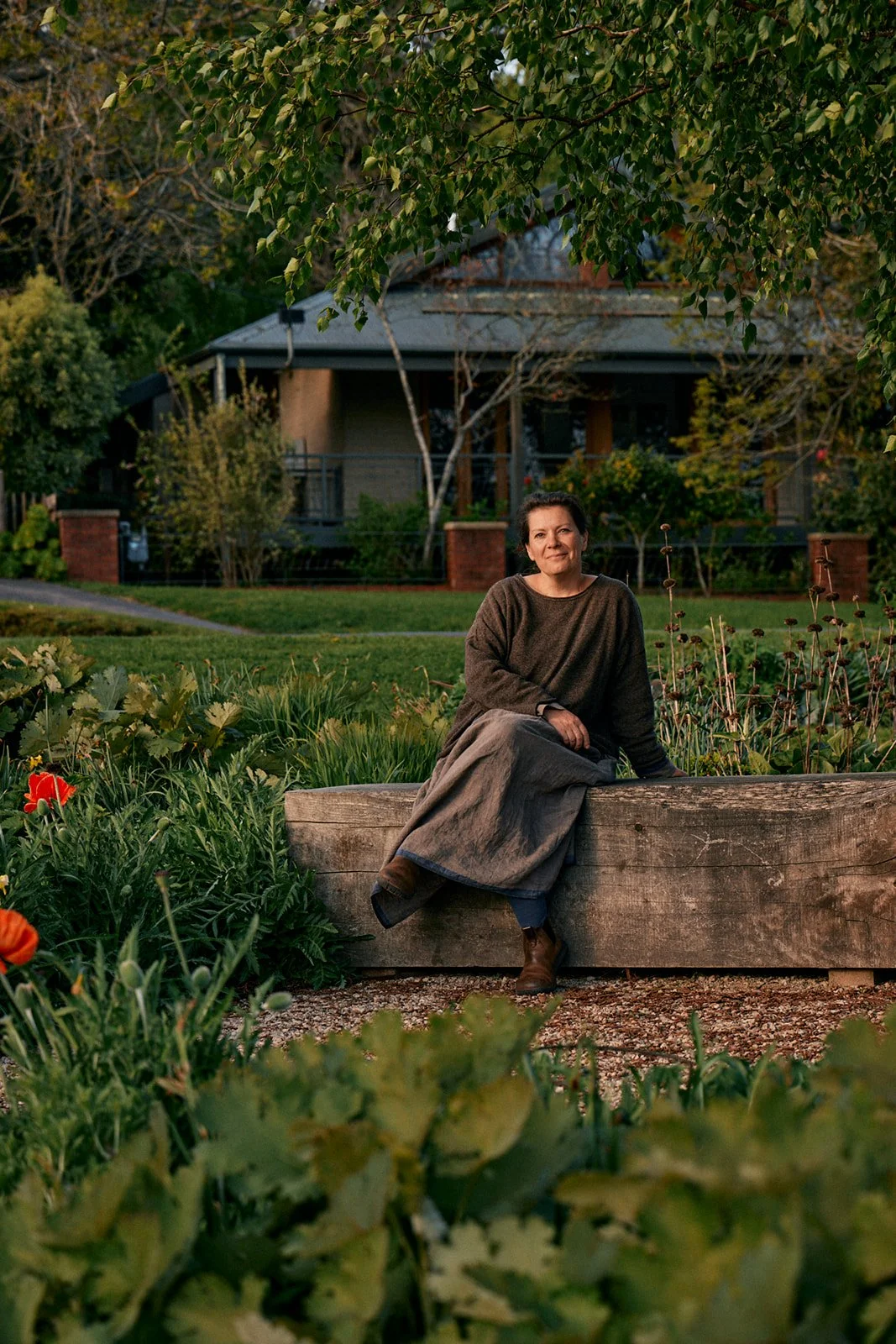
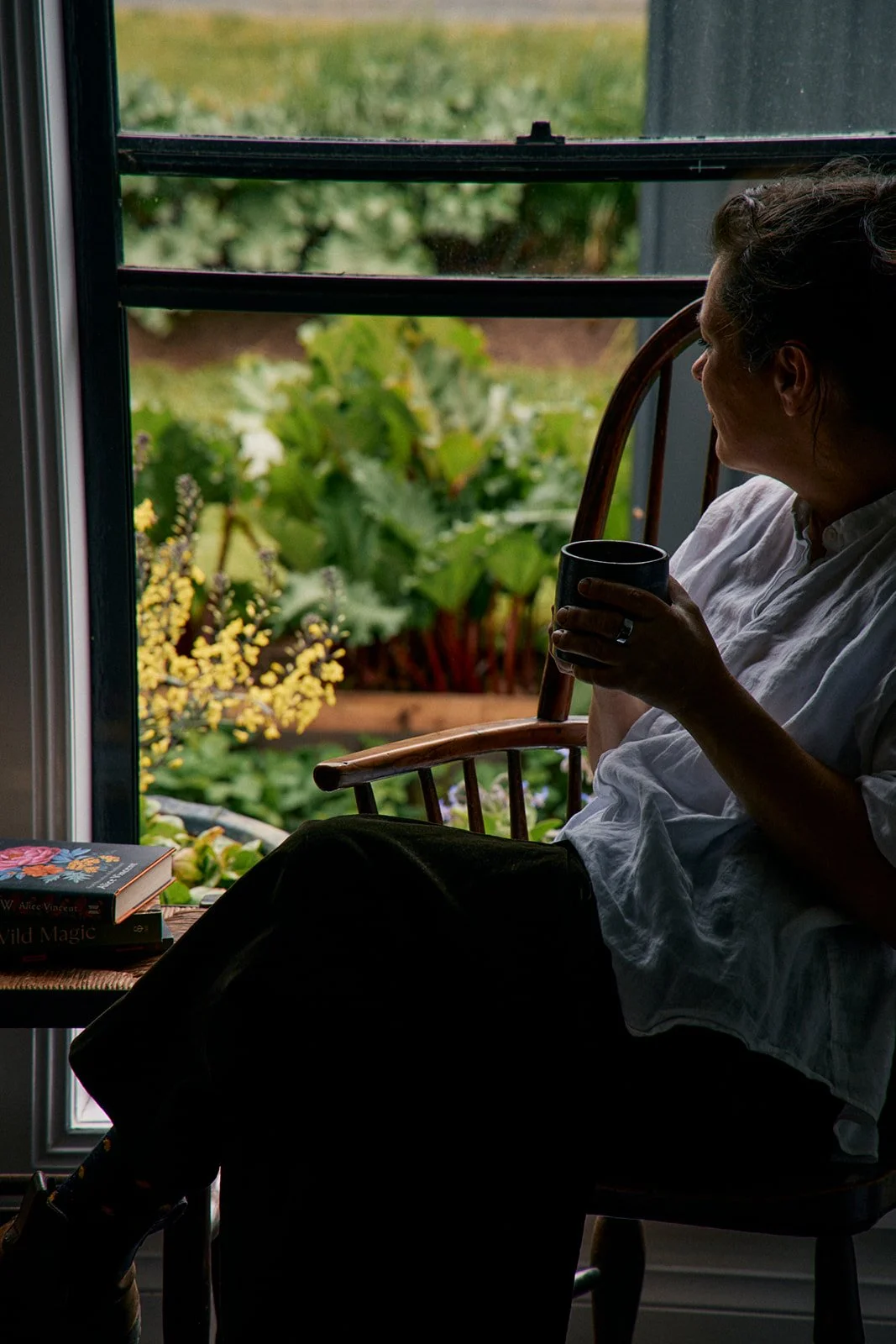
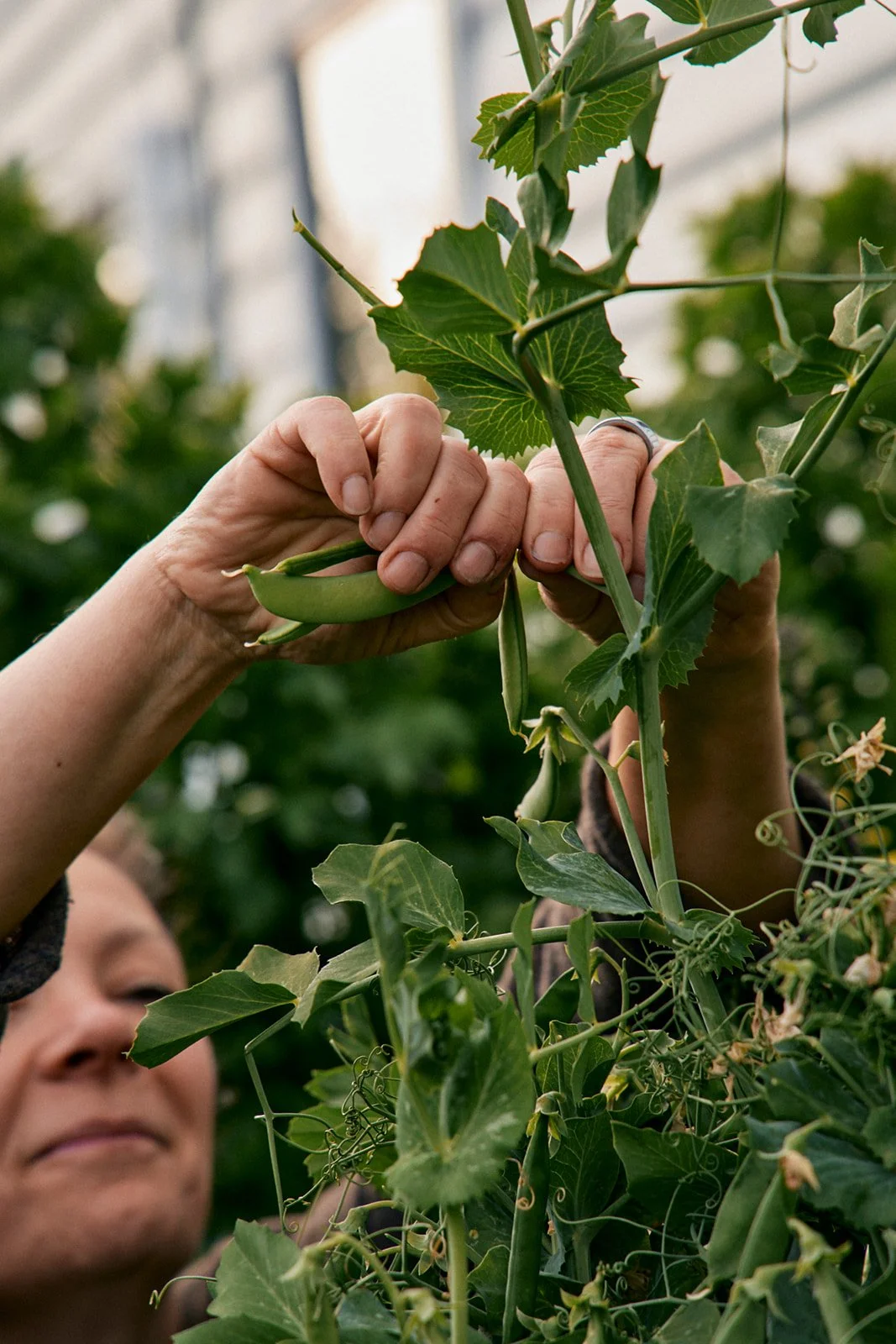
Join a workshop
If you love plants that work hard and give more than one thing back, my Medicinal Garden workshop is a natural next step. We’ll explore some of the most useful and beautiful plants to grow, and how they can enrich both your garden and your daily life.
Explore current workshops in the shop.
If you are building your garden from home right now, my e books on Wicking Bed Gardens and Introduction to Backyard Chicken Keeping offer practical step by step guidance that pairs well with the workshops.
Stay connected
Follow along on Instagram, Facebook, Gardenstead, LinkedIn, Pinterest and YouTube, visit the website and subscribe to the Newsletter for seasonal updates.
Stay tuned, for more exciting book news coming soon.
Thanks so much for following along.
Natasha xx
You may want to check out my related content below:
My top 5 plants from Oak & Monkey Puzzle – plants that I keep coming back to.
April garden tasks for Australian climates & adding interest for winter – The first week of the month of mileston
Redefining Productive - What it means in my Garden
The Medicinal Garden Workshop with Caroline Parker & Natasha Morgan — Step into the magic of nature
Stay connected for more seasonal inspiration:
Instagram | Facebook | Gardenstead | LinkedIn | Pinterest | YouTube | Website | Newsletter
My top 5 plants from Oak & Monkey Puzzle
My top 5 plants from Oak & Monkey Puzzle
Some plants stay with you.
Not just because they performed well, although these ones certainly did, but because they came to represent something much bigger. A season. A milestone. A long held dream finally made real.
Oak & Monkey Puzzle was where so many of my plant dreams came true. It was the first place I could truly grow the things I had longed for. The plants I wanted to cut in armfuls. The plants that marked the seasons so clearly. The ones that offered beauty, fragrance, structure, and that particular kind of generosity that makes a garden feel deeply lived in.
For nine years on five acres in Spargo Creek, I built that garden slowly, season by season, precinct by precinct. It held me through some of the hardest years of my life, but it also gave me so much. It gave me a place to test my ideas. It gave me proof that beauty and productivity can sit side by side. It gave me a garden full of plants that worked hard, and a few that were simply too magnificent not to grow.
This month, as part of my April month of milestones, I’ve created a free eBook for newsletter subscribers featuring the full Oak & Monkey Puzzle plant list, organised garden by garden across the property. It is a list built over nearly a decade of living, growing, observing, and refining on five acres.
In this article, I begin with my top five plants I return to again and again when I think about Oak & Monkey Puzzle.
They are not the only plants I loved there, not by a long shot, but they are five that hold something of the spirit of that garden for me.
Subscribe to the newsletter to download your free copy of the entire eBook
Hydrangea paniculata
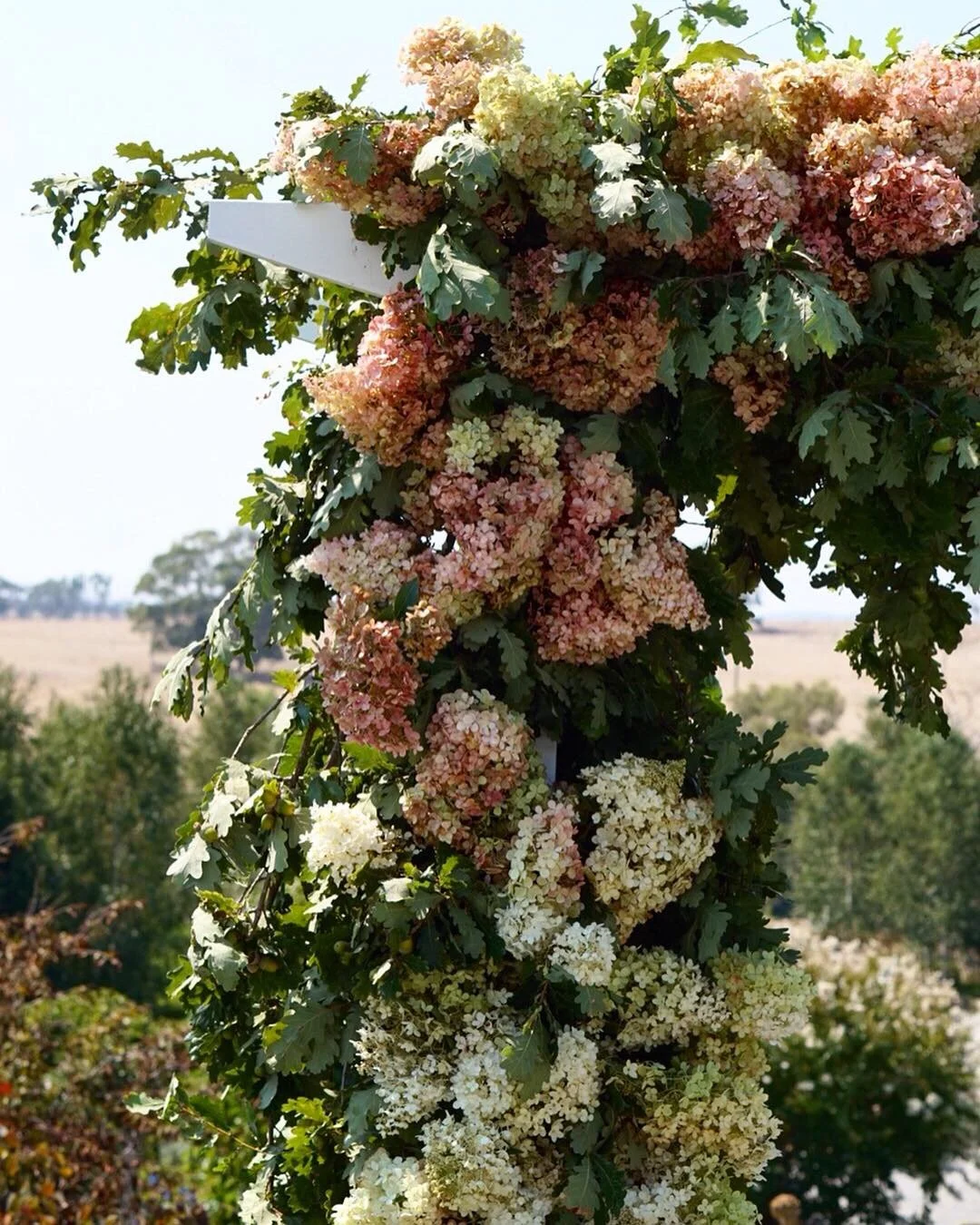
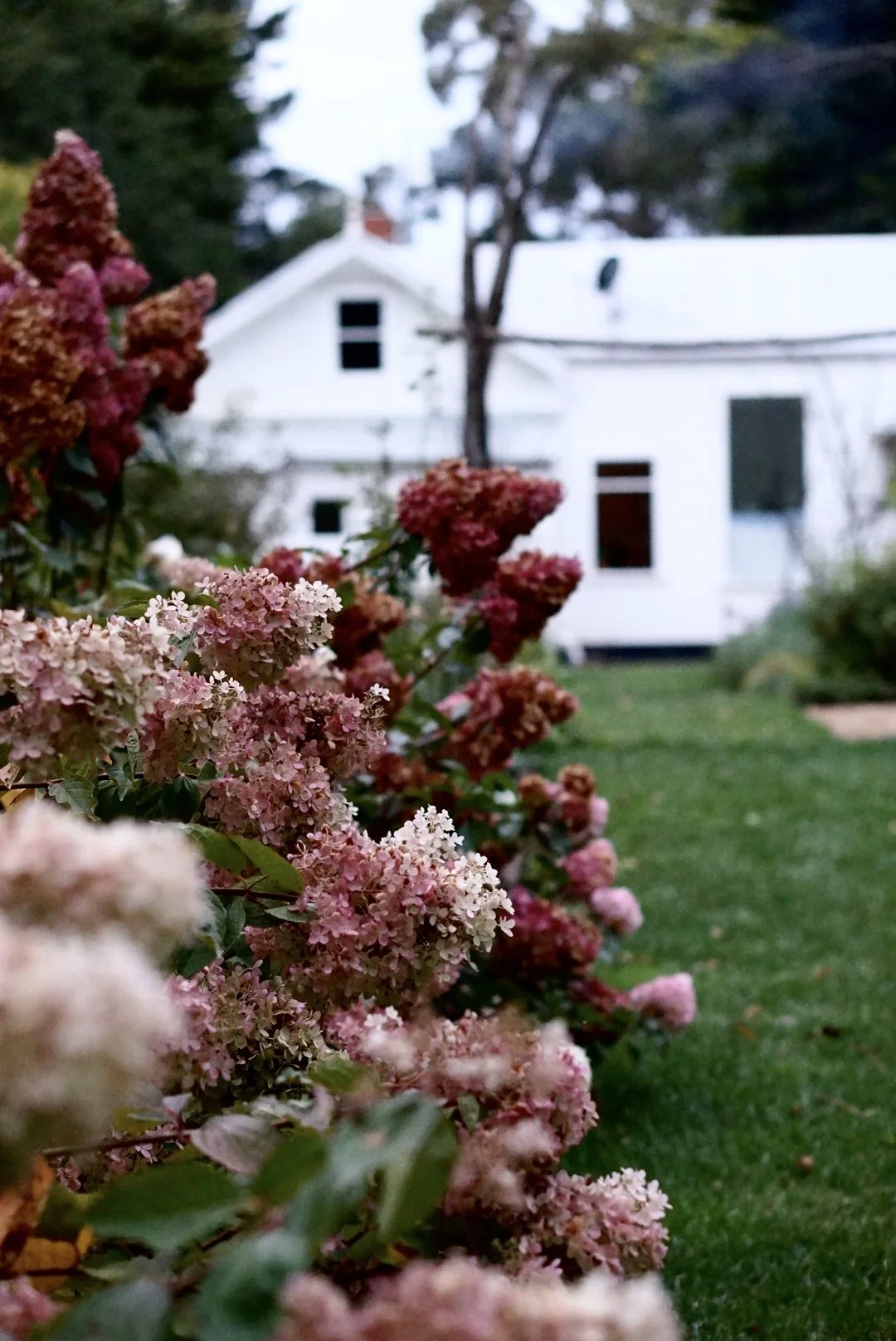
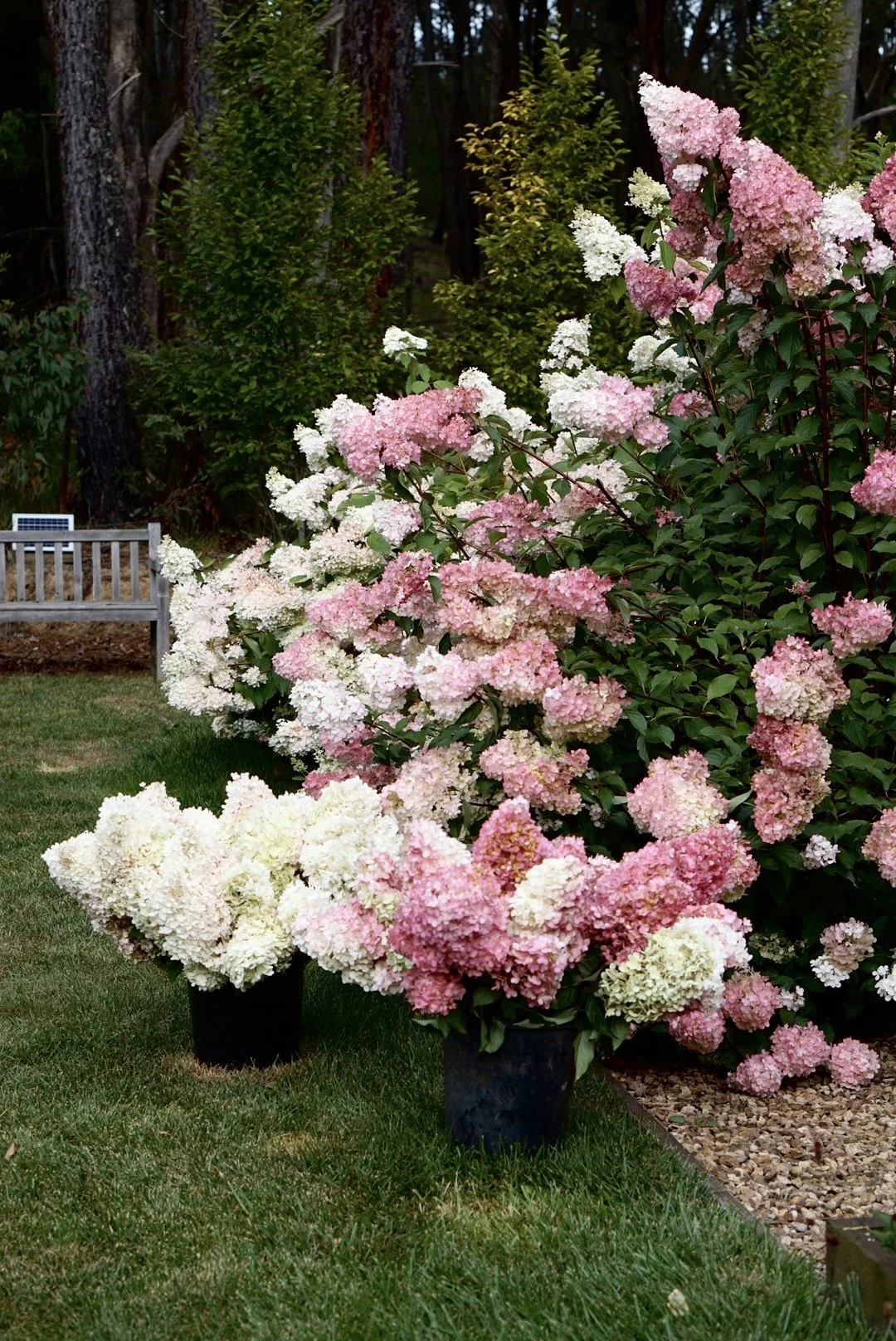
If there is one plant I have become known for, it is probably this one.
The Hydrangea paniculata I grew at Oak & Monkey Puzzle never came with a cultivar name. It was simply sold to me as Hydrangea paniculata, and over time it became one of the plants I most relied upon. Hardy, generous, and deeply beautiful across an extraordinarily long season, it carried the kind of quiet strength I value so much in a garden.
In spring and summer, it was all freshness and lift. Then came that beautiful soft shift into blush tones, before the flowers deepened into the rusted, parchment like autumn phase I love so much. Even after that, the spent flower heads held beautifully through winter, catching frost and low light in a way that made them feel just as valuable as when they were in full bloom.
That is what I mean when I talk about high performance plants. They do not only offer one fleeting moment. They hold their place and give back over time. This is something I talk about in my upcoming book - stay tuned for a huge announcement!
This plant mattered enough to me that when I left Oak & Monkey Puzzle, I took cuttings from it and planted them again at Little Cottage on a Hill. To me, that says everything. It’s a plant I would happily propagate from one property to another. I will never let it go!
Fragrant repeat flowering roses

For me, a rose must earn its place through fragrance as well as beauty.
At Oak & Monkey Puzzle, one of the great joys was finally being able to grow armfuls of roses that were not only beautiful, but richly scented and generous across the season. I did not want roses that gave one quick flush and disappeared. I wanted repeat flowering roses that I could keep cutting, keep bringing inside, and keep living with.
Three of my great loves were ‘Jude the Obscure’, ‘Golden Celebration’ and ‘Just Joey’. They had the softness, fragrance and fullness I longed for, and they brought that old world sense of abundance that is almost impossible to replicate with florist flowers. To cut them fresh from the garden and bring them indoors was one of those bucket list moments that felt every bit as magical as I had imagined.
They were not just ornamental plants. They shaped the atmosphere of the picking garden. They offered fragrance, seasonal continuity, beauty in the vase, and the kind of richness that makes you want to stop whatever you are doing and take notice.
If I am making room for a rose, it must be doing all of that.
Hellebores

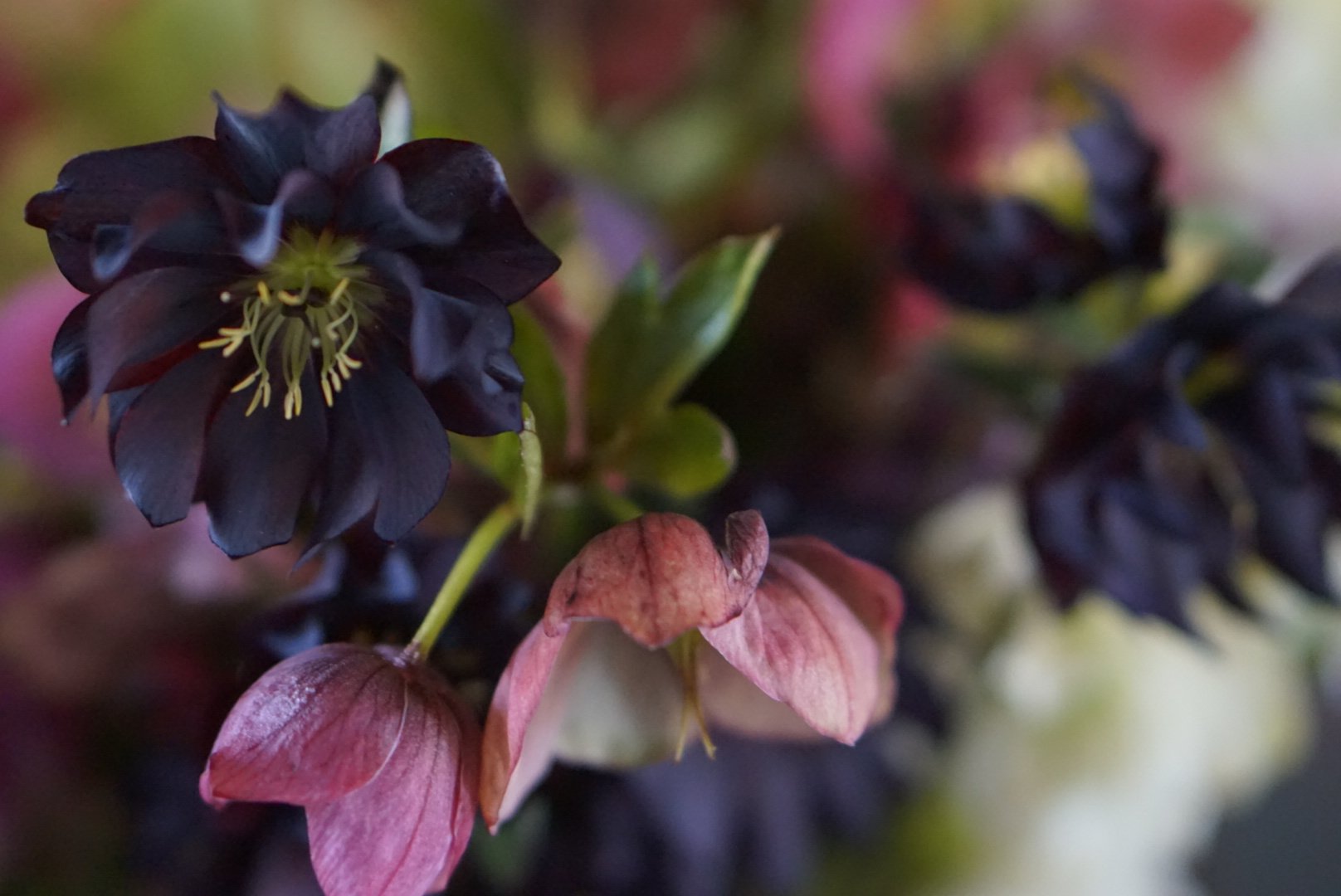
Hellebores are among the plants I rely on most for that crucial turning point in the year when winter begins to loosen its grip.
At Oak & Monkey Puzzle, they brought beauty at exactly the moment it was most needed. When so much else was still resting, hellebores were already there, quietly holding the garden and offering the first sense that the season was beginning to shift.
I grew all sorts, from single black to double black, single whites and many shades in between. What I love most about them is their restraint. They are not loud plants, but they are deeply moving in their timing and presence. They flower when the garden still feels sparse. They ask you to come closer. They reward attention.
They are also wonderfully suited to cool climate gardens, particularly where there is filtered light and a certain softness of setting. At Oak & Monkey Puzzle, they sat beautifully within the more layered and intimate planting combinations, offering that low, luminous kind of beauty that can anchor a whole moment in the garden.
They are, without question, one of the plants I would never want to garden without. Post Office Farm Nursery are your hellebore specialist growers.
Peonies
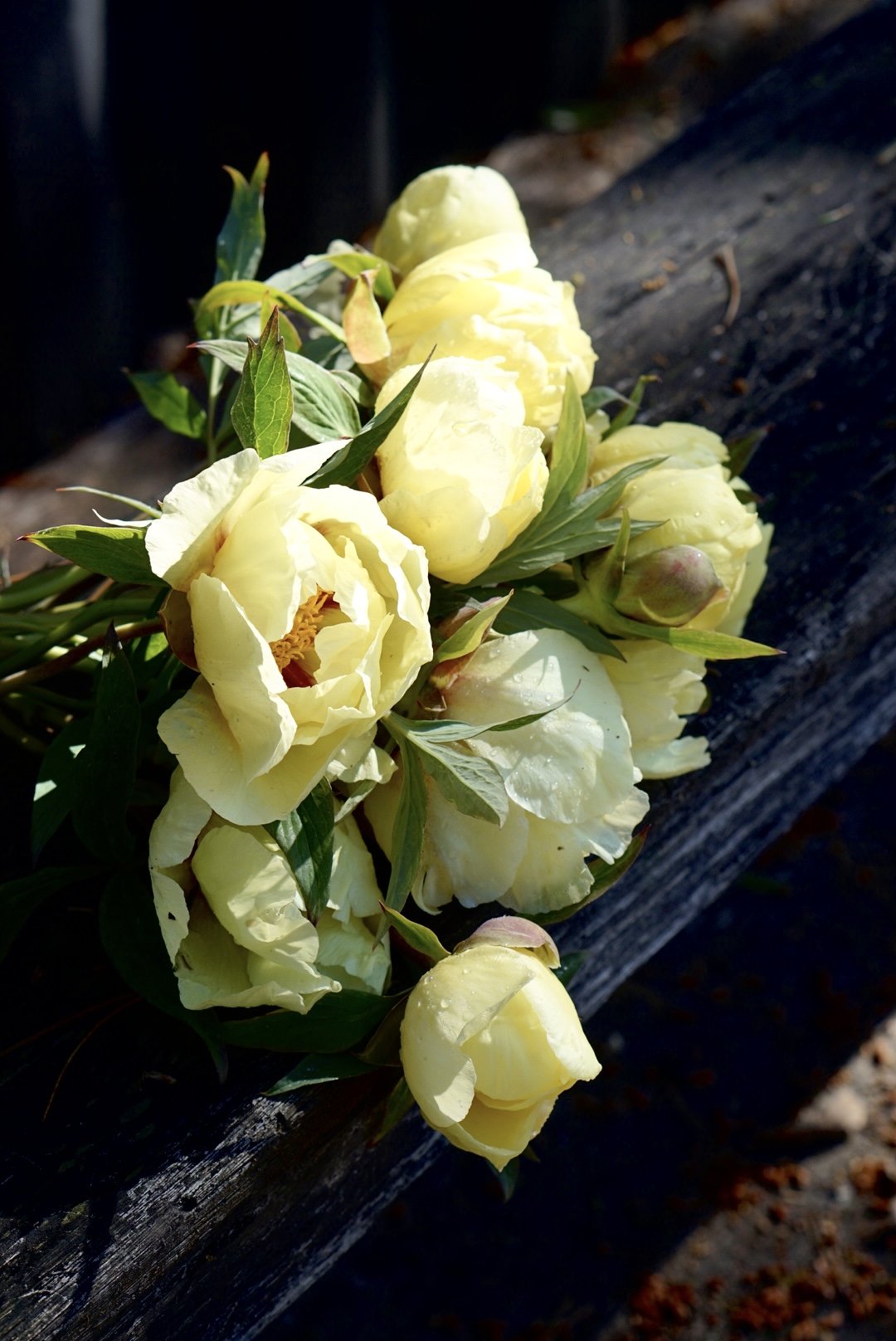
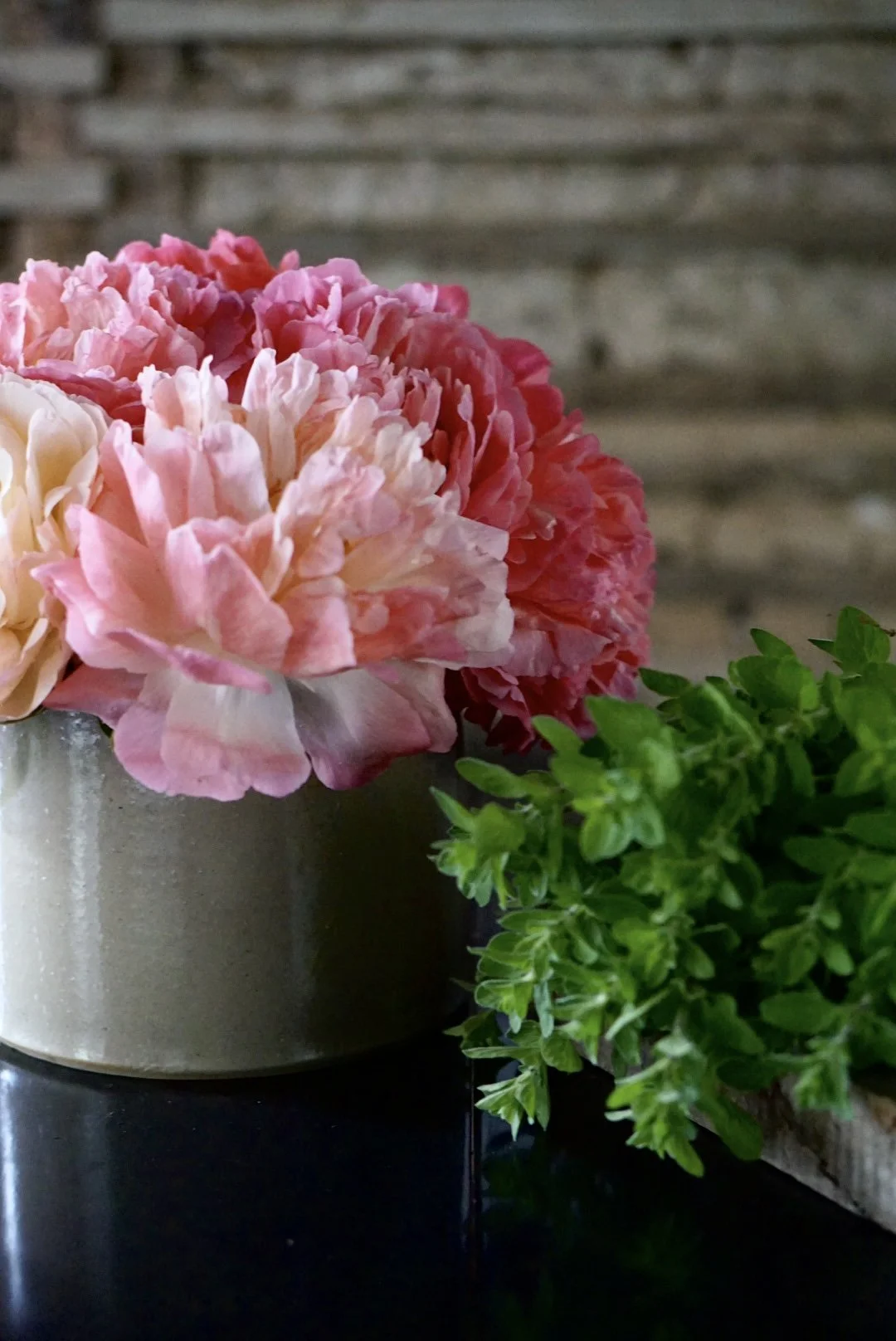
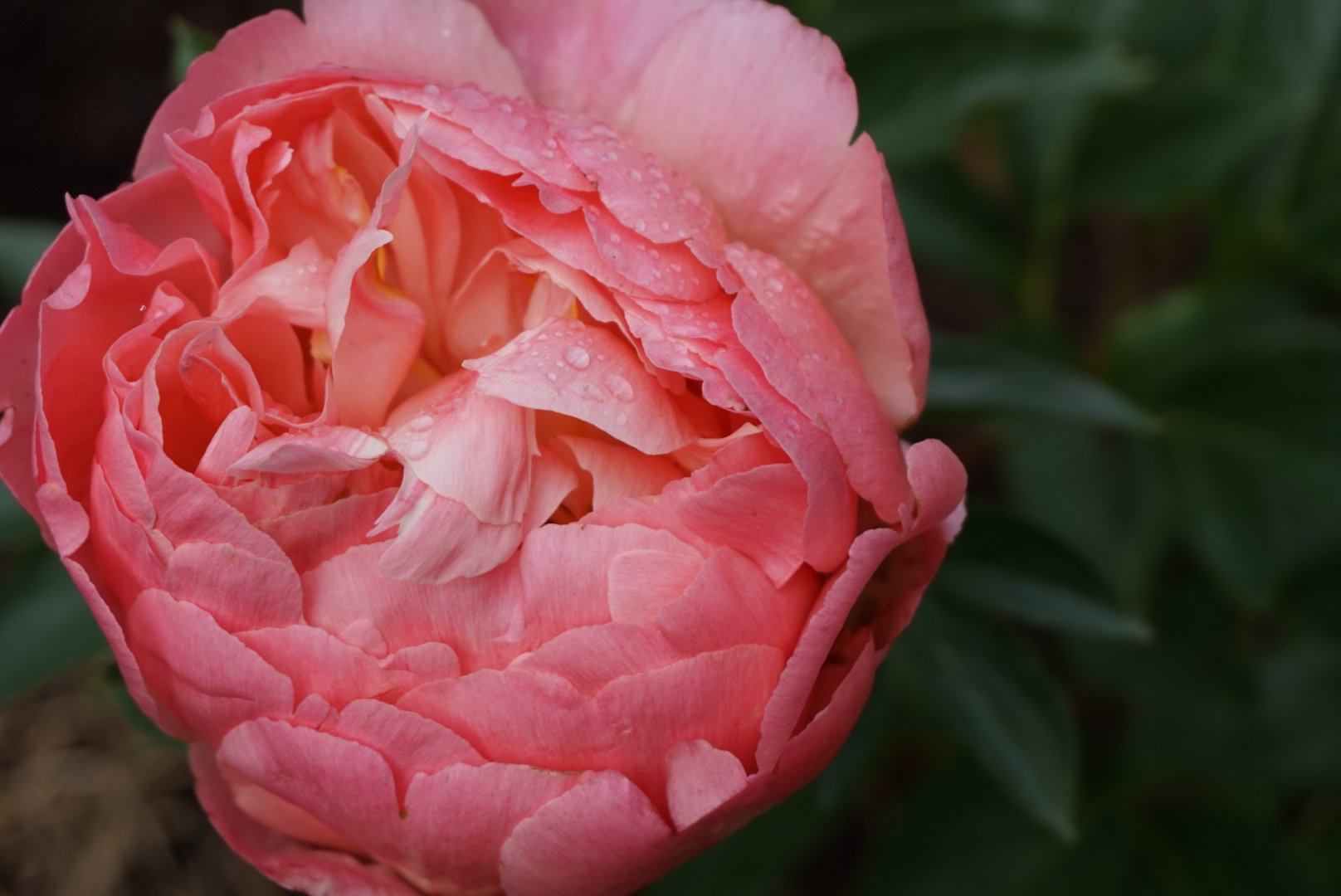

Peonies are the exception in this list.
When I talk about plants that work hard or offer more than one thing back, peonies are not necessarily the first to come to mind. They are not long flowering. They are not especially structural for most of the year. And yet, when you can grow them well, you do.
Because they are magnificent.
At Oak & Monkey Puzzle, I discovered just how well peonies respond to a cool climate with real winter chill and frost. The corals, especially ‘Coral Charm’ and ‘Coral Supreme’, became particular herbaceous peony favourites. Their colour is not static. It shifts and softens as the blooms age, moving through tones that feel almost impossible to describe properly unless you have lived with them day by day.
I also loved the contrast between herbaceous peonies and tree peonies. Herbaceous peonies disappear completely and return with fresh energy each year. Tree peonies hold more of a woody presence and bring a different kind of structure. Both are worth growing.
Peonies ask for patience. They are not instant plants. But that is part of their beauty too. They remind us that some things in a garden are worth waiting for.
Sweet peas
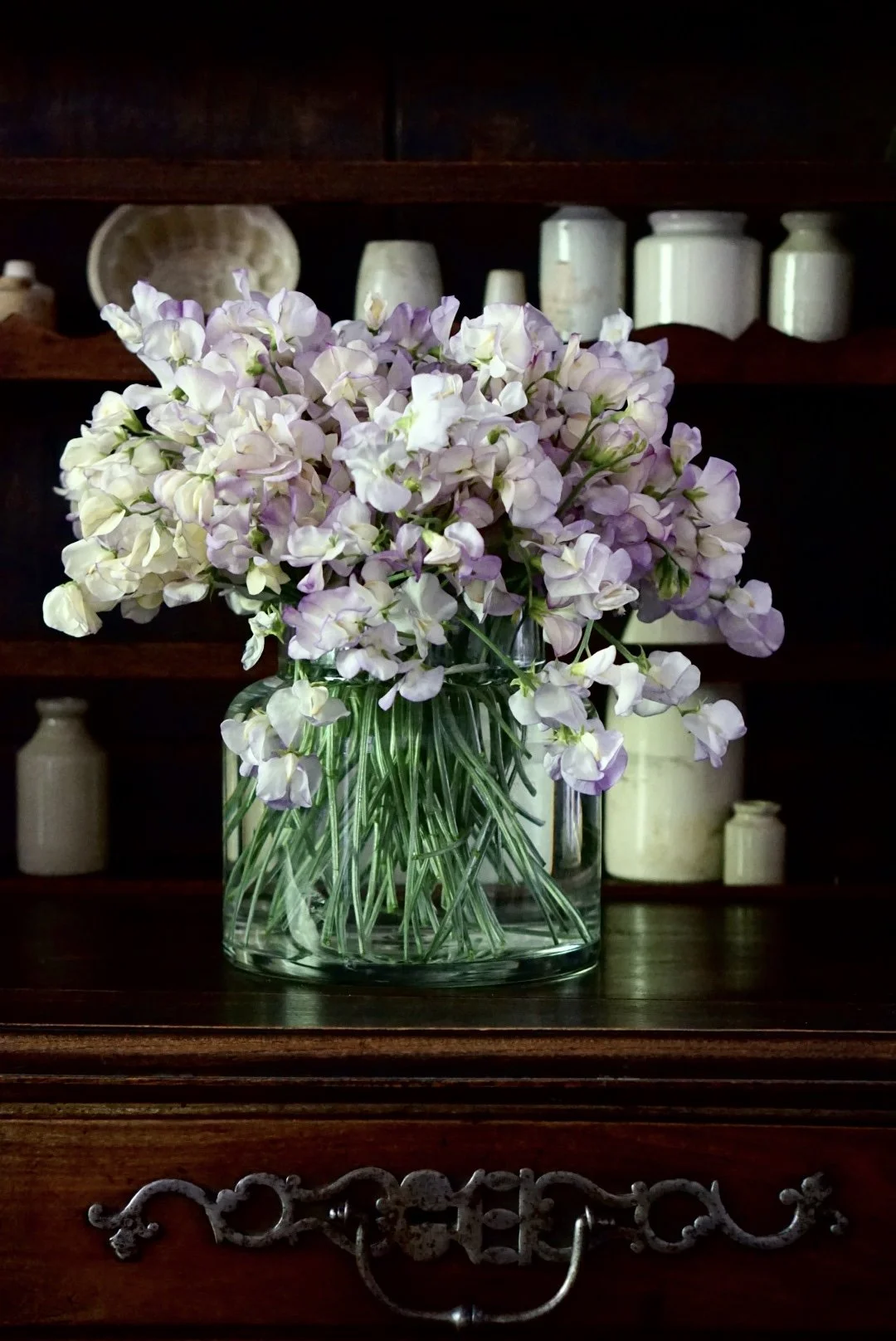
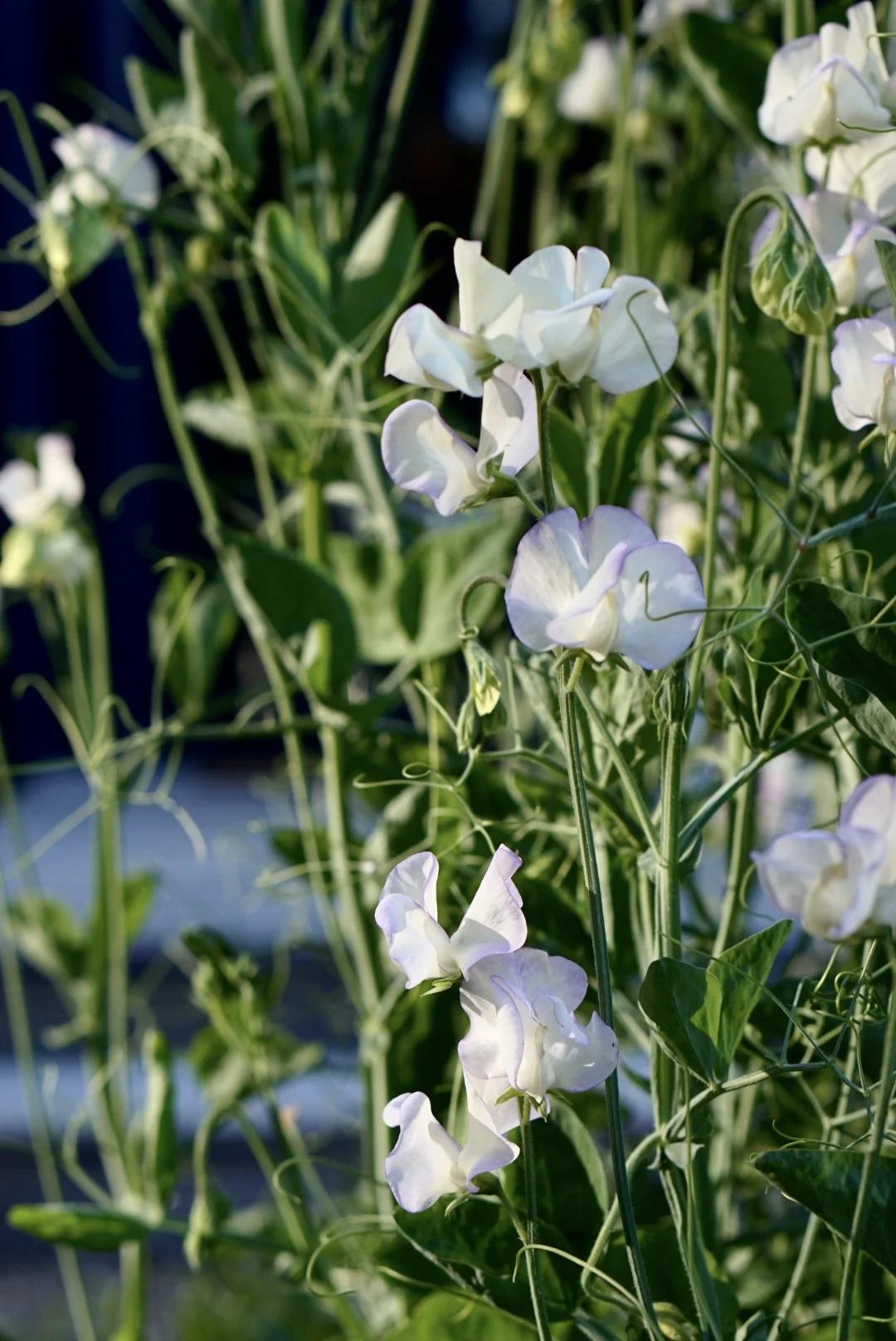
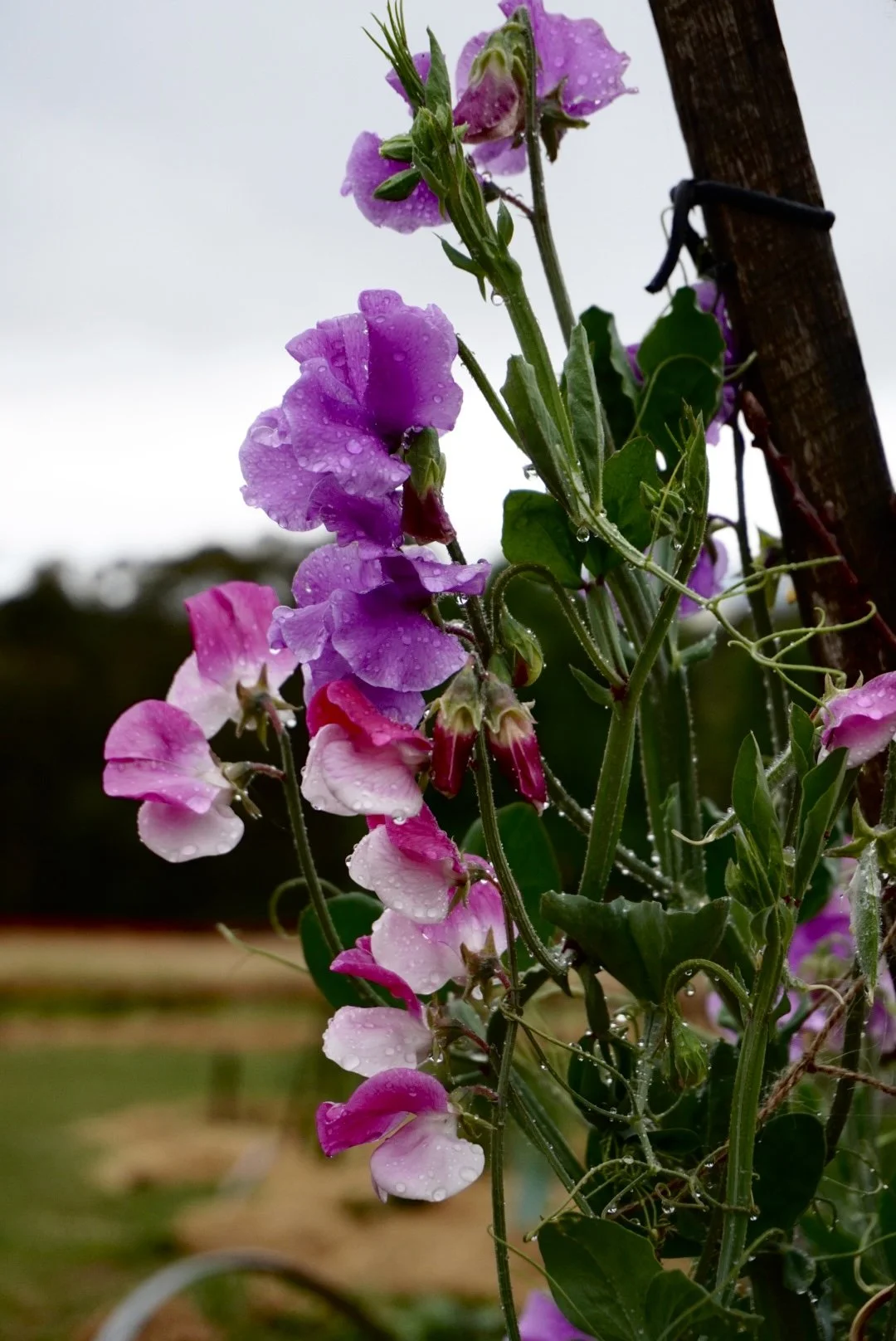
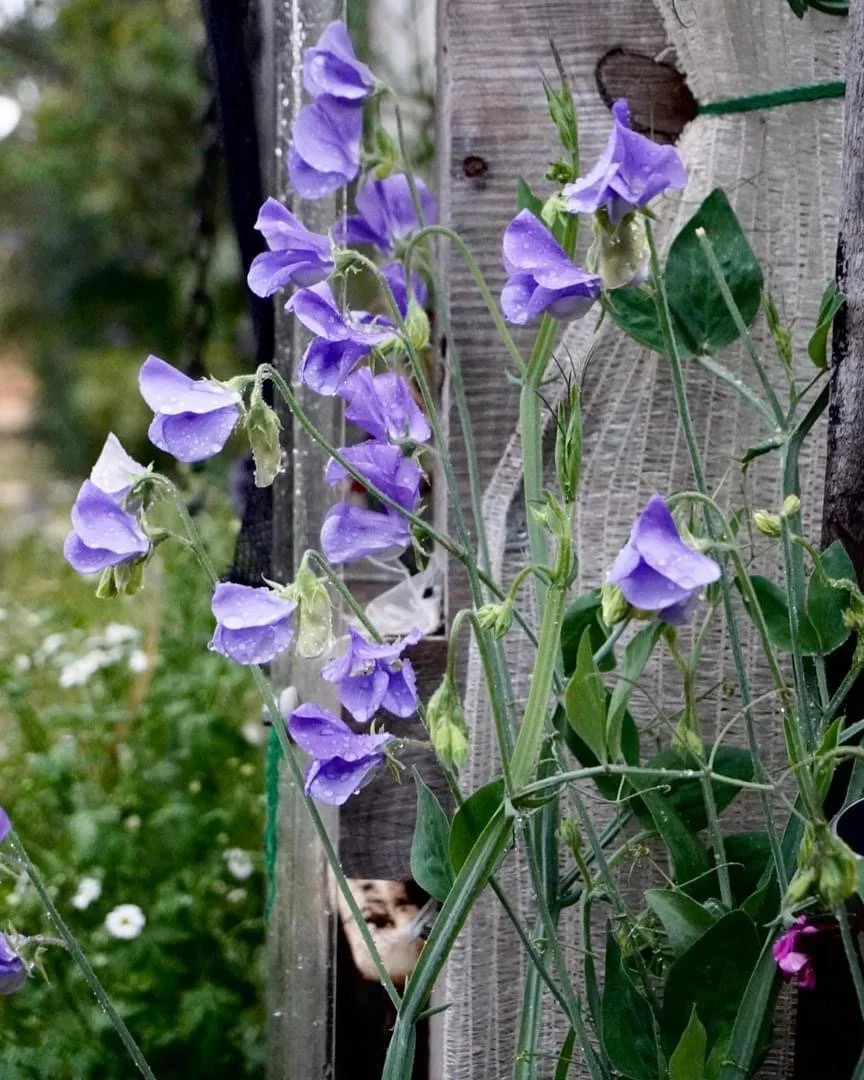
Sweet peas are pure joy.
There is really no other way to say it.
They are one of the plants I most strongly associate with the kind of abundance I wanted to experience at Oak & Monkey Puzzle. Not abundance in the sense of excess, but in the sense of being able to cut huge fragrant bunches, carry them inside, press them into someone’s arms, and fill a room with their scent.
Once you have grown and picked sweet peas yourself, it is very hard to feel the same way about buying them.
Their flowers are delicate, but their generosity is immense. They climb, they flower, they perfume the air, and they give that unmistakable feeling of the season being fully alive. They are one of those plants that engage memory so quickly. A smell, a bunch in a child’s hands, a vase on the table, and the whole time of year comes flooding back.
If you are thinking about sweet peas now, this is the time to plant seed. And if you have never grown them before, I would encourage you to begin. They ask for a little care, but they return it in spades.
Why these five?
All five of these plants hold something different for me, but they are united by one thing. They helped make Oak & Monkey Puzzle feel like the garden I had always dreamed of.
Hydrangea paniculata gave me longevity and seasonal depth.
The roses gave me fragrance and armfuls.
Hellebores gave me late winter lift.
Peonies gave me beauty for beauty’s sake.
Sweet peas gave me scent, abundance and sheer delight.
Together, they tell a story about the kind of garden I was creating there. A garden where plants were chosen not only because they looked good in one moment, but because they contributed to the life of the place. Because they carried the season. Because they gave me something to cut, notice, remember, or revere.
And because, in one way or another, they helped shape the experience of living there.
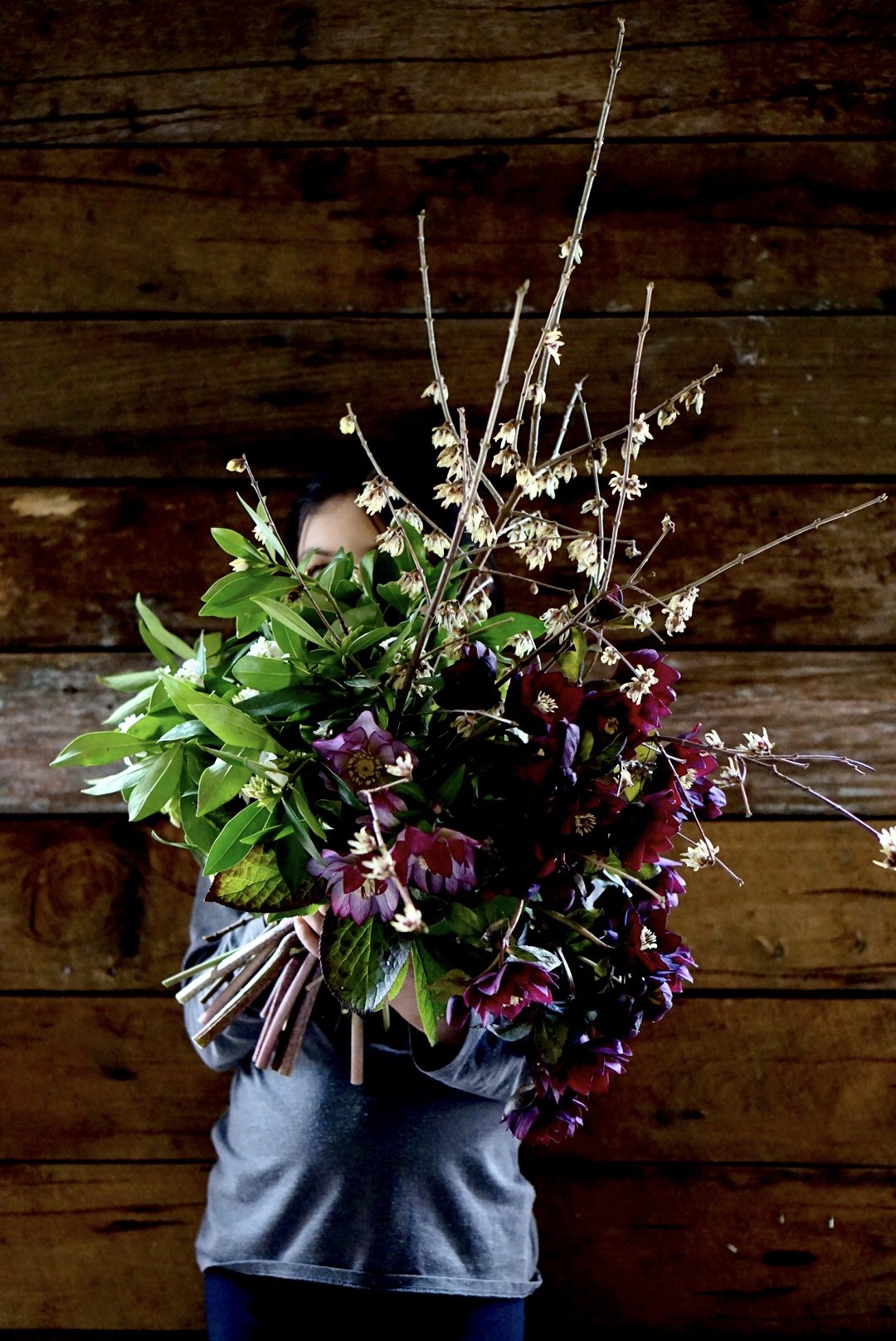
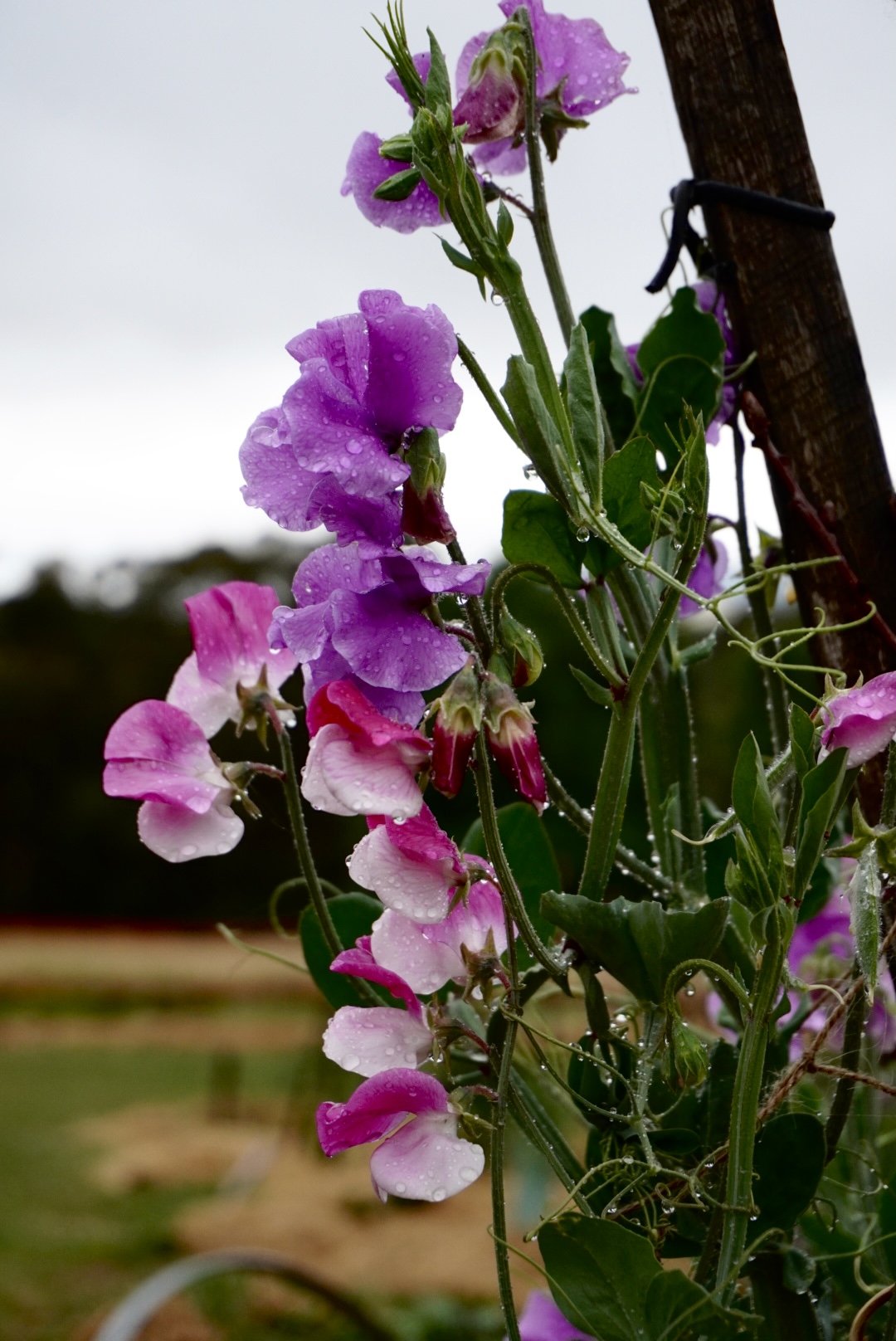
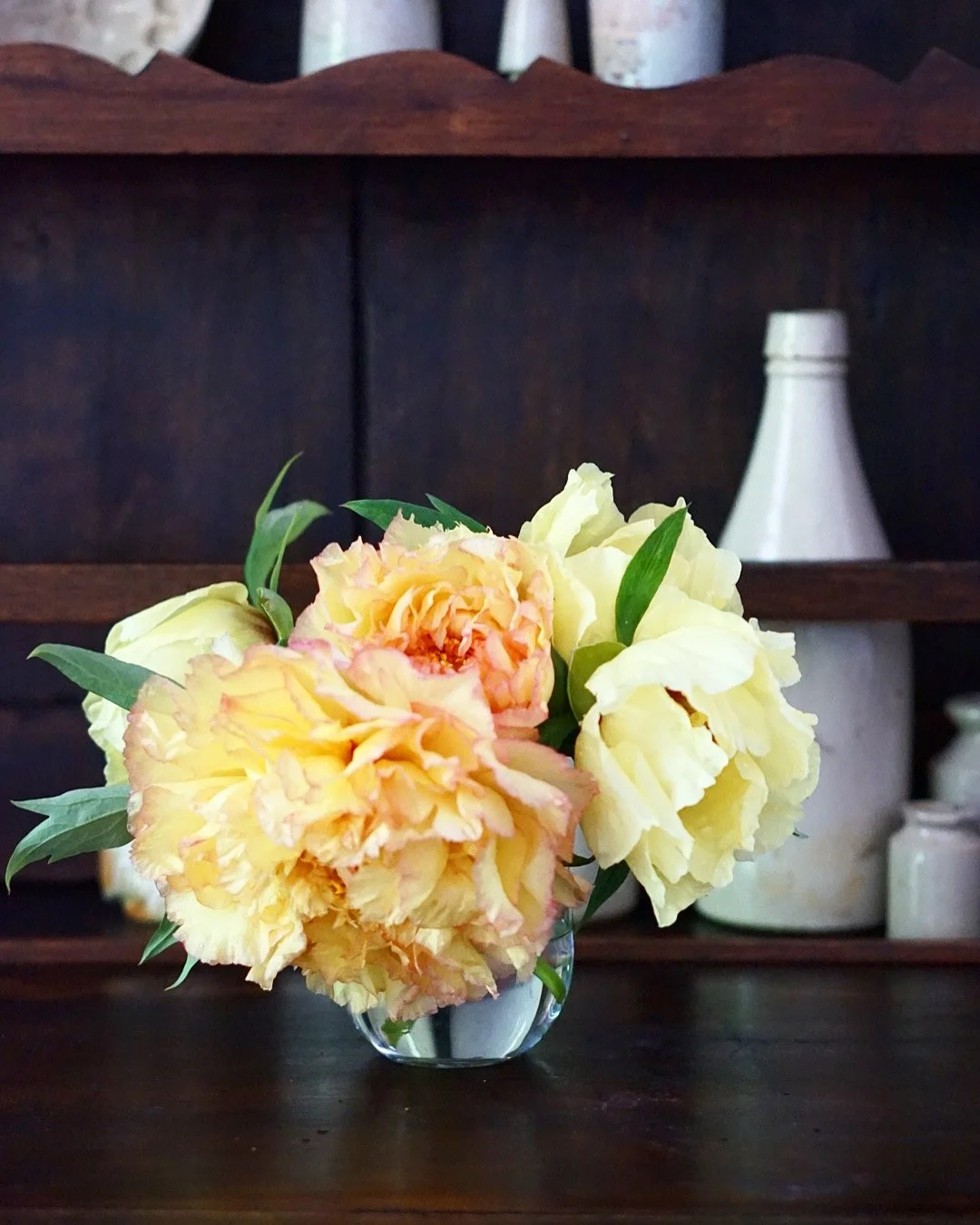
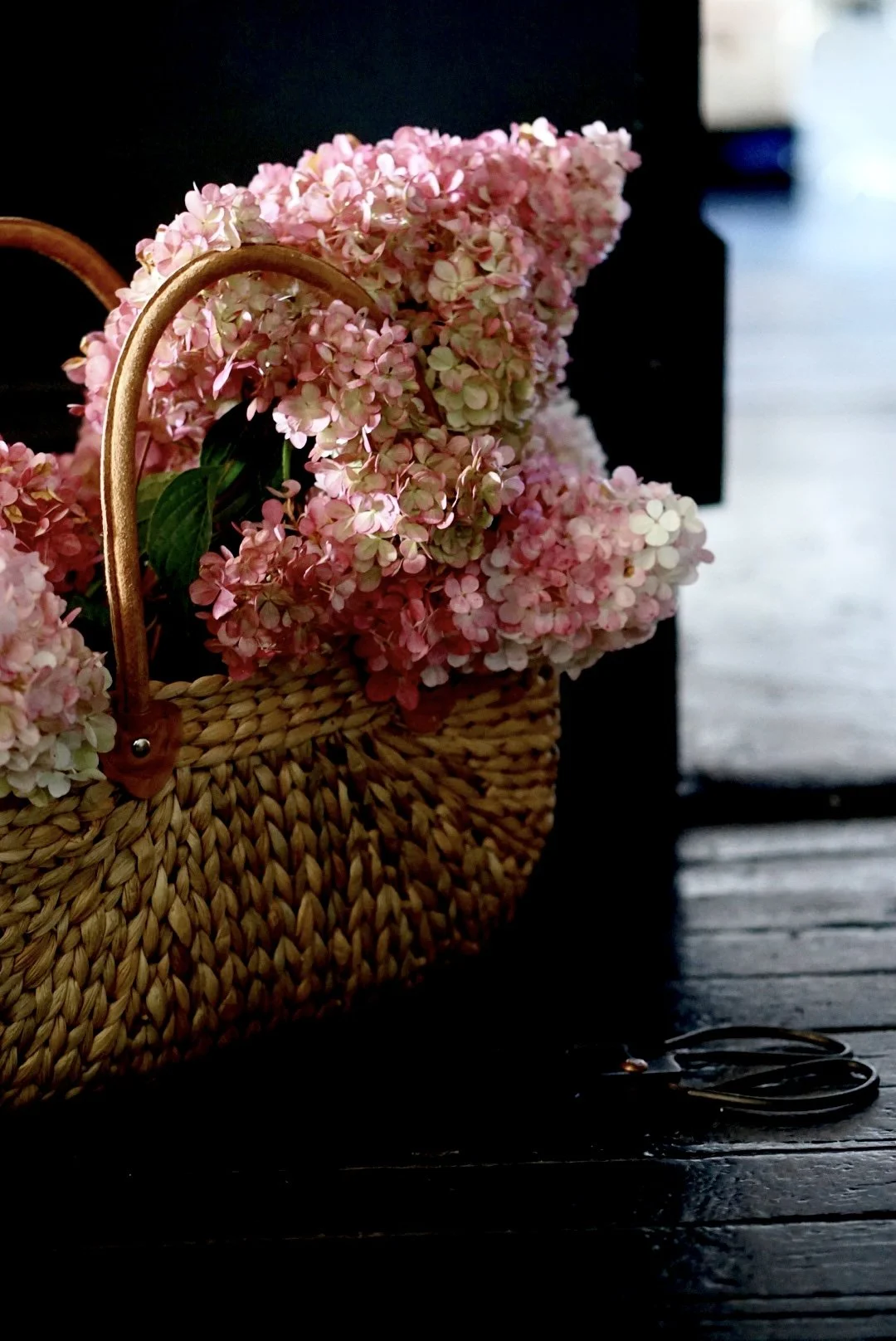
Subscribe to the newsletter and download the full Oak & Monkey Puzzle plant list
As part of my April month of milestones, I’ve created a beautiful free eBook for newsletter subscribers featuring the full Oak & Monkey Puzzle plant list, organised garden precinct by garden precinct.
It is a detailed record of the planting across the property, built over nine years of living and gardening on five acres, and I hope it offers both inspiration and practical ideas for your own garden, whatever scale you’re working at.
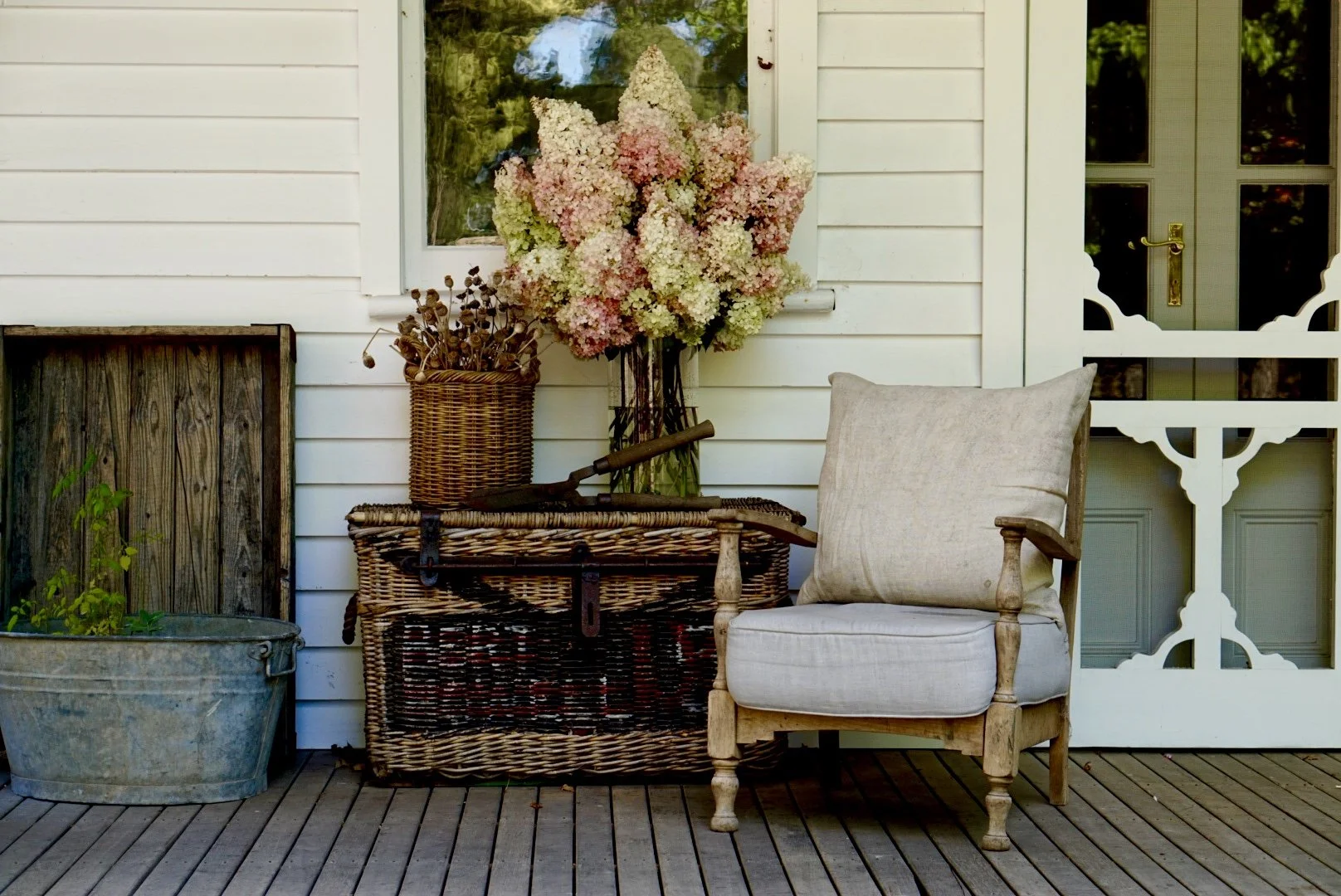
Join a workshop
If you love plants that work hard and give more than one thing back, my Medicinal Garden workshop is a natural next step. We’ll explore some of the most useful and beautiful plants to grow, and how they can enrich both your garden and your daily life.
Explore current workshops in the shop.
If you are building your garden from home right now, my e books on Wicking Bed Gardens and Introduction to Backyard Chicken Keeping offer practical step by step guidance that pairs well with the workshops.
Stay connected
Follow along on Instagram, Facebook, Gardenstead, LinkedIn, Pinterest and YouTube, visit the website and subscribe to the Newsletter for seasonal updates.
And stay tuned. There is a major announcement coming very soon, and I cannot wait to share it with you.
Thanks so much for following along.
Natasha xx
You may want to check out my related content below:
Hydrangea Paniculata: A Year-Round Beauty in the Garden – this is a plant that never fails to bring joy
April garden tasks for Australian climates & adding interest for winter – The first week of the month of milestones.
Autumn Gardening Jobs - A Gentle Approach for a Bountiful Season
The Medicinal Garden Workshop with Caroline Parker & Natasha Morgan — Step into the magic of nature
Stay connected for more seasonal inspiration:
Instagram | Facebook | Gardenstead | LinkedIn | Pinterest | YouTube | Website | Newsletter
April garden tasks for Australian climates & adding interest for winter
April brings a sense of settling to the garden.
The rush of high summer has passed. Light softens, mornings cool, and the garden begins to shift from heat and speed into a more measured autumn rhythm. This is the month to tidy with restraint, prepare beds carefully, and make the most of the soil warmth that still lingers.
In many parts of Australia, April is one of the best planting windows of the year. The pressure is off. Moisture begins to hold a little longer. New sowings establish more steadily. It is also a good time to pay close attention to what the garden has taught you over summer. Which crops performed well? Which beds struggled in heat or wind? Where did water move, sit or disappear too quickly?
I always think of April as a month for resetting. Not by stripping everything back, but by observing first, then acting with a bit more clarity.
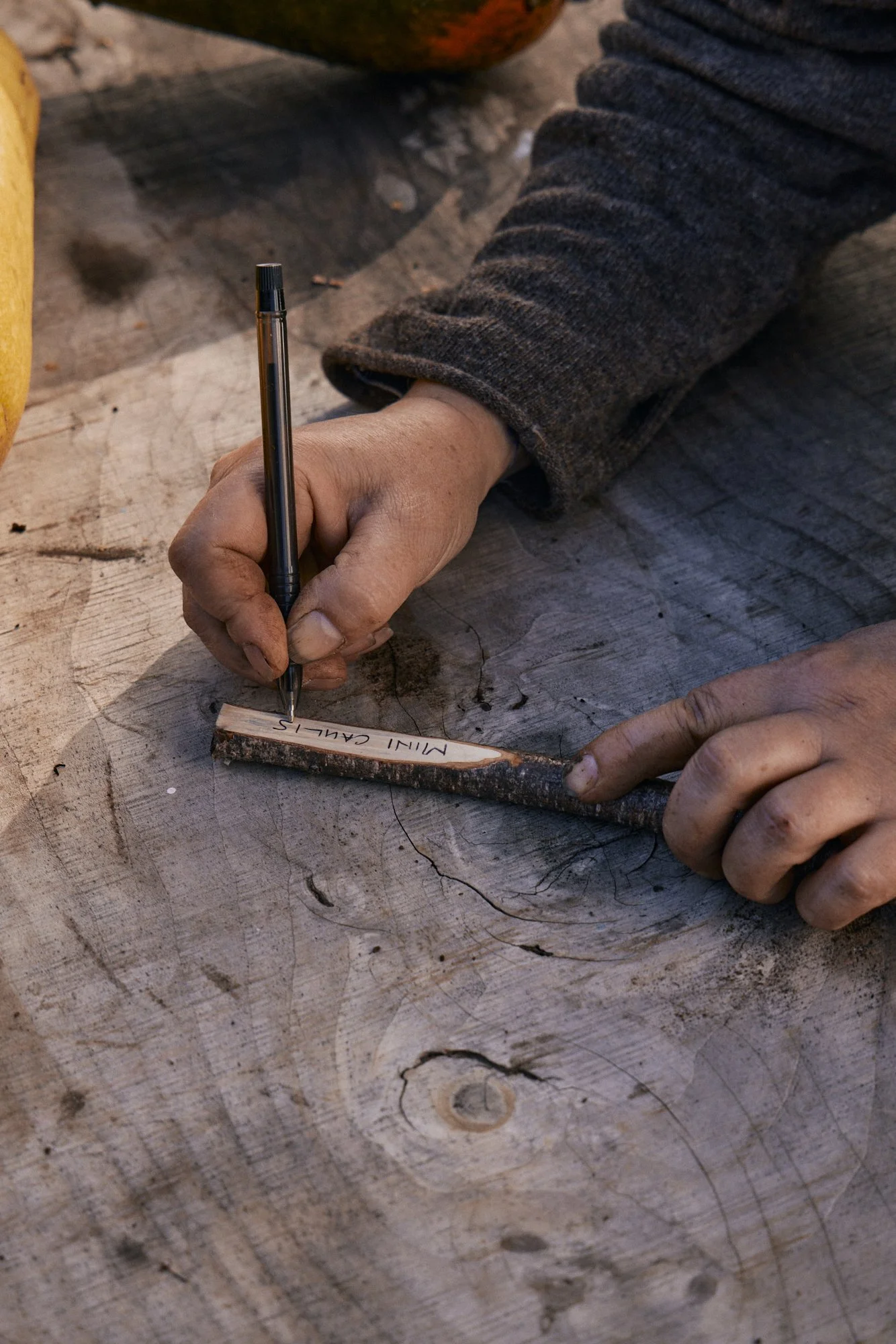

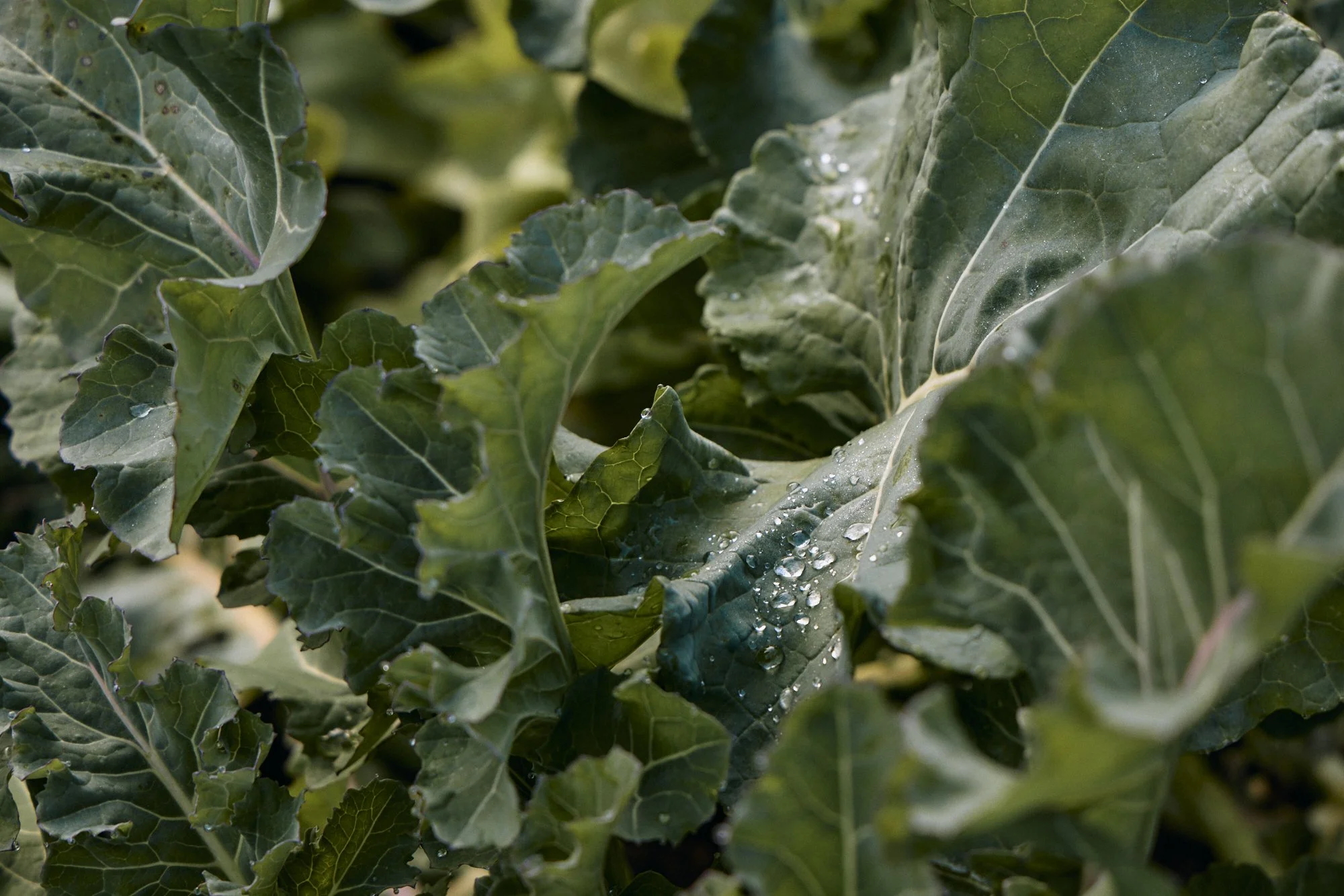
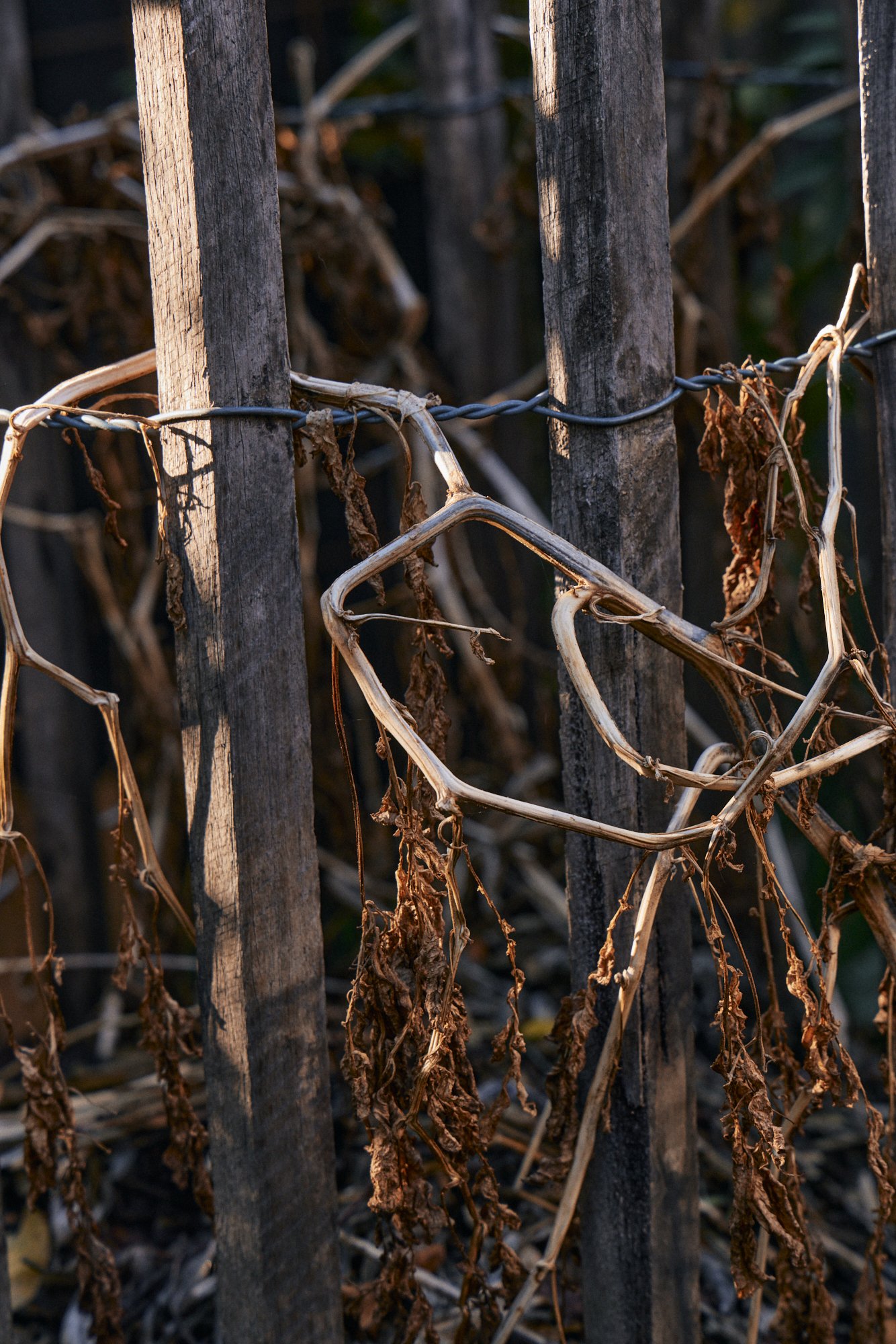
Shared tasks for all climates
These are the April tasks I keep as my base checklist:
Clear out spent summer crops, but only where they are truly finished.
Top-dress productive beds with compost or well-rotted manure.
Refresh mulch to around 5 to 7 cm (2 to 3 inches), keeping it clear of stems and trunks.
Sow in succession rather than all at once, especially for leafy greens and quick crops.
Save seed from healthy, productive plants.
Weed early while the ground is softer and before winter growth slows things down.
Check supports, trellises and ties before autumn winds strengthen.
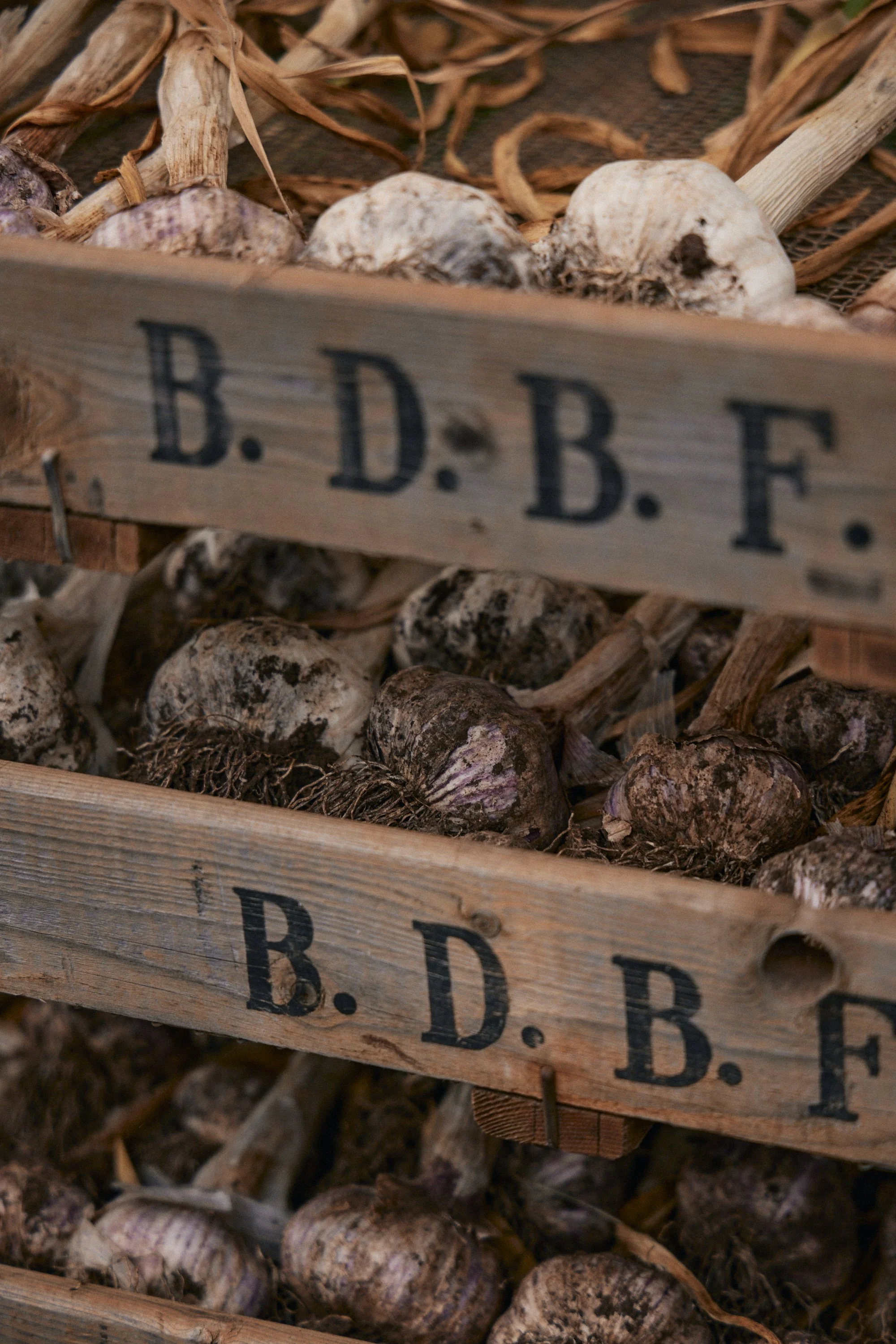
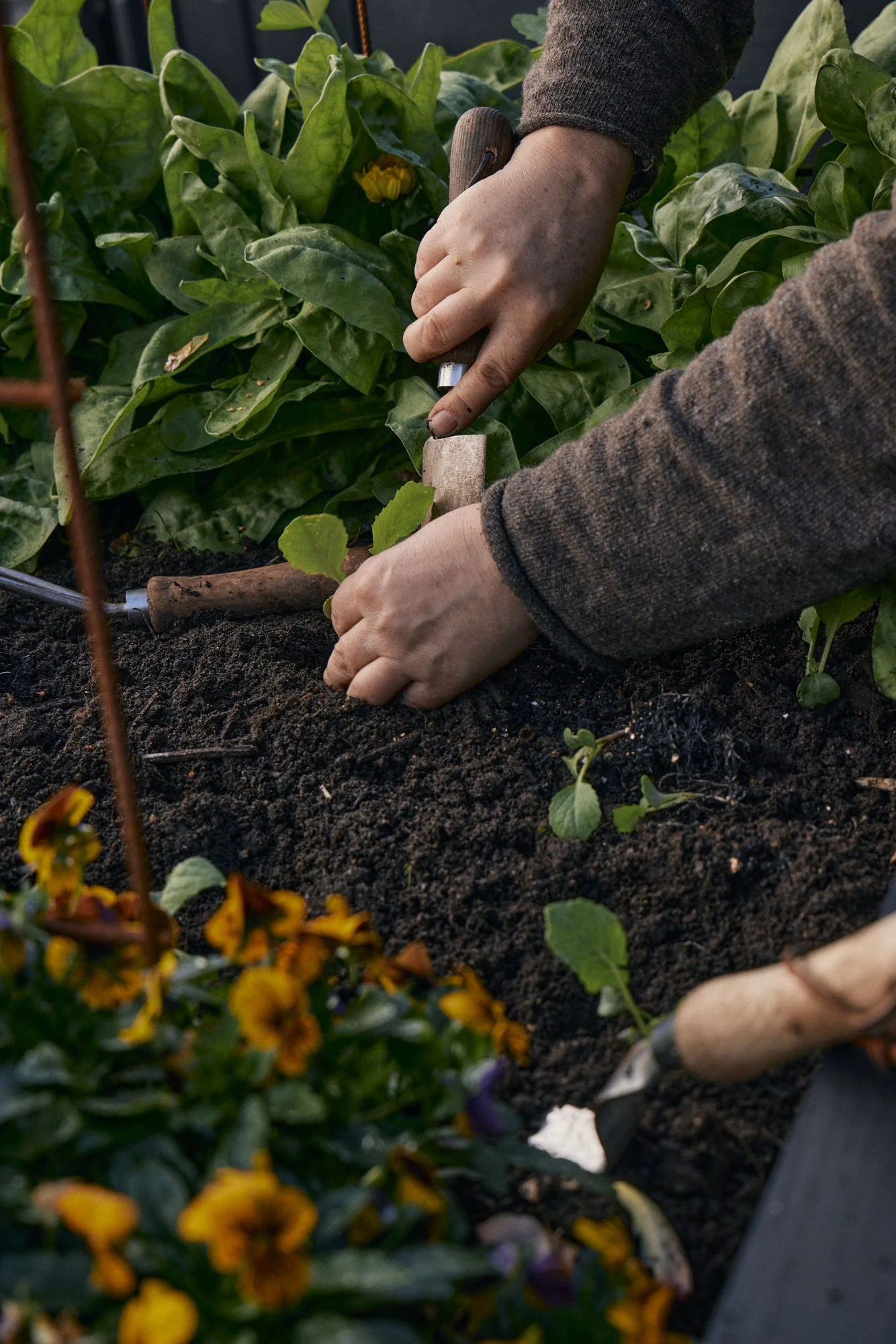
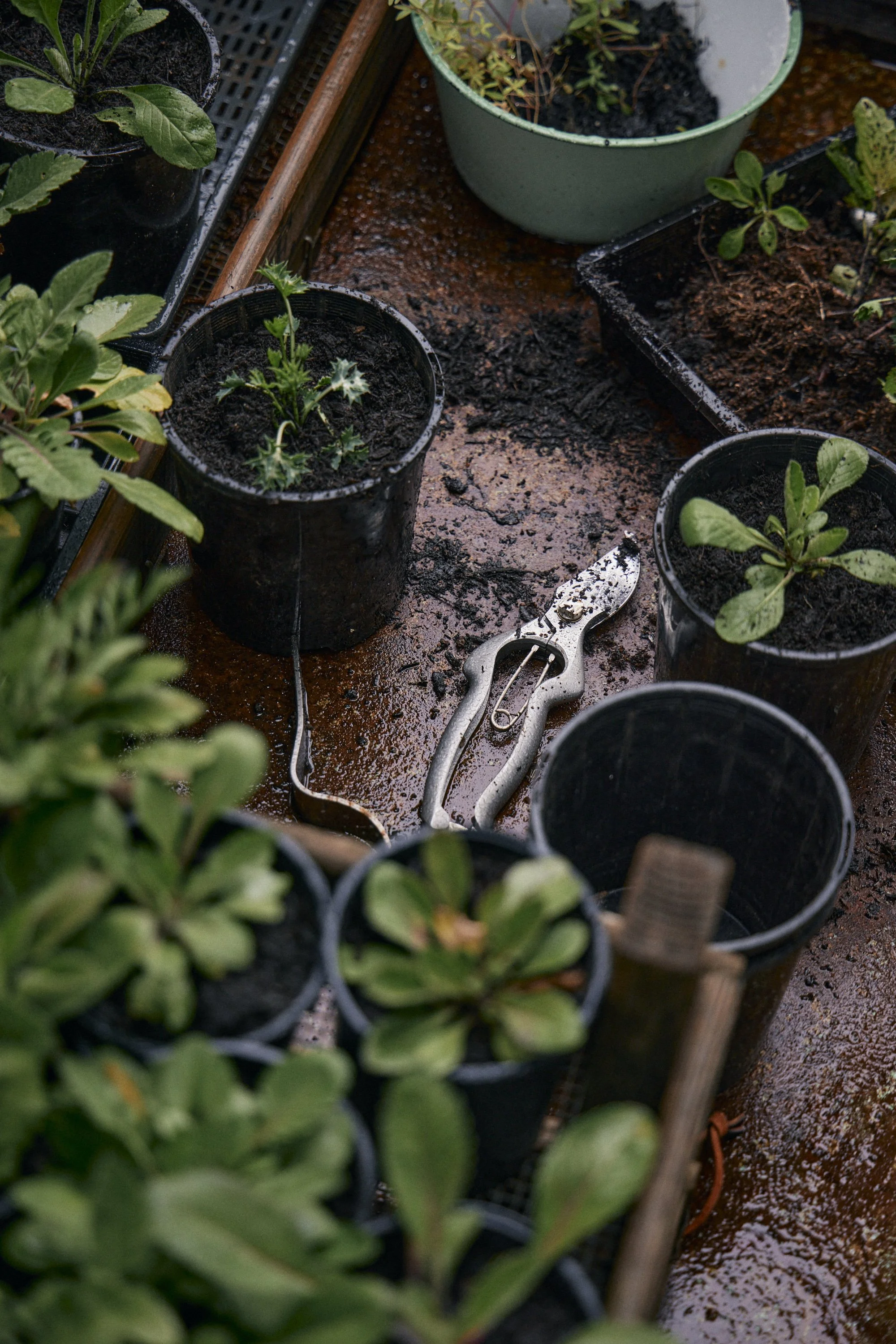
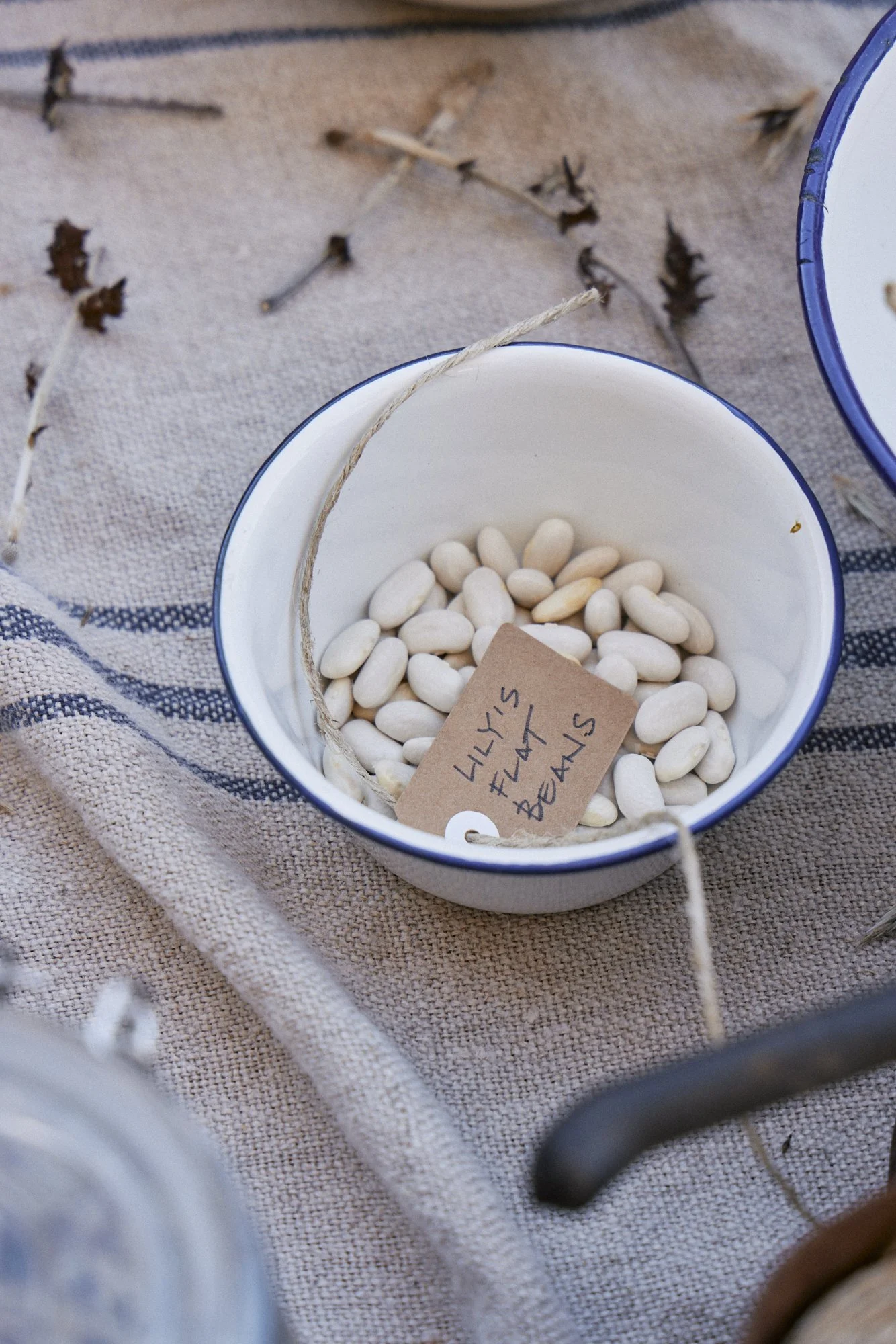
Seeds and seedlings by climate
Here are the April highlights by climate.
Temperate
This is one of the most generous planting windows of the year. Soil still holds warmth, but the fierceness has gone out of the season.
Try: broccoli, cabbage, cauliflower, kale, beetroot, carrots, radish, silverbeet, lettuce, rocket, spinach, peas, broad beans, spring onions, leeks, parsley, coriander and dill.
This is also a good time to:
feed and mulch fruit trees
plant strawberries in cooler temperate districts
keep harvesting lingering tomatoes, basil and late zucchini while nights remain mild
sow little and often so the garden stays productive rather than peaking all at once
Cool and alpine
April is a serious month in cool gardens. Growth slows, frosts begin to return in some districts, and timing matters.
Try sowing or planting: broad beans, peas, beetroot, carrots, broccoli, Brussels sprouts, cabbage, kale, lettuce, silverbeet, spinach, spring onions, leeks and garlic.
This is also a good time to:
tidy out the last of the summer crops
sow a green manure crop in any bed you will rest over winter
prune back herbaceous perennials as flowering finishes
protect young seedlings from sudden cold snaps
choose fast-maturing varieties where the growing window is short
Subtropical
April often brings a welcome easing. There is still warmth in the soil, but conditions are usually more workable and less relentless.
Try sowing or planting: lettuce, Asian greens, silverbeet, beetroot, carrots, radish, spring onions, coriander, parsley, broccoli, cabbage, cauliflower, kale, leeks, celery, ginger and turmeric in suitable districts.
This is also a good time to:
turn compost heaps and accelerate them with nitrogen-rich inputs
lift, divide and replant rhizomatous crops such as ginger, turmeric and horseradish
weed thoroughly, then mulch before winter weeds take hold
give citrus its final feed before spring growth
store chill-requiring bulbs in the crisper if your winters are mild
Tropical
April is a transition month between the wet season and the dry in many tropical areas. The work now is about harvesting what is finishing, reducing weed pressure, and preparing beds properly for the next round of sowing.
Try sowing or planting: beans, beetroot, cabbage, capsicum, carrot, cauliflower, celery, coriander, cucumber, eggplant, kale, basil, corn and chilli.
This is also a good time to:
harvest the last of the wet-season crops
weed regularly and mulch heavily
prepare beds with compost and well-rotted manure
apply trace elements to help renew the soil ahead of the dry season
keep a close watch on snails, slugs, aphids and citrus leafminer
Arid
In arid regions, April is a valuable reset point. Days can still be warm, but this is the moment to capture the gentler conditions before winter slows everything too sharply.
Try sowing or planting: broccoli, cabbage, cauliflower, kale, beetroot, carrots, radish, turnip, swede, lettuce, silverbeet, spring onions, beans and herbs such as coriander and parsley.
This is also a good time to:
harvest pumpkins and the last melons
prune and feed citrus and other evergreen fruit trees
top up mulch to suppress weeds and reduce moisture loss
protect brassicas early from caterpillars
keep watering deeply but less often, rather than little and often
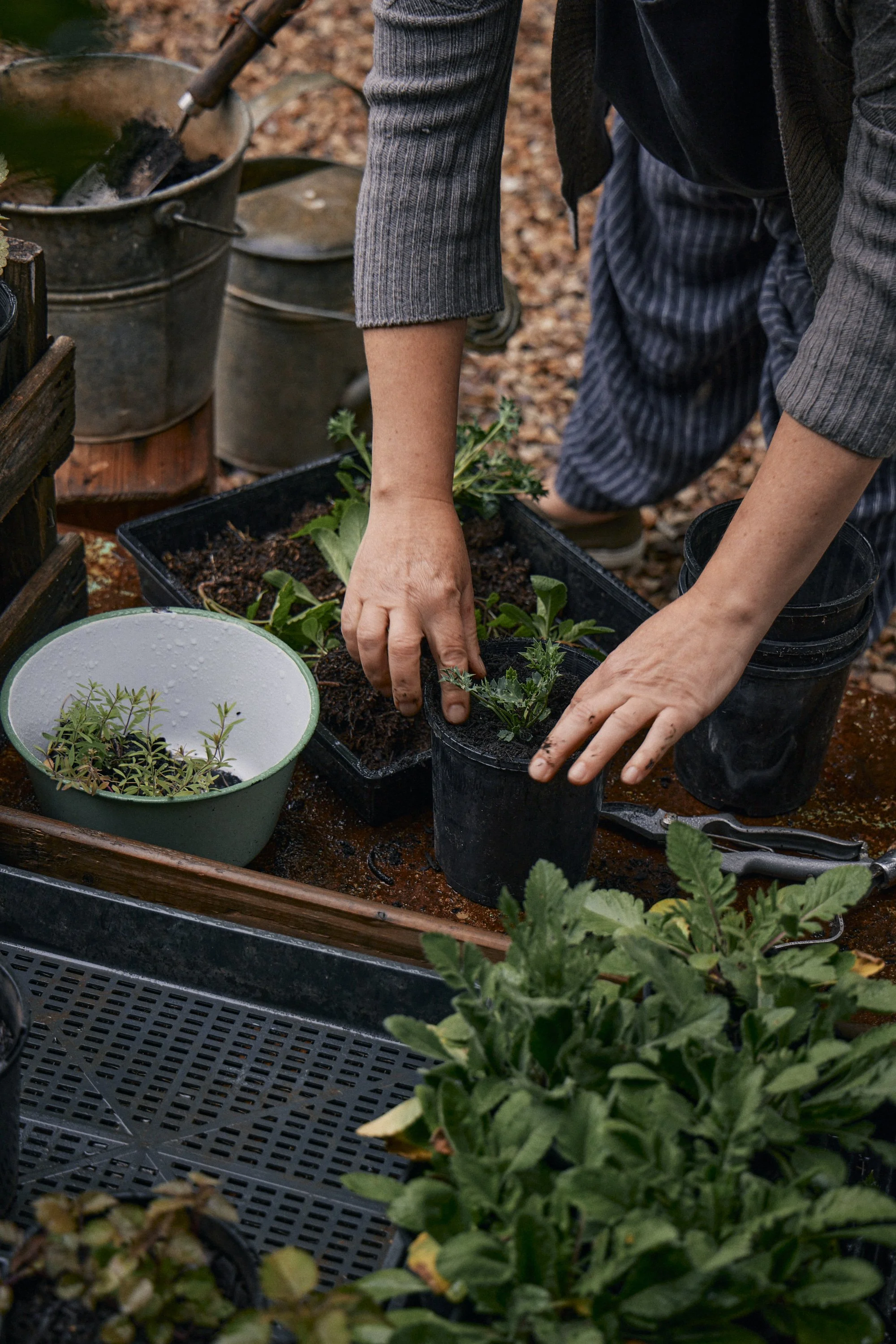
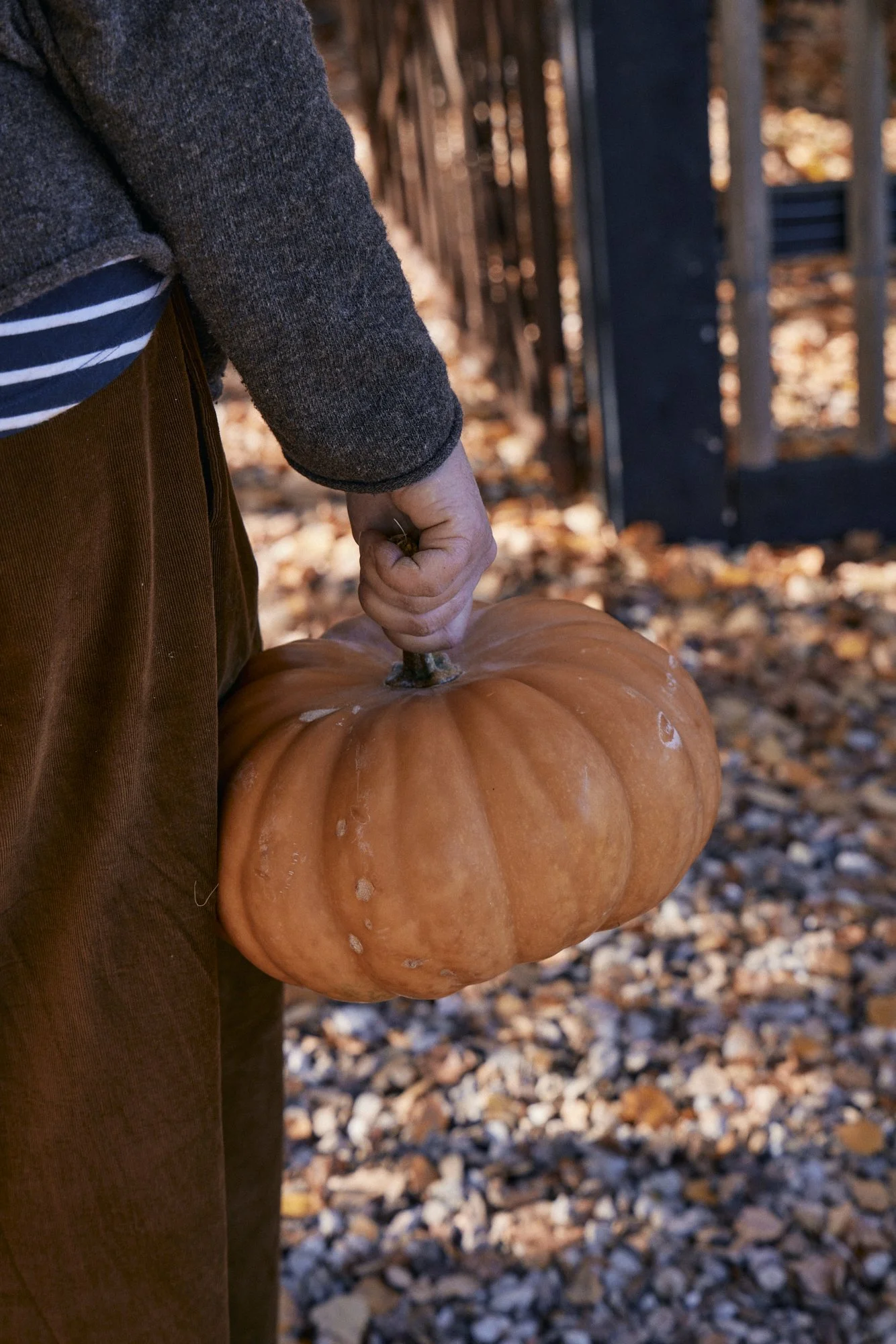
Plants to think about in April for winter colour and interest
April is a beautiful moment to plant shrubs, bulbs and perennials that will carry the garden visually through winter.
Winter gardens often rely on three subtle elements:
• Fragrance that carries through cold air
• Flowers appearing on bare branches
• Plants with beautiful stems, bark or evergreen form
These quieter moments are what give winter gardens their depth. Plants like winter sweet, daphne, hellebores and witch hazel are not loud performers, but they hold the garden beautifully through the coldest months.
One of my favourite winter flowering shrubs is Chimonanthus praecox, winter sweet. It is a quiet plant for much of the year, but in the depths of winter it suddenly comes into its own. Small waxy flowers appear along the bare branches, releasing a warm, spicy fragrance that carries through the cold air. Often you smell it before you see it. In a cool climate garden it is one of those plants that quietly holds the garden through winter and reminds you that the seasons are already beginning to shift.
Cool climate gardens
These gardens benefit from plants that bring fragrance, early flowers, bark and structure through winter.
Fragrant winter shrubs
• Chimonanthus praecox, winter sweet
• Daphne odora, incredibly fragrant late winter flowers
Winter flowering perennials and bulbs
• Hellebores, often flowering through the coldest months
• Snowdrops, Galanthus, delicate white winter flowers
• Cyclamen coum, jewel like ground layer colour
• Early narcissus, bringing brightness to the late winter garden
Plants that provide structure or seasonal beauty
• Hamamelis, witch hazel, sculptural winter flowers
• Cornus, dogwoods, colourful winter stems
• Sarcococca, sweet box, subtle fragrance in deep winter
Temperate climates
Milder winters allow a mix of evergreen structure and seasonal flowers.
Winter flowering shrubs
• Camellia sasanqua, early winter colour
• Camellia japonica, mid to late winter flowers
• Correa, wonderful winter nectar for birds
• Grevillea, many varieties flower through winter
Perennials and bulbs for colour
• Hellebores
• Pansies and violas
• Freesia and anemone
• Ranunculus
Warmer climates
Northern NSW, Queensland, subtropical regions
Winter is gentler, so colour and structure come from different plants.
Winter flowering plants
• Aloe species, dramatic winter flowers
• Salvias, many varieties flower through winter
• Plectranthus, soft purple winter blooms
• Hibiscus, providing colour through mild winters
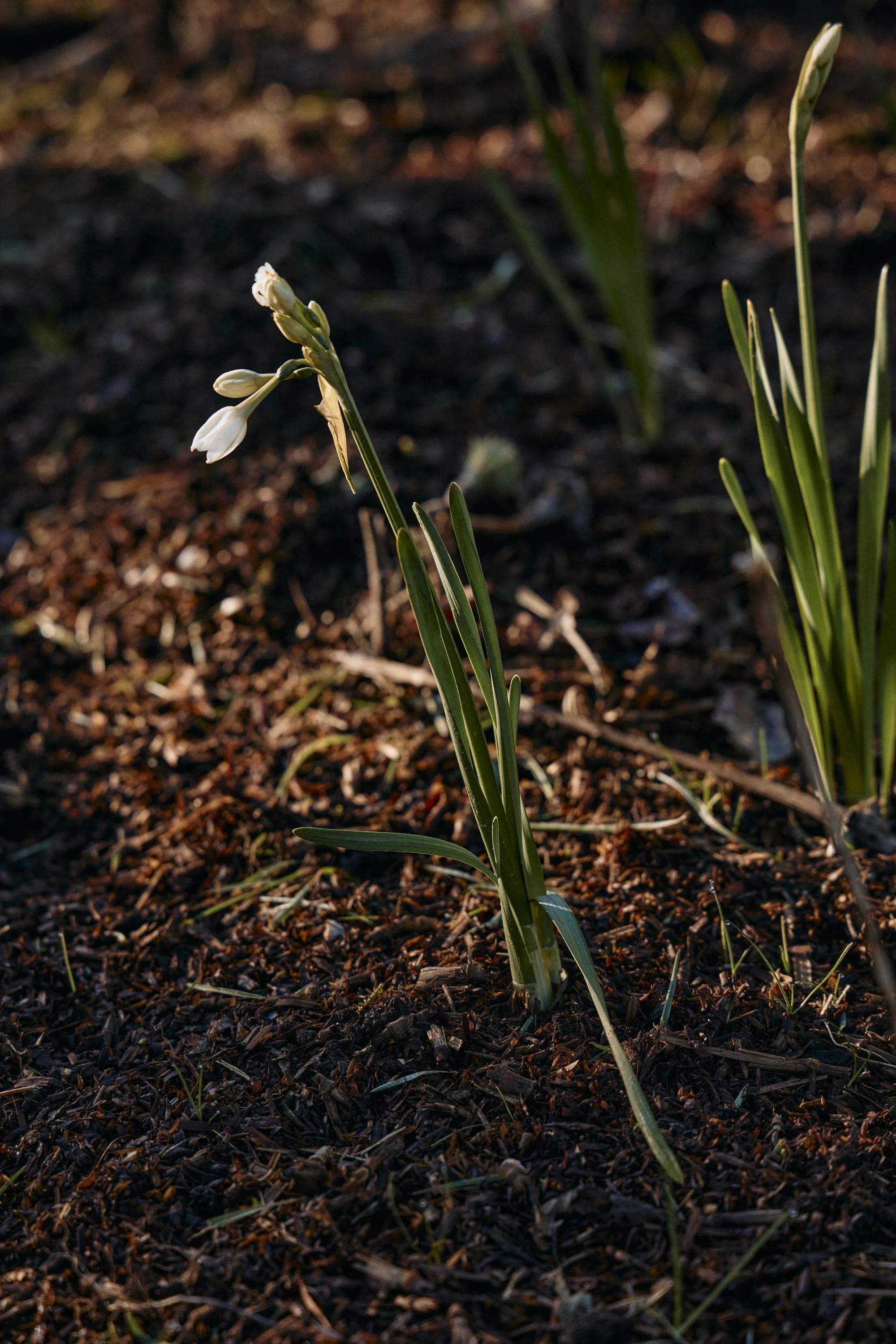
How I work with April
I see April as a month of adjustment. Not retreat, and not quite rest either. More a recalibration.
It is the time I start reading the garden differently. The angle of light changes. The air sits differently in the morning. Growth is no longer racing, which means there is a chance to intervene with a bit more intelligence. Beds can be improved. Crop choices can become more strategic. Mistakes made in summer can be noticed and resolved before winter really settles in.
This is also when I am thinking about continuity. I do not want a productive garden to operate in feast and famine. I want something always moving forward. A tray of seedlings under cover. A gap replanted before it becomes empty for too long. Compost maturing in the background. Mulch protecting what is already in place.
April rewards that kind of steady thinking.
Quick checklist
Clear tired summer crops.
Top-dress beds with compost.
Refresh mulch.
Sow leafy greens and roots in succession.
Plant brassicas suited to your climate.
Watch for early frost in cooler districts.
Weed, edge and tidy lightly.
Take note of what summer taught you.
Continue your gardening journey with me
If you enjoy this kind of content, my workshops offer more detail and guidance on design, productivity and seasonal care. April is also the month to sign up to my newsletter if you do not already subscribe. To celebrate my birthday each week of April I will be sharing via the newsletter free resources to help you in your garden journey.
If you are building your garden from home right now, my ebooks on Wicking Bed Gardens and Introduction to Backyard Chicken Keeping offer practical step by step guidance that pairs well with the workshops.
You may want to check out my related content below:
When the world feels uncertain, grow one thing – are you thinking what I am thinking?
Romanesco: fractal beauty from the brassica bed – I harvested the first Romanesco heads this week and had to stop and stare.
The Medicinal Garden Workshop with Caroline Parker & Natasha Morgan — Step into the magic of nature
Stay connected for more seasonal inspiration:
Instagram | Facebook | Gardenstead | LinkedIn | Pinterest | YouTube | Website | Newsletter
Thanks so much for following along.
Natasha xx
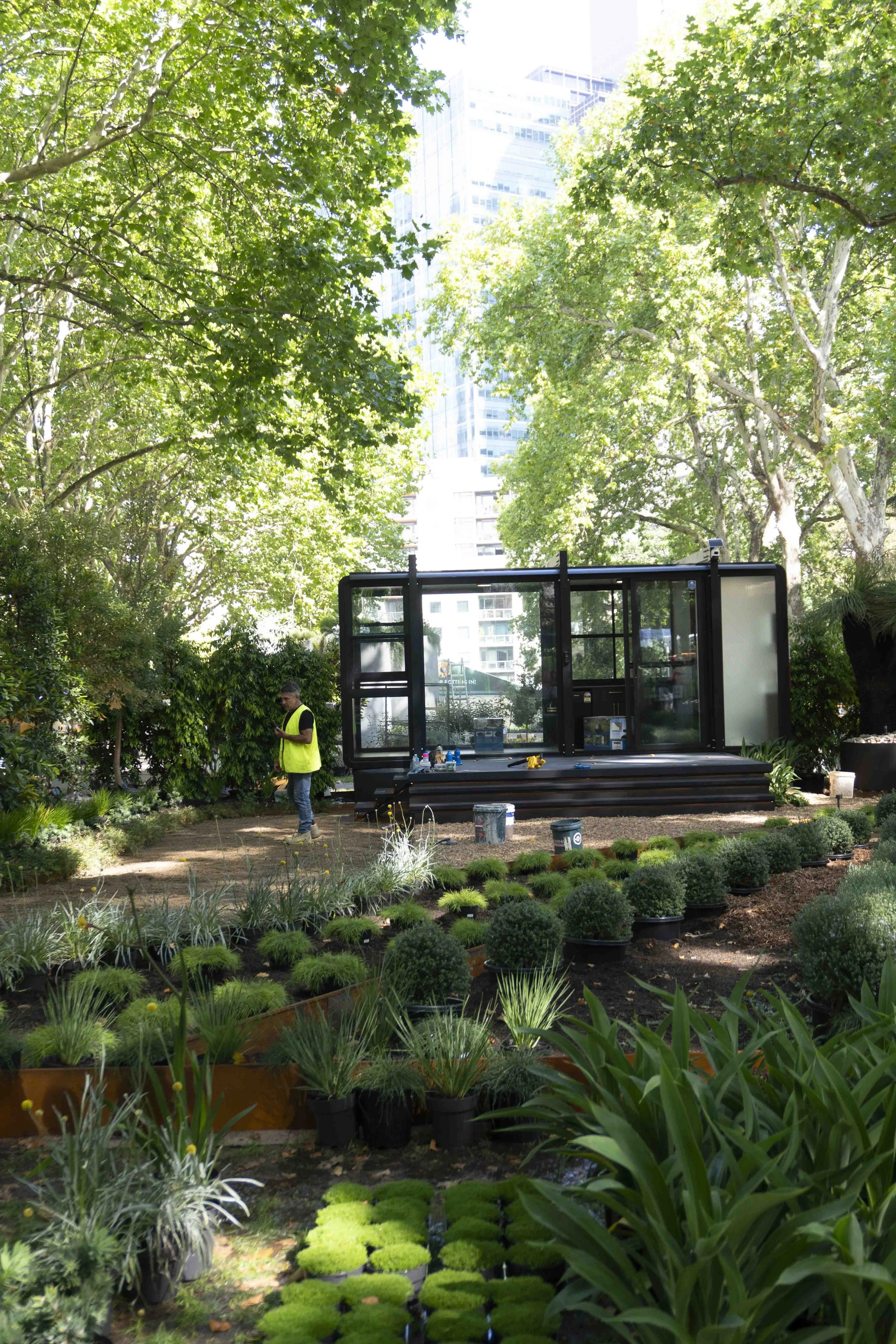
A first look inside MIFGS 2026
in Gardening, MIFGS, Garden Design
A rare chance to walk the gardens before the crowds
Yesterday I was invited to the Melbourne International Flower and Garden Show for a beautiful sneak peek ahead of opening day, thanks to Lisa McCann and Garden Centres of Australia. It was a rare chance to walk the gardens before the crowds, to hear directly from the people behind them, and to take in the extraordinary amount of thinking, labour and collaboration that sits behind a show of this scale. The 2026 show runs from Wednesday 25 March to Sunday 29 March at the Royal Exhibition Building and Carlton Gardens.
One of the great gifts of the afternoon was being guided by both Teena Crawford and Dan Foreman. Teena brought deep horticultural knowledge, historical context and the kind of project-by-project insight that only comes from decades in the industry. Dan, meanwhile, carried the group forward with such energy and enthusiasm. Together, they made it an incredible afternoon.
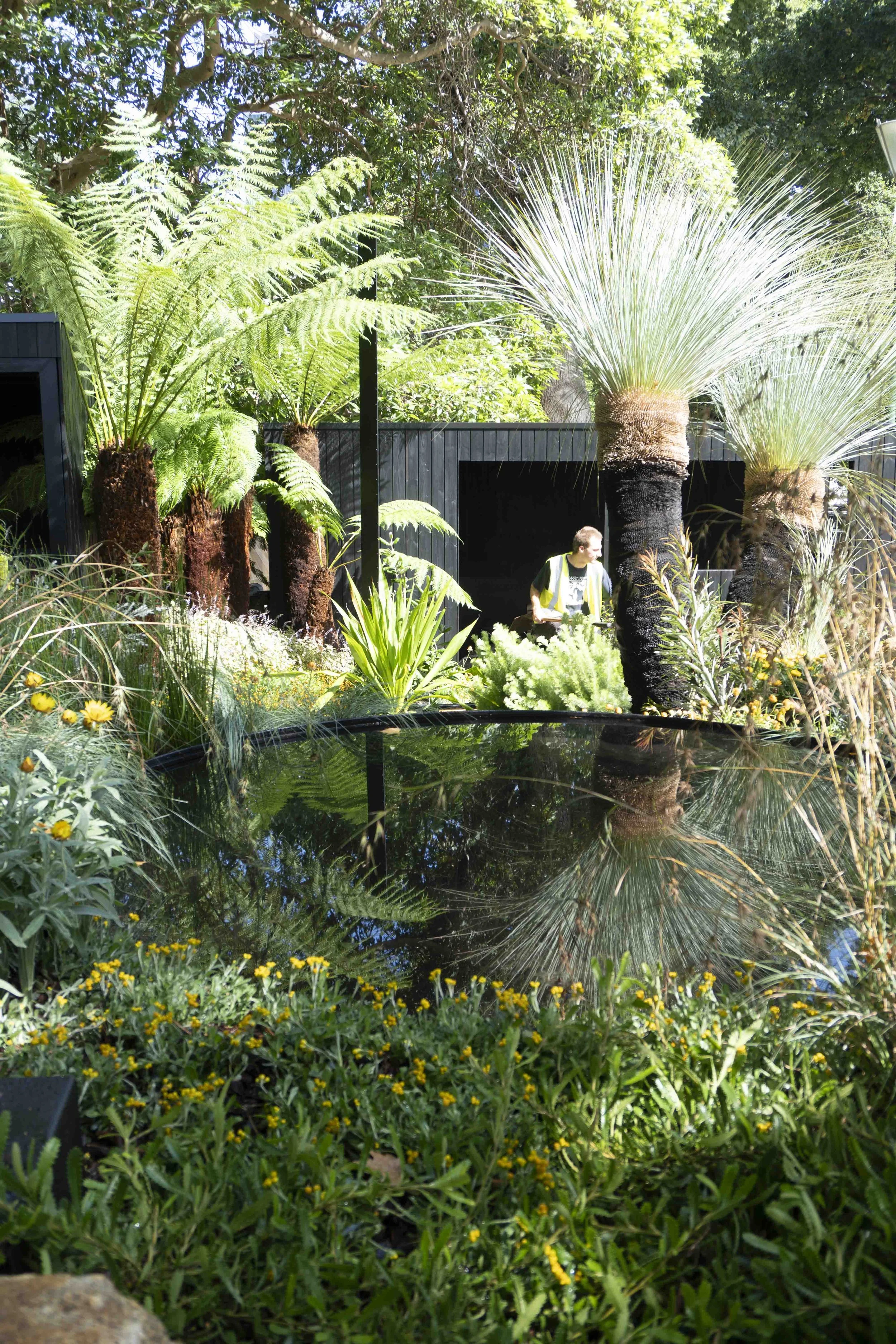
Teena’s expertise is considerable; a horticulturist with more than 40 years of professional experience. She is also a judge at the Melbourne International Flower and Garden Show. Teena has generously shared her insights for this article. Thanks Teena!
The afternoon moved us through an extraordinary cross section of the show. We began with the history of the Exhibition Building, then moved through the major show gardens with Teena, before continuing on with Dan through Achievable Gardens, Jamie Durie’s garden, small-space competitions, Indigenous and Beyond Blue Wellness Gardens, Boutique Gardens and more. It was an ambitious and generous program, and it offered such a strong sense of the breadth of MIFGS in 2026. Thank you Lisa Mc Cann of Garden Centres of Australia for such an incredible lineup!
Reading the show through the gardens
One of the gardens I was especially pleased to spend time with was We the Wild by Matt York of Ratio. Matt’s garden draws on the rugged beauty of Victoria’s southern coastline and translates it into a compact, immersive space. It brings together sculptural native planting, granite outcrops, seasonal meadow effects and a multifunctional wet ledge, with plant support from Kuranga Native Nursery, Surf Coast Palms and Proven Winners. What struck me most was that it did not rely on scale to create impact. It showed how a tightly considered space can still hold atmosphere, biodiversity and a strong sense of place. That feels especially relevant right now, when so many people are gardening on smaller suburban blocks, town gardens and compact urban sites.
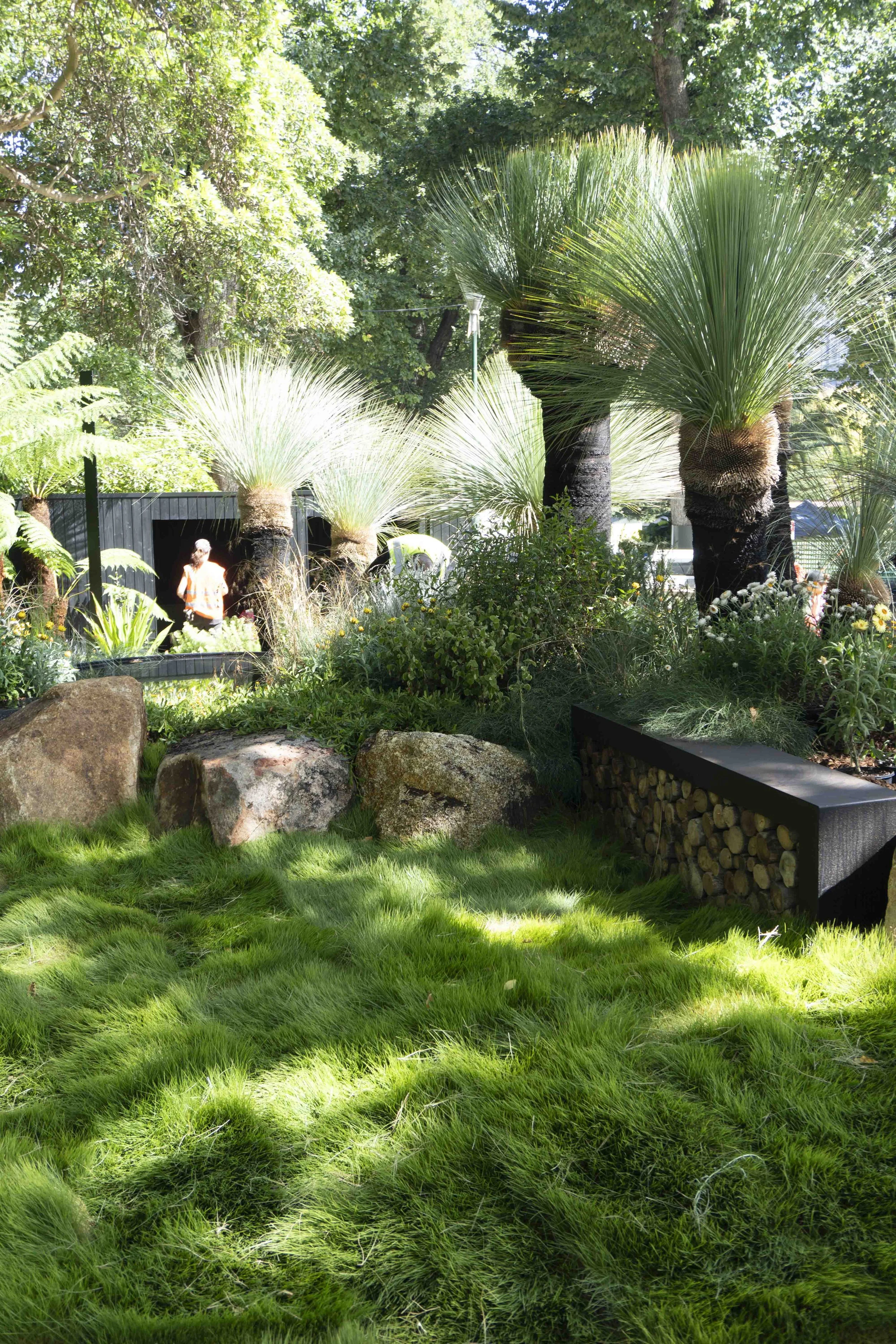
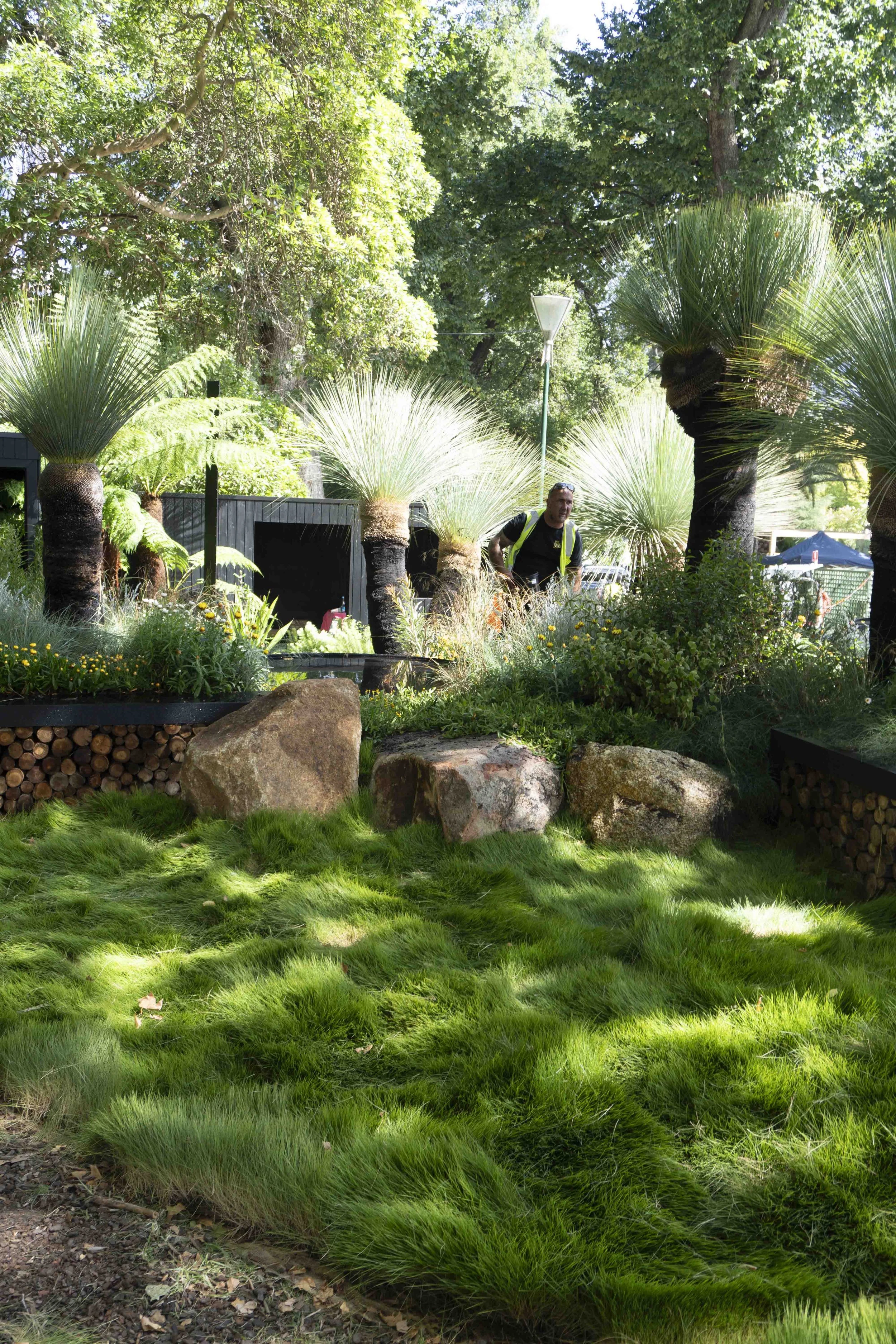
We also visited Urban Luxe by Andrew Stark, built with MPF Garden Company and supported by Warners Nurseries. This garden leans into symmetry, structure and layered planting, with a distinctly European influence. There was a clarity to it that I admired. It reminded me that formal structure still has enormous power when it is well resolved and well planted. In a show full of movement, narrative and mood, it held its ground through precision.
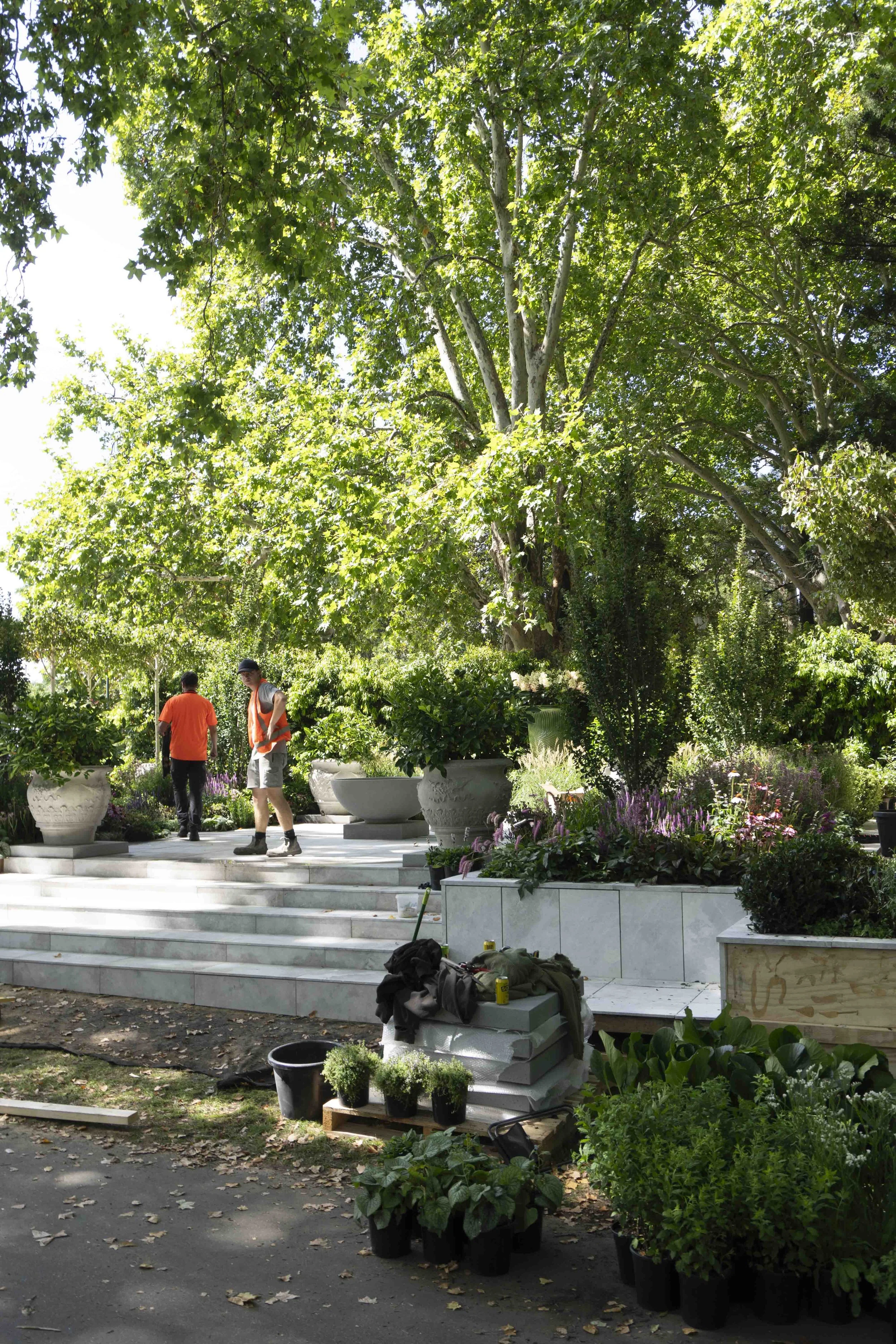
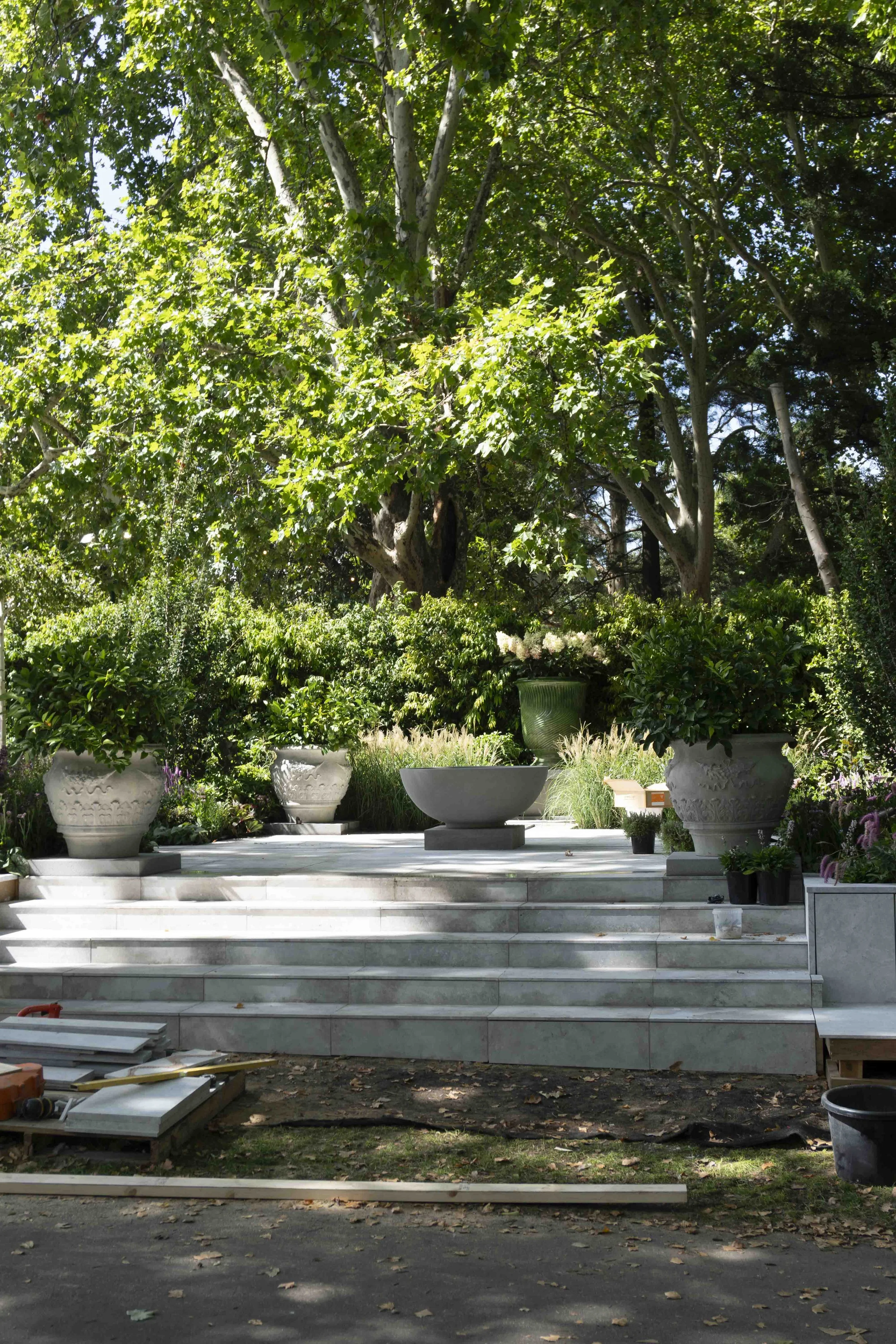
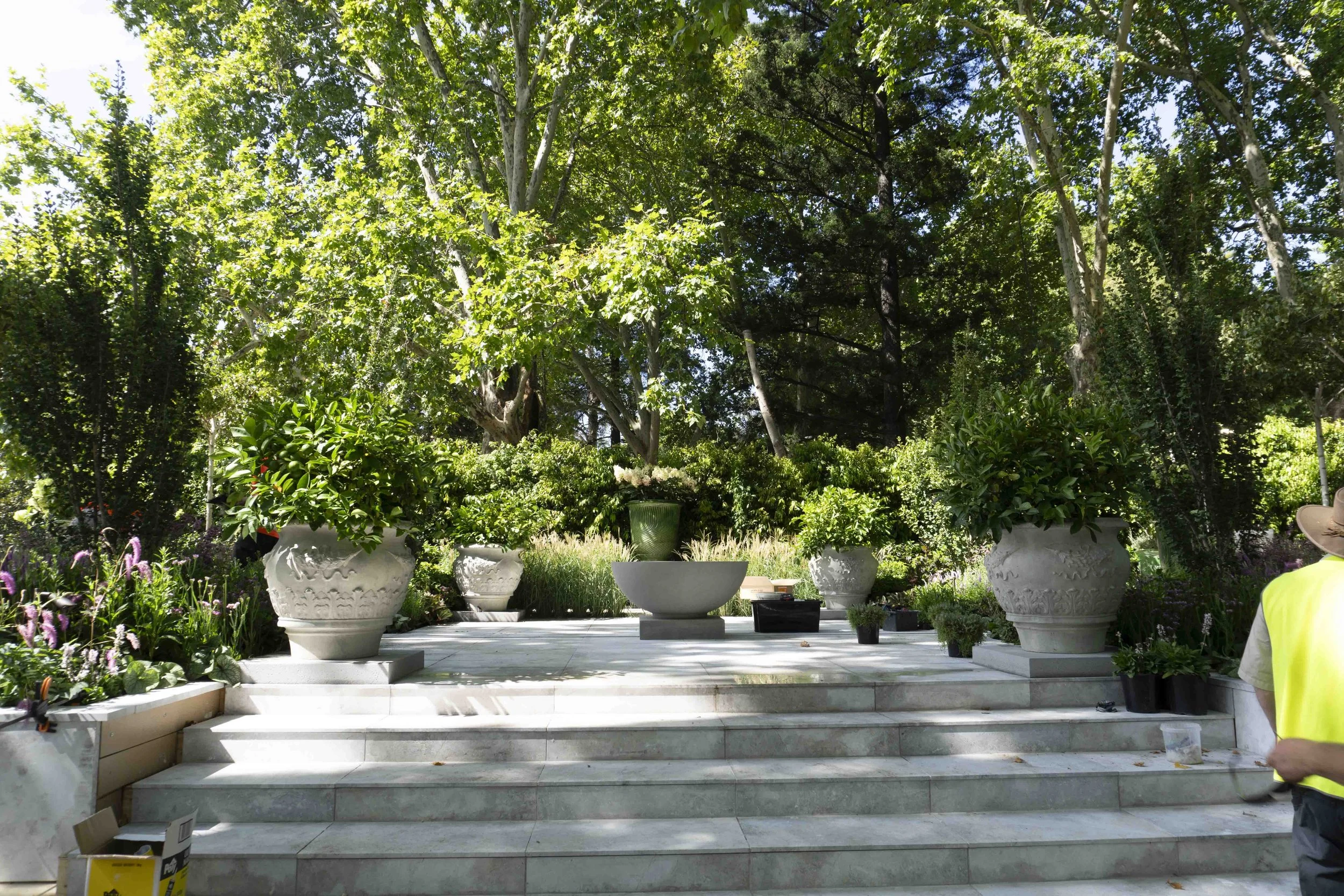
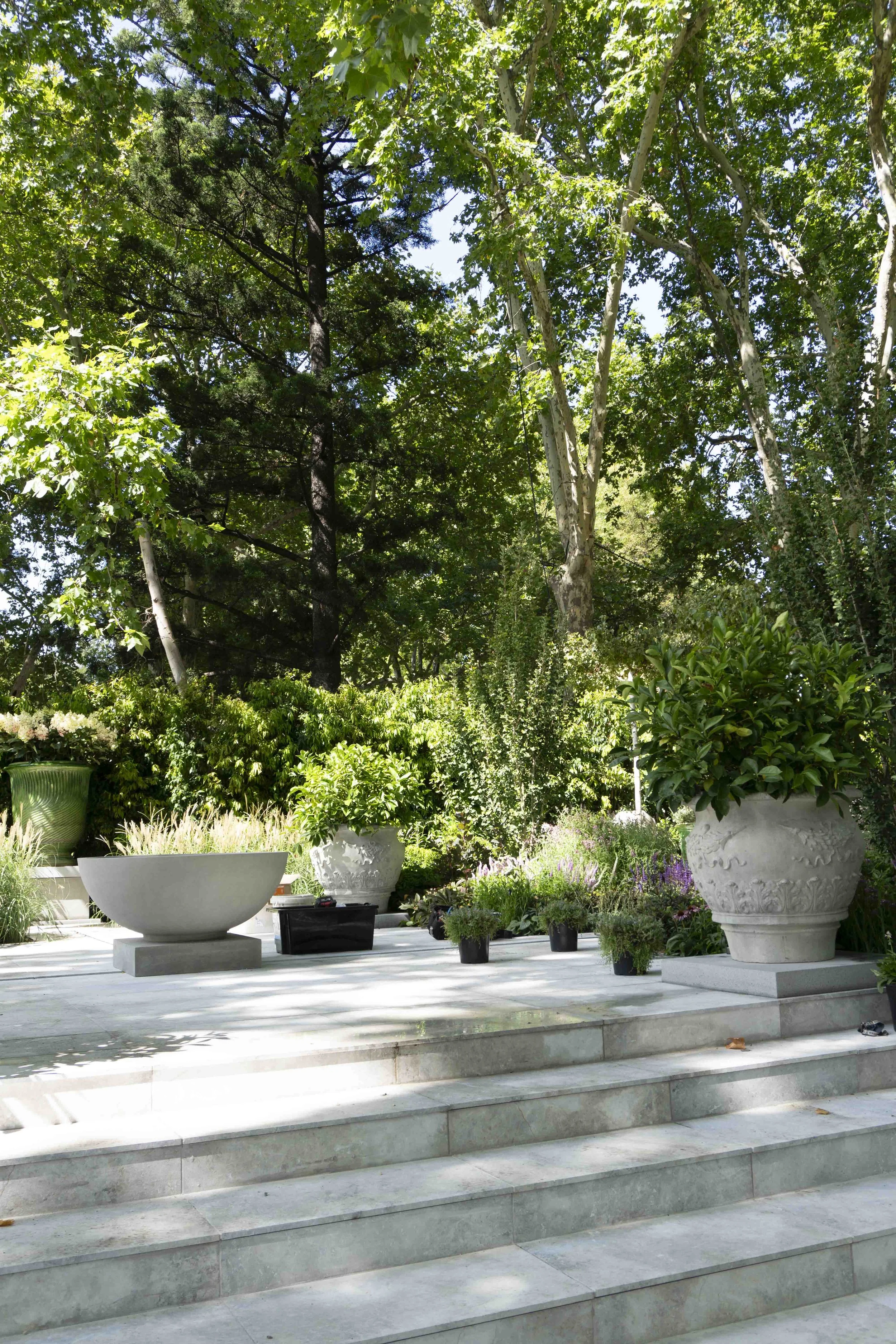
Echoes of the Ancient Silk Road by Iftikhar Ahmed, constructed by Semken Landscaping, brought a very different scheme. A garden inspired by Iftikhar’s recent travels through Uzbekistan, with semi-ruined architecture, reflective water and an atmosphere of reflection and wonder. It was one of the gardens that most clearly demonstrated how landscape can hold narrative without becoming literal.
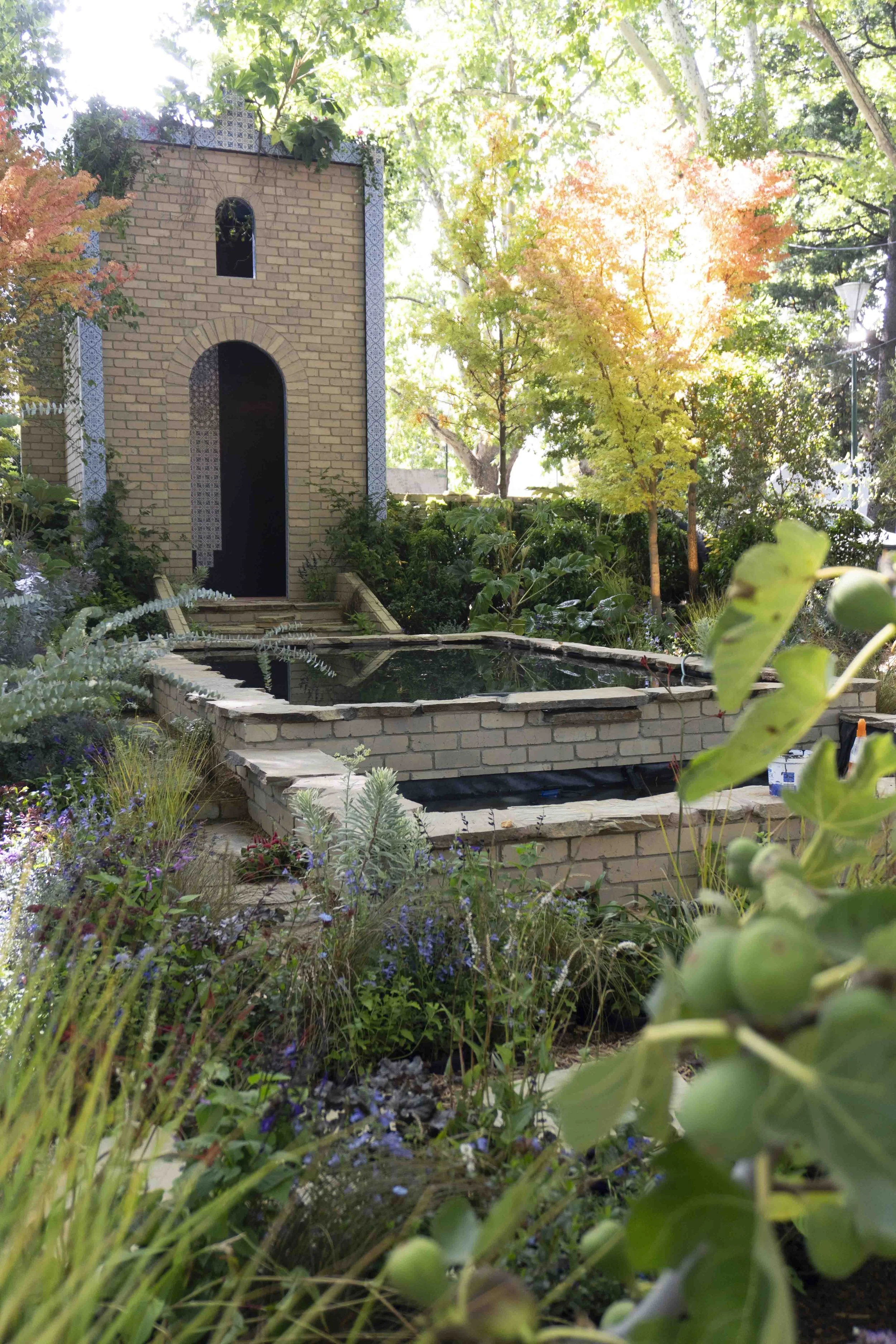
Joel Barnett’s je ne sais quoi brought a welcome shift in tone. Built by The Landscaping School, it uses expressive curves, circular forms and playful seating moments to create a garden with personality and movement. It felt lively and confident, and it was a reminder that gardens can be serious in their design resolution without becoming overly restrained.
Emma Doman’s Where We Gather, built by Avoca Landscape Construction, offered another distinct mood altogether. It was softer and subtropical in tone, shaped around outdoor living, gathering and sensory calm. Featuring a spa, curved seating, an outdoor shower and layered planting that draws from Queensland family life. It was clearly designed around experience, and that emphasis on how a garden is inhabited is something I respond to in my own garden.
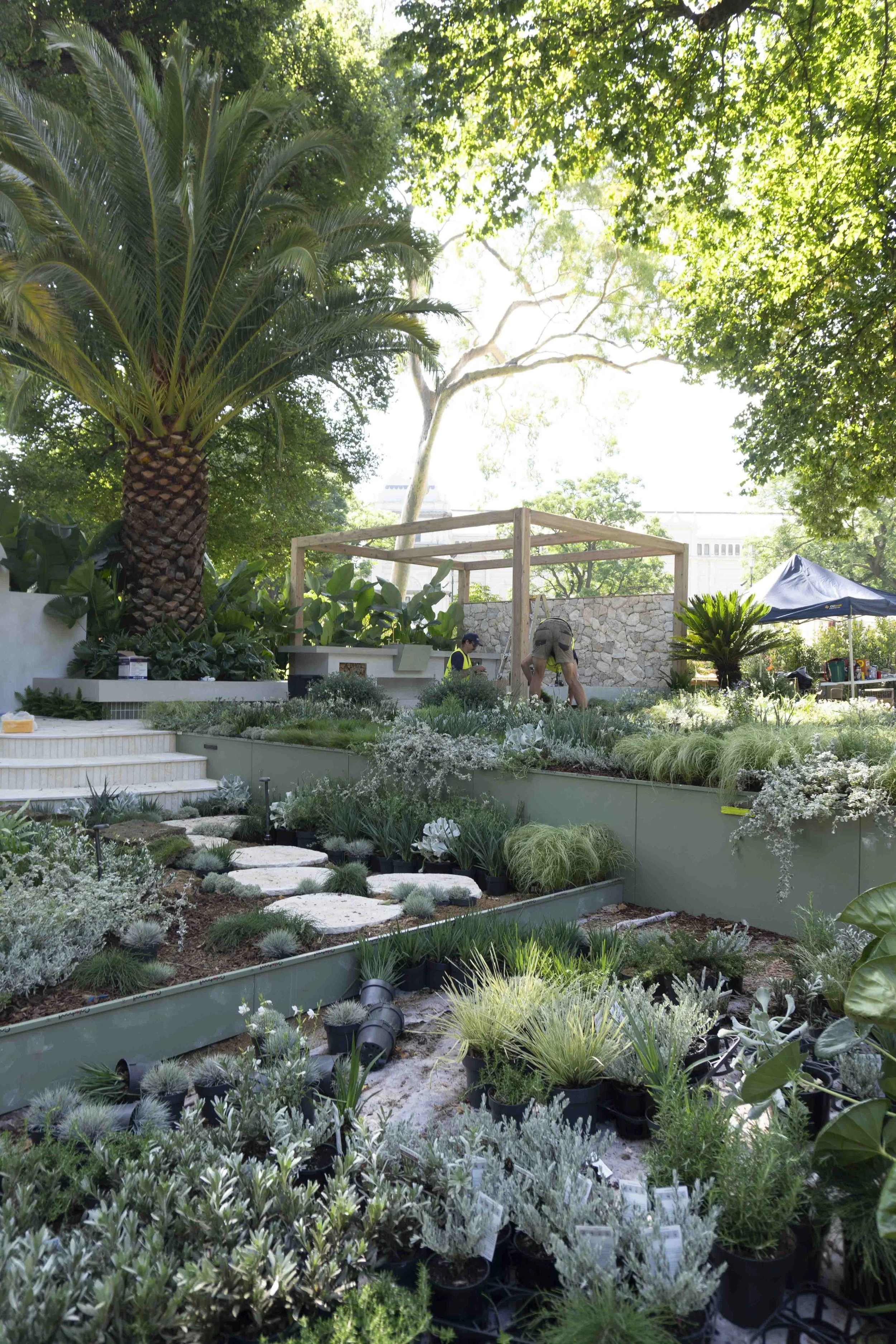
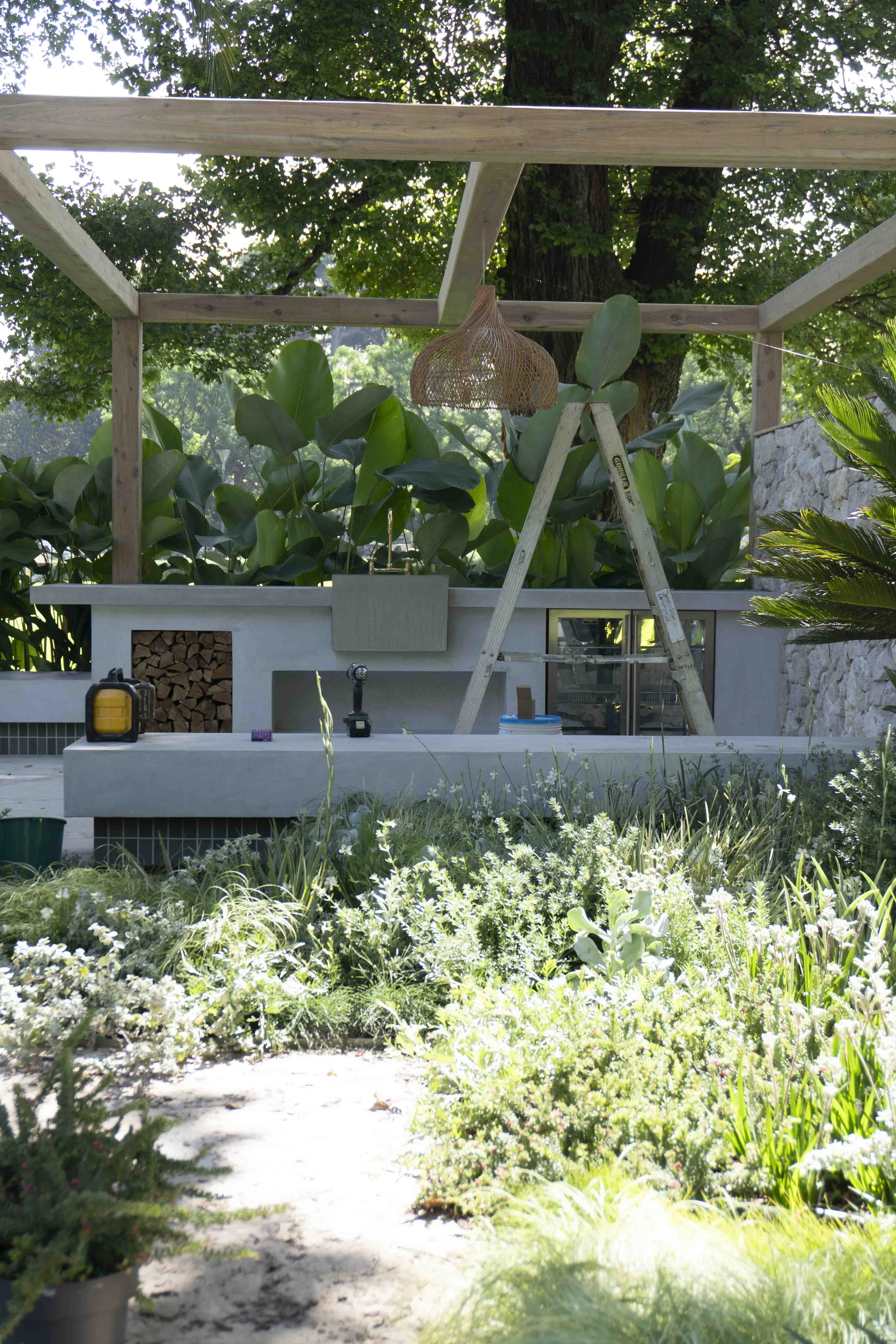
Jason Hodges’ Love Blooms Here, constructed by Semken Landscaping, will no doubt capture plenty of public attention, and for good reason. The garden has been designed as the setting for a real wedding during the show, for Dean, a long-time Semken team member, and his partner Tayla. Their daughter Bloom inspired the garden’s name. That story gives the project an emotional charge, but it is also a reminder that gardens are not abstract compositions. At their best, they really are places where life happens.
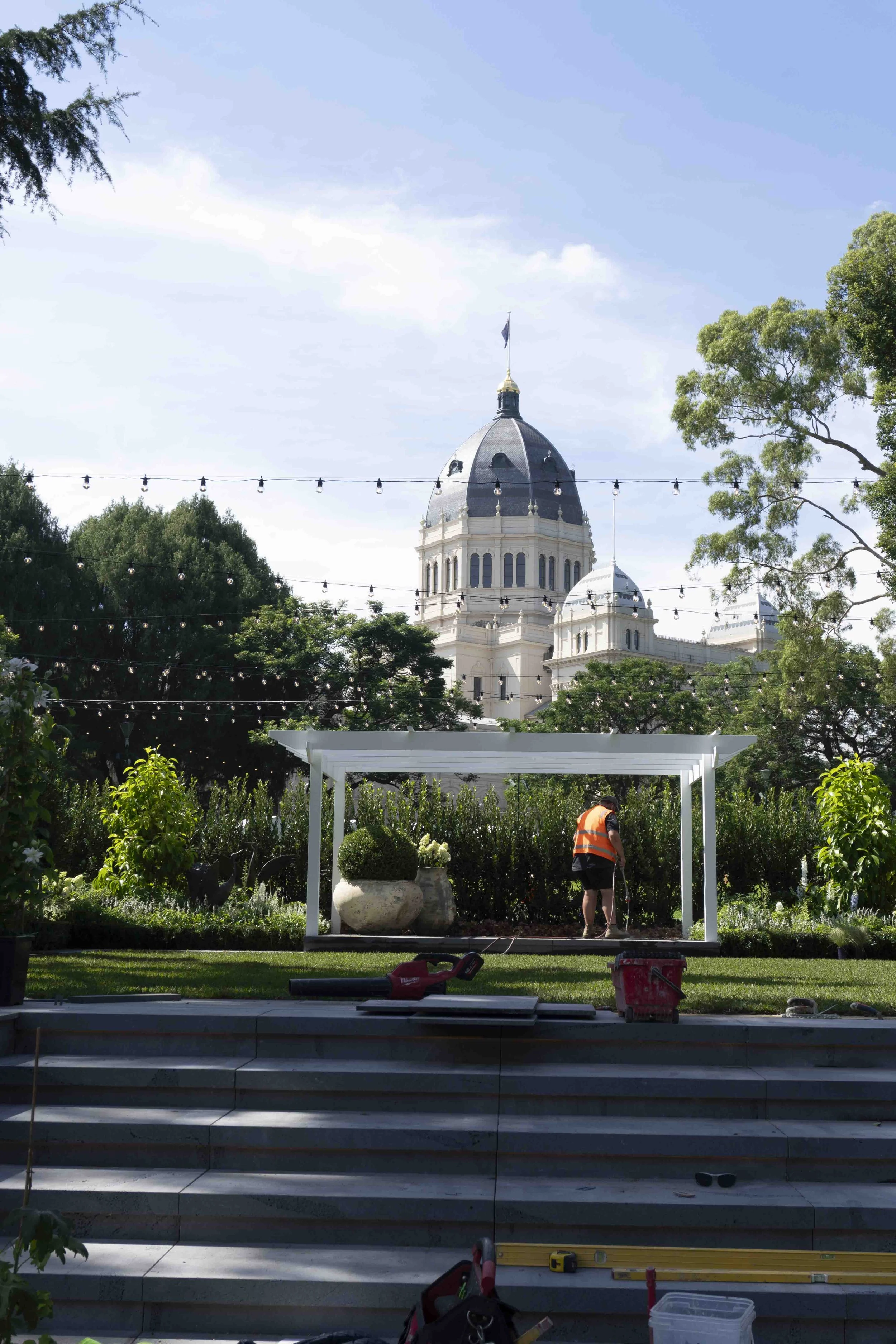
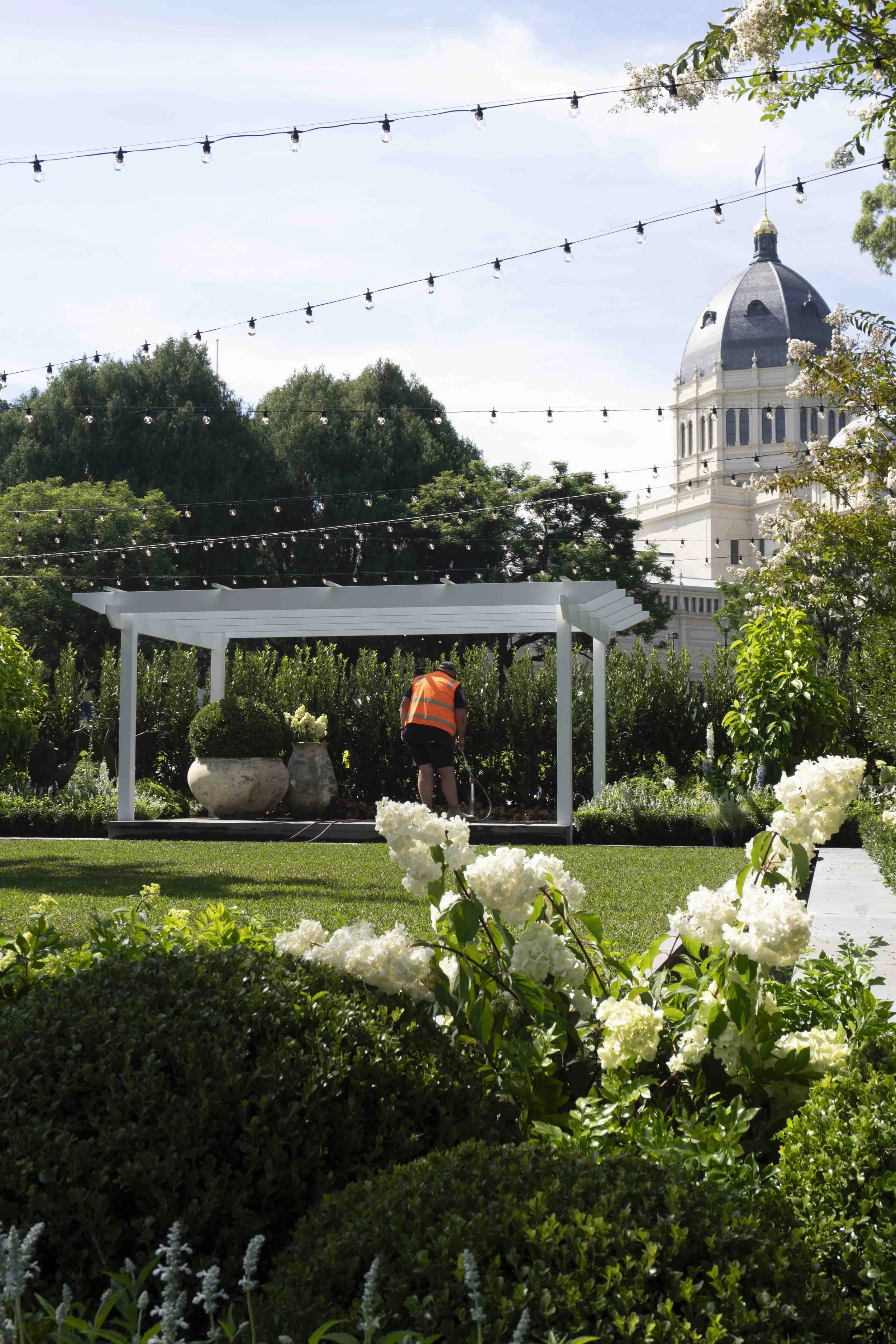
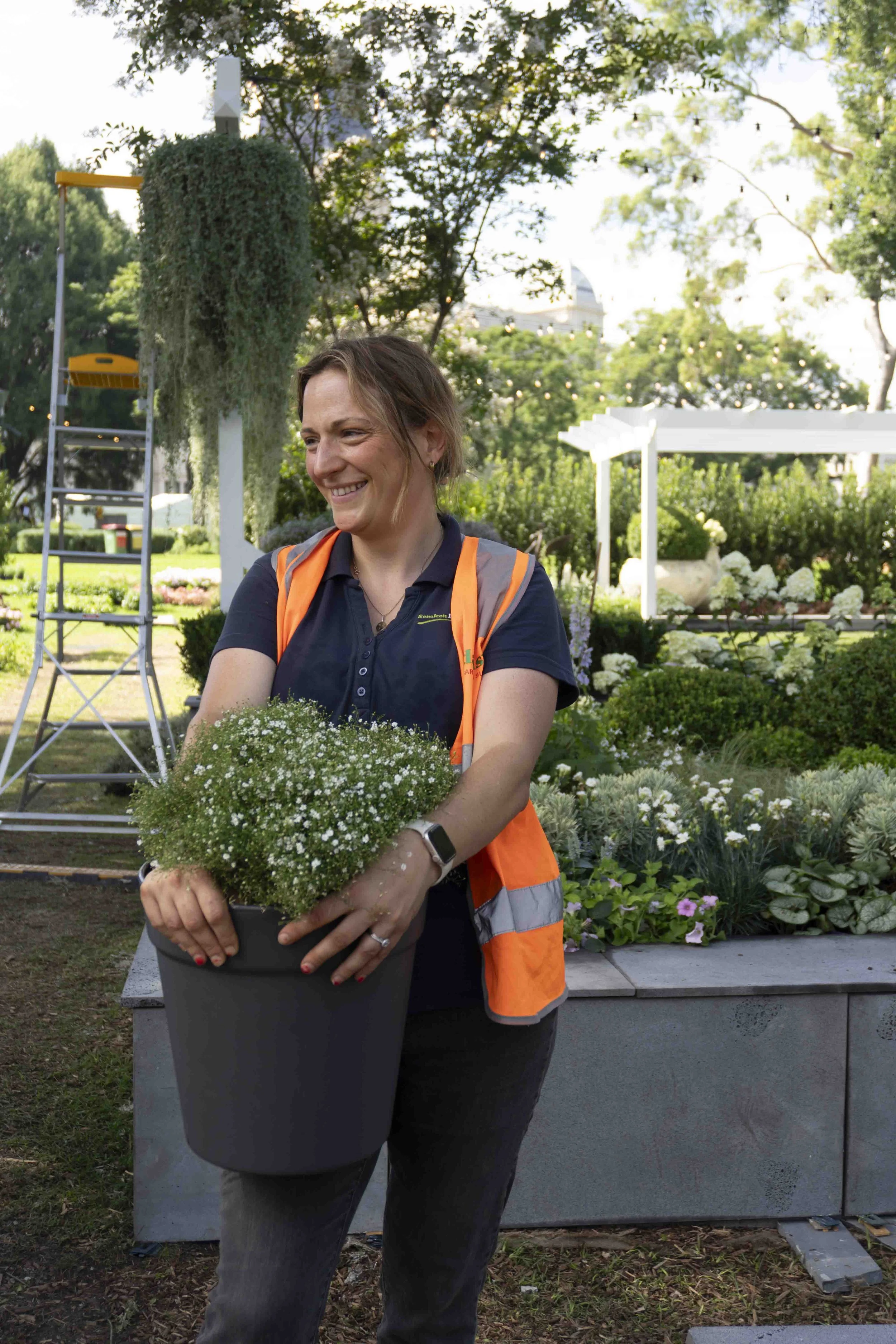
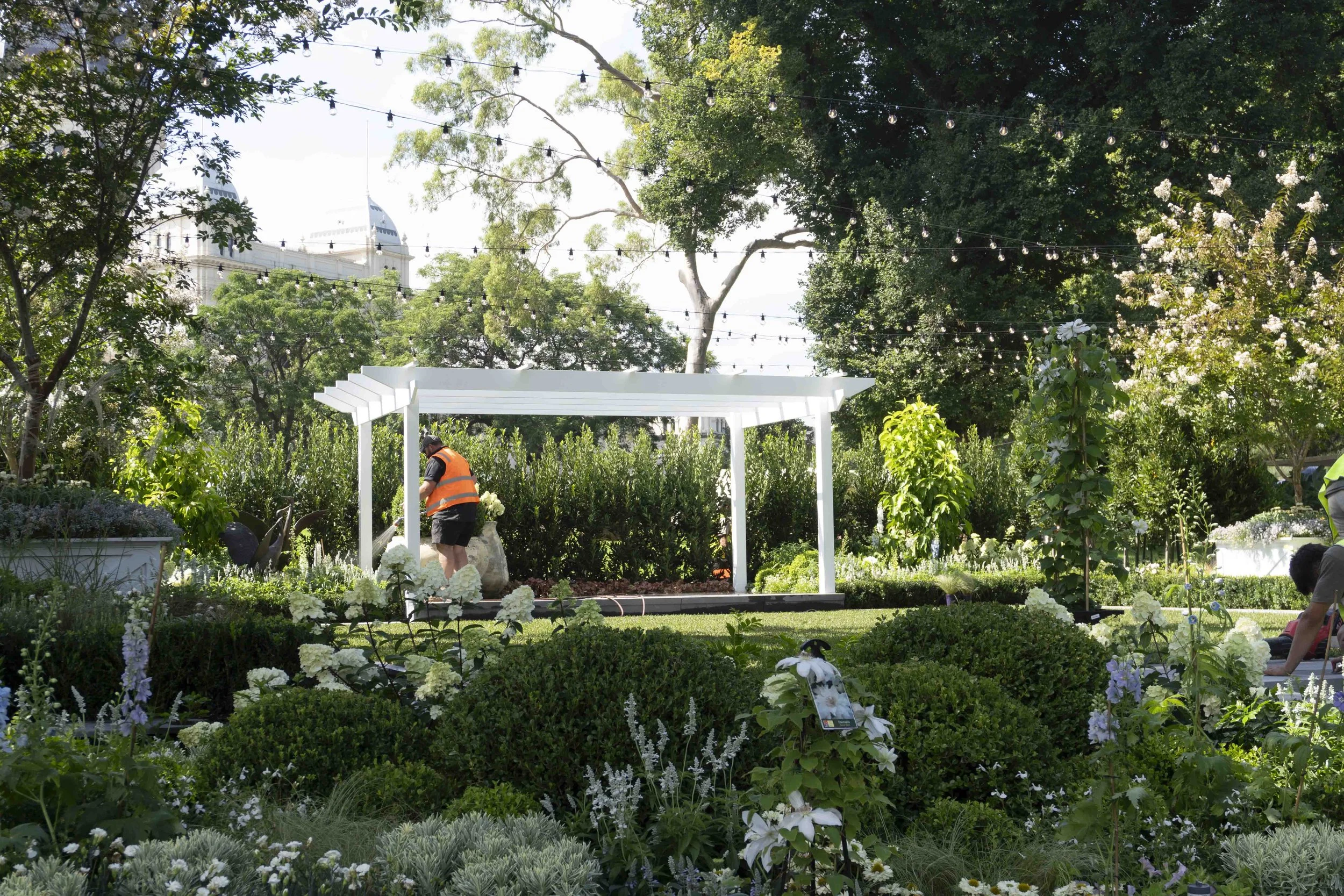
Jamie Durie, circular thinking, and one of the most important stories of this year’s show
A key moment on the tour was A Creation With a Conscience by Jamie Durie, constructed by Semken Landscaping. It is a future-facing garden inspired by Jamie Durie’s Future House, developed with Eufy, Repurpose It, Semken Landscaping and Elsewhere Pods. It brings together sustainable materials, circular economy thinking, prefabricated living and smart home technology.
What feels especially important this year is not only Jamie’s garden itself, but the broader role of Repurpose It across the show. Repurpose is the Official Sustainability Sponsor and Industry Partner for 2026, supplying bark and sustainable materials to show gardens and then recovering organics, timber and construction materials after the show so they can be processed into new products. That’s something super impactful for a show garden program like this that literally uses hundreds and hundreds of square cubic metres of materials. It is one of the most compelling stories in this year’s show because it shifts sustainability from styling language into practical logistics and material afterlife. It asks what happens after the applause, after the judging, after the public has gone home.
Whether you are interested in design, technology, materials or industry change, that circular economy story is one worth paying attention to.
Small spaces, practical possibility, and the wider show
After the major show gardens, the day opened out into another layer of the event. The Challenger Achievable Gardens particularly stood out because they make space for emerging talent and practical, affordable garden ideas. There are 12 sustainable and affordable gardens created by students and emerging designers from institutions including Chisholm Institute, Melbourne Polytechnic, Bendigo Kangan, Holmesglen, London College of Garden Design and The Gordon.
The small-space categories are another strong part of the 2026 program showcasing Balcony Gardens, Border Gardens and the Australian Unity Hanging Basket Competition as part of this year’s offer. Not everyone has room for a sprawling showpiece garden, but almost everyone can learn something from a balcony, a border, a threshold, a container, or a tightly resolved small footprint.
We also visited the Indigenous Garden and the Beyond Blue Wellness Garden. Indigenous Garden as a collaboration for the third year between the Wurundjeri Council and Royal Botanic Gardens Victoria, inspired by Bolin Bolin Billabong and framed as an act of remembrance and renewal.
The Boutique Gardens were another highlight. Intimate 5 x 5 metre gardens where designers can push boundaries and show what compact residential-scale spaces can do. This year’s line-up includes Aaron Leslie and Kelsey Johns, Alannah Easton, Emily Rubira, Paul O’Hara and Galin Dimintrov, each with a very different proposition. There is something especially compelling about seeing ambition distilled into a small footprint. In some ways, those tighter spaces really do ask for sharper thinking.
Looking ahead to more stories from the show
I am so pleased to be spending more time with the broader feature program over Thursday and Friday in my capacity as media, writer and educator. One installation I am particularly keen to return to is Plant Futures, which brings Jac Semmler and Super Bloom into the wider 2026 story. This is an immersive living laboratory focused on climate-resilient, low-water planting, developed by Super Bloom, Heliotope Studio, Evergreen Infrastructure and Mood Construction, with a commitment to relocating the garden into public space after the event. This is a project that feels very aligned with the broader conversations I care about around resilient planting, beauty, public learning and what future-facing gardens can offer.
And that, perhaps, is the thing I left with most strongly yesterday. Right now the world feels super hectic and uncertain. There is a lot to be concerned about. But a show like this does not read to me as escapism. It reads as possibility. It is a place where people are testing ideas, sharing knowledge, building relationships, working across disciplines and asking better questions about materials, planting, liveability and care. It is also a place where the public can come and be inspired not only to admire, but to act. Sometimes that action is large. Sometimes it is very small. But small actions matter. Gardens teach us that.
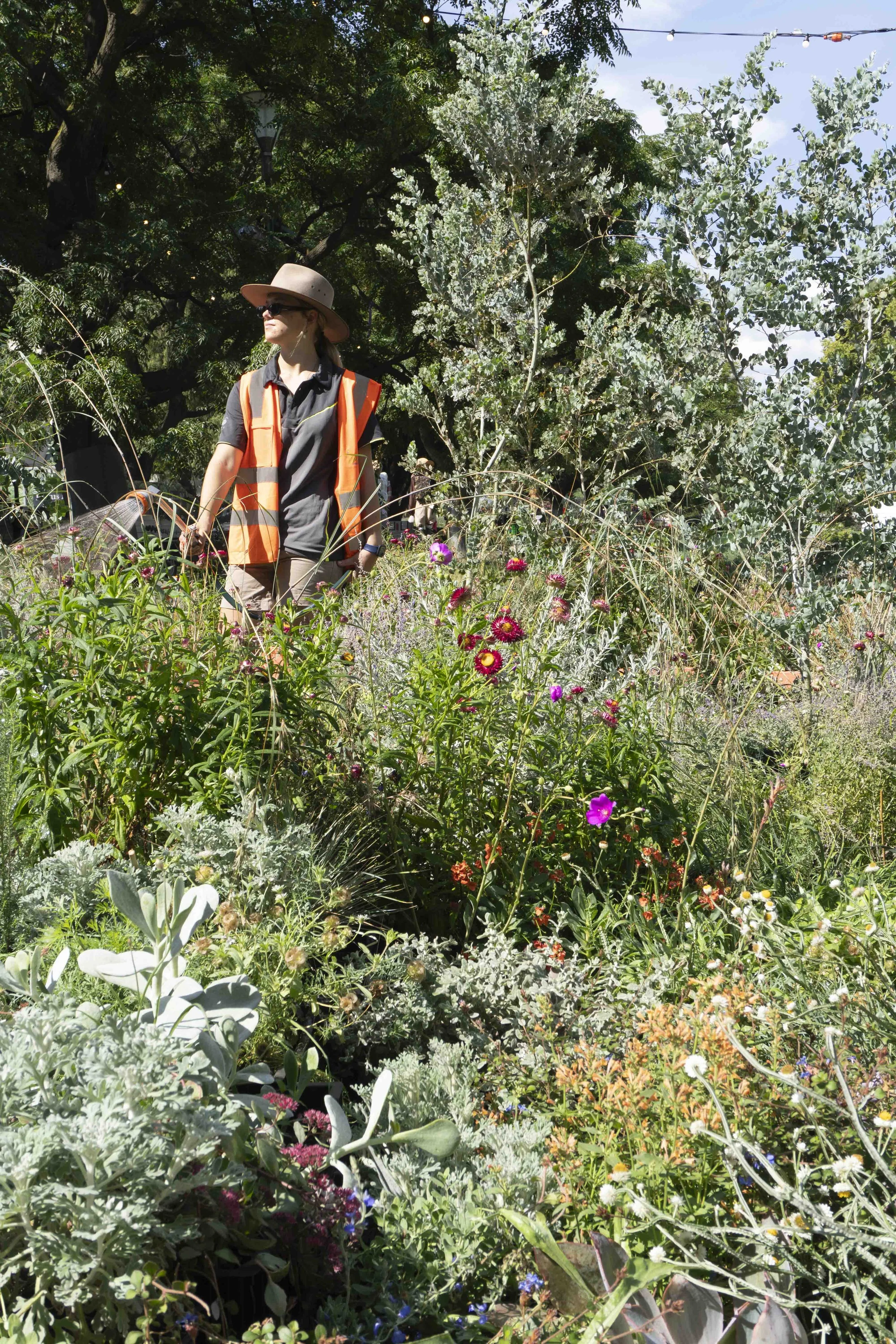
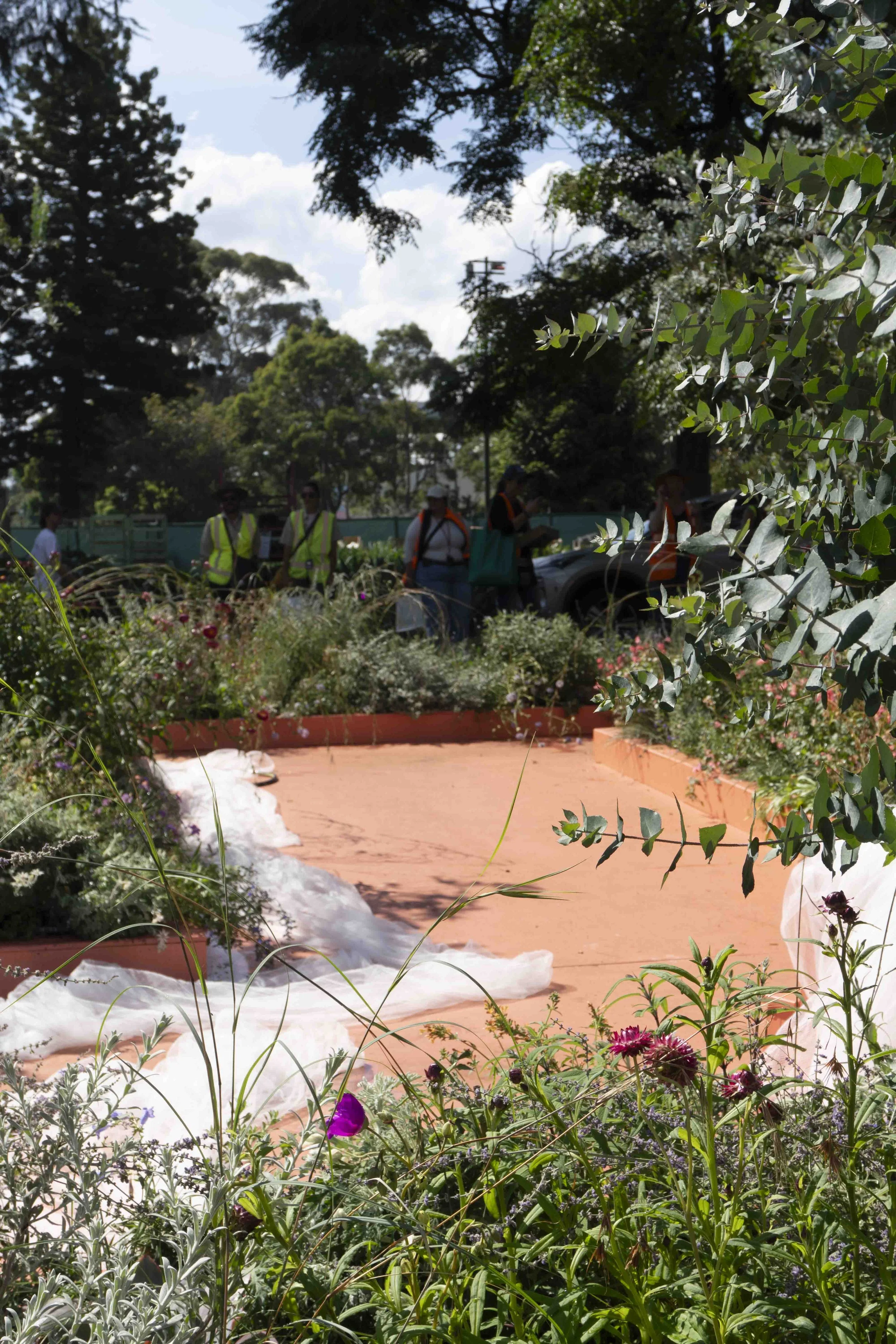
The Melbourne International Flower and Garden Show runs from Wednesday 25 March to Sunday 29 March at the Royal Exhibition Building and Carlton Gardens. I’ll be there again on Thursday and Friday as media and I’m genuinely looking forward to connecting with exhibitors, designers and the public.
A heartfelt thank you again to Teena Crawford for her insight and generosity on the tour. If you are interested in Teena’s work, her book Plantology: The Essential Guide to Better Gardens, co-authored with Lisa Ellis, is an incredible reference for anyone wanting to think more deeply about plants and planting.
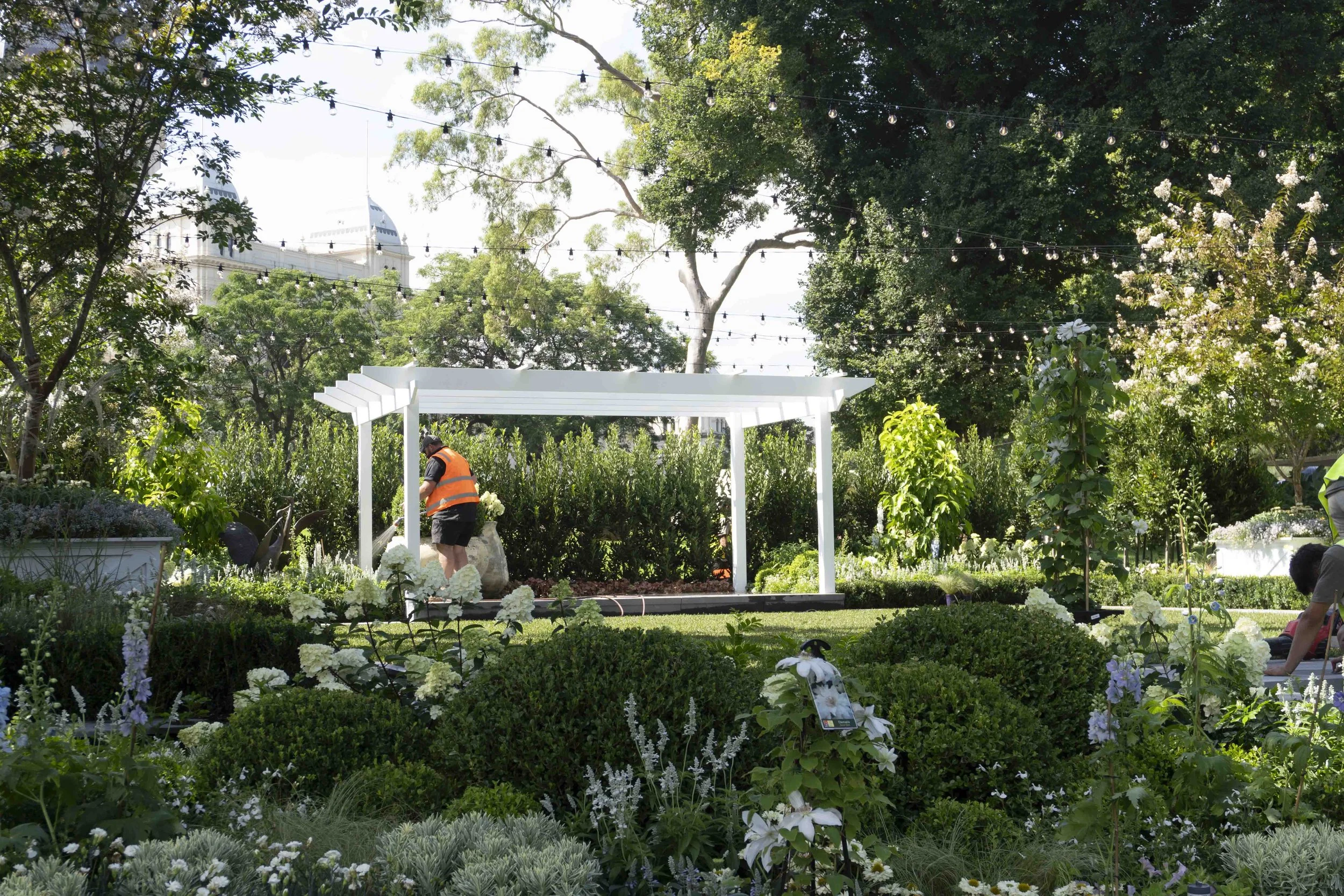
Join a workshop
Explore current workshops in the shop.
If you are building your garden from home right now, my e books on Wicking Bed Gardens and Introduction to Backyard Chicken Keeping offer practical step by step guidance that pairs well with the workshops.
A new date the for the Wicking Bed Garden workshop has also just been added for Sunday 17th May. Places are limited and almost sold out, so please get in quick if you have been wondering how you can grow more with less. You can book via the shop section of the website or here https://www.natashamorgan.com.au/shop/wicking-bed-garden-workshop-with-natasha-morgan
Continue your gardening journey with me
If you enjoy this kind of content, my workshops offer more detail and guidance on design, productivity and seasonal care.
If you are building your garden from home right now, my ebooks on Wicking Bed Gardens and Introduction to Backyard Chicken Keeping offer practical step by step guidance that pairs well with the workshops.
I share seasonal tips, behind the scenes at Little Cottage on a Hill, and new resources through my newsletter. Subscribe to receive my entire plant list from the garden as a personal thank you.
You may want to check out my related content below:
Cultivating beauty in a war zone – Alla Olkhovska’s garden of resistance - gardening as a form of survival. Of resistance. Of legacy.
Why I Grow. Why I Design. Why I Return. - Finding comfort in small daily acts.
Caring for Ornamental Grasses – When (and Whether) to Cut Back - As we head toward winter here in the southern hemisphere, it’s the time of year when I’m often asked: Should I be cutting back my grasses now?
Stay connected for more seasonal inspiration:
Instagram | Facebook | Gardenstead | LinkedIn | Pinterest | YouTube | Website | Newsletter
Thanks so much for following along.
Natasha xx
When the world feels uncertain, grow one thing
When the world, feels uncertain, grow one thing.
The other day, after my wicking bed garden workshop, I found myself sitting on the verge beside the tomatoes and zucchini, both of them running late, and just letting myself think.
We had spent the day talking about wicking beds, soil, seasonal timing, water, what to plant now, what to plant next. But underneath all of that, there was another conversation quietly running through the room.
Not just how to grow things, but why.
And I have been wondering whether you are thinking what I am thinking.
Not from a place of panic.
Not from catastrophising.
Just from that quieter, steadier sense that perhaps it is time to come back to some very basic things. To growing something. To using that patch of soil. To learning one skill properly. To becoming, in whatever small way, a little more capable at supporting ourselves and each other.
Because when the world feels uncertain, and right now for many people it does, there is something deeply steadying about knowing how to grow food, preserve it, share it, and use your own hands well.
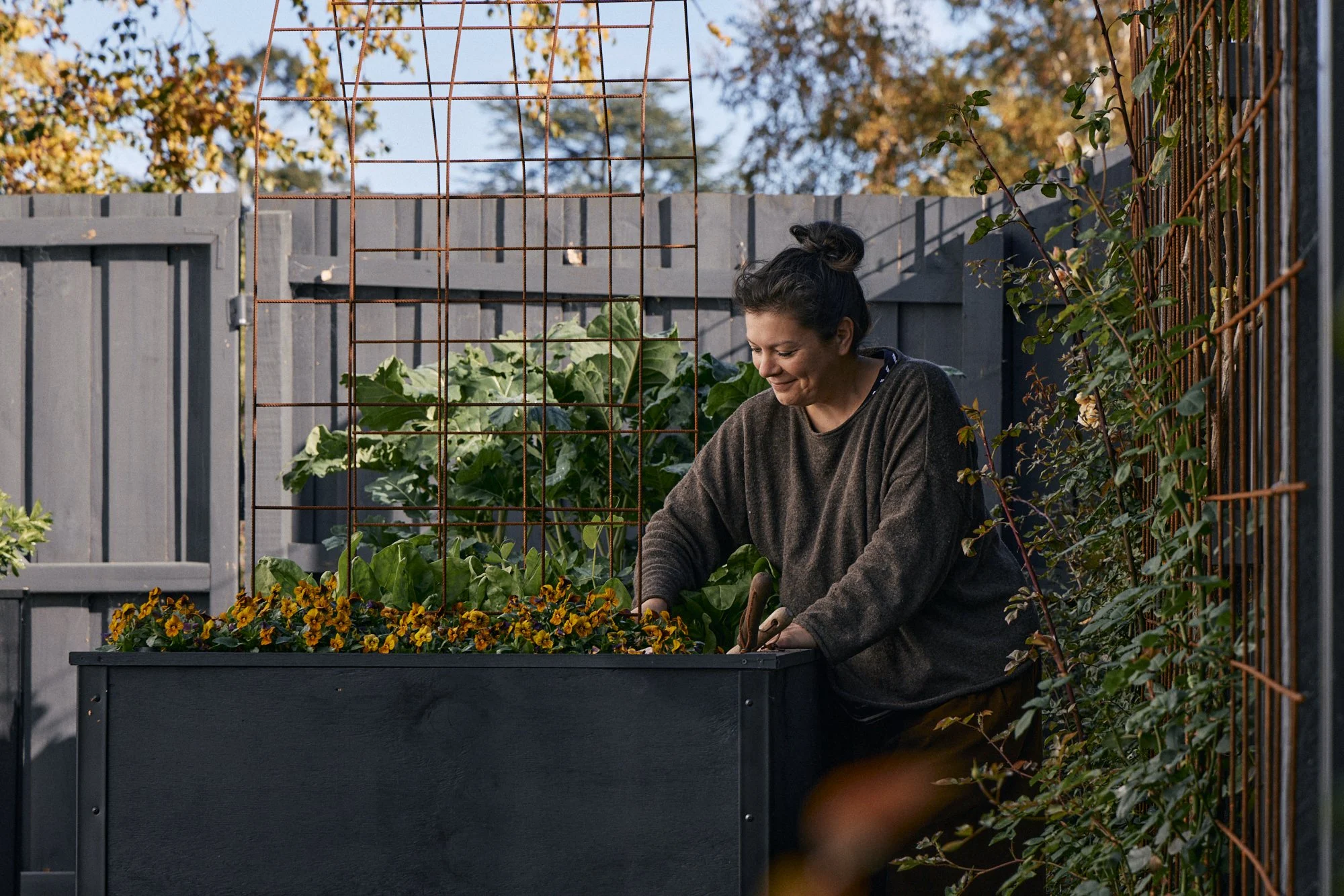
This is not about fear
I want to be very clear about that.
This is not about prepping (although there is absolutely nothing wrong with that!).
It is not about panic buying seed packets, building a bunker, or imagining that we each need to disappear into our own little fortress of self sufficiency.
It is about practicality.
It is about remembering that useful skills matter.
It is about knowing that if you can grow herbs, lettuce, beans, tomatoes, pumpkins, or a row of garlic, that matters. If you can save seed, preserve quinces, dry beans, make passata, or share extra seedlings with a neighbour, that matters too.
These things do not solve everything. But they do change your relationship to uncertainty. They shift you, even slightly, from passive worry to active participation.
And that matters a great deal.
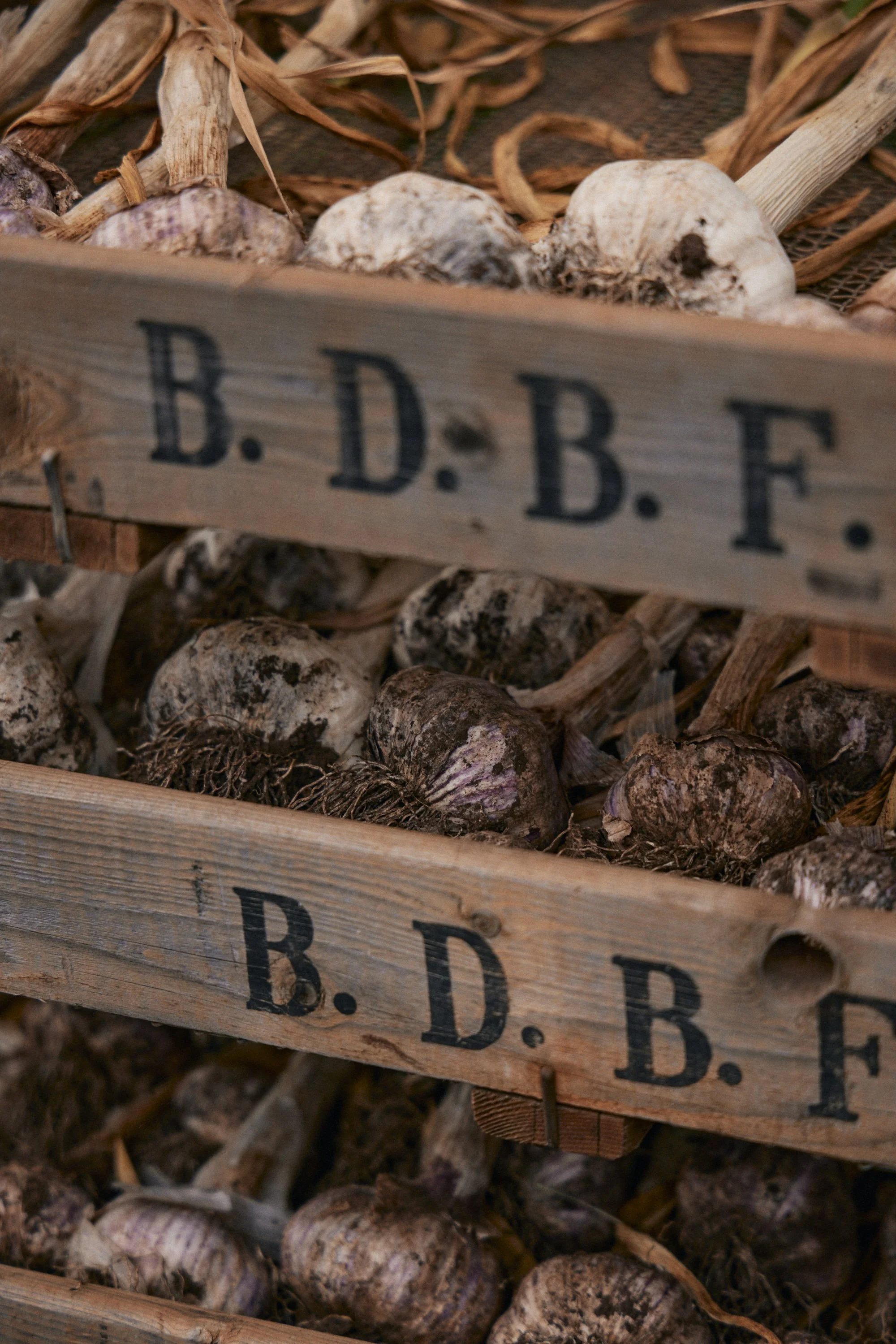
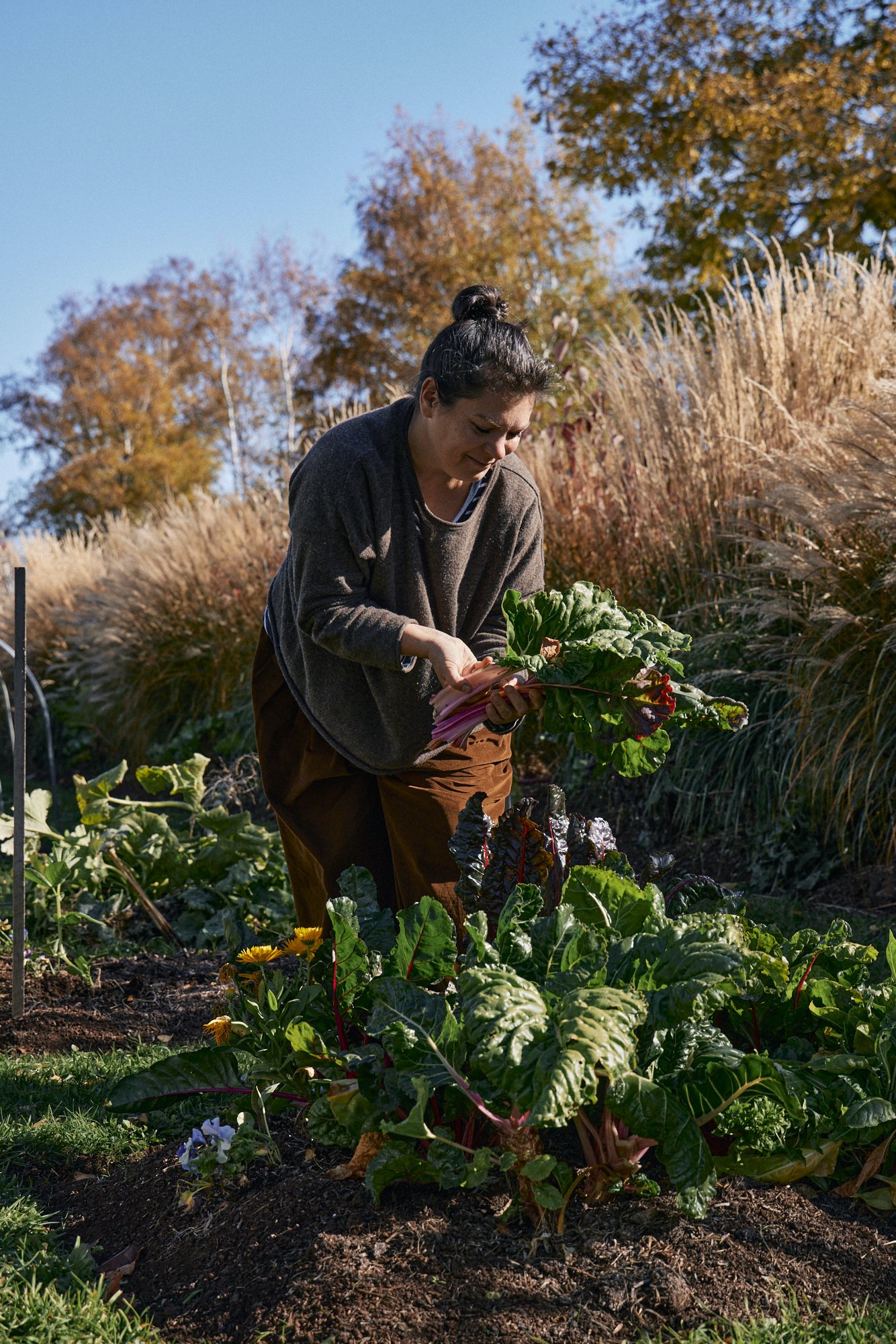
Why growing food can feel so grounding
There is something about food growing that pulls us back into rhythm.
You notice the weather differently. You pay attention to timing. You begin to understand what your soil can do, how much sun reaches a certain corner, where water sits, what thrives, what struggles, what needs protecting. You become more observant, more capable, more responsive.
Even one small success can change something in a person.
A pot of parsley by the door.
A bed of salad leaves.
A few winter brassicas.
A bucket of potatoes.
A row of peas.
A tomato vine that actually gets to ripen properly.
These are small things, yes. But they are also not small.
They build confidence.
They build skill.
They build memory.
They build a sense that you can participate in your own life more actively.
That is part of why gardening matters so much to me. It is never only about the harvest. It is about what the practice asks of us, and what it gives back.
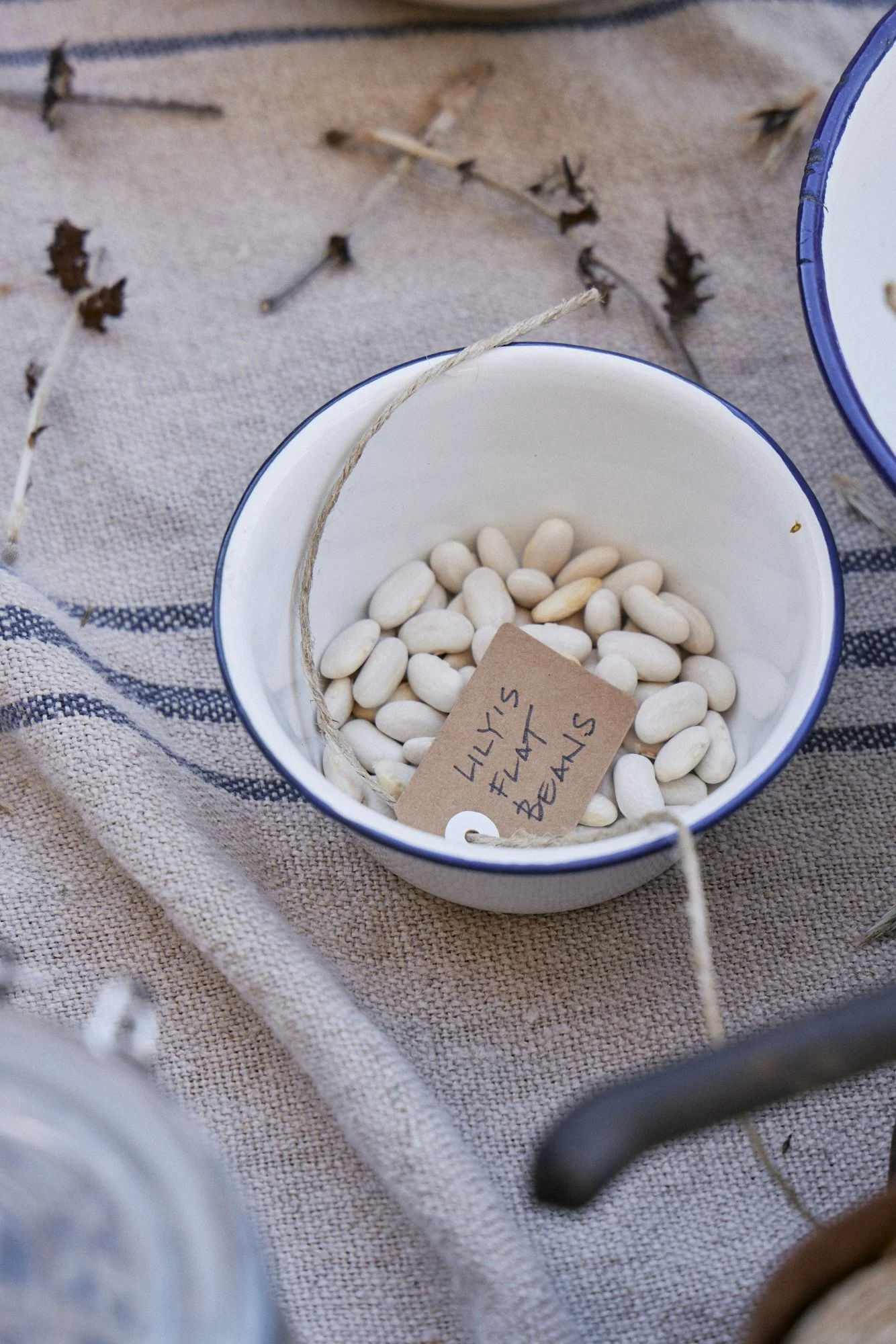
The question I keep coming back to
What if each of us just grew one thing?
I talk about this in my book, which comes out in September (announcement coming soon!), and I find myself returning to the idea more and more.
Not everyone has room for an orchard.
Not everyone wants chickens.
Not everyone is going to preserve forty jars of tomatoes or redesign their whole backyard.
But one thing is possible for many more people.
One herb.
One bed.
One fruit tree.
One climbing bean on a fence.
One trough of leafy greens.
One skill.
One seasonal crop.
If every household grew one thing well, and if enough of us shared knowledge, seed, excess produce, and encouragement, the effect would be far bigger than the individual crop itself.
That is how resilience works in real communities. It is rarely dramatic. It is cumulative.
What Victory Gardens can teach us now
Lately I have also been thinking about the old Victory Gardens.
During the First and Second World Wars, governments in countries including the United States and Britain encouraged ordinary people to grow food at home, in backyards, on vacant land, in school grounds, in public plots, and wherever else space could be found. The goal was practical, to supplement food supplies, ease pressure on transport and commercial agriculture, and help households contribute in a meaningful way. The movement also had a strong morale and community dimension. It gave people something useful to do with their uncertainty.
That is the part I find compelling.
Not the wartime slogan.
Not the patriotism.
Not the idea that we should romanticise hardship.
What interests me is the reminder that ordinary domestic skills have social value. Growing food, preserving it, and sharing it are not fringe activities. They are practical, intelligent responses to unstable times.
And perhaps that is something worth remembering now.
Not as a re enactment.
Just as a useful precedent.
A reminder that growing food has long been one way people contribute, steady themselves, and strengthen the places they live.
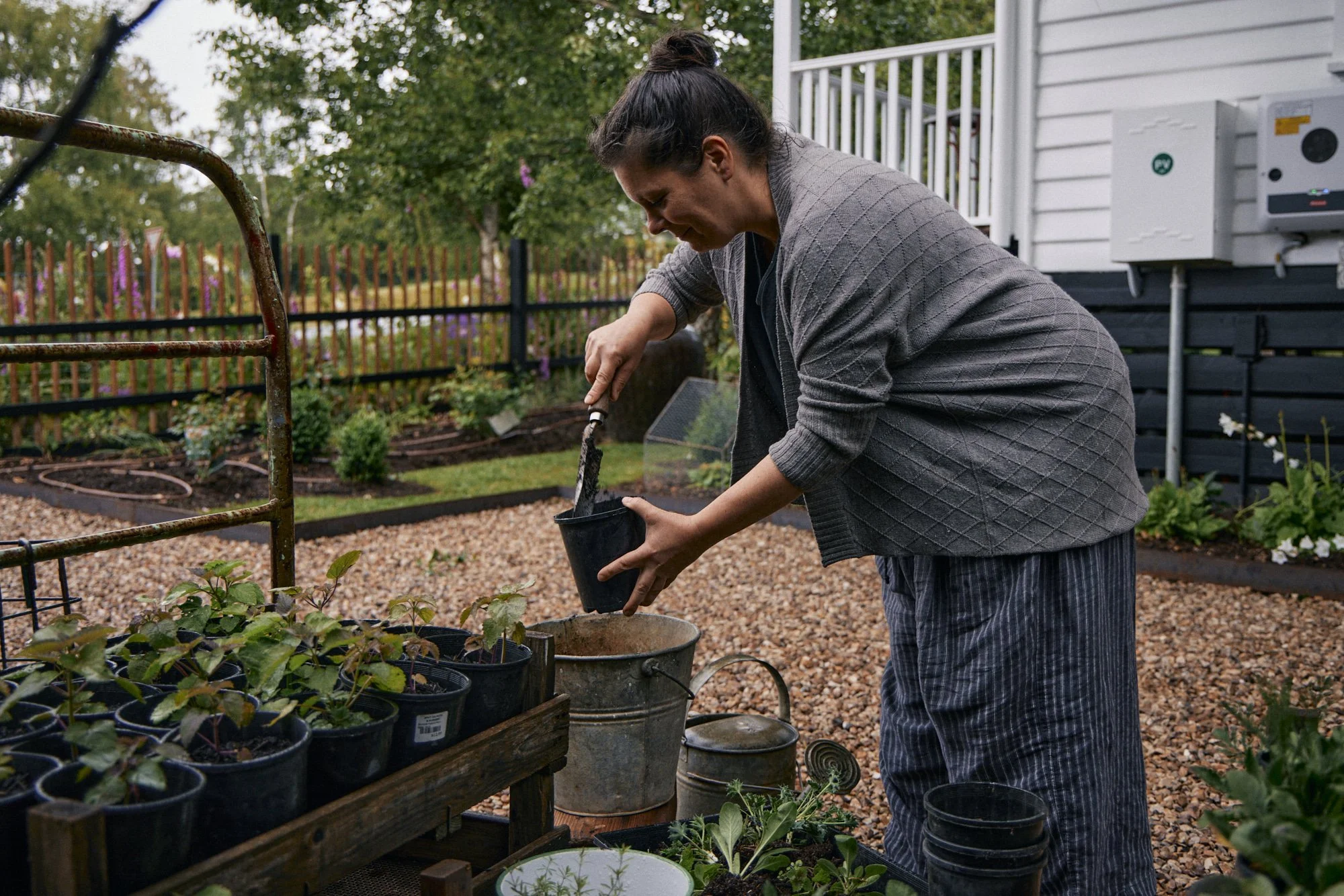
What I am noticing in my own garden
I am lucky.
I have a verge garden.
I have wicking beds.
I have years of growing knowledge.
I have a reasonably full larder.
I know how to preserve and plan ahead.
And even so, I am still thinking differently at the moment.
I am thinking about what I want to grow next.
I am thinking about what earns its place.
I am thinking about what stores well, what feeds us well, what is worth repeating, what is genuinely useful.
I am also thinking about timing. About late tomatoes and late zucchini. About what the season has done. About what the next one may ask.
This is what gardening teaches so well. You do not control the season. You respond to it. You observe first, act second.
That is true in the garden, and I think it is true in life as well.
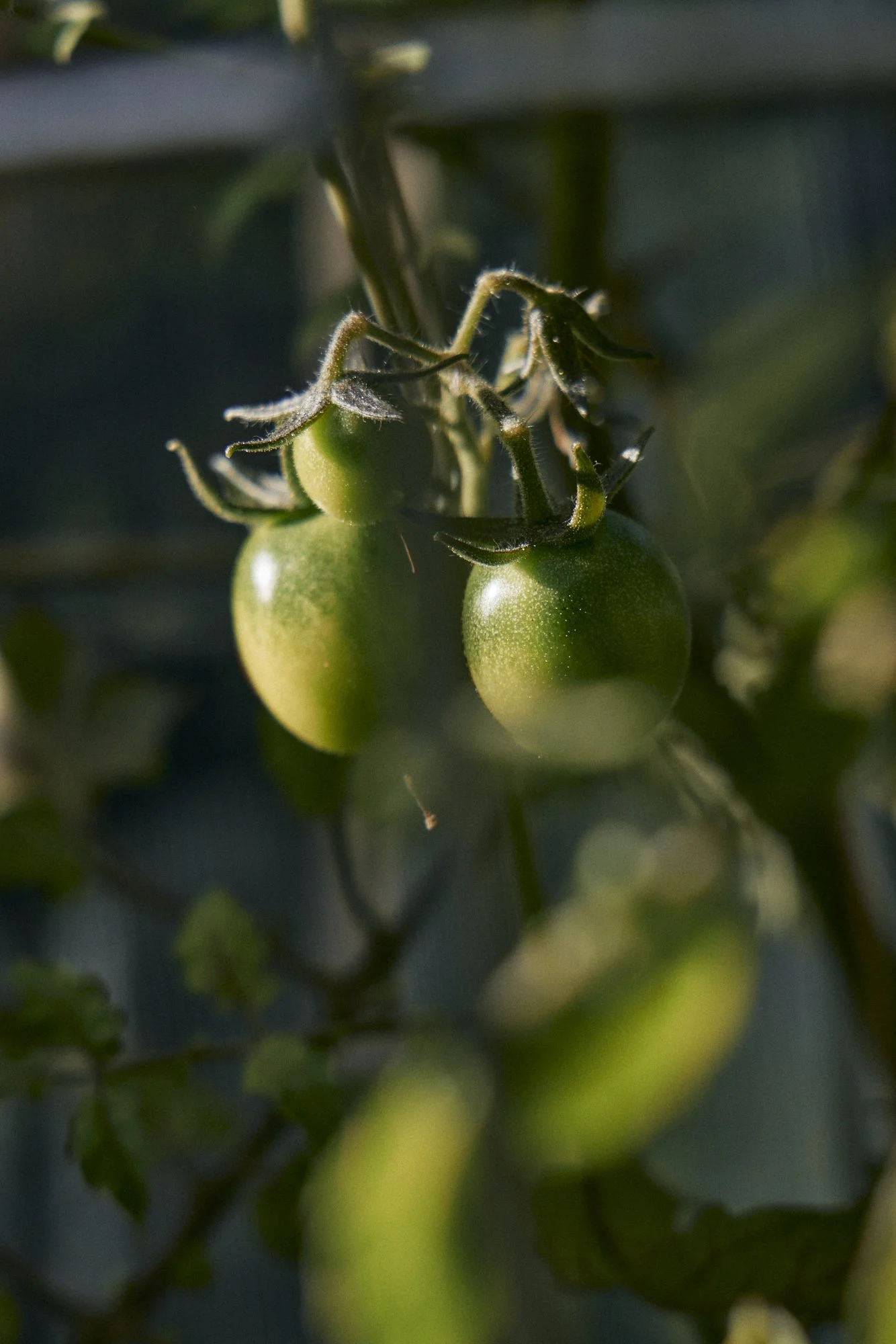
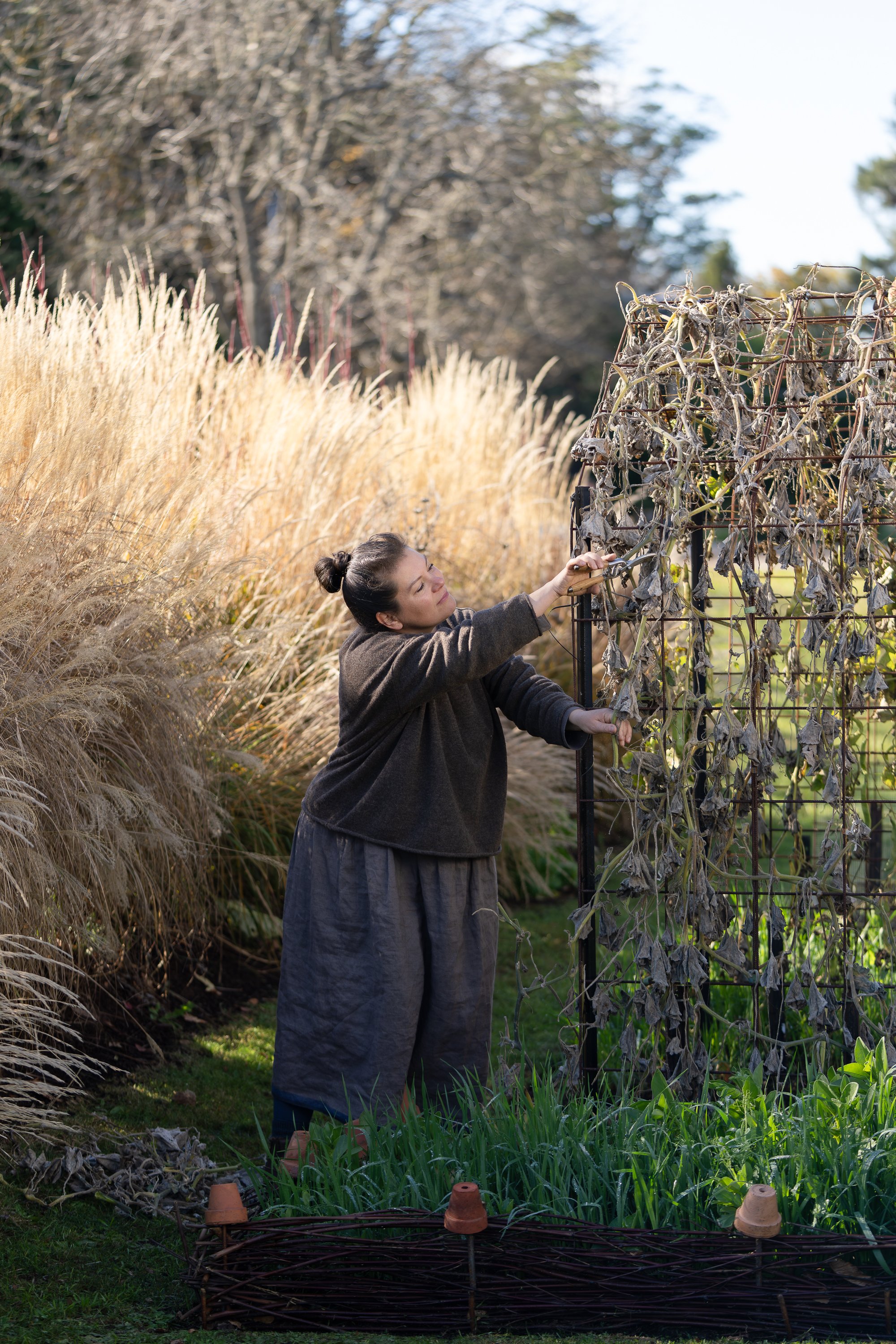
What your comments told me
One of the most moving parts of sharing that reel was the response.
So many of you were already thinking along similar lines.
Some of you are expanding your productive gardens.
Some are planting extra and collecting seed.
Some are building raised beds or converting them to wicking beds.
Some are preserving more, drying beans, refilling pantries, saving what the garden offers.
Some are wanting hens.
Some are revisiting older skills.
Some are simply asking where to start.
That breadth of response mattered to me because it showed that this is not a fringe thought. It is a real one. Quiet, practical, shared by many people, each in their own circumstance.
And importantly, not everyone was starting from the same place.
Some people already grow a lot and want to become more deliberate.
Others are at the very beginning.
Others feel the urge but not yet the confidence.
All of that is valid.
If you are new to this, start smaller than you think
If your head is going here too, but you are worried you do not know enough, start smaller than you think you should.
Do not begin with the fantasy version.
Begin with what fits your life.
Grow what you actually eat.
Grow what is easy in your climate.
Grow something that gives you a quick return.
Grow something that teaches you one useful lesson.
A pot of herbs is not nothing.
A trough of rocket is not nothing.
A few lettuce seedlings are not nothing.
Learning how to sow coriander at the right time is not nothing.
Growing a decent crop of spinach in winter is not nothing.
It is a practice.
And practice works by repetition.

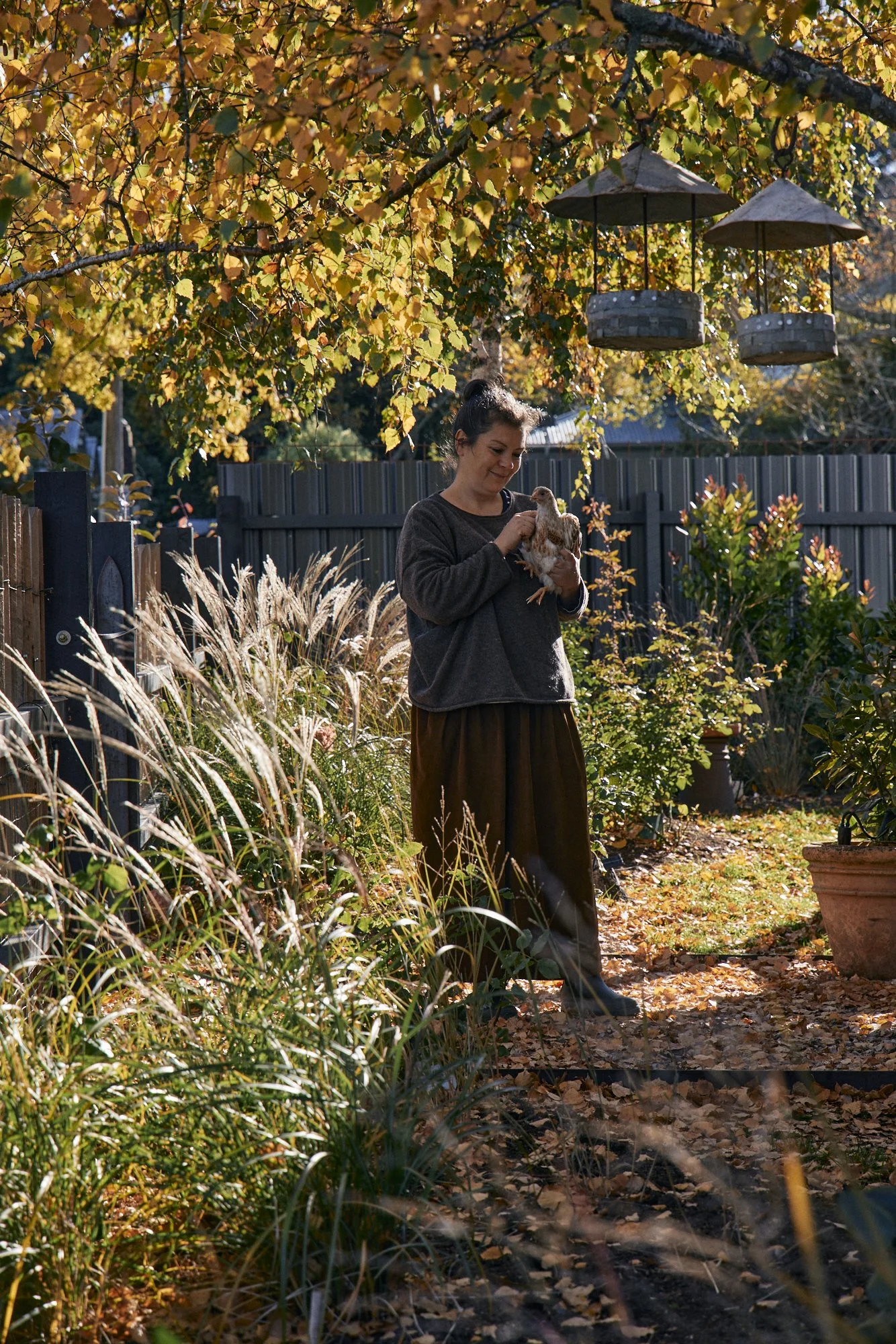
If you already have skills, this may be the moment to use them more fully
If you already know how to grow, preserve, propagate, compost, save seed, or cook from the garden, perhaps this is the moment to lean in a little more.
Not in a frantic way.
Just in a more conscious one.
Maybe that means planting an extra row.
Maybe it means finally getting serious about succession planting.
Maybe it means preserving what you might once have let slide.
Maybe it means teaching your children.
Maybe it means sharing seedlings.
Maybe it means checking in on a neighbour.
Maybe it means using your front yard, your verge, or the sunny side of the fence a bit more deliberately.
Skills gain value when they are used and shared.
Practicality can be a form of contribution
I keep coming back to that word, contribution.
For me, this is not about control. It is about contribution.
Growing something is a contribution.
Saving seed is a contribution.
Learning to preserve food is a contribution.
Giving away excess produce is a contribution.
Showing someone how to start is a contribution.
Using your garden, however small, with care and intention, is a contribution.
In uncertain times, practical acts can help settle the nervous system because they return us to what is concrete. Soil. Water. Seed. Season. Repetition. Usefulness. Care.
That is not escapism.
That is participation.
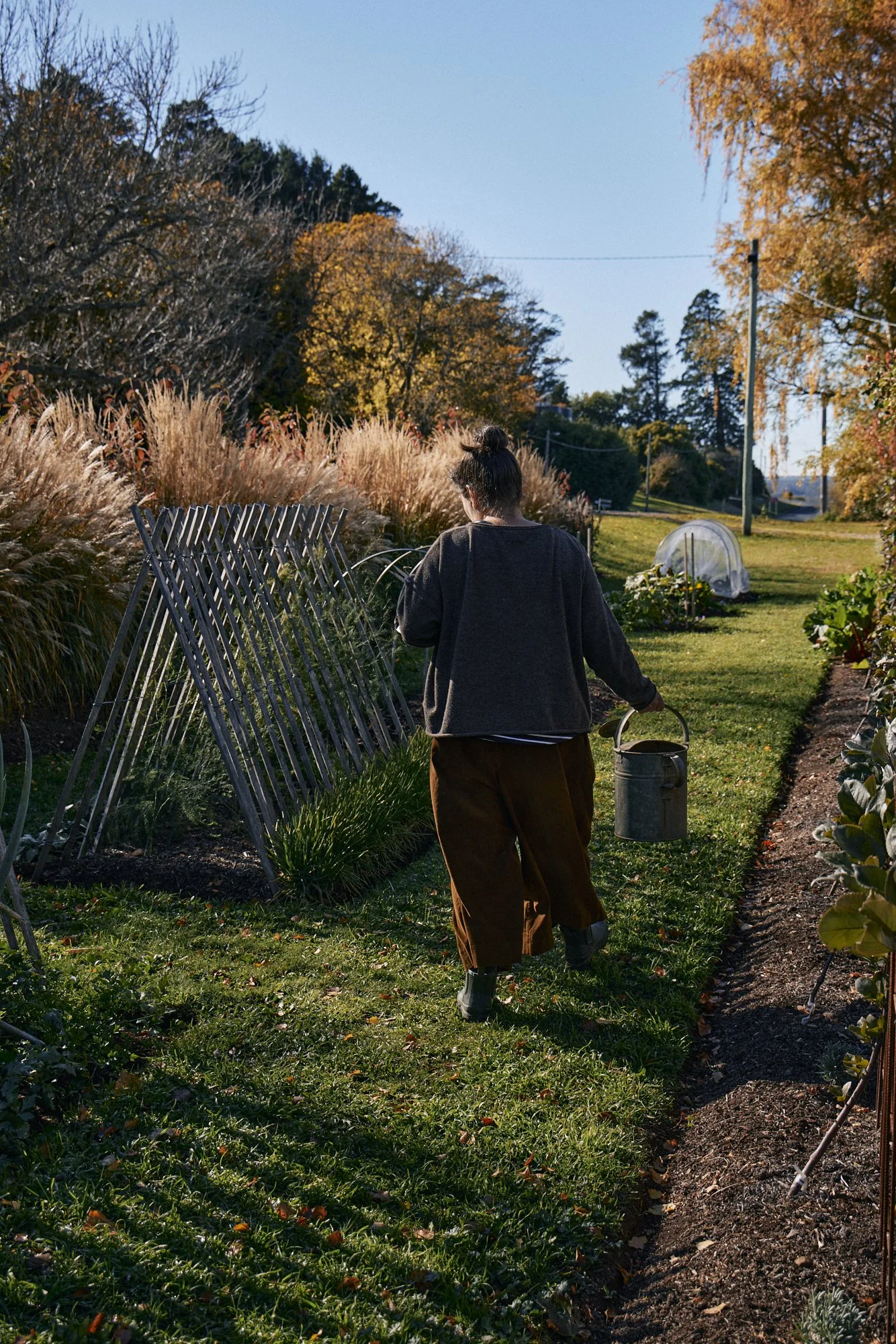
So where is your head at?
That is really the question behind all of this.
Are you thinking about growing more right now?
Are you wondering where to start?
Are you worried you do not know enough?
Or do you already have skills and want to use them more fully, more thoughtfully, more generously?
Because if this is where your mind is going too, then maybe this is a conversation worth having.
And maybe, in one way or another, I can help.
Join a workshop
Explore current workshops in the shop.
If you are building your garden from home right now, my e books on Wicking Bed Gardens and Introduction to Backyard Chicken Keeping offer practical step by step guidance that pairs well with the workshops.
A new date the for the Wicking Bed Garden workshop has also just been added for Sunday 17th May. Places are limited, so please get in quick if you have been wondering how you can grow more with less. You can book via the shop section of the website or here https://www.natashamorgan.com.au/shop/wicking-bed-garden-workshop-with-natasha-morgan
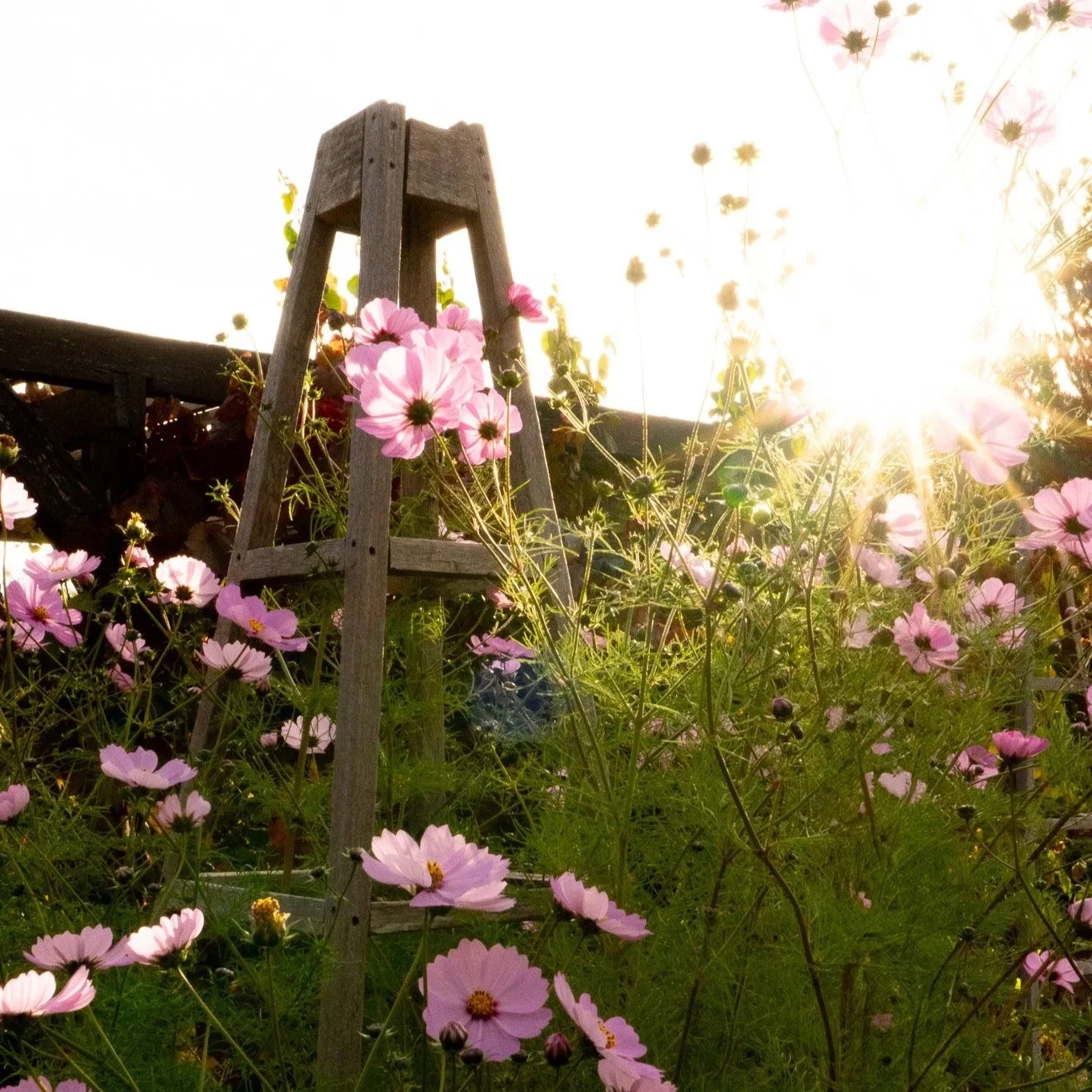
Continue your gardening journey with me
If you enjoy this kind of content, my workshops offer more detail and guidance on design, productivity and seasonal care.
If you are building your garden from home right now, my ebooks on Wicking Bed Gardens and Introduction to Backyard Chicken Keeping offer practical step by step guidance that pairs well with the workshops.
I share seasonal tips, behind the scenes at Little Cottage on a Hill, and new resources through my newsletter. Subscribe to receive my entire plant list from the garden as a personal thank you.
You may want to check out my related content below:
Cultivating beauty in a war zone – Alla Olkhovska’s garden of resistance - gardening as a form of survival. Of resistance. Of legacy.
Why I Grow. Why I Design. Why I Return. - Finding comfort in small daily acts.
Caring for Ornamental Grasses – When (and Whether) to Cut Back - As we head toward winter here in the southern hemisphere, it’s the time of year when I’m often asked: Should I be cutting back my grasses now?
Stay connected for more seasonal inspiration:
Instagram | Facebook | Gardenstead | LinkedIn | Pinterest | YouTube | Website | Newsletter
Thanks so much for following along.
Natasha xx
Beauty, Tending, Belonging: Why I Keep Growing Things
Growing things is how I remember who I am.
It is the quiet, steadfast practice that has held my hand through every season of my life, from childhood curiosity to the work I do now in my garden and on the page. When I grow something, even just one small plant, the world narrows to a scale I can hold and, at the same time, somehow expands; I feel both anchored and open, both soothed and alive.
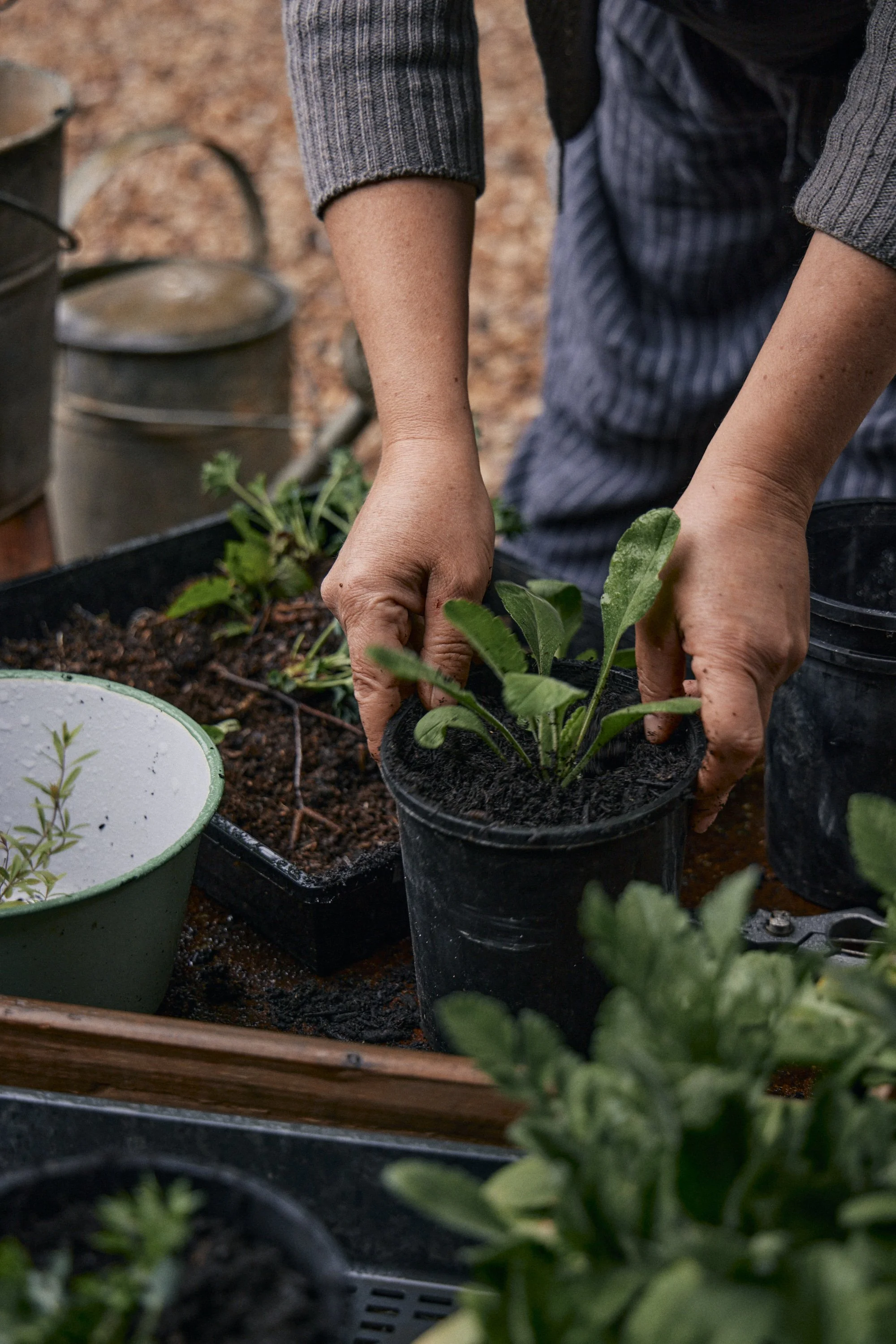
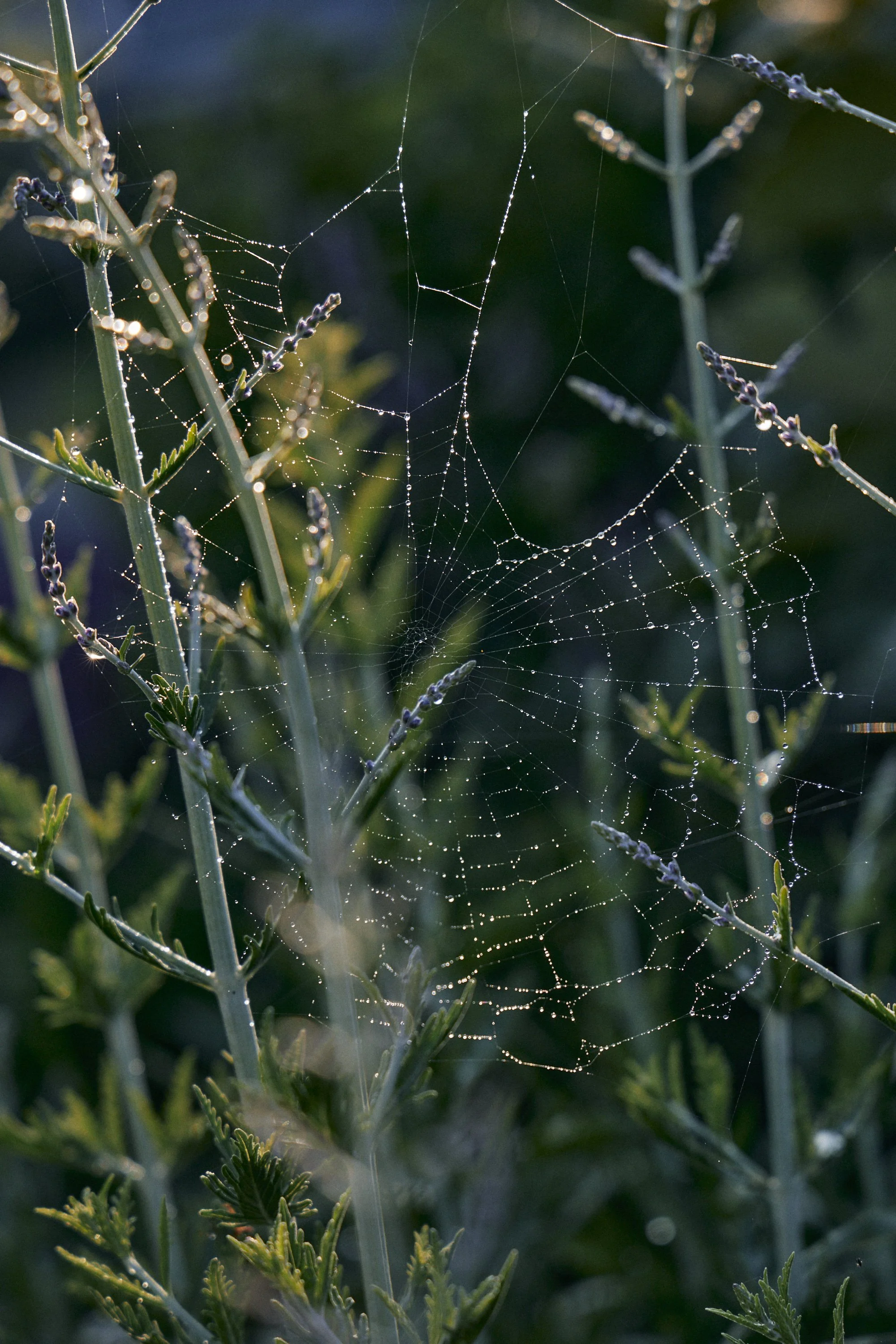
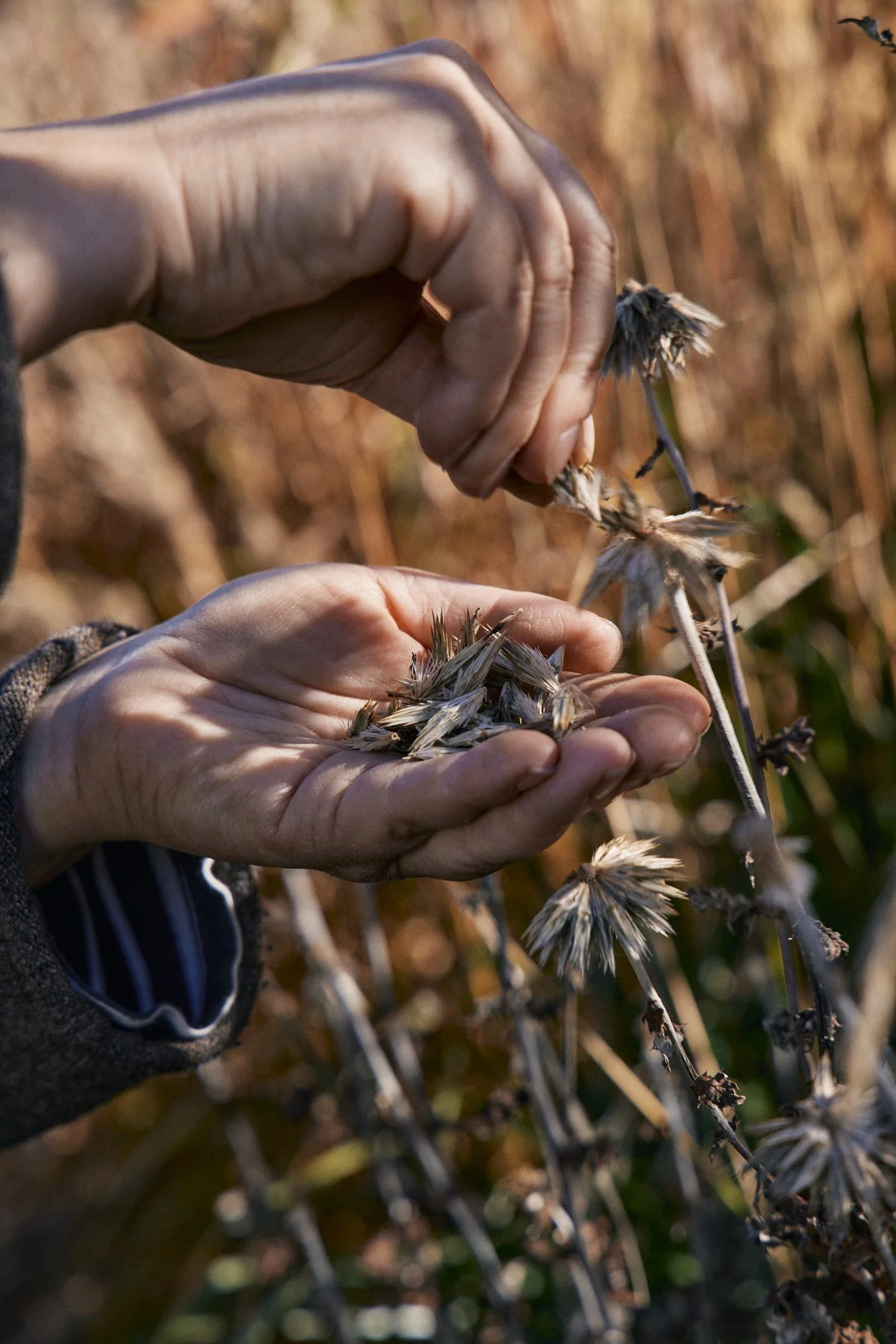
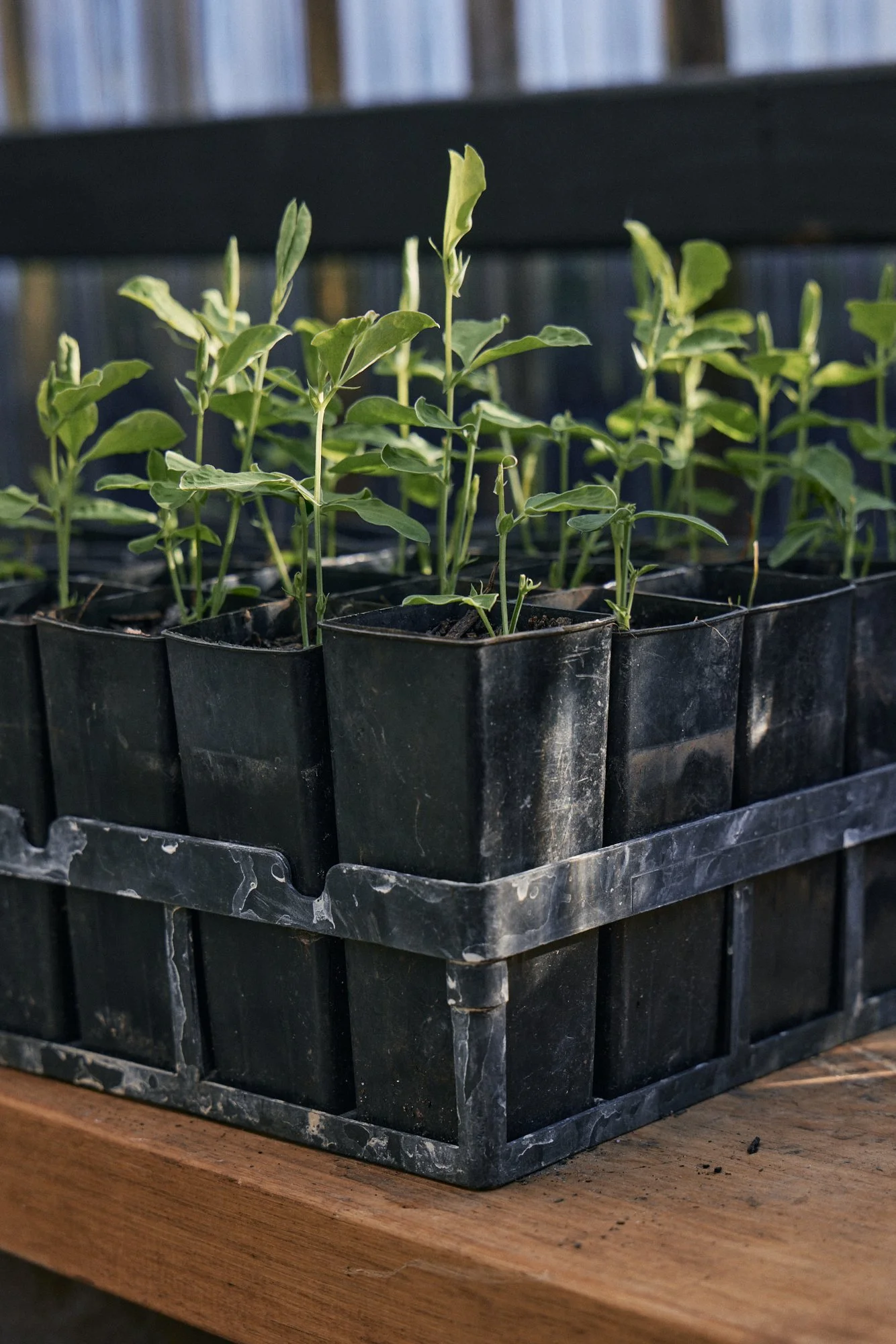
The childlike wonder of beginnings
Every time I tuck a seed into soil or take a cutting from a plant I love, I feel that small, familiar flutter of wonder. Will it take? Will it sulk? What will it become in this particular patch of earth, with this particular light, wind and weather? I still find myself checking far too early for signs of life, scanning the surface for the faintest lift of soil, the first sliver of green that says, I am here.
That moment never gets old. A seed pushing through, a bud swelling, a tendril finding something to hold – these are such modest events, but they land in me like miracles. They remind me of being a child pottering in gardens where no one needed me to impress them, where the whole point was to notice, to touch, to be in conversation with whatever was growing. Growing things returns me to that state, again and again – curious, attuned, unguarded.
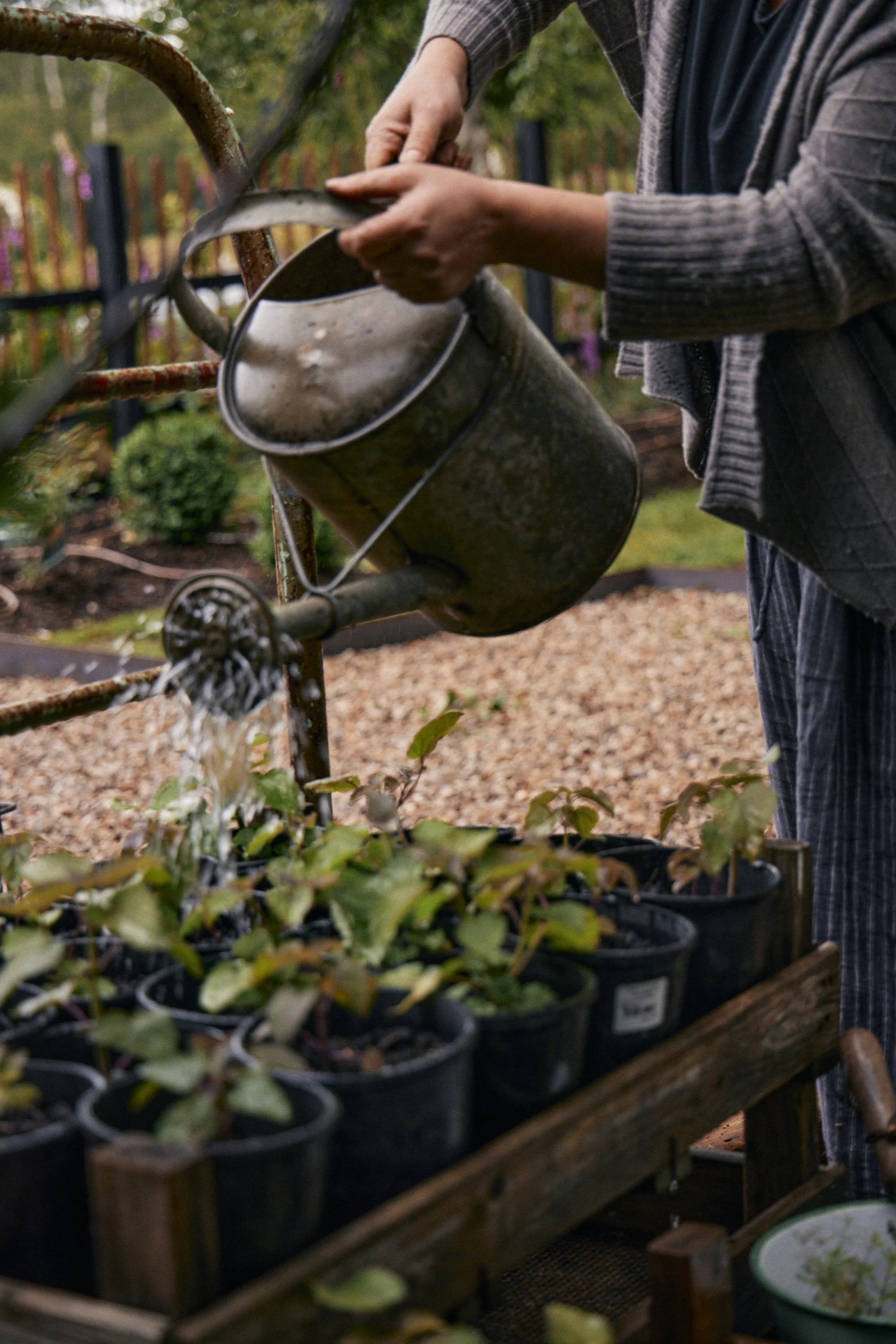
Contentment in tending
People sometimes imagine that the satisfaction of gardening lies in the finished picture – the overflowing beds, the baskets of produce, the vases of flowers on the table. For me, the deepest contentment lives in the tending itself. Watering a single pot at the back door. Brushing past lemon verbena and carrying its scent with me into the house. Tying in a wandering stem so it can find the light more easily.
There is a profound relief in doing one small, useful thing for something living – especially on the days when life feels unruly, loud or beyond my control. I don’t need to fix the world; I can deadhead a rose, top up a wicking bed, check the moisture under the mulch with my fingers. Each of these gestures is tiny, almost invisible from a distance, but together they knit a rhythm that steadies me. The garden gives back in beauty and harvest, yes, but it also gives back in pace – in a tempo my nervous system can actually live inside.
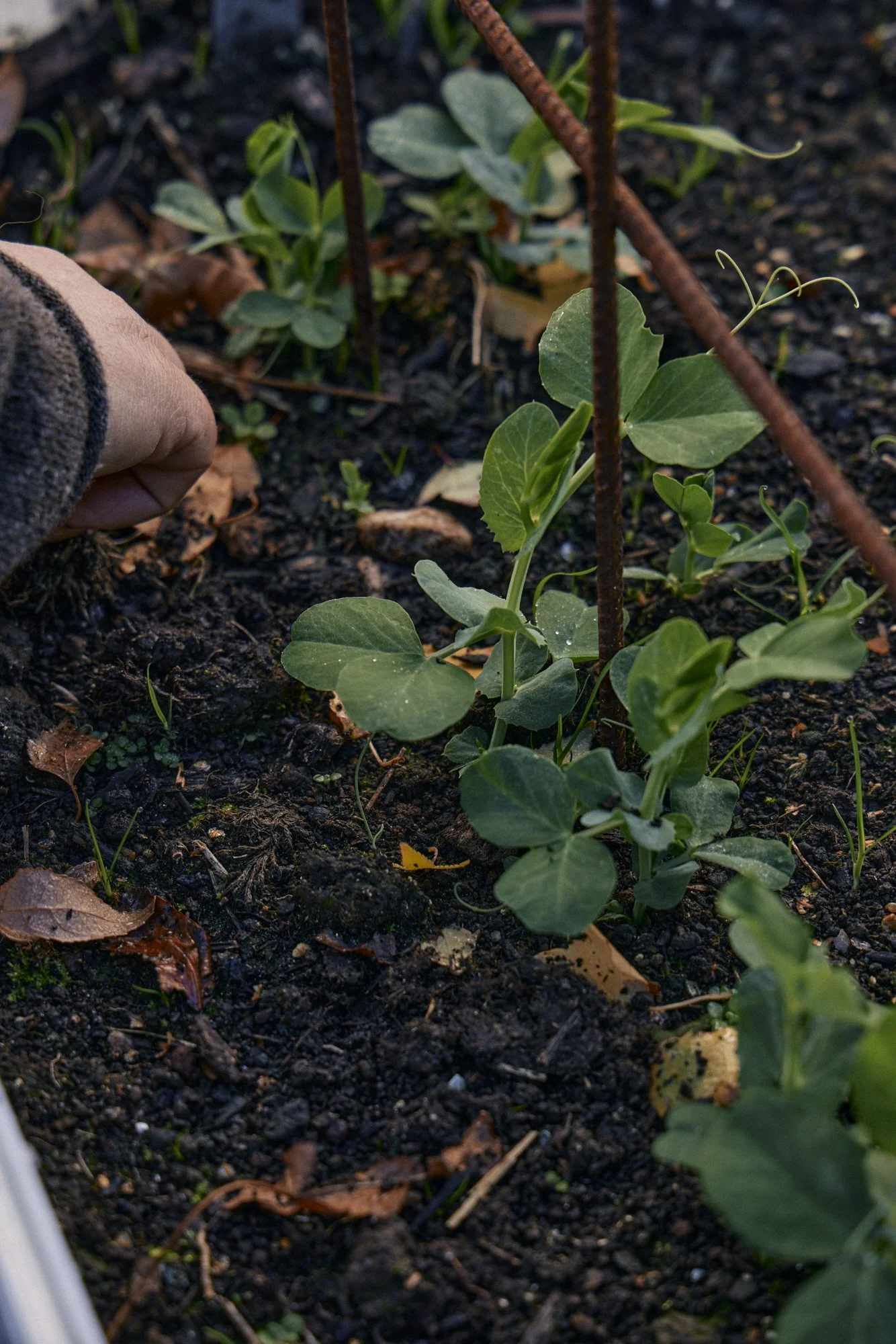
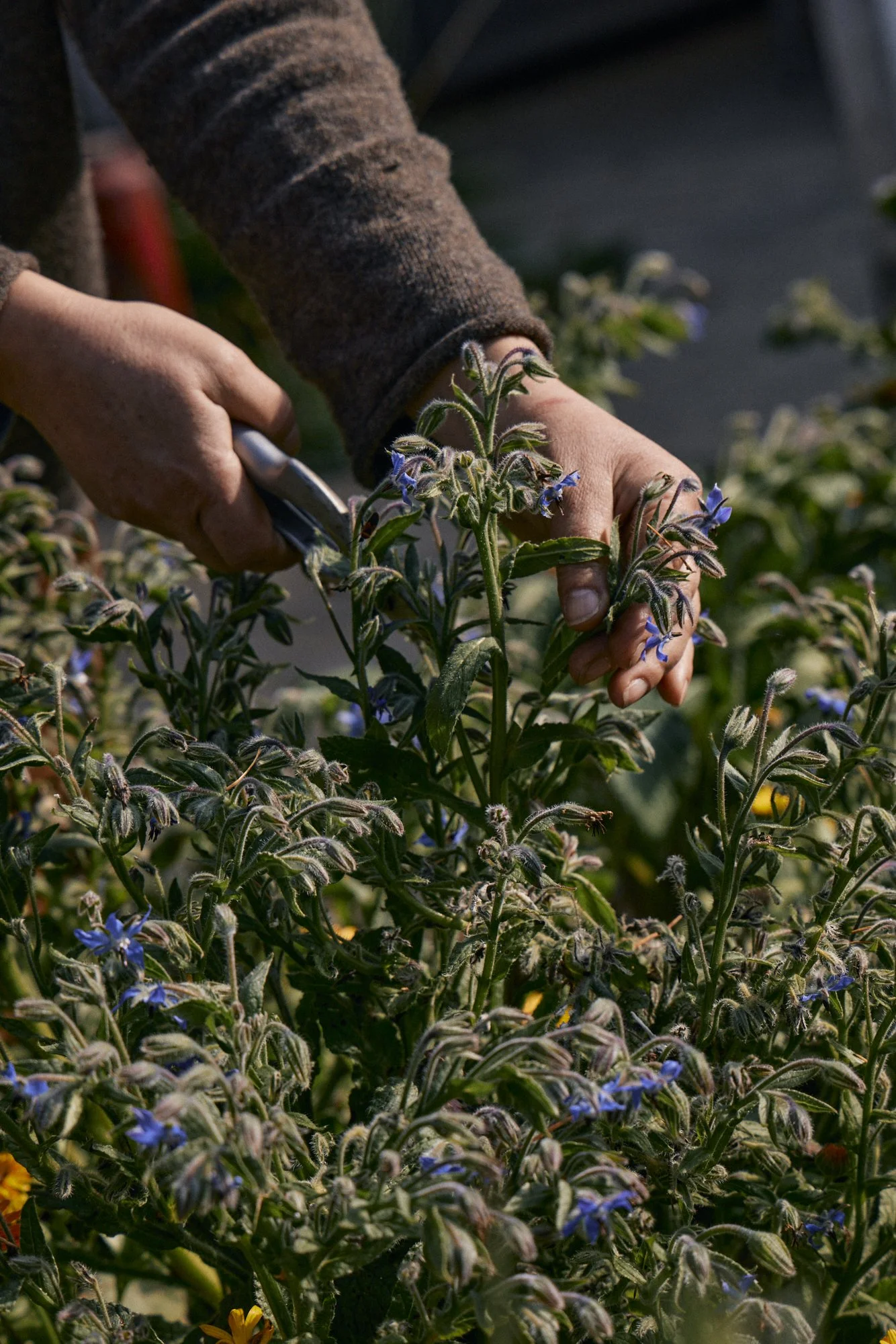
Curiosity, exploration and discovery
Growing things has always been my favourite way to ask questions. What happens if I plant garlic between the flowers? If I leave the seedheads standing through winter? If I turn off the irrigation and see who copes? Gardens, by nature, are experiments written in soil and time. I rarely follow the textbook to the letter, yet still, the garden grows – and that gives me courage to keep trying, adjusting, learning on the job.
Curiosity shows up in small daily explorations: a lap of the wicking beds in bitter weather, checking which plants are holding their nerve; a wander along the verge to see what self-seeded while I was busy elsewhere; a notebook scribble about which flower kept the bees busy longest. The garden keeps offering discoveries – a leaf my child holds up like a jewel, a volunteer plant in exactly the right place, a combination of scent and light that makes me stop mid-task and simply breathe. In a noisy world, growing things is how I keep my capacity for surprise alive.
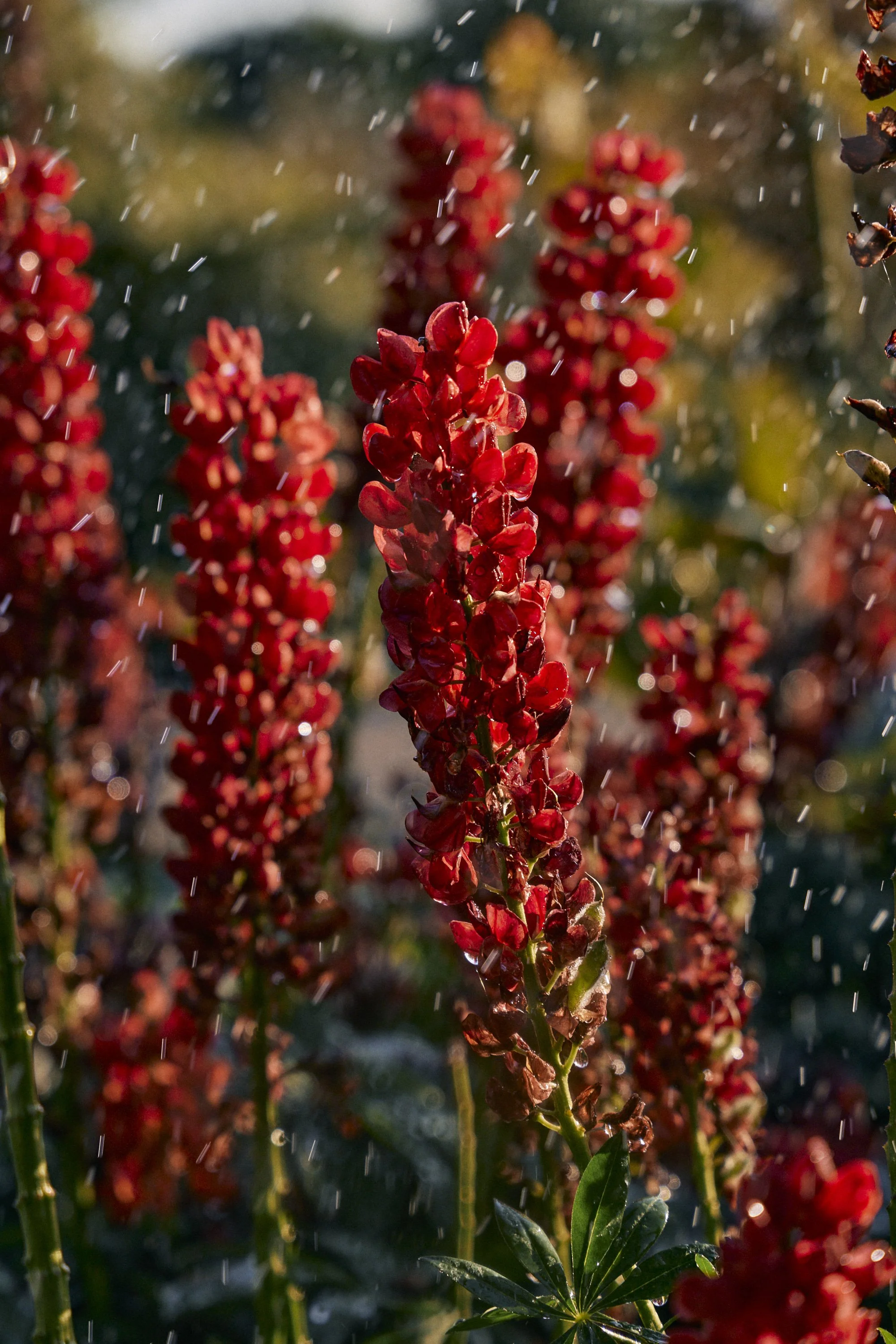
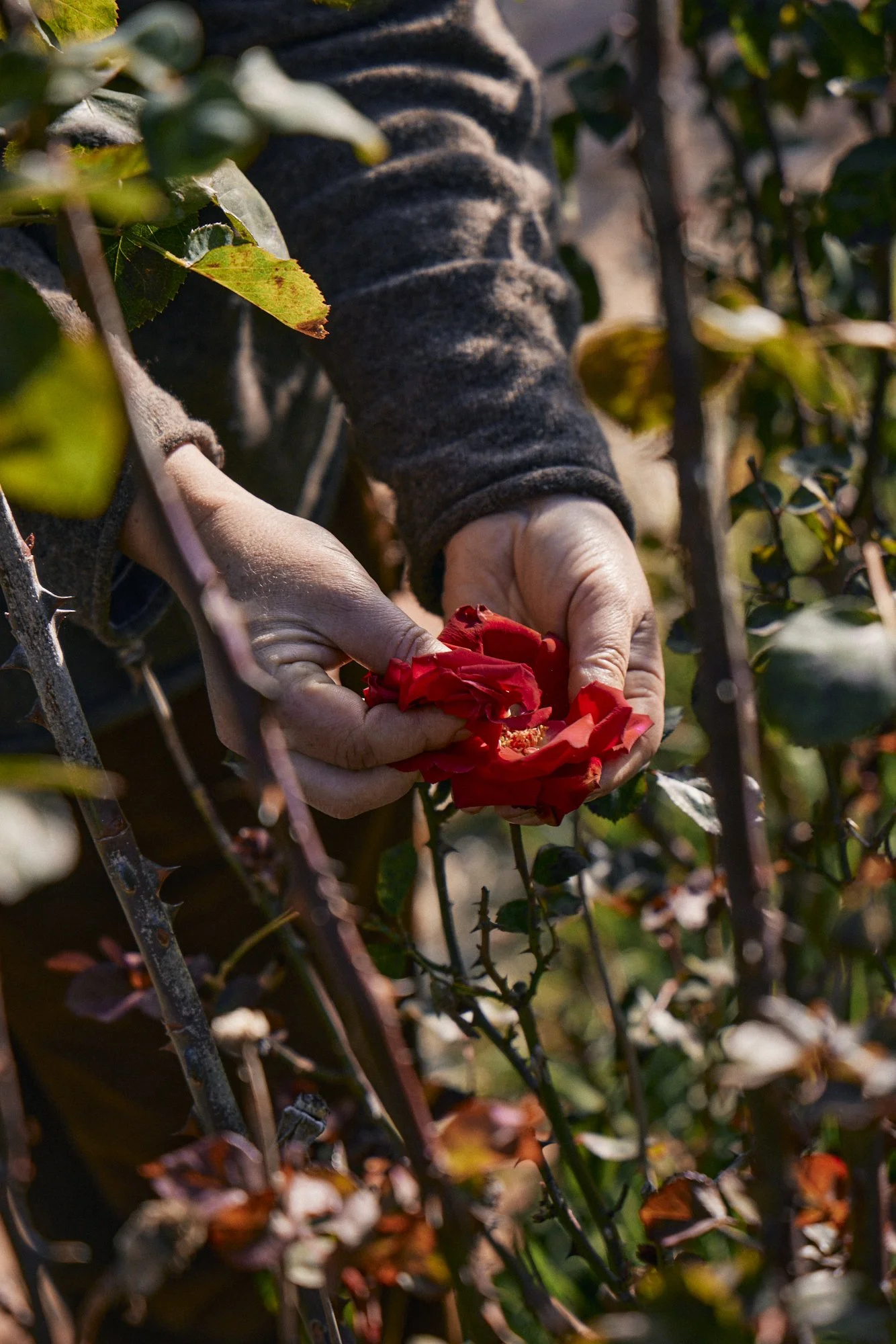
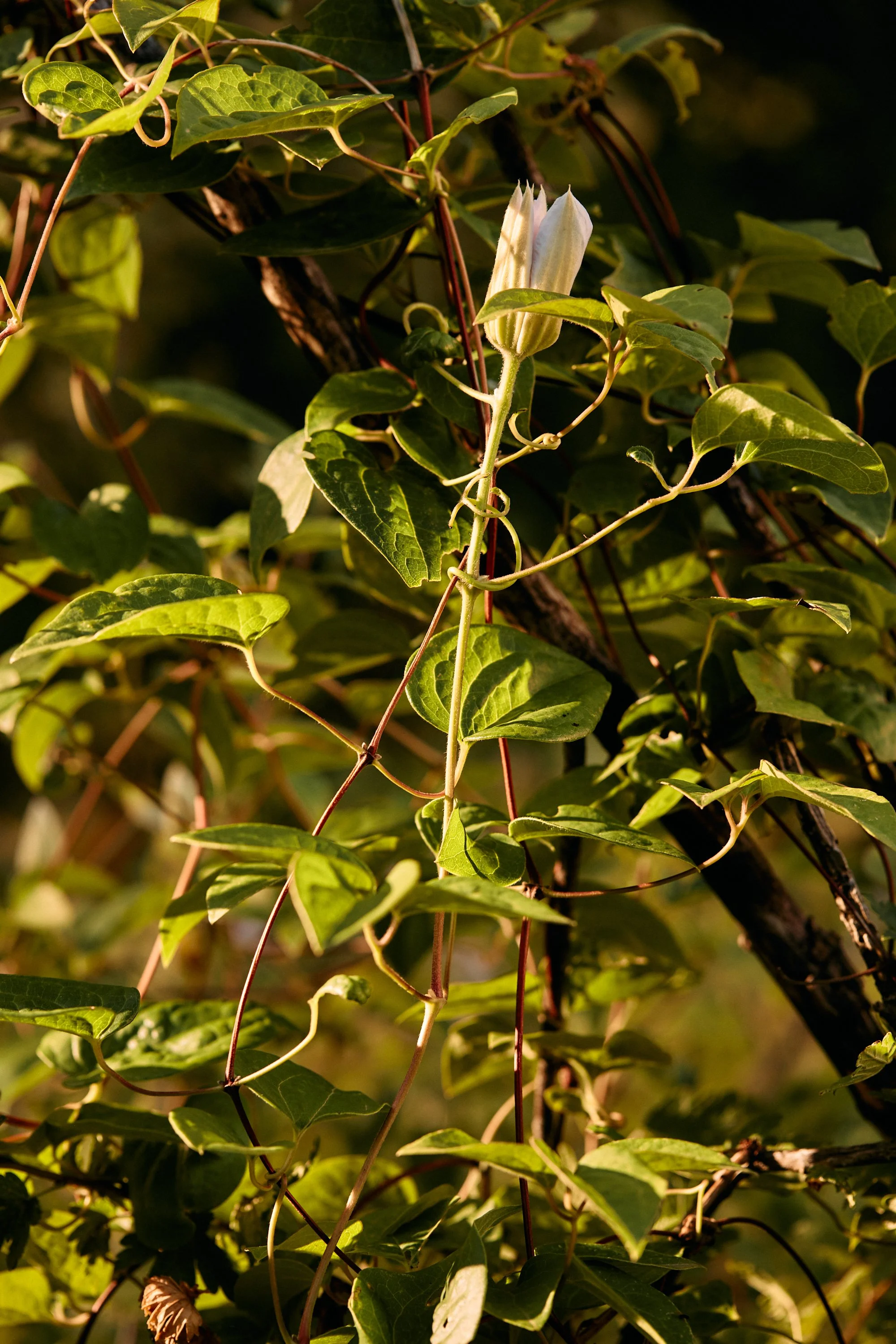
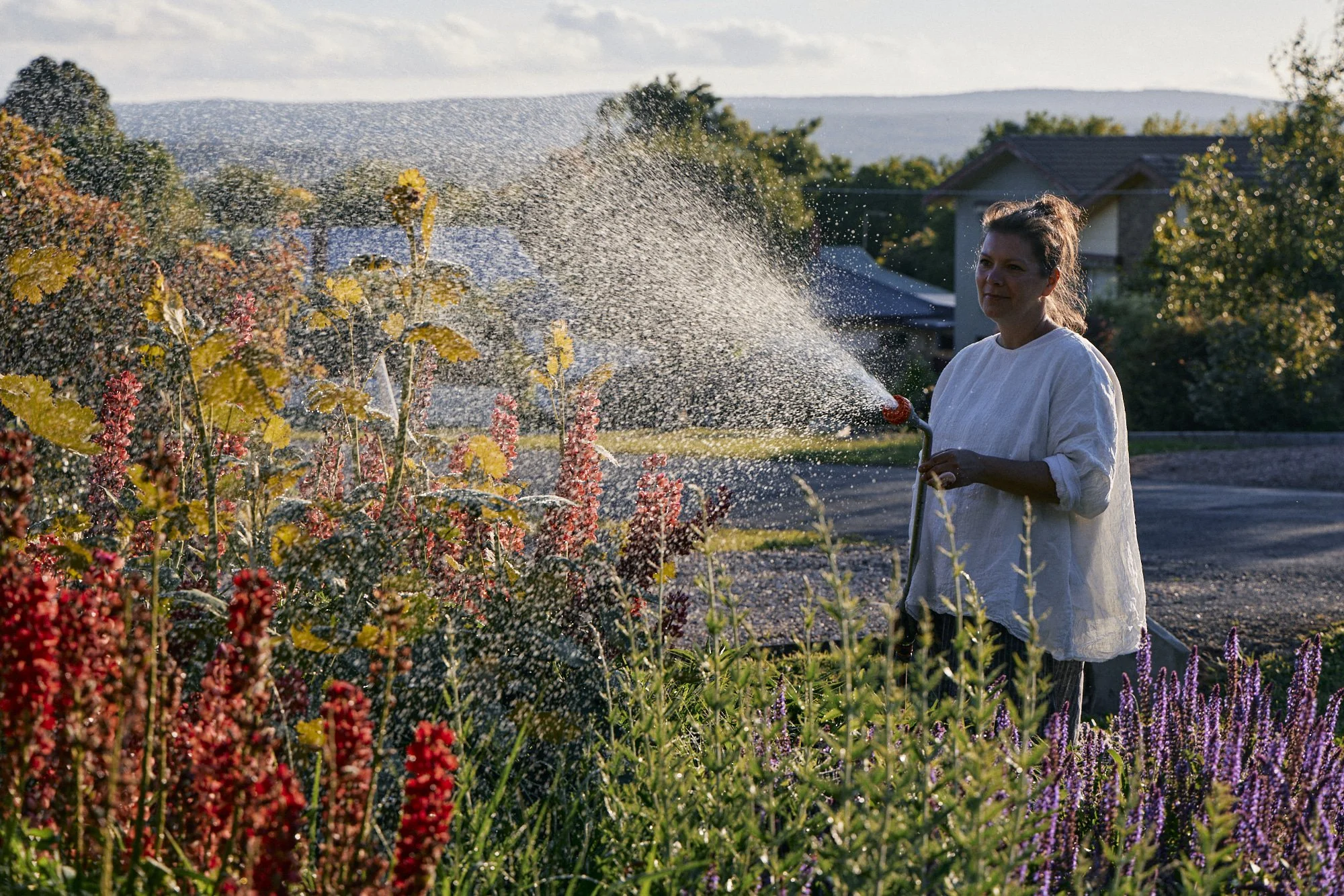
Beauty as a way of staying
There’s a misconception that beauty in the garden is indulgent, something to earn only after the “real work” is done. In my world, beauty is the real work – not in a decorative sense, but as a reason to keep showing up. The shape of morning light through grasses, the hum of bees in borage, the brush of lavender against a path – these are not extras, they are invitations.
When beauty is woven into the everyday, care stops feeling like a chore and becomes almost instinctive. I don’t step outside because I should; I step outside because some part of me longs to see how the fennel is catching the sun today, or whether the sweet peas have finally decided to open. Beauty turns maintenance into ritual, ritual into rhythm, and rhythm into a way of moving through a year that feels intentional and kind.
Growing one thing, and then more
So much of my work rests on a simple, almost disarmingly small idea: grow one thing. Not an entire garden overhaul, not a reinvention of your life, just one honest plant that fits inside the days you already have. A pot of parsley by the gate with a note that says, “Take some.” A single tomato on a sunny sill. A flower whose scent makes your shoulders drop each time you brush past.
For me, the profound power and contentment of growing things lives precisely there – in the way one plant can change how you see light, weather, time and yourself. You start noticing where the frost settles, where the wind sneaks through, which days you have energy to tend and which days a brief look and a deep breath are enough. From the outside, it doesn’t look like much. From the inside, it’s a quiet revolution: a decision to participate, to pay attention, to belong to the living world rather than stand apart from it.
That is where my childlike joy sits now – not in grand gestures, but in these repeatable, seasonal acts of care. A seed. A cutting. A single bed re-mulched before the rain. Each one is a small promise: I will grow one thing. And from that, for me at least, contentment keeps quietly, generously, growing.
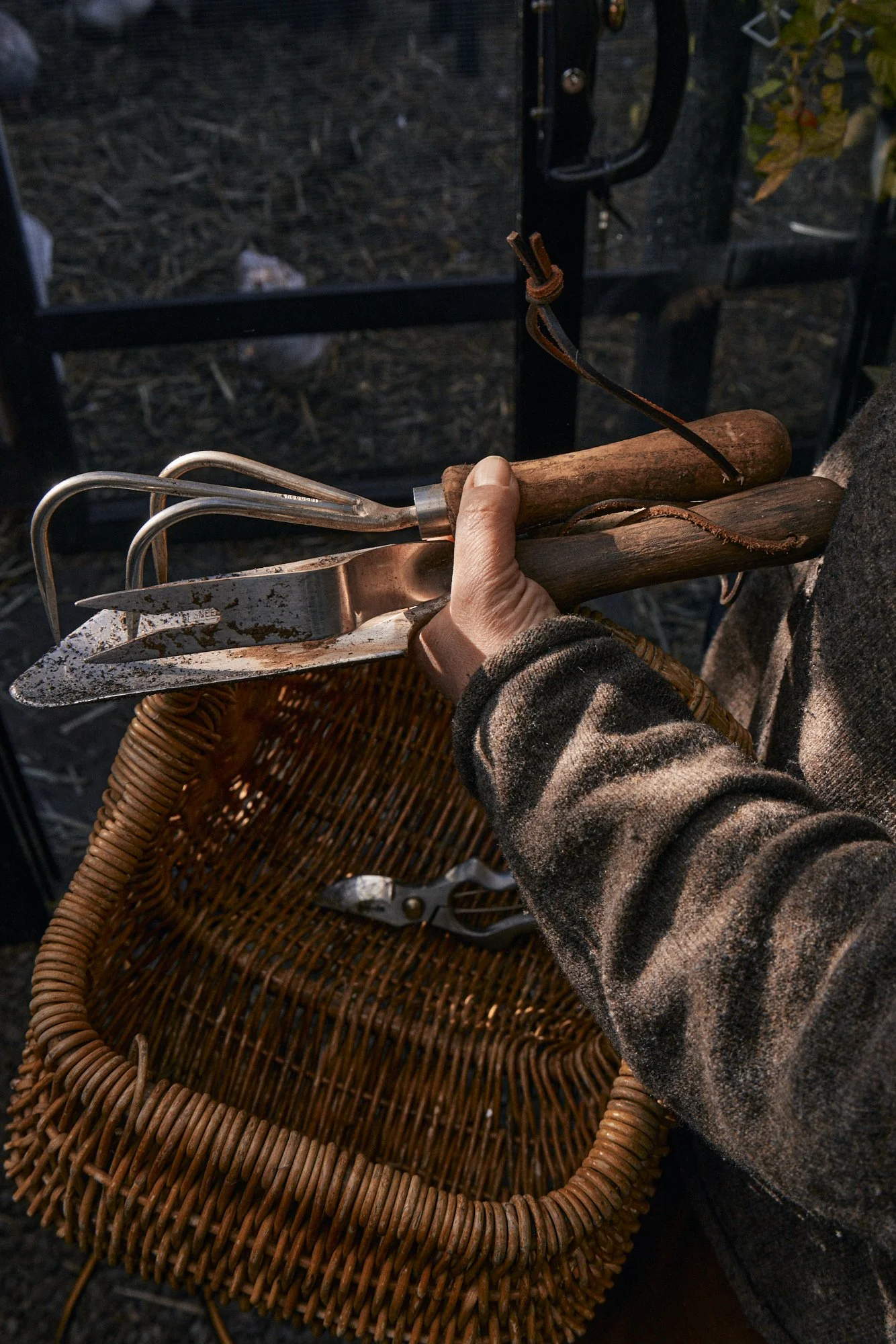
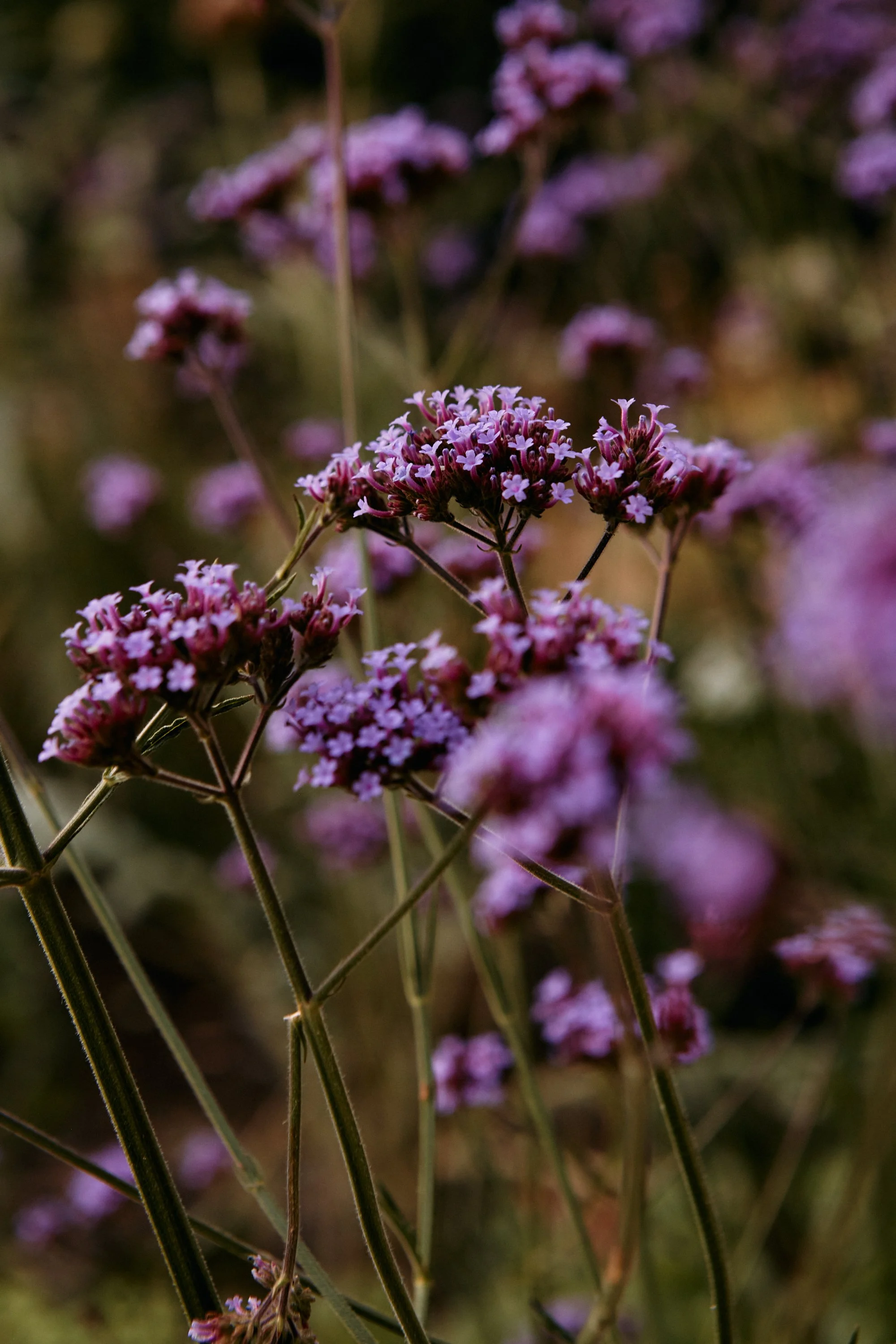
Continue your gardening journey with me
If you enjoy this kind of content, my workshops offer more detail and guidance on design, productivity and seasonal care.
If you are building your garden from home right now, my ebooks on Wicking Bed Gardens and Introduction to Backyard Chicken Keeping offer practical step by step guidance that pairs well with the workshops.
I share seasonal tips, behind the scenes at Little Cottage on a Hill, and new resources through my newsletter. Subscribe to receive my entire plant list from the garden as a personal thank you.
You may want to check out my related content below:
The Medicinal Garden Workshop with Caroline Parker & Natasha Morgan - a journey through the healing power of plants bringing them into your everyday life from your own garden that nurtures the body, mind, and soul.
Why I Grow. Why I Design. Why I Return. - Finding comfort in small daily acts.
Rooted in Reflection, Growing with Intention – Explore the intentionality behind creating a garden that serves both purpose and beauty.
Stay connected for more seasonal inspiration:
Instagram | Facebook | Gardenstead | LinkedIn | Pinterest | YouTube | Website | Newsletter
Thanks so much for following along.
Natasha xx
Romanesco: fractal beauty from the brassica bed
I harvested the first Romanesco heads this week and had to stop and stare.
Those luminous chartreuse spirals feel like a little lesson in pattern and patience. I grow Romanesco because it is delicious, beautiful, and surprisingly resilient in a cool temperate garden like Daylesford.

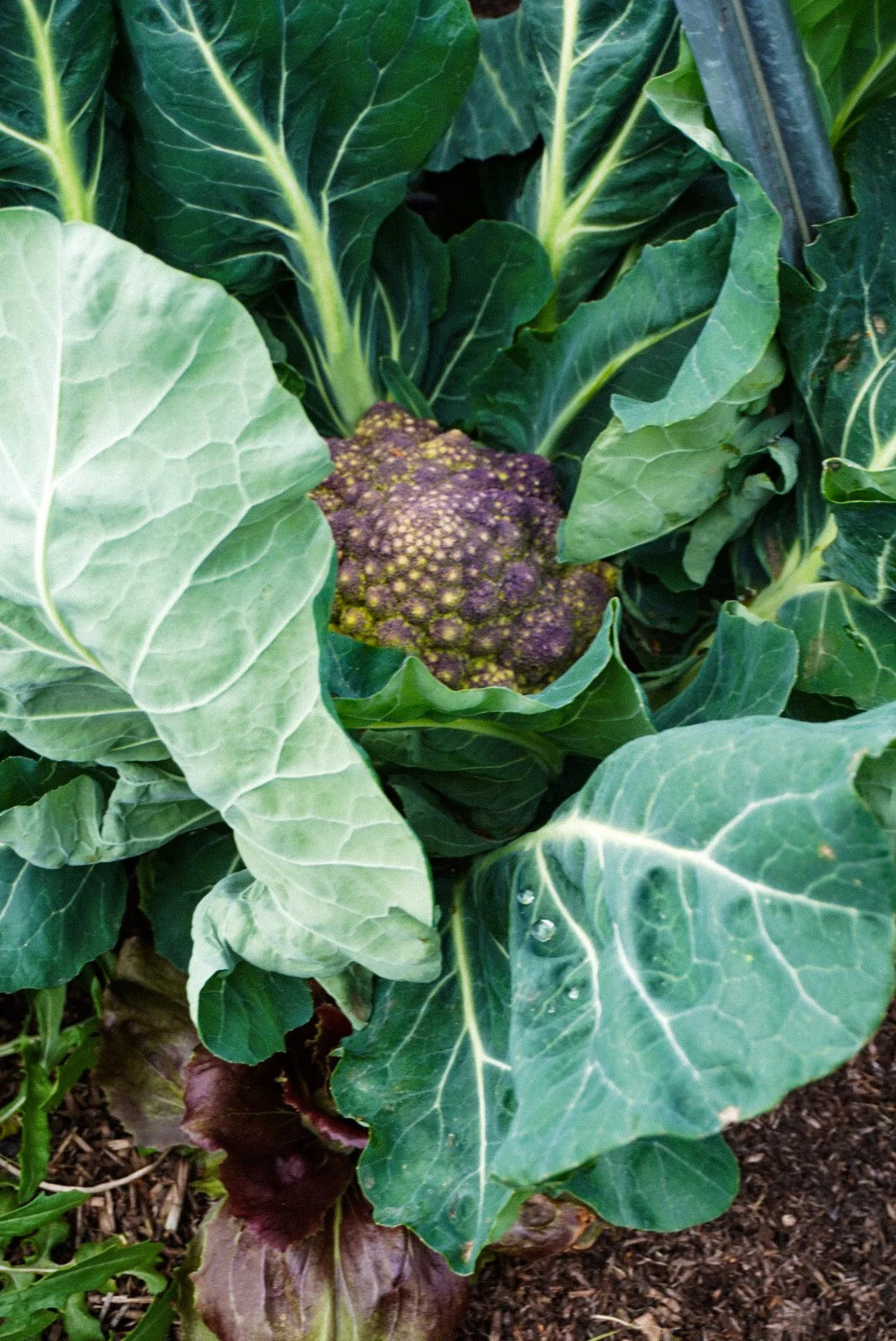
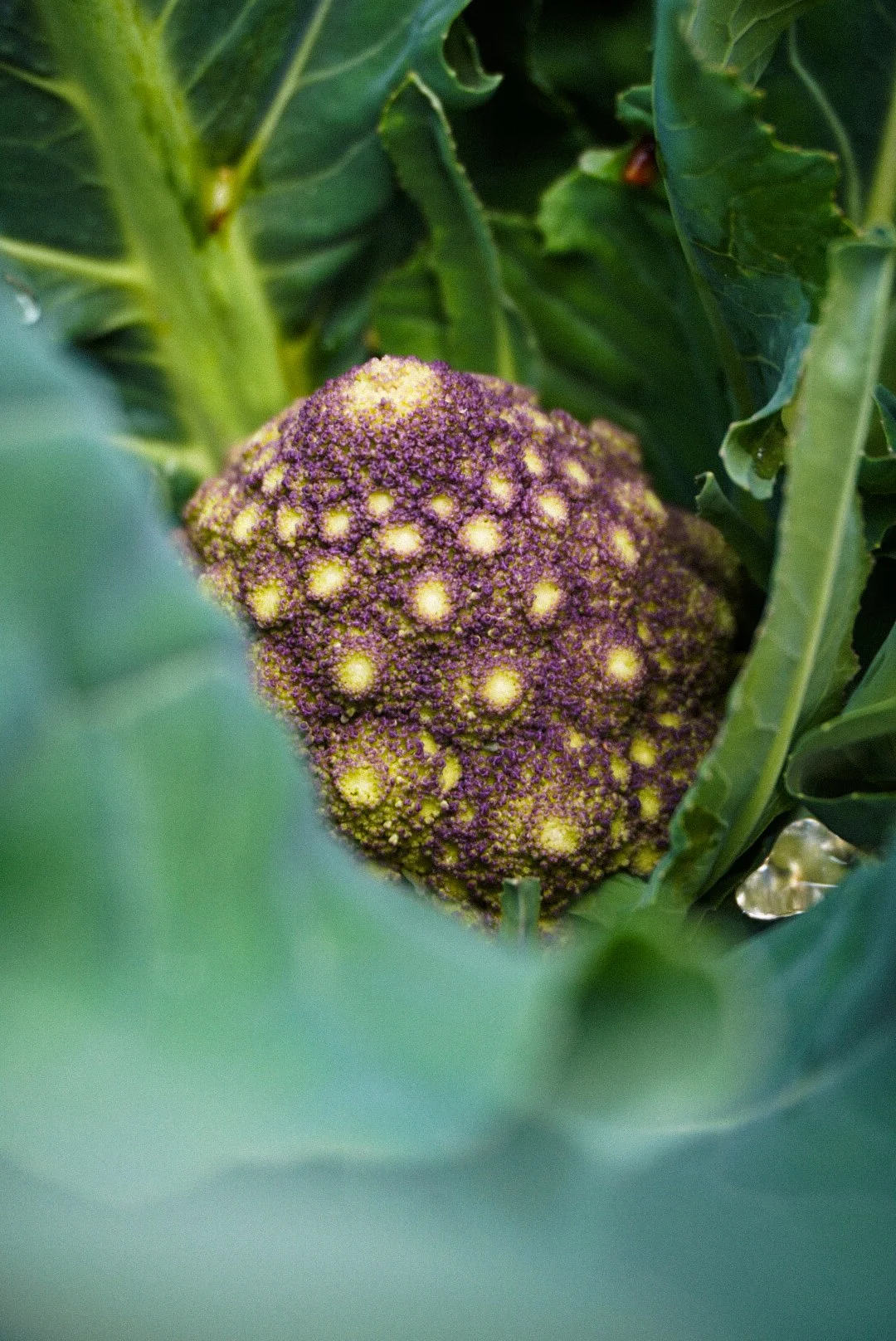

What is romanesco
Romanesco is a brassica that sits between cauliflower and broccoli. It cooks like cauliflower, with a flavour that is slightly sweeter and nuttier. The texture is tender but holds shape beautifully, which makes it perfect for roasting and for dishes where you want structure on the plate.
Why I plant it
I like plants that serve more than one role. Romanesco offers food, sculptural presence, and a steady supply of leaves for the kitchen (and chooks!). The heads become seasonal markers in the bed, and when they finally appear it feels like the garden offering a small celebration.
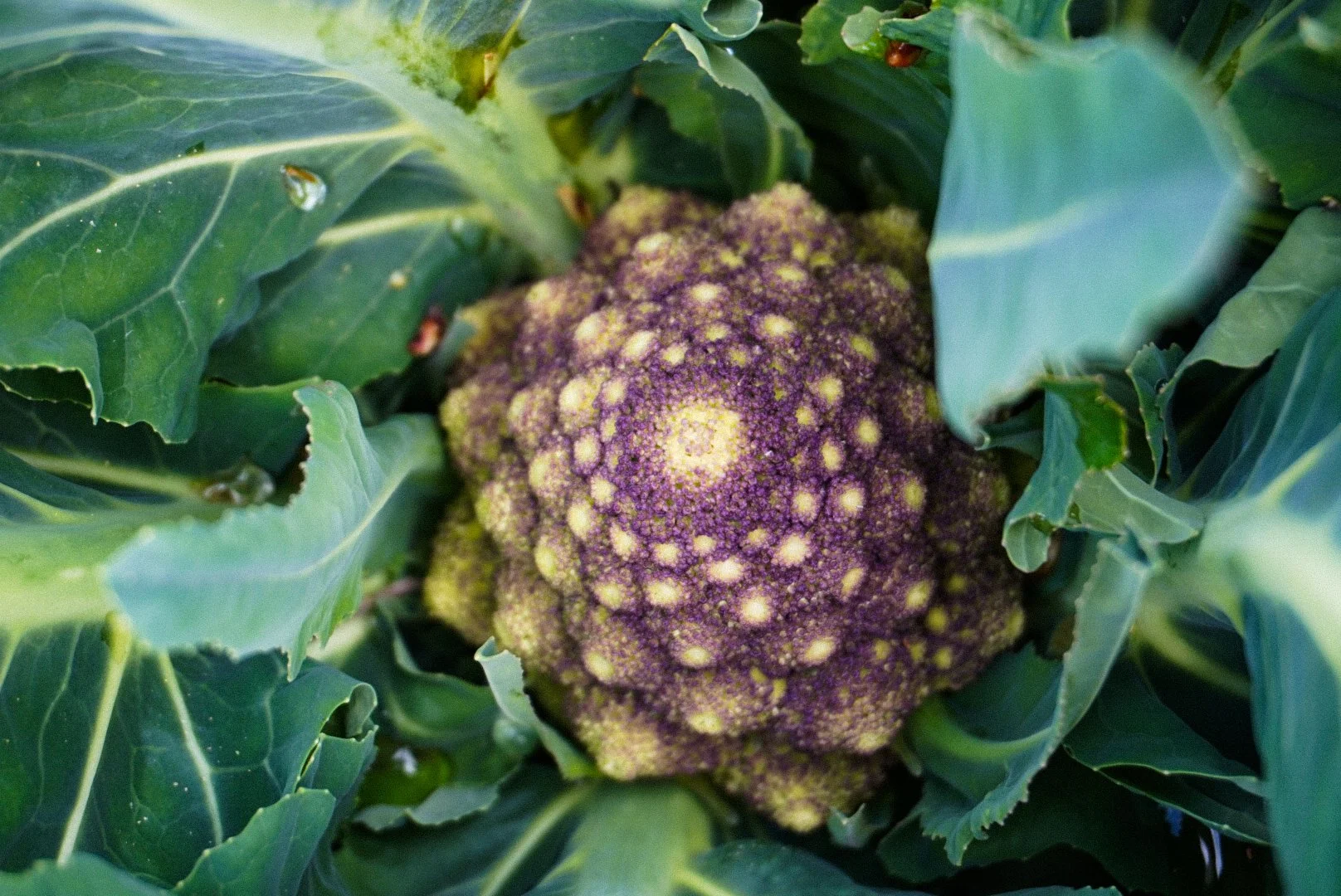
How I grow romanesco in a cool temperate garden
Timing
Sow in late summer to early autumn for spring harvests. In cooler pockets, start seed in trays under cover, then transplant once seedlings are sturdy.
You can also sow in late winter for late spring to early summer heads if your season allows. Stagger a few sowings to spread the harvest.
Site and soil
Full sun and rich, living soil are non-negotiable. I prep beds with compost and a light sprinkle of a balanced, organic fertiliser, then mulch after transplanting.
Brassicas like consistent moisture. My wicking beds hold an even soil profile which helps prevent stress and buttoning. Water at the base rather than overhead to discourage disease.
Spacing
Give each plant room to develop a full head. I use 45 centimetres between plants and about 45 centimetres between rows. Good airflow is essential.
Protection and care
Cabbage white butterflies adore brassicas. I keep insect exclusion netting over young plants. If you are not netting, check daily and remove any green caterpillars by hand.
Feed little and often. I alternate seaweed and compost teas through the season and keep mulch topped up to regulate soil temperature.
Romanesco appreciates cool nights for head formation. If a sudden warm spell arrives, keep water consistent and shade the bed lightly in the afternoon if needed.
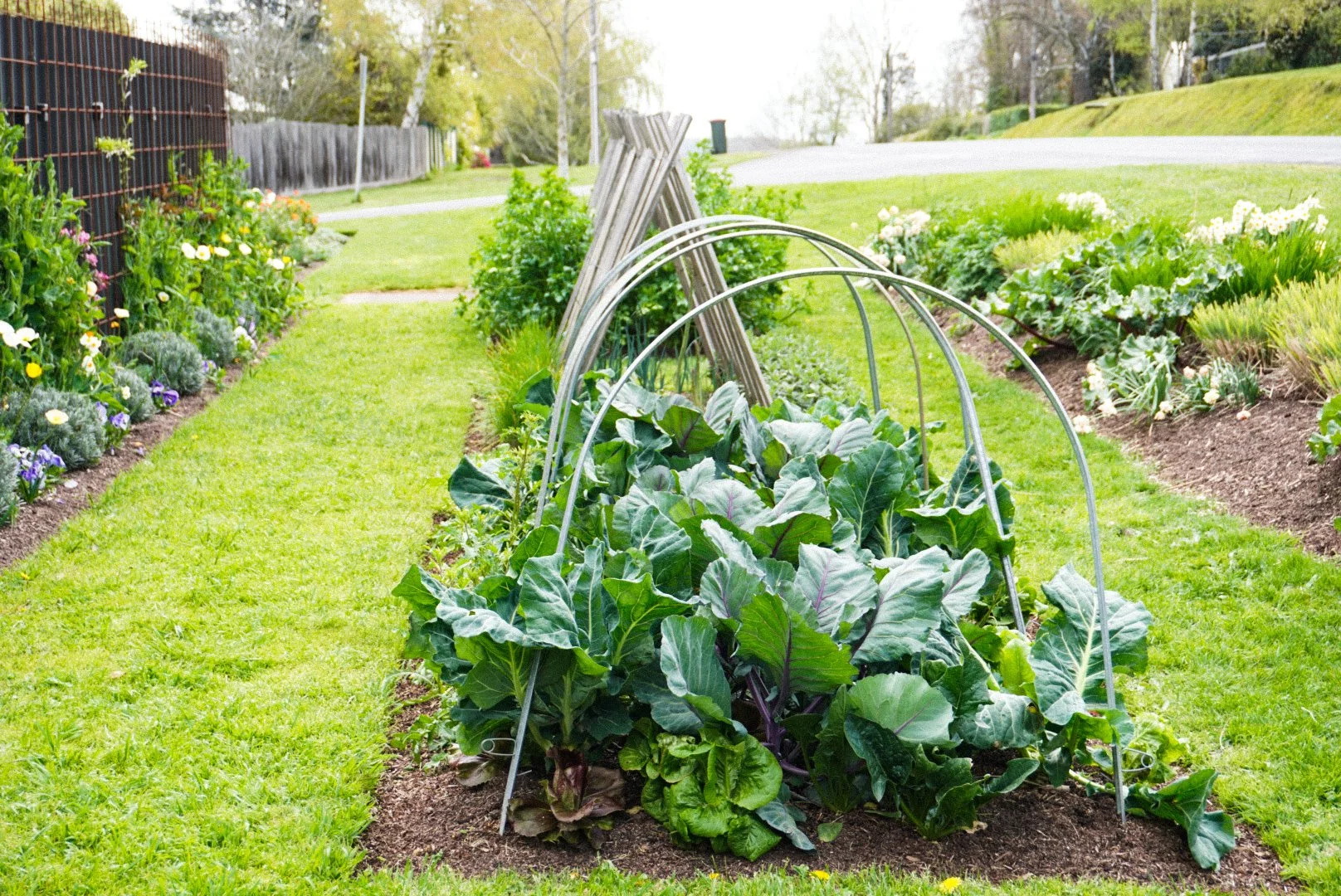
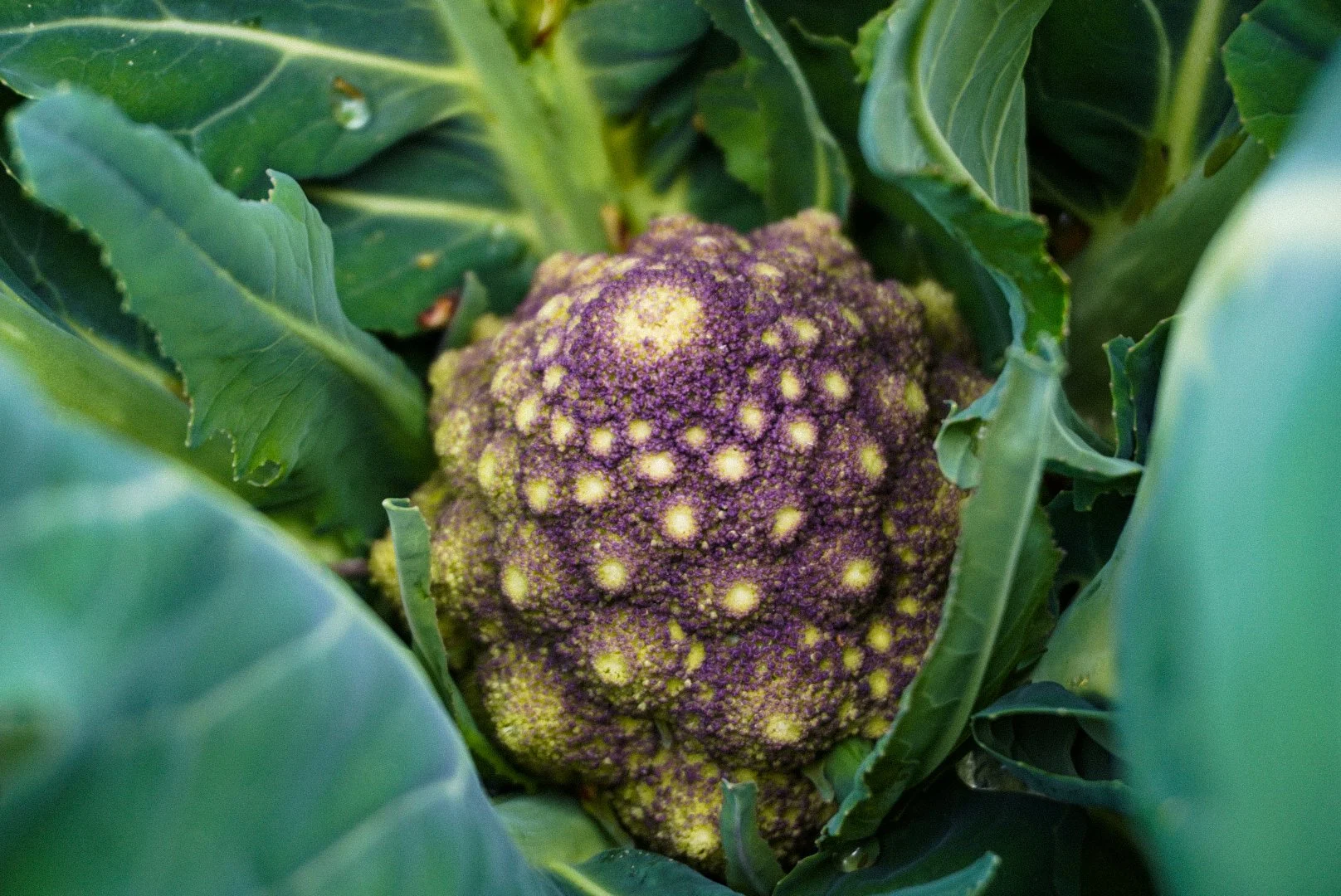
Rotation and companions
Rotate brassicas yearly to protect soil health and reduce disease.
Companion plant with dill, calendula, and sweet alyssum to support beneficial insects and soften the edge of the bed. I’ve planted this lots with spinach, lettuce and radicchio for a diverse and thriving polyculture
Harvest and storage
Pick when the head is tight, uniform, and firm. Use a sharp knife and keep a few leaves attached to protect the florets.
Store in the crisper wrapped loosely. Eat within a few days for best flavour.
Small-space tip
Romanesco is a statement plant. If you only have room for one, give it pride of place at the end of a bed or in a large wicking container and underplant with herbs or salad greens.
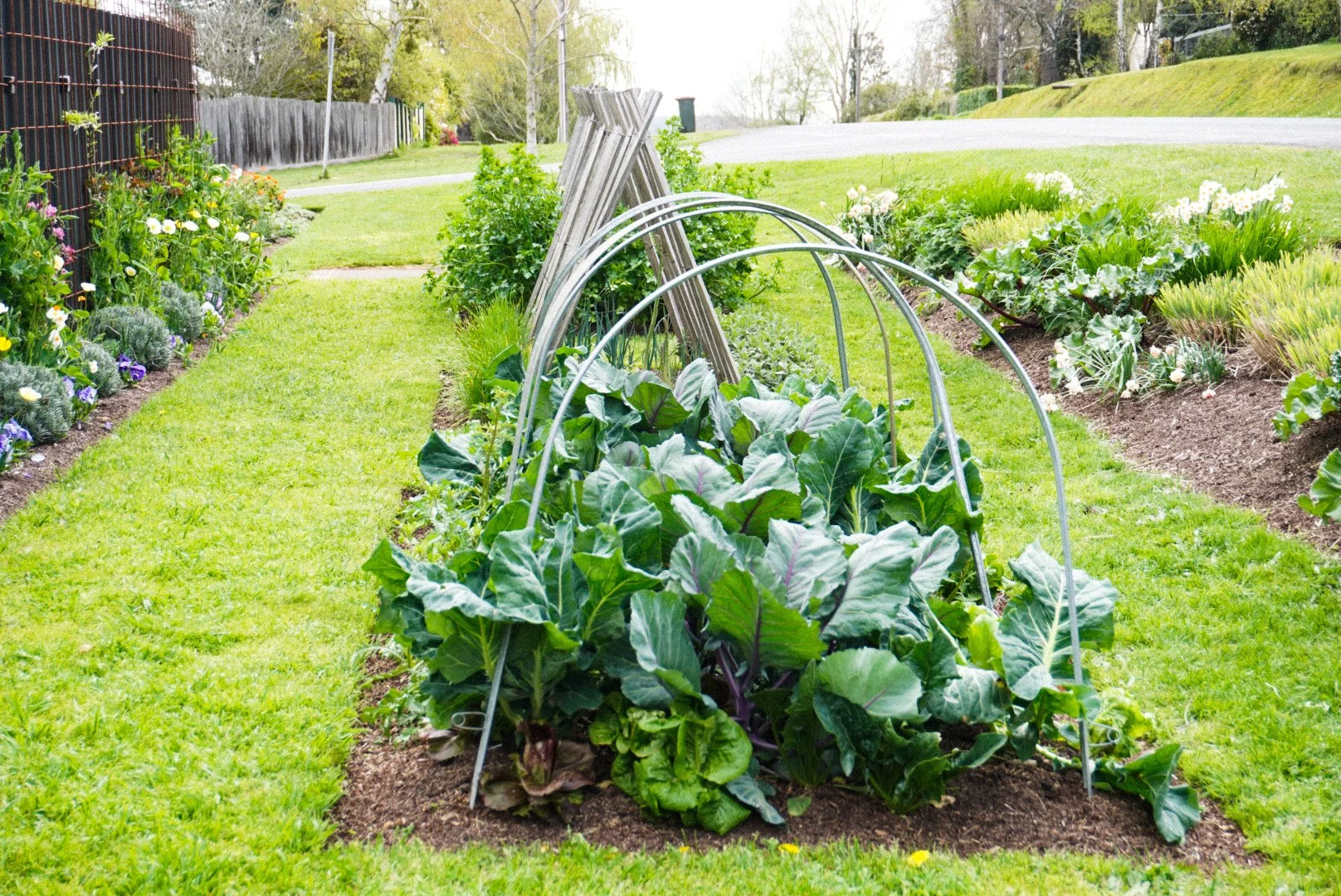
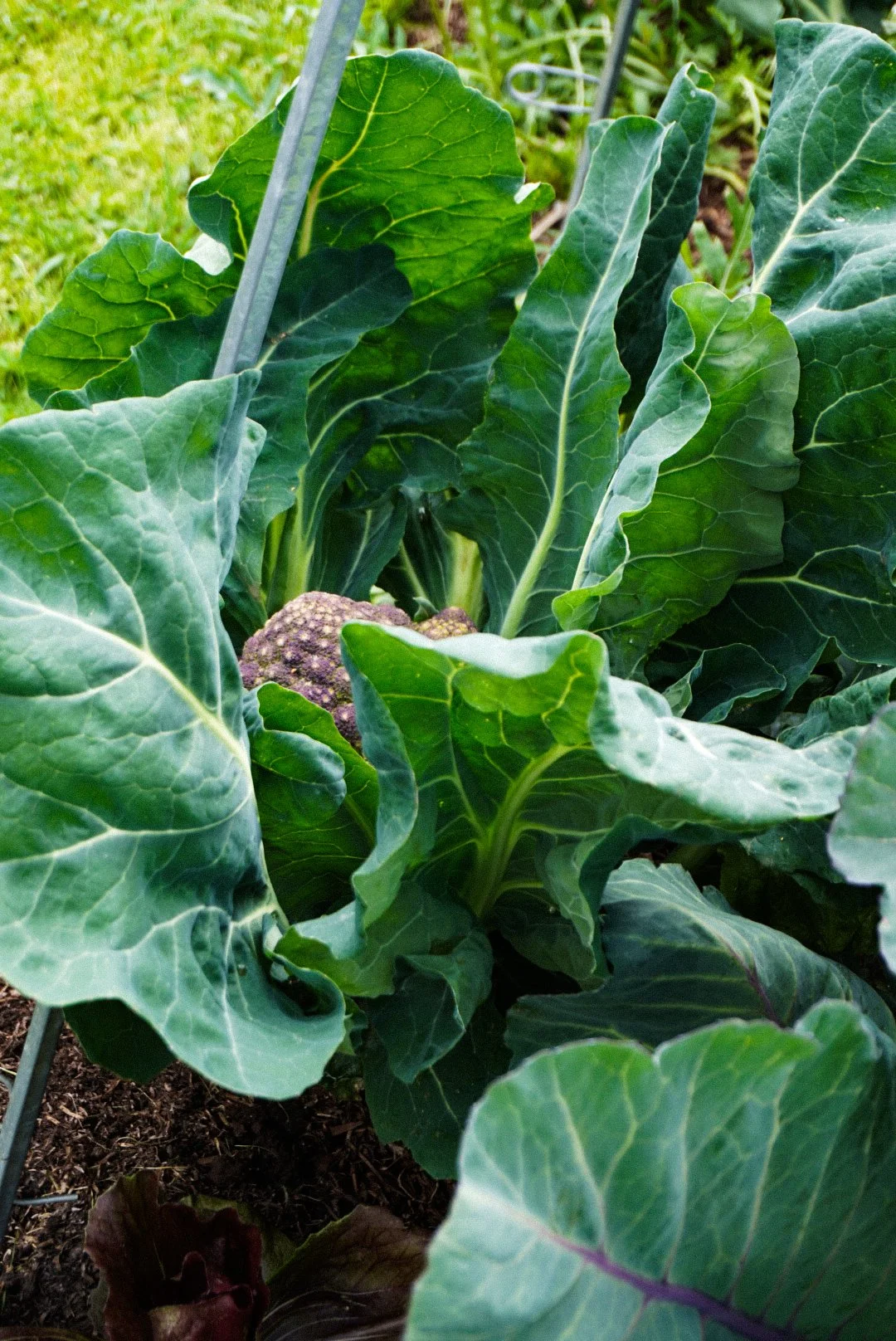
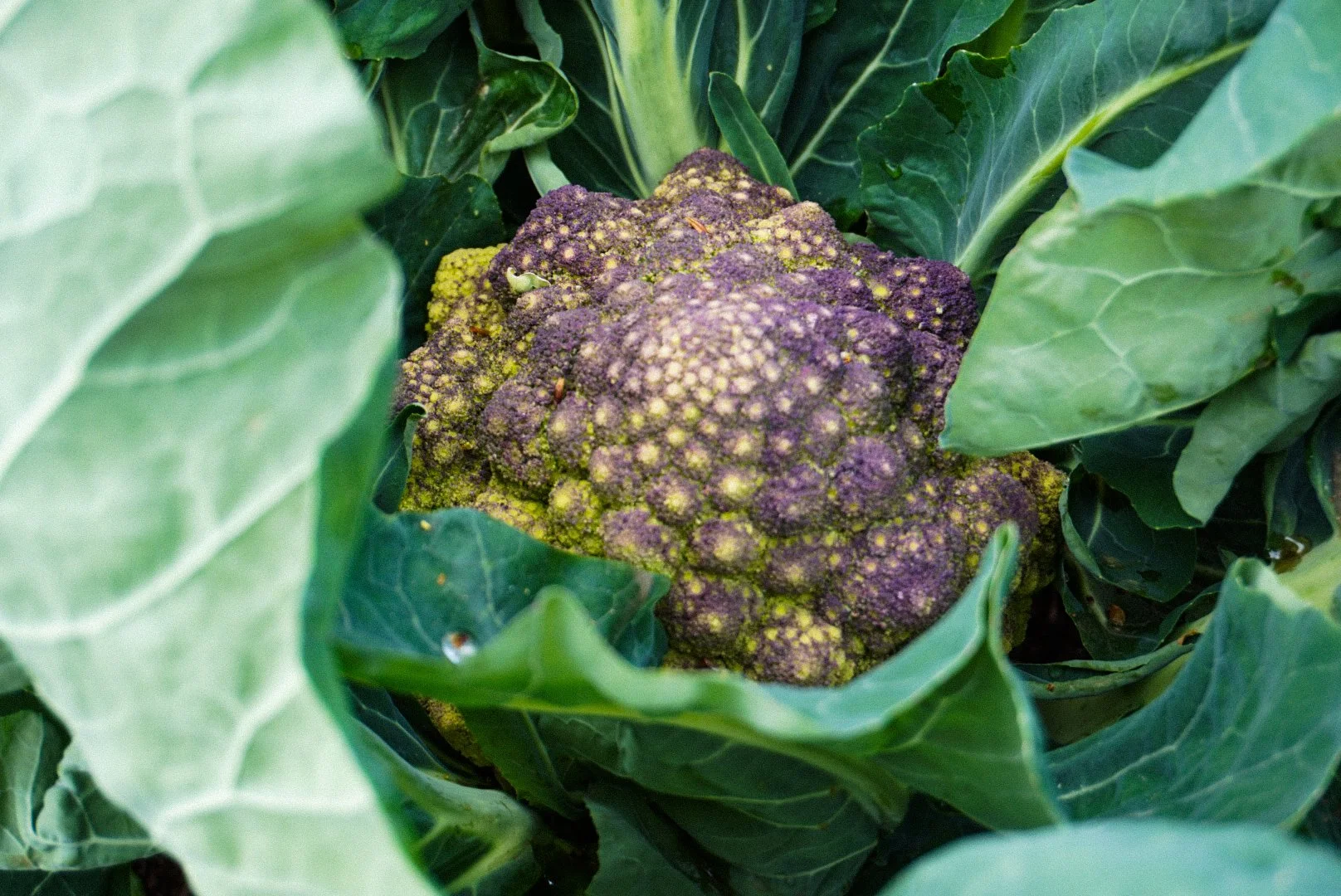
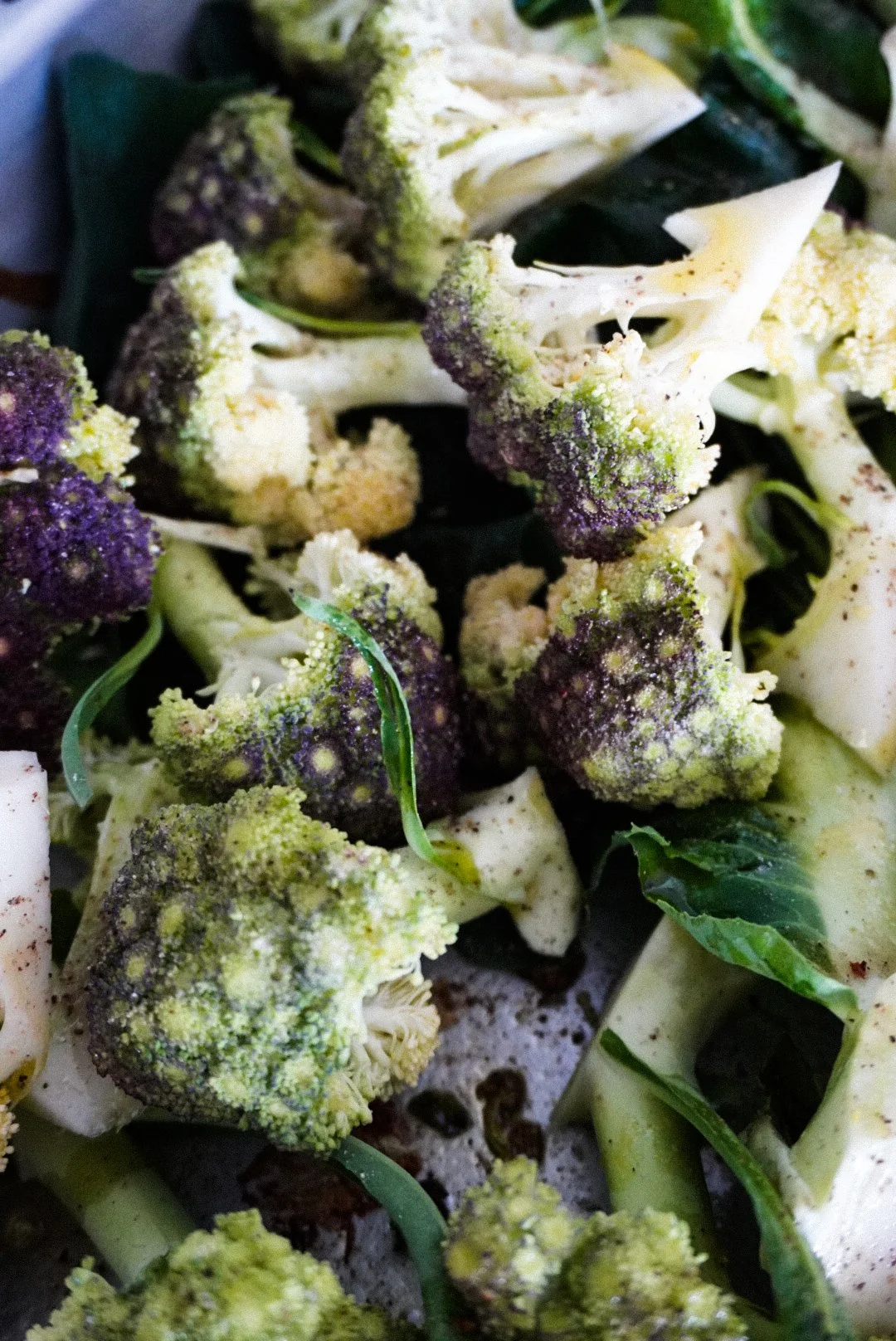
Kitchen notes and serving suggestions
Roasted romanesco with yoghurt tahini and pomegranate molasses
Break into florets. Toss with extra virgin olive oil, sea salt, and cracked pepper. Add a Middle Eastern spice profile such as cumin, coriander, or za’atar. Roast hot until caramelised at the edges. Finish with a yoghurt and tahini drizzle, a thread of pomegranate molasses, fresh herbs, and toasted nuts.
More ways to serve
Toss warm florets with anchovy, lemon zest, chilli, and breadcrumbs.
Steam until just tender, then dress with olive oil, lemon, and parsley for a simple side.
Cut into small florets for a quick tray bake with chickpeas and red onion.
Use the leaves as you would kale. Slice and sauté with garlic and a squeeze of lemon.
Cook’s tip
Do not overcook. Romanesco is at its best when the spirals stay intact and there is still a little bite.

Sustainability notes
I like to use the whole plant. The leaves are excellent, the core can be thinly sliced for stir-fries, and any trim goes to the chocks, compost or worm farm. If a plant wants to flower and you do not need seed, let it. The bees will thank you.
Troubleshooting at a glance
Tiny or loose heads: heat or stress. Keep water steady, mulch well, and plant for the cool end of your season.
Caterpillars: net early, hand-pick, and encourage beneficial insects with companion flowers.
Yellowing leaves: a sign of nutrient drawdown. Side-dress with compost and water in.
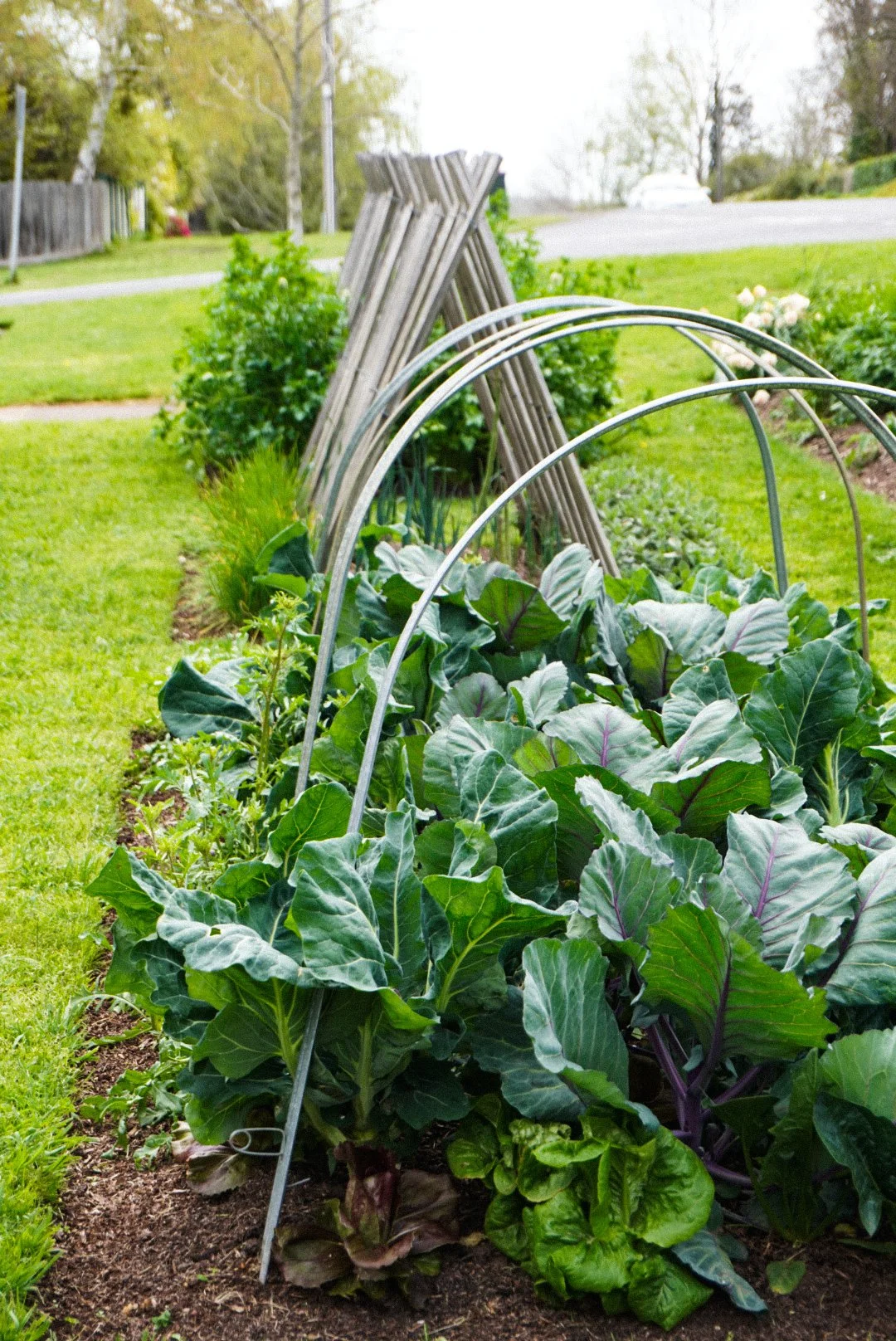
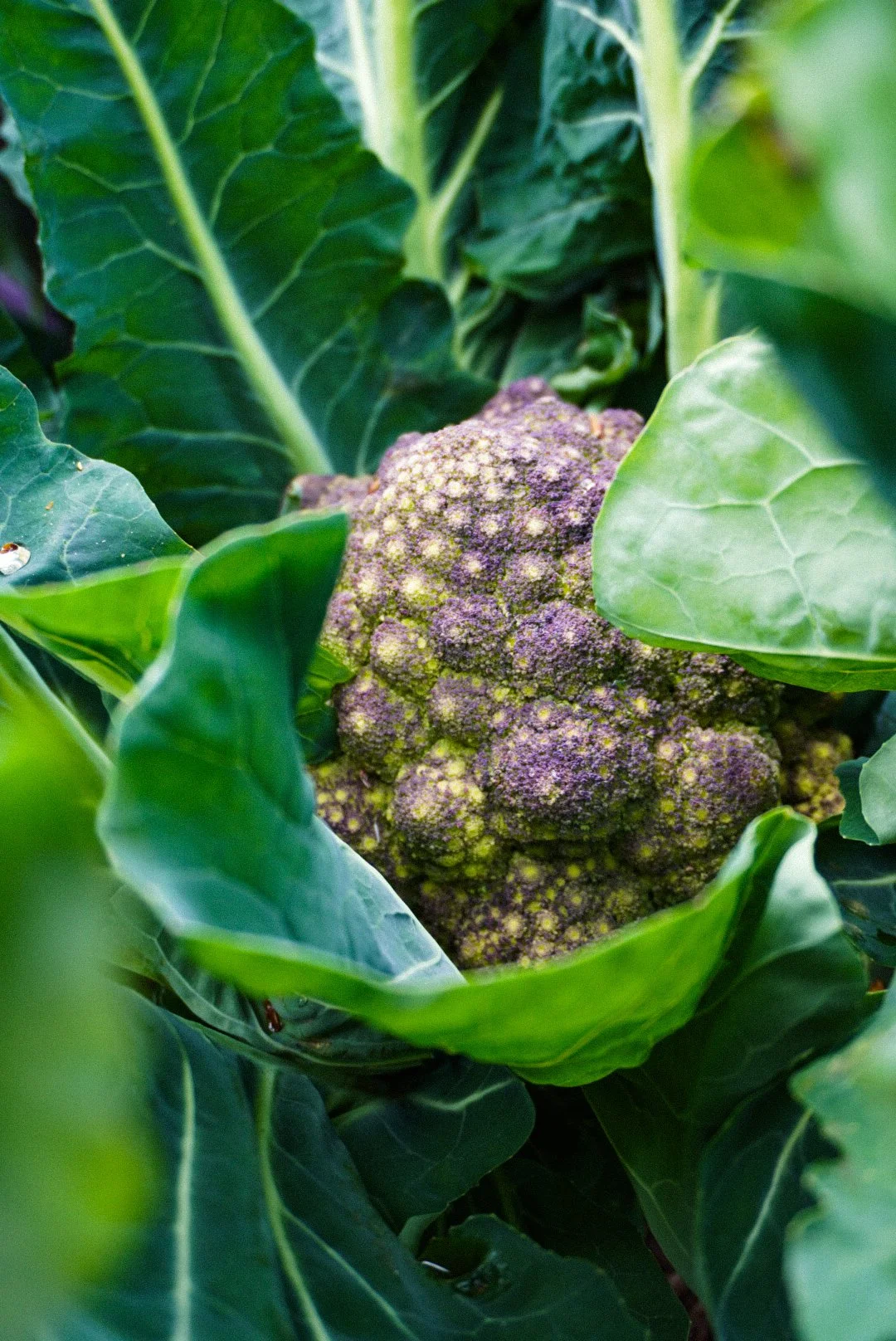
Continue your gardening journey with me
If you enjoy this kind of content, my workshops offer more detail and guidance on design, productivity and seasonal care.
If you are building your garden from home right now, my ebooks on Wicking Bed Gardens and Introduction to Backyard Chicken Keeping offer practical step by step guidance that pairs well with the workshops.
I share seasonal tips, behind the scenes at Little Cottage on a Hill, and new resources through my newsletter. Subscribe to receive my entire plant list from the garden as a personal thank you.
You may want to check out my related content below:
Rooted in Reflection, Growing with Intention – Explore the intentionality behind creating a garden that serves both purpose and beauty.
The Power of Noticing: How a Garden Wander Led Me to Morels – Explore the quiet magic of noticing the small wonders that grow in your garden.
If You Could Learn Anything From Me This Year, What Would It Be? – Discover what I’ve been reflecting on the workshops I’ve shared over the years—and dreaming into what might come next.
Stay connected for more seasonal inspiration:
Instagram | Facebook | Gardenstead | LinkedIn | Pinterest | YouTube | Website | Newsletter
Thanks so much for following along.
Natasha xx
October garden tasks for Australian climates
October brings a sense of momentum in the garden.
Soil is warming, days are stretching, and spring growth is accelerating. This is the month to keep sowing steadily, build structure, and prepare for the abundant months ahead.


Shared tasks for all climates
These are the October jobs I keep as my base checklist:
Mulch to lock in moisture and protect warming soil.
Feed fruit trees and top-dress beds with compost.
Plant out spring annuals, evergreens, and citrus while soil is still soft.
Tie up climbing crops and trellis where needed.
Pinch tips on herbs such as basil to encourage bushier growth.
Keep sowing in succession for a continuous harvest.
Watch for pests and act early with gentle, natural control.
Water deeply and less often to encourage strong root systems.


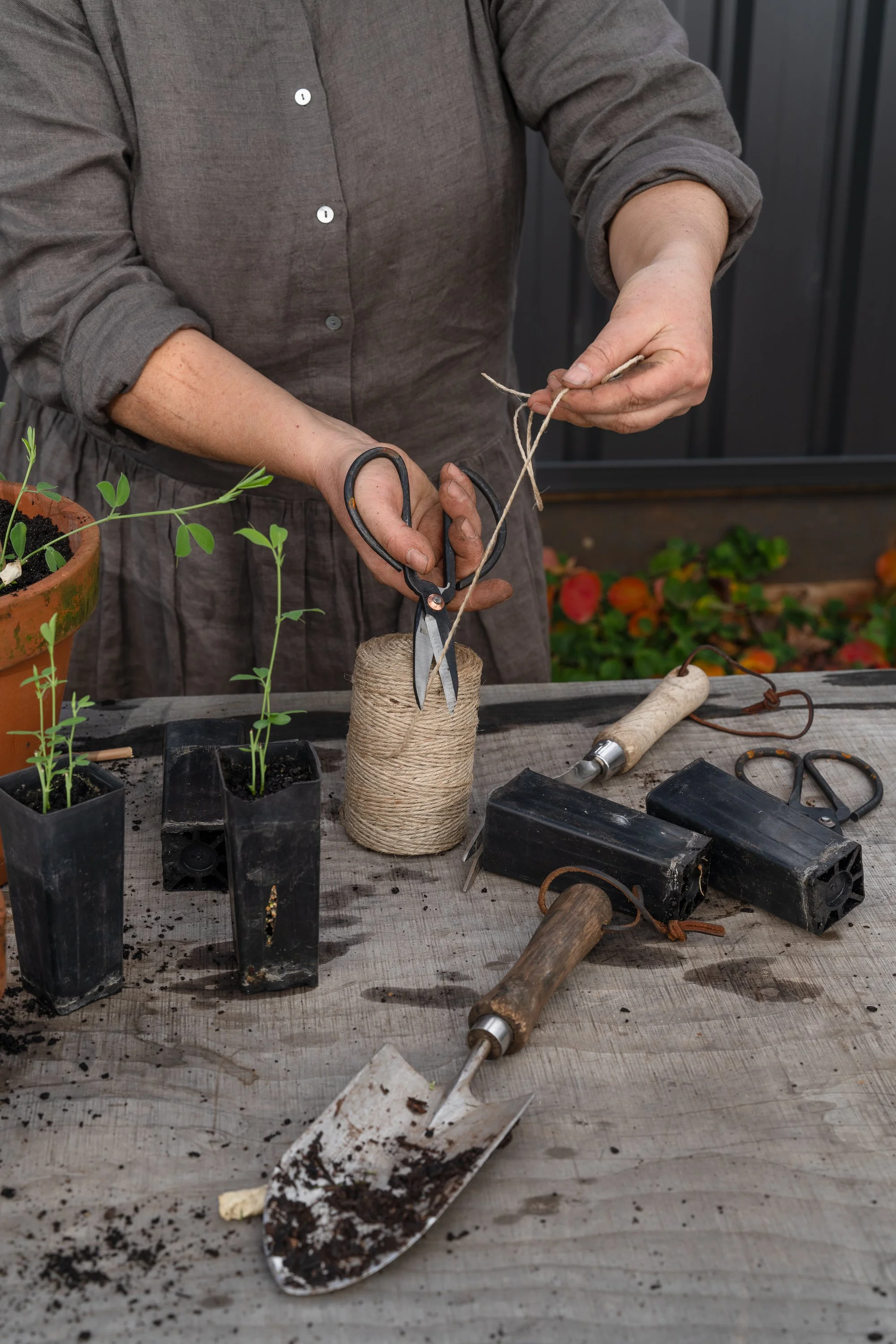
Seeds and seedlings by climate
Here are the October highlights by climate.
Temperate
Warm season crops take off now.
Try: tomatoes, basil, beans, cucumber, zucchini, pumpkin, corn, melons, capsicum, eggplant, lettuce, rocket, silverbeet. Harden off seedlings and plant out once frost risk has passed.
Cool and alpine
Frosts may still linger in higher areas, so stay watchful.
Try: beetroot, cabbage, cauliflower, kale, peas, silverbeet, spring onions, radish. Start warmth lovers like tomatoes, basil, zucchini, and corn in trays and transplant once conditions settle.
Subtropical
Conditions are reliably warm, with storms possible along the coast.
Try: beans, cucumber, capsicum, eggplant, pumpkin, corn, okra, melons, sweet potato, taro, basil, coriander, dill. Plant passionfruit and keep mulching heavily.
Tropical
The build-up towards the wet season begins, with increasing humidity.
Try: snake beans, cowpeas, okra, zucchini, sweet corn, sweet potato, taro, basil, coriander. Shade cloth or afternoon protection helps tender crops.
Arid
Heat is climbing quickly, so protect soil and conserve water.
Try: tomatoes, capsicum, eggplant, zucchini, pumpkin, melons, okra, corn, basil, oregano. Plant in cool parts of the day and mulch deeply.
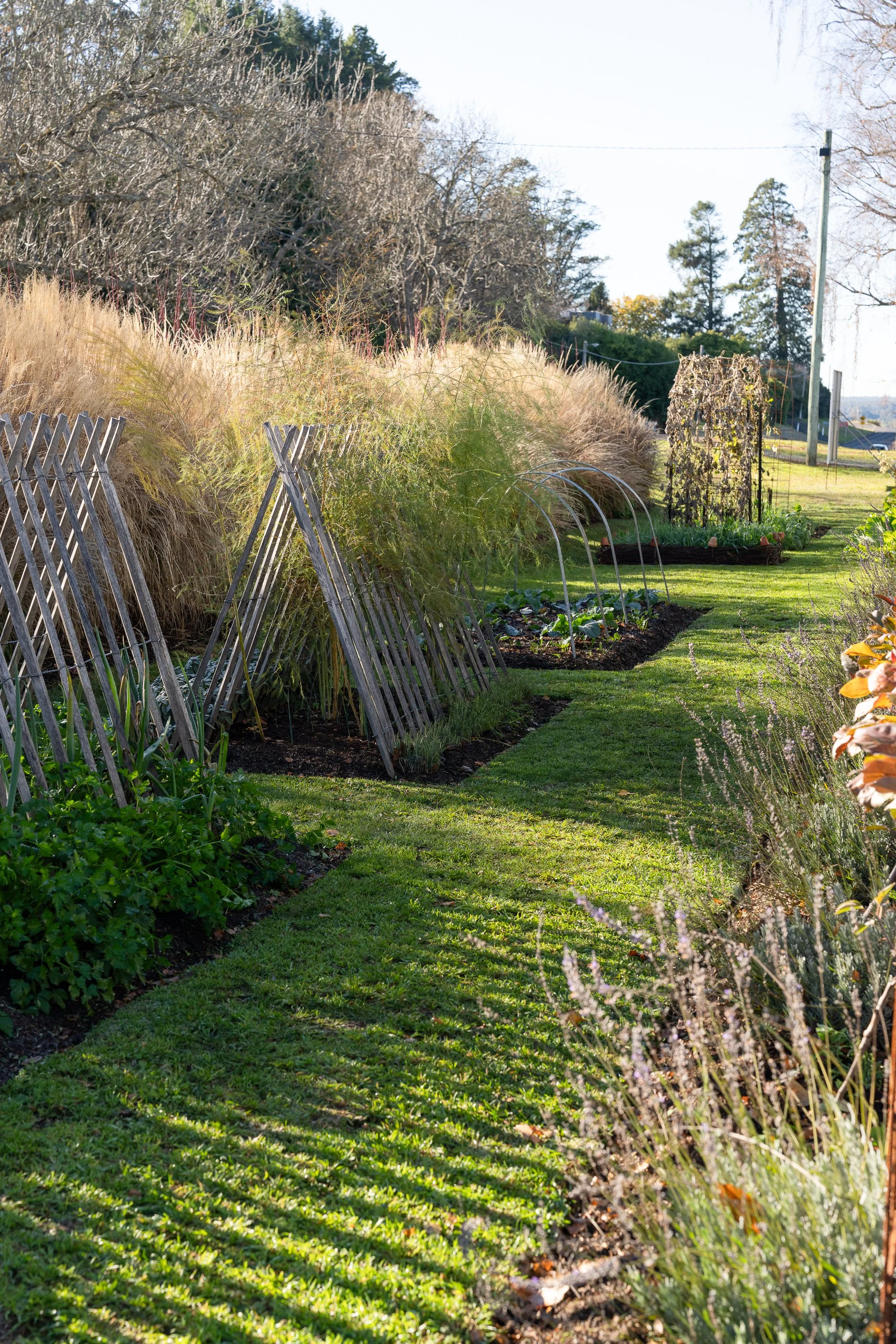


How I work with October
I see October as the turning point of spring — the garden shifts from tentative beginnings to full momentum. I keep sowing little and often, making sure I’m not overwhelmed all at once. I also start building in structure now: staking tomatoes, weaving in trellises, and tying up climbers before they surge. It’s about keeping ahead of growth so that abundance feels generous rather than unruly.
Quick checklist
Mulch and feed fruit trees.
Succession sow warm-season crops.
Tie in climbing beans, peas, and cucumbers.
Pinch herbs like basil.
Protect tender crops in frost or harsh sun zones.
Water deeply and mulch to conserve soil moisture.
Continue your gardening journey with me
If you enjoy this kind of content, my workshops offer more detail and guidance on design, productivity and seasonal care.
If you are building your garden from home right now, my ebooks on Wicking Bed Gardens and Introduction to Backyard Chicken Keeping offer practical step by step guidance that pairs well with the workshops.
You may want to check out my related content below:
Workshops are back. Gathering again for Spring – Discover the rest of the years workshops — from Garden Design, Productive Gardens, Wicking Beds and Medicinal Gardens.
Rooted in Reflection, Growing with Intention – Explore the intentionality behind creating a garden that serves both purpose and beauty.
September garden tasks for Australian climates — Explore last months quick tips and my must dos.
Stay connected for more seasonal inspiration:
Instagram | Facebook | Gardenstead | LinkedIn | Pinterest | YouTube | Website | Newsletter
Thanks so much for following along.
Natasha xx
The Medicinal Garden Workshop with Caroline Parker & Natasha Morgan
Step into the magic of nature
With Caroline Parker of The Cottage Herbalist and Natasha Morgan at the idyllic Little Cottage On A Hill. Together, they will guide you on a journey through the healing power of plants bringing them into your everyday life from your own garden that nurtures the body, mind, and soul. Whether you’re new to medicinal plants and their uses, a seasoned gardener or just starting, this workshop will provide valuable insights and hands-on experience to help you cultivate the use of healing plants in your gardens and everyday life.
Date: Sunday 2 November 2025
Time: 10 am - 1 pm
Location: Natasha’s Studio & Garden, Little Cottage On A Hill, Daylesford, VIC
Buy your ticket via the shop.
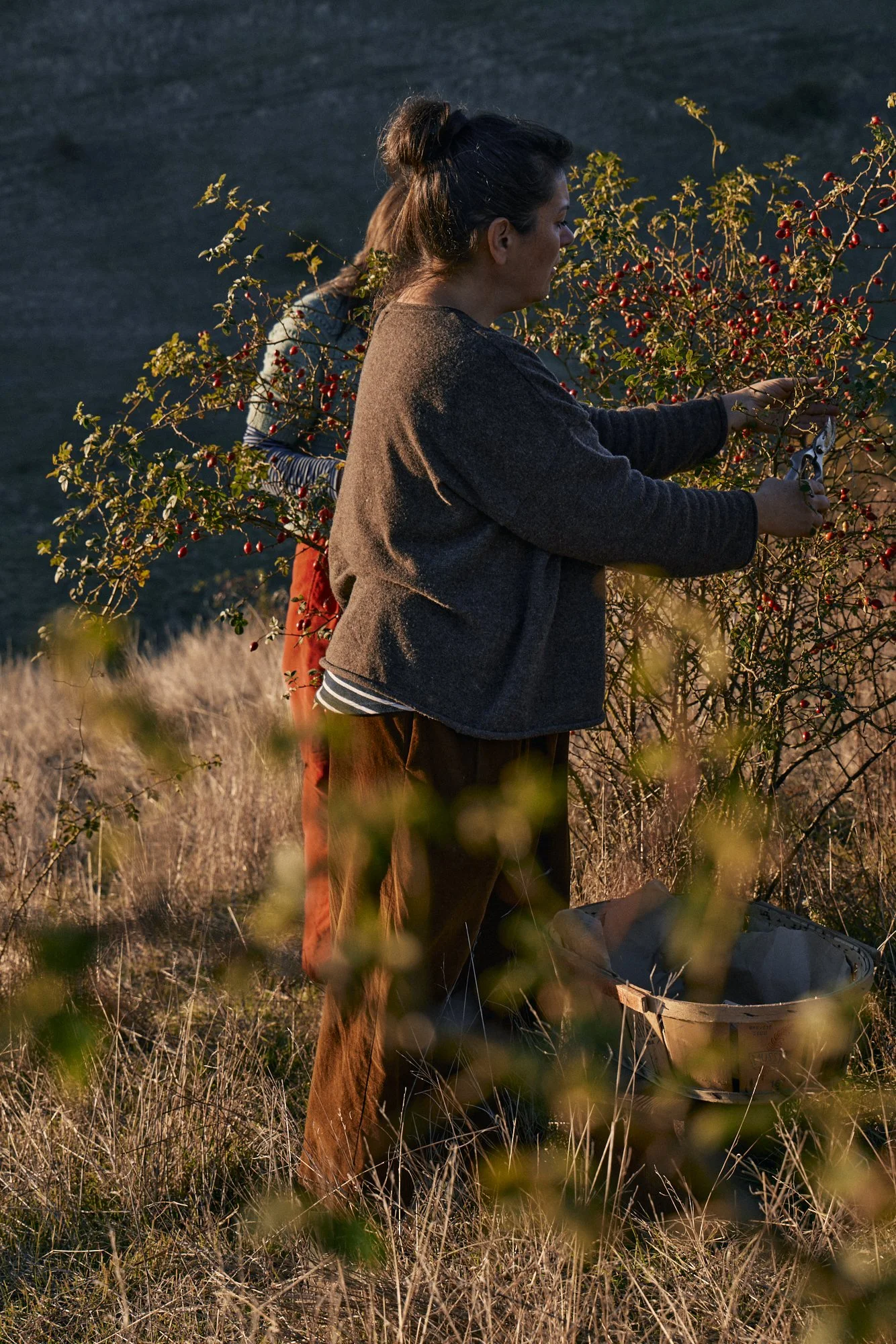

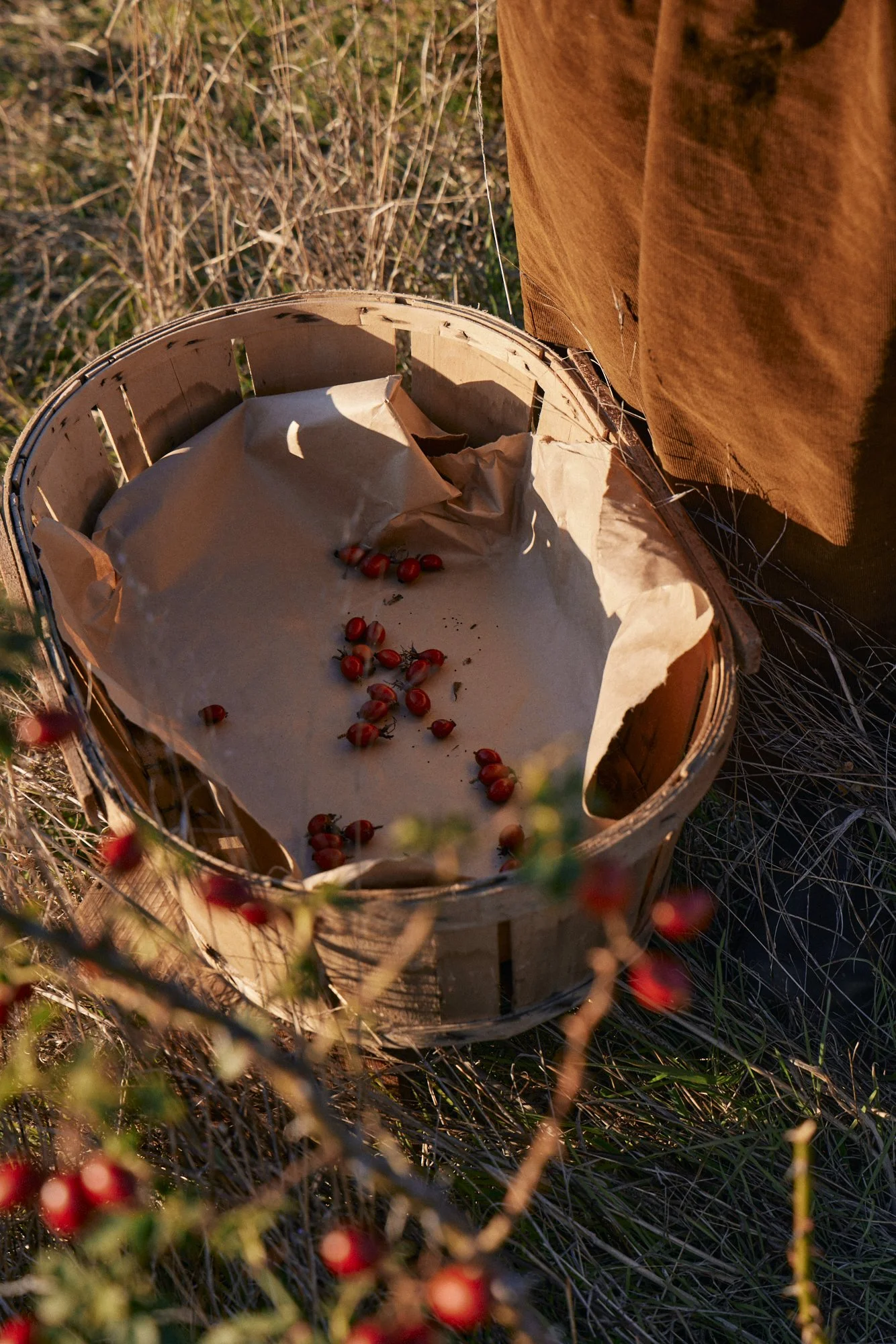

From edible treats to therapeutic remedies, unearth the healing potential of plants, both wild and cultivated. Come for a day of healing botanical goodness, learning to make healing treats for the body, mind and soul. Delve into the medicinal benefits of botanicals by creating your own hand-made delights and celebrate the release of Caroline’s book, ‘The Medicinal Garden’.
Enjoy a day of sumptuous experiences in a gorgeous space with lovely people. Natasha and Caroline will share discussions on how to bring plants and their incredible healing properties into your everyday life in the simplest yet most precious ways.


About the Workshop:
Join Caroline Parker (aka @thecottageherbalist), and Natasha Morgan for a unique hands-on workshop in the idyllic setting of Little Cottage On A Hill, Daylesford. Dive deep into the world of botanical healing as Caroline shares her expertise in creating natural, healing remedies.
Caroline is a degree-qualified herbalist, author, farmer, forager and facilitator. She is obsessed with cups of tea, getting her hands dirty, growing beautiful herbs and flowers, and foraging for wild weeds and herbs. Caroline’s small home-based studio, in the cool and misty Wombat Forest, is where you'll find her blending up award-winning teas and tisanes.
What You’ll Learn and Create:
• An immunity-boosting botanical syrup
• A magical medicinal balm for gardeners and so much more!
• A weedy pesto/salsa from foraged botanicals that will transform any meal
Participants will receive beautiful botanicals to use on the day, as well as recipes to follow and take home, ensuring you can continue creating medicinal magic long after the workshop. Be welcomed in Natasha’s idyllic garden world to pick from and enjoy during a guided tour. Of course, there will also be pots of Caroline’s award-winning hand-blended tea and a sumptuous long table morning tea of freshly baked botanically infused healing treats (sweet and savoury), beautiful company and conversation!
Tickets are extremely limited, so grab some friends, your camera or phone to take pics, and come to Daylesford for the day—just do it quickly! You don’t want to miss out.
Note: Caroline will have her latest book ‘The Medicinal Garden’ available for purchase and signing on the day.
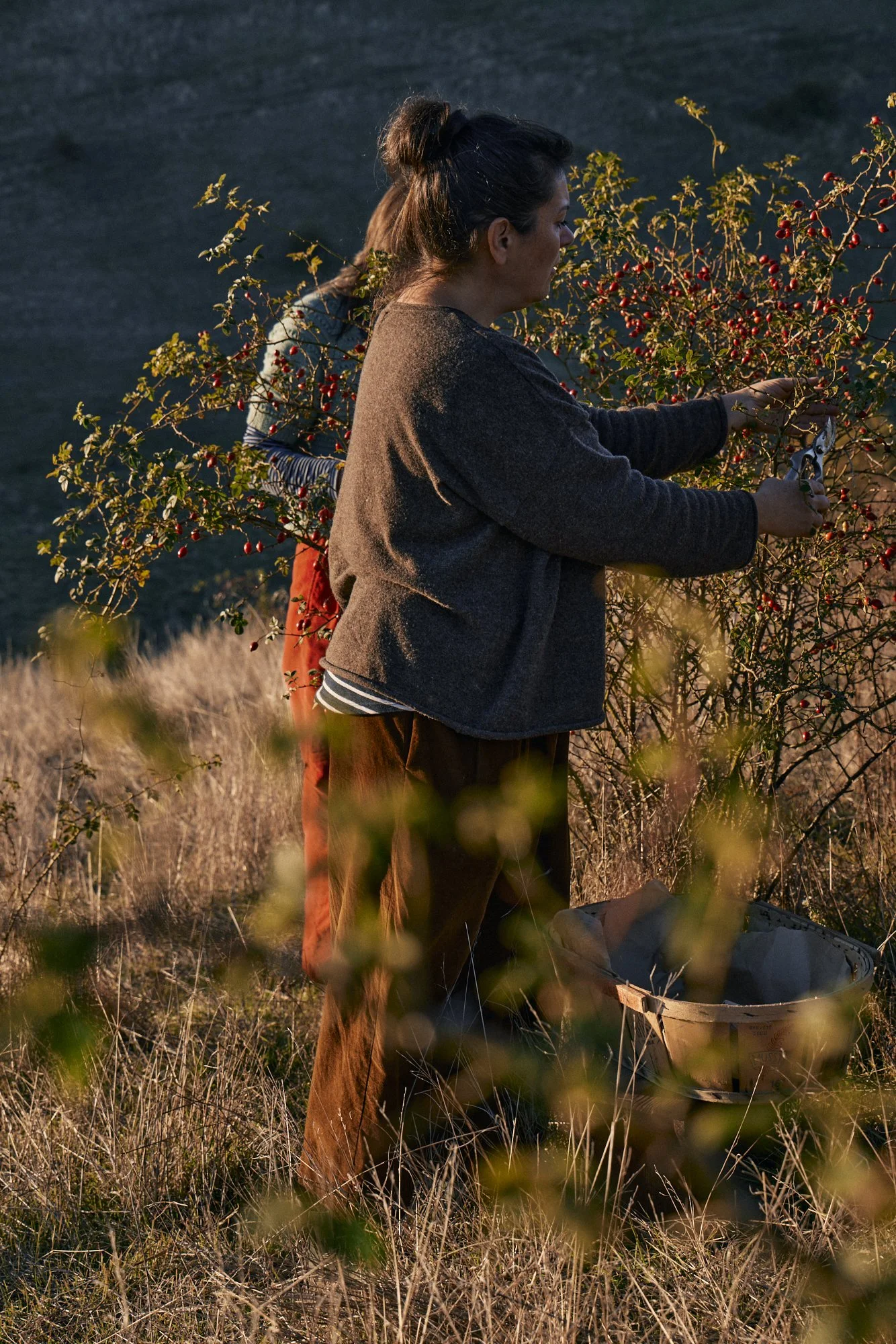

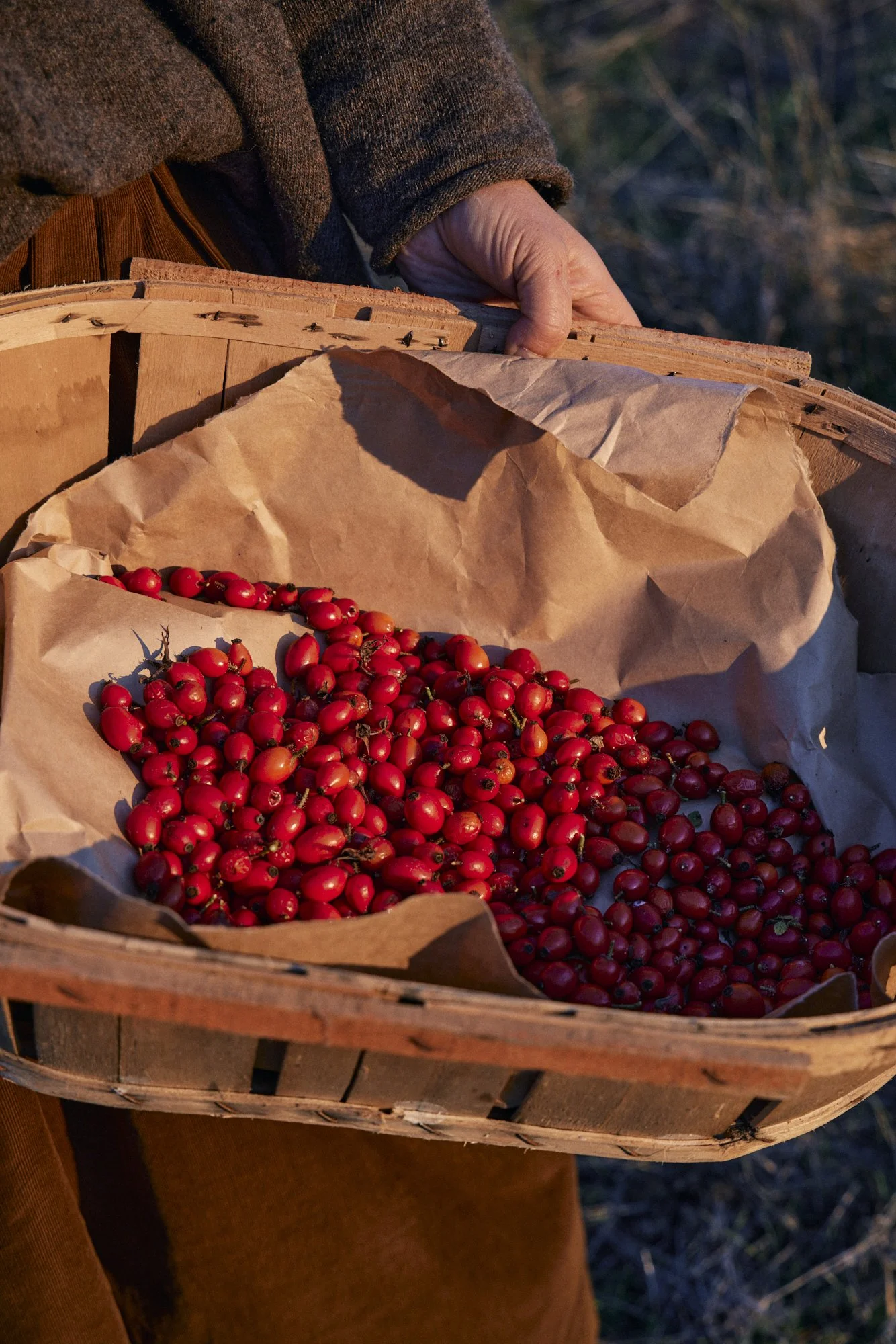


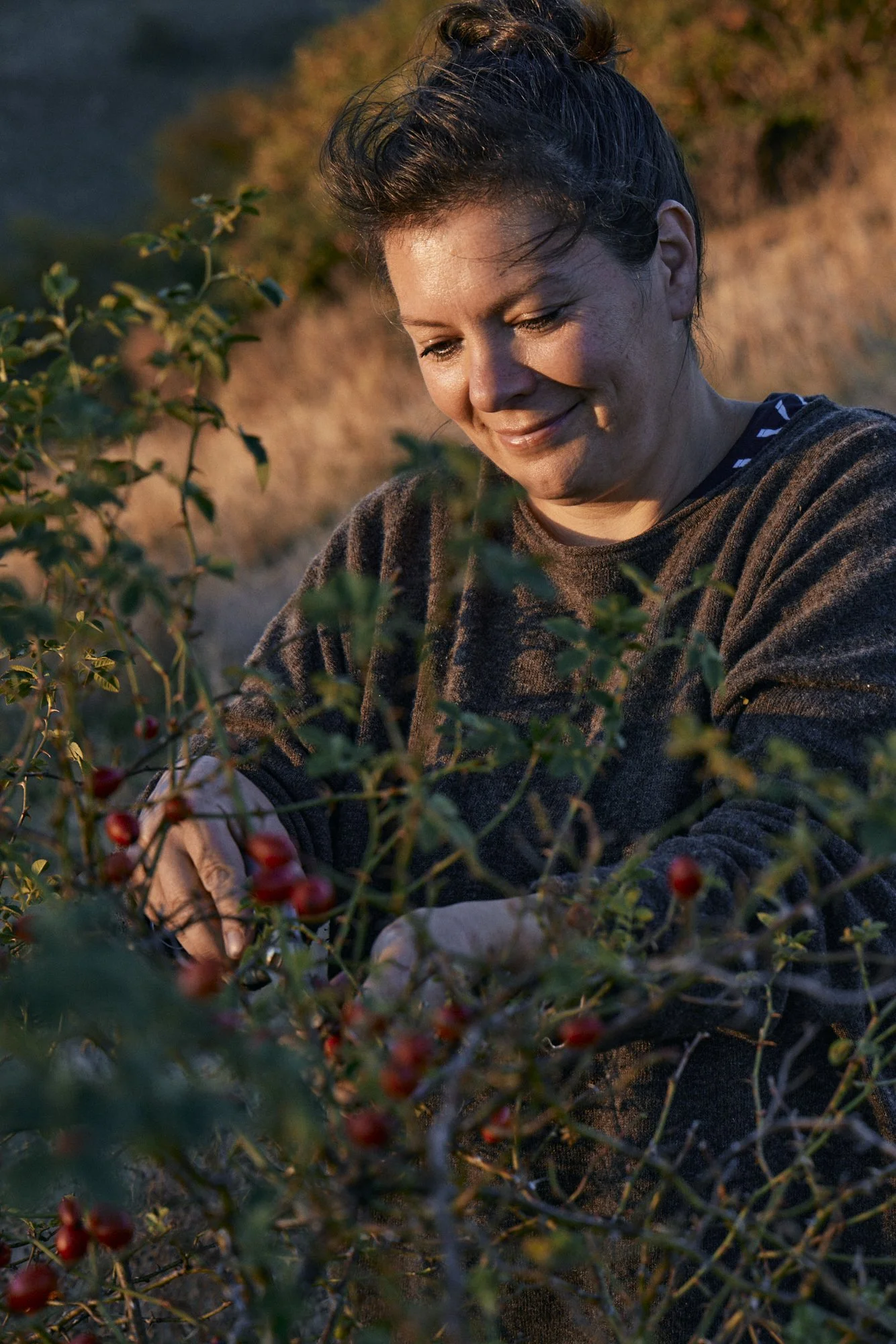
Continue your gardening journey with me
See what other workshops I offer, you’ll find everything from guidance of design, productivity and seasonal care.
If you are building your garden from home right now, my ebooks on Wicking Bed Gardens and Introduction to Backyard Chicken Keeping offer practical step by step guidance that pairs well with the workshops.
You may want to check out my related content below:
Workshops are back. Gathering again for Spring – Discover the rest of the years workshops — from Garden Design, Productive Gardens, Wicking Beds and Medicinal Gardens.
Rooted in Reflection, Growing with Intention – Explore the intentionality behind creating a garden that serves both purpose and beauty.
Stay connected for more seasonal inspiration:
Instagram | Facebook | Gardenstead | LinkedIn | Pinterest | YouTube | Website | Newsletter
Thanks so much for following along.
Natasha xx